

TL;DR:
- Most home fires result from habits, such as neglecting to maintain smoke alarms and practicing fire safety routines.
- Common hazards include unattended cooking, damaged electrical cords, and improper use of heating devices that increase the risk of fires and property damage.
Residential fire hazards are defined as conditions or behaviors that significantly increase the risk of a fire starting or spreading inside a home. Cooking causes 49% of all residential fires in the U.S., making it the single largest source of household fire risk. Electrical malfunctions, heating equipment, and smoking materials follow closely, each contributing to deaths and property loss every year. Understanding the most common fire hazard examples in homes gives you the knowledge to act before a fire starts, not after.
1. What are common fire hazard examples in homes from cooking?
Unattended cooking is the leading cause of kitchen fires. Leaving a pan on the stove, even for two minutes, creates the conditions for a grease fire to ignite. Grease buildup on stovetop surfaces and inside range hoods is especially dangerous because it can catch fire silently and spread fast.
Flammable items near burners are a frequent and overlooked risk. Dish towels, paper bags, wooden utensils, and loose sleeves all ignite quickly when placed too close to an open flame or electric coil. Toaster ovens and air fryers also generate intense heat and require at least six inches of clearance from cabinets and walls.
Holiday and weekend cooking significantly increases fire incidence, with Thanksgiving, Christmas, and New Year’s Eve ranking as the highest-risk cooking days of the year. That risk spike is tied directly to larger meals, longer cook times, and more distractions in the kitchen.
- Never leave cooking food unattended on the stovetop
- Keep flammable materials at least three feet from burners
- Clean grease from stovetops, hoods, and drip pans regularly
- Keep a fire extinguisher within reach of the kitchen
Pro Tip: Mount a kitchen-rated extinguisher near the kitchen exit, not directly above the stove. Reaching over a fire to grab it defeats the purpose.
2. Which electrical problems create fire hazards in residential buildings?
Electrical malfunctions cause 6% of all home fires but produce some of the highest property damage totals. The reason is location. Electrical fires frequently start inside walls, behind outlets, or in attic wiring where they smolder undetected for hours before breaking through.
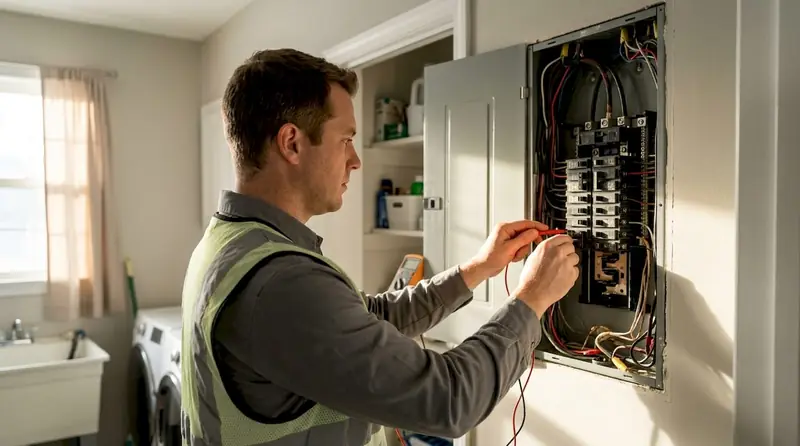
Damaged cords are one of the most common electrical fire risks homeowners ignore. Cords with cracked insulation, frayed ends, or pinch points under rugs or furniture generate heat that can ignite surrounding materials. Overloaded outlets and power strips draw more current than the circuit can safely handle, which causes wiring to overheat.
Water near electrical components compounds the risk significantly. A leaking pipe above a junction box or a wet floor near an outlet creates conditions for short circuits that can spark instantly. Hidden fires behind walls cause structural damage that is far more expensive and dangerous than a surface fire.
- Replace any cord with visible cracking, fraying, or heat damage
- Never run extension cords under rugs or through doorways
- Avoid daisy-chaining power strips together
- Schedule a professional electrical inspection every five to seven years
Pro Tip: Charge phones and laptops on hard surfaces, never on beds or sofas. Soft materials trap heat from batteries and can ignite during an overnight charge.
3. How does heating equipment contribute to fire hazards in homes?
Space heaters cause a significant share of fatal heating fires, and the most common reason is placement. The standard safety rule is three feet of clearance on all sides from curtains, bedding, furniture, and any other combustible material. Most heating fires happen when that rule is ignored.
Fuel-burning appliances like gas furnaces, wood stoves, and fireplaces require annual maintenance to operate safely. Creosote buildup inside chimneys is a direct ignition source. A chimney that has not been cleaned in two or more years can ignite from a single fire in the hearth.
Cold-weather states see heating fires rise to 14–18% of all residential fires during winter months. That seasonal pattern means the weeks between november and february carry the highest heating-related risk. Garages and utility rooms are especially vulnerable because they often house portable heaters alongside fuel containers, paint, and other combustibles.
- Keep space heaters at least three feet from all combustibles
- Have chimneys inspected and cleaned annually
- Turn off portable heaters when leaving a room or going to sleep
- Store fuel containers outside the living area in a ventilated space
4. What other household fire hazards should homeowners and renters watch out for?
Smoking materials cause only 5% of home fires but 23% of fire deaths, making them the deadliest fire cause per incident. That gap exists because smoking fires often start in upholstered furniture or bedding, where smoldering can go undetected for hours. Fire-safe cigarettes and an outdoor-only smoking policy cut this risk substantially.
Dryer lint buildup in traps and exhaust vents is a fire hazard that most renters and homeowners underestimate. Restricted airflow from a clogged vent causes the dryer to overheat, and lint is highly flammable. Clean the lint trap before every load and have the exhaust duct professionally cleaned at least once a year.
Personal heat appliances like flat irons, curling wands, and hair dryers left plugged in and unattended are a consistent source of residential fires. These tools reach temperatures above 400°F and can ignite fabric, paper, or plastic in seconds. Garages present a separate cluster of risks, including multiple combustibles like fuel containers, motor oil, and stored paint near vehicles that leak flammable vapors.
| Hazard | Primary Risk | Prevention Step |
|---|---|---|
| Smoking materials | Smoldering upholstery fires | Smoke outdoors; use fire-safe cigarettes |
| Dryer lint | Overheating and ignition | Clean trap each use; duct cleaned annually |
| Hair tools | Contact ignition on fabric | Unplug after use; store on heat-safe surface |
| Garage combustibles | Vapor ignition near vehicles | Store fuel in approved containers outside |
| Holiday lighting | Cord damage and overheating | Inspect cords; use indoor-rated lights only |
Decorative lighting with damaged cords or lights not rated for indoor use round out this category. A fire prevention checklist that covers these less obvious hazards helps homeowners and renters catch risks they would otherwise miss during a DIY fire hazard inspection.
Key Takeaways
Preventing home fires requires identifying specific hazards by room and behavior, then addressing each one with a concrete action before an incident occurs.
| Point | Details |
|---|---|
| Cooking is the top fire source | Unattended cooking causes 49% of residential fires; never leave the stove unsupervised. |
| Electrical fires hide inside walls | Damaged cords and overloaded outlets start fires that smolder undetected; inspect wiring regularly. |
| Heating equipment needs clearance | Keep space heaters three feet from all combustibles and service chimneys annually. |
| Smoking materials are the deadliest | Smoking causes 23% of fire deaths despite only 5% of fires; smoke outdoors on non-combustible surfaces. |
| Smoke alarms save lives | Working alarms cut fire death risk by 50%; test monthly and replace every 5–10 years. |
What I’ve learned about home fire safety that most guides miss
Most fire safety content focuses on what to buy: smoke alarms, extinguishers, escape ladders. That advice is correct, but it misses the harder truth. The homes that burn are rarely missing equipment. They are missing habits.
I’ve seen homeowners with three smoke alarms and dead batteries in all of them. About 40% of fire deaths occur in homes with alarms that were not working, almost always because of maintenance lapses. A smoke alarm with a dead battery is not a safety device. It is a false sense of security mounted to the ceiling.
The second thing most guides skip is the layered defense concept. One alarm is not a plan. A real fire safety setup includes working alarms on every level, a mounted extinguisher in the kitchen, a clear family fire escape plan practiced at least twice a year, and a professional inspection of electrical and heating systems on a regular schedule. Each layer catches what the others miss.
The third gap is utility space neglect. Dryers, water heaters, and HVAC units sit in rooms that most people enter only when something breaks. Routine maintenance around these appliances prevents the slow-building hazards that cause fires months after the risk first appeared. Schedule it like a bill payment. It is that predictable and that preventable.
Fire safety is not a one-time purchase. It is a recurring practice. The homeowners and renters who stay safe are the ones who check, test, and maintain on a schedule, not the ones who react after something goes wrong.
— Reliable-fire-protection
How Reliable-fire-protection can help protect your home
A working fire alarm system is the foundation of any home fire safety plan. Reliable-fire-protection installs, inspects, and maintains residential fire alarm systems across Houston and surrounding neighborhoods, ensuring your detection equipment performs when it matters most.

Understanding how fire alarm systems work is the first step toward choosing the right protection for your home. Reliable fire protection’s certified technicians assess your property, recommend the right detection setup, and handle installation to code. Whether you need a new system or a maintenance check on an existing one, the team at Reliable-fire-protection is ready to help. Reach out for a free quote and get your home’s fire protection evaluated by professionals who specialize in residential safety.
FAQ
What is the most common fire hazard in homes?
Cooking is the most common fire hazard in residential settings, accounting for 49% of all home fires in the U.S. Unattended stovetop cooking and grease buildup are the two leading causes within that category.
How often should smoke alarms be tested and replaced?
Smoke alarms require monthly testing and replacement every 5–10 years. Alarms older than 10 years lose sensitivity and may fail to detect smoke in time.
What are the biggest fire hazards in a garage?
Garages concentrate multiple fire risks in one space, including fuel containers, motor oil, stored paint, and vehicles that emit flammable vapors. Adding a portable heater to that environment without proper clearance and ventilation significantly raises ignition risk.
How do I do a basic DIY fire hazard inspection at home?
Walk through each room and check for damaged cords, overloaded outlets, flammable materials near heat sources, and blocked dryer vents. Use a fire prevention checklist to cover every area systematically, including utility rooms and the garage.
Why do smoking materials cause so many fire deaths despite fewer fires?
Smoking materials cause 23% of fire deaths while starting only 5% of fires because they ignite upholstered furniture and bedding, which smolder slowly and allow toxic smoke to build before flames appear. Victims are often asleep before the fire becomes visible.