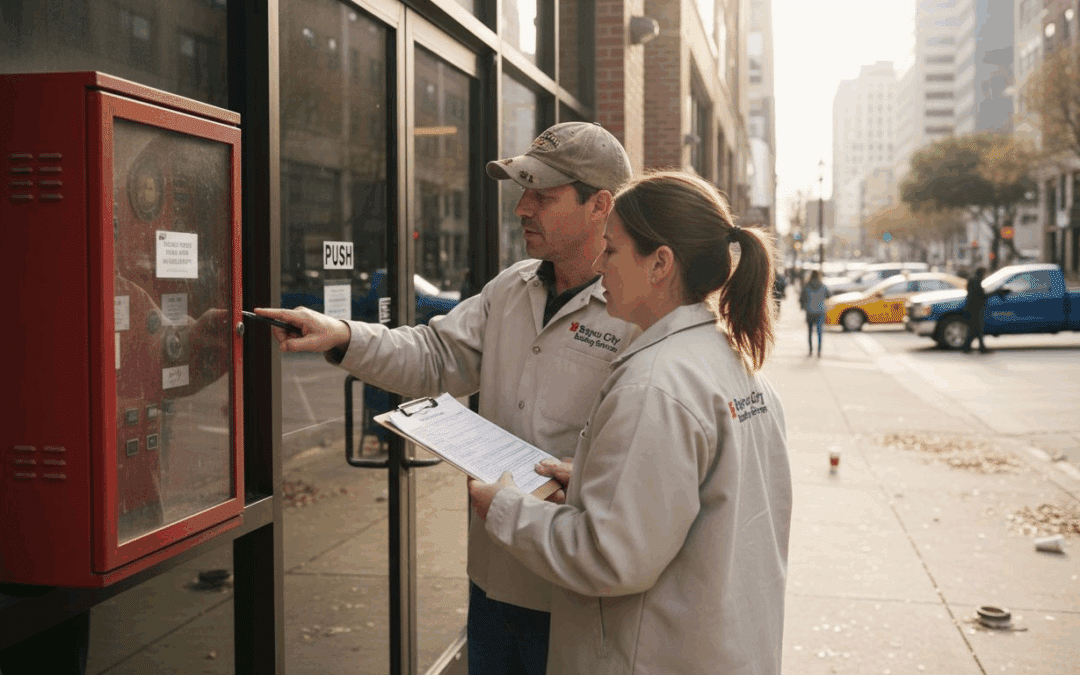
Choosing the right fire protection approach in Houston means navigating a maze of codes, technical specs, and real-world risks building owners face daily. For commercial property managers, these standards are more than paperwork—they are the backbone of protecting tenant lives and investments. By following the proven methods outlined by the National Fire Protection Association and OSHA, you benefit from industry expertise and shield your property against common violations. Understanding these standards is the foundation for safer, more resilient buildings.
Table of Contents
- Defining Fire Protection Industry Standards
- Major Codes: NFPA, OSHA, and Local Laws
- Types of Fire Protection Systems Required
- Key 2026 Code Updates and Trends
- Commercial Property Compliance Responsibilities
- Common Violations and How to Avoid Them
Key Takeaways
| Point | Details |
|---|---|
| Fire Protection Standards Are Essential | Compliance with NFPA, OSHA, and local Houston codes is crucial for property safety and legal protection. |
| Regular Maintenance Is Mandatory | Fire protection systems require timely inspections and maintenance to ensure functionality and compliance. |
| Documentation Is Key | Maintaining accurate records of inspections and training is necessary for proving compliance and mitigating liability. |
| Training Is Vital for Safety | Staff should be well-trained in emergency procedures and fire safety protocols to ensure effective response during incidents. |
Defining Fire Protection Industry Standards
Fire protection industry standards are the rulebook that keeps Houston properties safe. Think of them as the technical and procedural guidelines that govern everything from how fire alarm systems get installed to how sprinkler systems operate during an emergency. These standards exist because fires don’t follow a casual schedule, and when they happen, every second counts. Standards ensure that whether you own an office building downtown or manage a warehouse in the suburbs, the fire protection measures in place follow the same proven methods that have been tested and refined over decades.
At the federal level, the National Fire Protection Association develops over 300 codes and standards addressing various fire and life safety challenges. These standards are consensus-based, meaning they reflect input from fire protection engineers, building officials, manufacturers, and safety experts who come together to establish what actually works in real fire situations. The NFPA updates these standards every three to five years, keeping pace with new technologies, materials, and construction methods. In Houston specifically, you’ll encounter standards covering construction and design requirements, emergency planning protocols, and detailed specifications for fire protection systems themselves. It’s not just about installing equipment and hoping for the best. It’s about installing equipment that meets exact technical specifications because those specifications have proven to save lives.
OSHA’s fire safety standards operate at another level, focusing on workplace fire prevention, emergency action plans, and the maintenance and use of fire protection systems. OSHA enforces these regulations across general industry, construction, and maritime sectors. For Houston property managers, this means understanding that your fire protection systems aren’t just nice to have, they’re legally required to be maintained, tested, and documented in specific ways. OSHA violations can result in substantial fines, but more importantly, they indicate gaps in protection that could endanger your tenants or employees. The enforcement mechanism behind OSHA standards gives them teeth that general industry recommendations simply don’t have.
When you manage a Houston property, these standards translate into concrete requirements. Your fire alarm system must undergo annual inspections. Your sprinkler systems need specific water pressure readings and flow rates. Fire extinguishers require regular servicing. Exit routes must meet exact specifications. These aren’t arbitrary rules created to make your life difficult, they’re the accumulated wisdom of fire safety professionals who’ve studied what works and what fails when buildings actually catch fire. Understanding that standards exist for a reason changes how you approach fire protection. You’re not just checking boxes for compliance. You’re implementing proven methods that protect your investment and, more importantly, the people inside your building.
Pro tip: Request documentation showing when each fire protection system on your property was last inspected and tested against current standards, then create a calendar reminder to schedule the next required inspection before compliance deadlines pass.
Major Codes: NFPA, OSHA, and Local Laws
Fire protection in Houston operates under a three-tier system: federal standards, state regulations, and local codes. This layered approach exists because one size doesn’t fit all properties. A historic warehouse in the Heights faces different fire risks than a modern office tower in the Medical Center, so regulations need flexibility while maintaining baseline safety. The key codes you’ll encounter fall into three distinct categories, each serving a specific purpose in protecting your property and the people inside it.
The National Fire Protection Association sets the technical foundation through codes like NFPA 101 (Life Safety Code) and NFPA 13 (Installation of Sprinkler Systems). These codes are developed through a consensus process where engineers, architects, fire chiefs, and safety experts debate and refine requirements based on real fire incidents and testing data. NFPA codes aren’t laws by themselves, but federal and state governments have adopted them as the basis for building codes. When you see references to the International Building Code or local Houston fire ordinances, they’re typically incorporating NFPA standards as their technical backbone. OSHA standards complement NFPA codes by focusing specifically on employee safety and workplace fire prevention. Where NFPA might specify how a sprinkler system gets designed, OSHA specifies how it gets maintained and tested in a workplace setting. The distinction matters because OSHA can assess penalties for violations, making compliance a legal obligation rather than just a best practice.
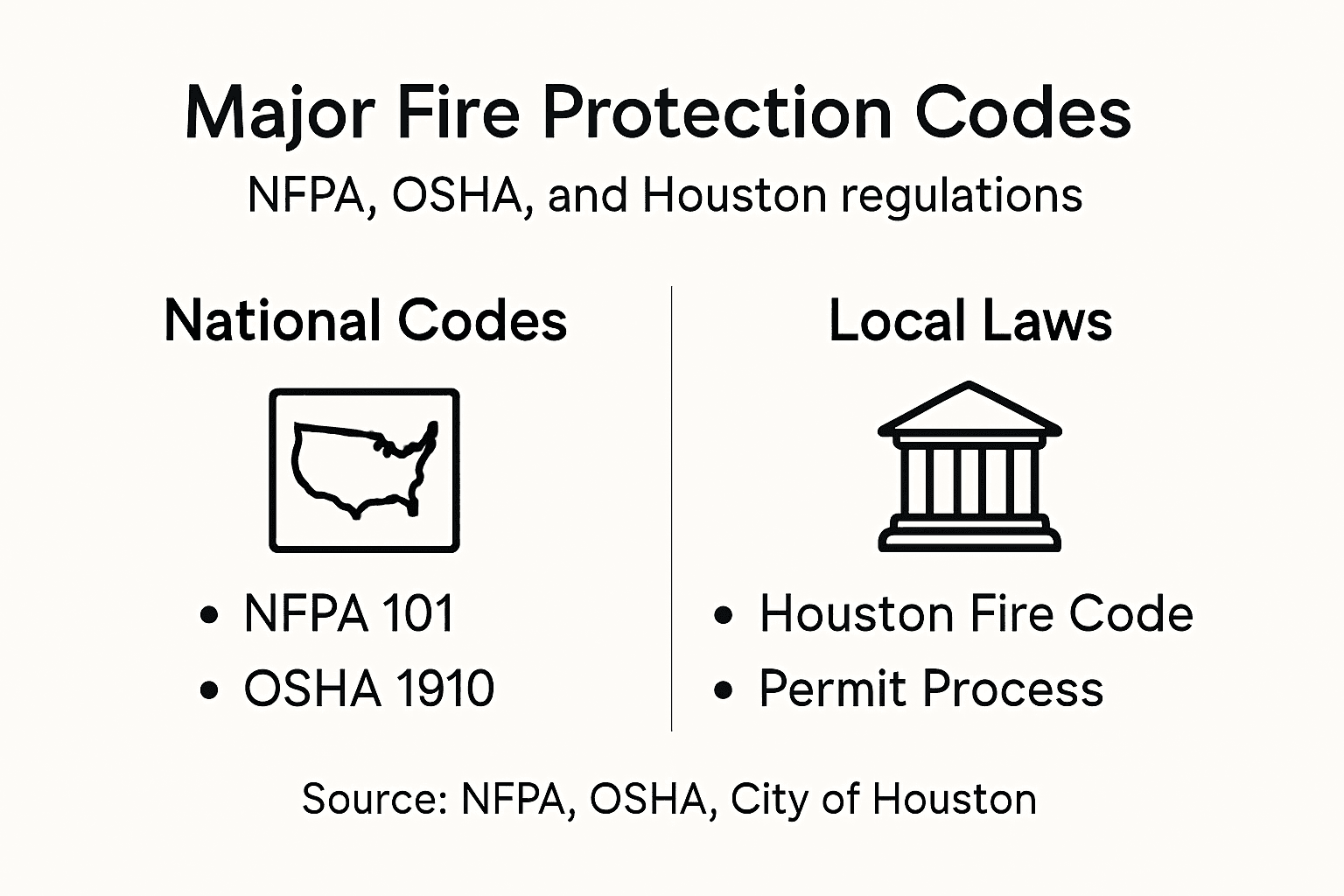
At the federal level, the Federal Fire Safety Act mandates specific fire protection measures in multi-family housing, particularly sprinkler systems. This creates a floor below which properties cannot go. Texas then adds its own layer through the Texas Fire Marshals Association and state building codes, and Houston adds its own local modifications through the Houston Fire Department and city ordinances. Your property must comply with whichever requirement is most stringent. If federal law requires sprinklers in a 4-story apartment building, but Houston’s local code also requires sprinklers in the same building, you follow both. If Houston’s code is stricter than what NFPA recommends, Houston’s code wins.
Understanding which code applies to your specific property type matters enormously. Office buildings follow different requirements than warehouses. Restaurants face different standards than retail spaces. Manufacturing facilities have entirely different compliance pathways. Fire safety equipment requirements vary based on occupancy classification, square footage, and intended use. This is where working with a fire protection professional becomes valuable. You don’t need to memorize every code provision, but you do need to know which codes govern your property and ensure you’re meeting all applicable requirements. Missing one standard because you weren’t aware it applied is just as damaging as intentionally ignoring a requirement.
Here is a summary comparing key fire protection codes and their focus in Houston:
| Code/Standard | Focus Area | Enforcement Level |
|---|---|---|
| NFPA (e.g., NFPA 13, 72, 101) | System design, installation, technical specs | Forms basis of building codes, widely adopted |
| OSHA Standards | Workplace prevention, employee safety, training | Legally enforced with penalties for violations |
| Houston Local Laws | Local system specs, stricter requirements | Enforced by city inspections and ordinances |
Pro tip: Contact the Houston Fire Department’s plan review section to request a code compliance summary specific to your property’s occupancy classification, then use that document as your reference guide for ongoing maintenance and upgrade decisions.
Types of Fire Protection Systems Required
Not all Houston properties need the same fire protection systems. Building occupancy, size, and use determine what gets installed and maintained. An office building downtown requires different protections than a warehouse in the industrial corridor, which differs from a restaurant in Midtown. Understanding what your property actually needs prevents both over-investment in unnecessary systems and dangerous gaps in protection. The code determines your requirements, but knowing what those requirements translate to in practical terms makes the difference between compliance and confusion.
Automatic sprinkler systems form the backbone of fire protection for most commercial properties. These systems detect heat from a fire and release water directly at the source, often extinguishing small fires before they spread. NFPA standards for sprinkler systems specify how they get designed, installed, and maintained based on your building’s occupancy type and size. A 2,000-square-foot office requires different sprinkler design than a 50,000-square-foot manufacturing facility. Sprinkler requirements depend on ceiling height, room layout, and what materials are stored or used. The sprinkler system in your property isn’t just a single component. It includes the water supply, pumps, pipes, heads, valves, and a complex system of pressure and flow rates that must be precisely calculated during design and verified through annual testing.
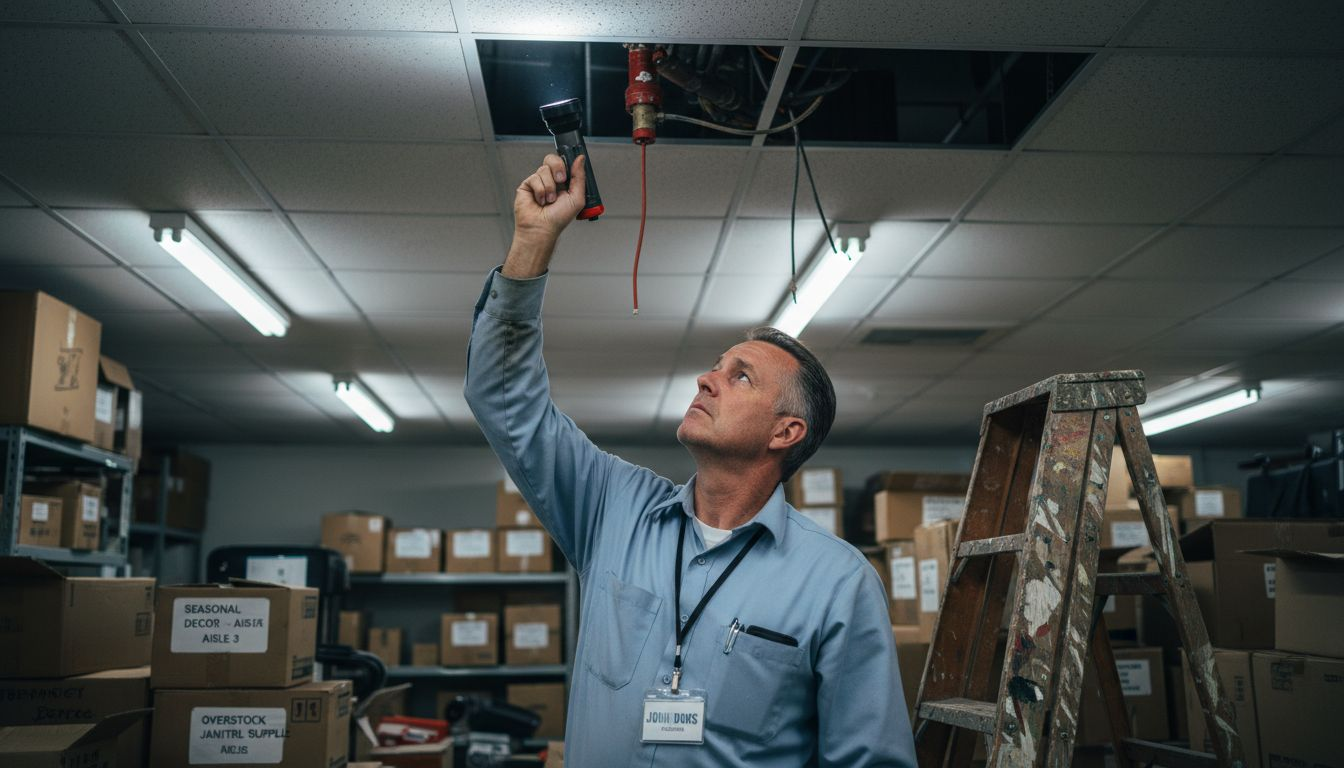
Fire alarm and detection systems work alongside sprinklers by alerting occupants to danger and notifying fire departments. These systems include smoke detectors, heat detectors, manual pull stations, and control panels that integrate the entire warning network. Fire alarm and signaling systems following NFPA 72 standards ensure that when smoke or heat is detected, occupants get the signal to evacuate and emergency services get the location. Without detection and alarm systems, occupants might not know about a fire until it’s too late. Standpipe and hose systems provide a supplementary water source for firefighters. They’re essentially vertical pipes running through your building with connections at each floor. Firefighters can connect their hoses to these connections and fight fires from within the building rather than relying solely on external water sources. The larger your building or the more floors it has, the more likely standpipes become a code requirement.
Portable fire extinguishers serve as first response tools for small fires before they grow dangerous. Houston’s Fire Code requires specific types based on occupancy. A kitchen requires Class K extinguishers for grease fires. A garage with flammable liquids requires Class B extinguishers. An office with electrical equipment requires Class C extinguishers. Having the wrong type won’t help and might actually make things worse. Specialized suppression systems handle specific hazards that water-based sprinklers cannot address. Chemical suppression systems protect server rooms and data centers where water would destroy expensive equipment. Foam suppression systems protect areas with flammable liquids. These systems require specialized installation, maintenance, and annual inspections because they contain hazardous chemicals or pressurized gases.
Quick reference by occupancy:
- Office buildings: Sprinklers, fire alarm systems, portable extinguishers, and usually standpipes in buildings over 55 feet
- Restaurants: Sprinklers, fire alarm systems, Class K suppression in kitchens, portable extinguishers
- Warehouses: Sprinklers, fire alarm systems, portable extinguishers, and specialized systems based on stored materials
- Data centers: Fire alarm systems, specialized chemical suppression, portable extinguishers, no sprinklers
- Medical facilities: Sprinklers, fire alarm systems, specialized extinguishers for various areas, standpipes
Your specific requirements depend on Houston’s interpretation of state and federal codes as applied to your building’s exact classification. Building size matters because larger buildings trigger additional requirements. Occupant load matters because higher occupancy means more exit requirements and more comprehensive warning systems. The materials inside matter because hazardous materials require specialized suppression. This is why a professional assessment of your specific property reveals exactly what you need rather than guessing based on what other properties have installed.
Pro tip: Request a written fire code compliance assessment from a certified fire protection engineer that specifically lists which systems your property requires and which are optional recommendations, then prioritize required systems in your maintenance budget.
Key 2026 Code Updates and Trends
Fire protection standards don’t stay frozen in time. The NFPA updates its codes every three to five years, and 2026 brings meaningful changes that will affect how you maintain and upgrade your Houston property. These aren’t minor tweaks either. They reflect real shifts in how the fire protection industry approaches safety based on lessons learned from recent fires, advances in technology, and the reality that Houston faces climate challenges that weren’t top-of-mind when previous codes were written. Understanding what’s coming helps you plan capital budgets and avoid costly retrofits when new requirements take effect.
Climate resilience has moved from a nice-to-have consideration to a core design principle. Houston experienced Hurricane Harvey in 2017, and the resulting flooding damaged fire protection systems across the city. Basements filled with water, rendering sprinkler systems inoperable exactly when fires were most likely. The 2026 updates emphasize protecting fire protection infrastructure from flood damage, which means new requirements for pump placement, water supply protection, and system design in flood-prone areas. If your building sits in a flood zone, these updates will directly affect your sprinkler system design and water supply arrangements. Elevated equipment, redundant water supplies, and backup power systems are becoming standard requirements rather than optional enhancements. For Houston properties near bayous or in low-lying areas, this translates to equipment upgrades and system modifications.
Expanding fire safety standards for high-rise and mixed-use buildings reflects a trend toward more stringent requirements in taller structures and buildings that combine residential, commercial, and hospitality uses. Houston’s skyline includes more mixed-use developments than ever before, so these updates directly affect downtown properties and vertical developments in Uptown. The updated codes add requirements for enhanced communication systems between fire departments and building management, better coordination of evacuation procedures across different occupancy types within a single building, and improved stairwell pressurization to keep smoke out during evacuations. These changes acknowledge that mixed-use buildings present evacuation challenges that single-occupancy buildings don’t face. A resident evacuating from floors above a restaurant or office space needs different procedures and signaling than occupants of a traditional office tower.
Innovative suppression technologies are getting formal recognition in updated codes. Water-mist systems, foam systems, and clean agent suppressants that were previously limited or experimental are now getting clear pathways for installation in specific applications. Server rooms, pharmaceutical storage areas, and specialized manufacturing spaces can now use alternatives to traditional sprinklers if they meet the updated technical standards. This matters for Houston’s growing tech sector and specialized manufacturing facilities. Additionally, the 2026 updates strengthen requirements for fire alarm system integration with building management systems and emergency communication networks. Your alarm system can no longer operate in isolation. It must communicate with your access control systems, emergency notification systems, and in some cases, directly with Houston Fire Department dispatch through automated systems.
These trends point toward a future where fire protection is more sophisticated, more integrated with building technology, and more aware of Houston’s specific environmental challenges. Your current systems might be compliant today but fall short of 2026 standards. Planning ahead prevents emergency retrofits and allows you to budget for upgrades systematically.
Key areas to monitor:
- Flood protection for water supplies and equipment in vulnerable areas
- Enhanced fire alarm system integration with building control systems
- Improved evacuation procedures for mixed-use buildings
- Updated standards for alternative suppression technologies
- Stronger requirements for emergency communication with fire departments
- Increased emphasis on system redundancy and backup power
Pro tip: Schedule a pre-2026 code compliance review with a fire protection professional to identify which of your current systems will need upgrades, then stagger the work across your budget cycles to avoid expensive emergency compliance projects when new standards take effect.
Commercial Property Compliance Responsibilities
As a Houston commercial property manager, fire protection compliance isn’t delegated work you hand off and forget about. It’s an ongoing responsibility that directly impacts your liability exposure, your tenants’ safety, and your property’s insurability. When a fire occurs and investigators discover that your sprinkler system wasn’t properly maintained or your fire alarm system hadn’t been tested in years, the legal and financial consequences fall on you. Insurance companies deny claims for losses that stem from negligent maintenance. Lawsuits follow when occupants are injured because required safety systems failed. Understanding what compliance actually demands prevents these scenarios from becoming your reality.
System maintenance forms the foundation of compliance. Your fire protection systems must be inspected, tested, and serviced on schedules mandated by code. Fire alarm systems require quarterly inspections and annual certification. Sprinkler systems need annual inspections and five-year internal inspections. Fire extinguishers require annual inspections and hydrostatic testing every five to twelve years depending on type. Backflow preventers need annual testing. This isn’t optional work you can defer when budgets tighten. Property owners and managers must ensure buildings comply with applicable NFPA codes and conduct regular inspections and testing. The word “must” isn’t suggestions. It’s legal obligation. Missing one inspection deadline exposes you to code violations and potentially criminal liability if that system failure contributes to injury or death.
Documentation proves compliance when it matters most. Every inspection, every test, every service call must be documented and maintained. When the Houston Fire Department conducts a compliance inspection, they want to see records showing that your systems were inspected on schedule. When insurance adjusters investigate a claim, they examine maintenance logs. When lawyers deposing you in a lawsuit ask when your sprinklers were last tested, you better have documentation to support your answer. Many property managers maintain files, but inadequate record keeping is common. You need a system that tracks what was done, when it was done, who did it, and what the results were. Digital record keeping prevents lost files and makes retrieval instantaneous during inspections or investigations.
Staff training isn’t optional under OSHA regulations. Employers must implement fire prevention plans and train employees in emergency response. This means your staff needs to know where fire alarm pull stations are located, how to use fire extinguishers, evacuation procedures, and how to account for occupants during emergency situations. New employees need initial training. Existing employees need refresher training annually. Designated personnel need specific training on fire watch procedures, system operation, and emergency coordination with fire departments. Training documentation must be maintained like maintenance records because OSHA inspectors verify that training occurred and employees actually retain the information.
Liability protection depends on demonstrated diligence. When something goes wrong, your first line of defense isn’t the fire protection system. It’s evidence that you maintained that system properly and trained your staff thoroughly. Insurance coverage often includes exclusions for losses resulting from failure to maintain required systems. Courts view negligent maintenance as grounds for punitive damages beyond basic liability. Tenants and employees can sue for injuries stemming from inadequate fire protection. Your documented compliance history becomes your shield in these situations.
Responsibilities checklist:
- Schedule and document all required inspections and testing
- Maintain comprehensive records of all maintenance activities
- Contract with certified service providers for specialized systems
- Conduct annual staff fire safety training
- Perform quarterly fire alarm system checks
- Maintain fire extinguisher accessibility and functionality
- Keep exit routes clear and properly marked
- Coordinate with Houston Fire Department for inspections
- Update systems when code changes require upgrades
- Maintain current insurance coverage that reflects your actual fire protection measures
The reality is that compliance demands attention, documentation, and budget allocation. It’s not complex work, but it requires consistency and follow-through. Property managers who treat fire protection as a checkbox exercise rather than an ongoing responsibility create exposure. Those who build compliance into their standard operating procedures and maintain meticulous documentation protect their properties and tenants while defending themselves against liability.
Pro tip: Create a fire protection compliance calendar in your property management system that triggers 60 days before each required inspection or test is due, then assign responsibility to specific staff members with documented completion requirements and photo evidence of work performed.
To help property managers plan, the following table highlights inspection and documentation responsibilities:
| Activity | Frequency | Critical Documentation |
|---|---|---|
| Sprinkler inspection | Annual and five-year | Service reports, pressure logs |
| Fire alarm system test | Quarterly, annual | Test results, maintenance logs |
| Staff fire safety training | Annual and new hire | Training rosters, sign-in sheets |
| Fire extinguisher check | Annual, monthly visual | Inspection tags, service records |
Common Violations and How to Avoid Them
The Houston Fire Department and OSHA inspectors have seen the same violations repeatedly across commercial properties. These aren’t mysterious or obscure infractions. They’re common patterns resulting from deferred maintenance, inadequate documentation, or simply not understanding what codes require. Learning what triggers violations helps you avoid them before an inspector walks through your door. Most violations are preventable with the right systems and attention. The ones you see repeatedly are usually the result of property managers treating fire safety as a low priority until something forces their hand.
Deferred sprinkler system maintenance remains the most frequent violation. Sprinkler systems require annual inspections, but many property managers skip these because budgets tighten or because the systems seem fine without formal testing. What inspectors find when they actually test these systems tells a different story. Water pressure readings fall short of code requirements. Valve positions are incorrect. Corrosion blocks pipe sections. Heads get painted over during building maintenance. The system looks fine on the surface but fails when it’s actually put to the test. Common fire protection violations include failure to maintain fire sprinkler systems, which often results from postponing required annual inspections and five-year internal testing. Avoiding this violation requires building inspections into your annual budget as a non-negotiable line item and contracting with a certified sprinkler service contractor who performs the work on schedule.
Exit blockages represent a violation that seems obvious yet appears constantly. Fire code requires that every exit route remain clear and accessible at all times. Yet inspectors regularly find boxes stacked against emergency doors, portable furniture blocking pathways, or storage equipment partially obstructing exit signage. Sometimes these obstructions appear because a renovation project temporarily stored materials near exits. Sometimes they appear because someone decided that corner space would work perfectly for temporary storage that becomes permanent. Emergency lighting fails because bulbs aren’t replaced or batteries in emergency fixtures die. Exit signs get obscured by cobwebs or dust. The violation exists not because managers don’t understand the requirement, but because they don’t perform regular visual inspections to catch problems before inspectors do.
Inadequate or non-existent emergency action plans create violations that OSHA takes seriously. Houston properties need written fire prevention plans and emergency action plans that address evacuation procedures, accounting for occupants, and communication with emergency responders. Many businesses have these documents filed away and forgotten. OSHA inspectors ask employees about procedures and find that staff don’t know basic details about evacuation routes or assembly points. The violation isn’t just the missing plan. It’s the failure to train employees on the plan and verify they understand it. The fix requires a written plan specific to your building, quarterly staff briefings on procedures, and documented training records that show employees actually attended and understood the information.
Non-functioning fire detection systems undermine your entire protection strategy. Smoke alarms with dead batteries, fire alarm systems that haven’t been tested in months, heat detectors with dust coating them, or manual pull stations positioned where they’re inaccessible all create violations. The devices are physically present, but they won’t function when needed. Quarterly testing of your fire alarm system prevents this violation. Monthly visual inspections of smoke and heat detectors catch problems early. Ensuring manual pull stations remain accessible during any building renovation prevents them from getting blocked.
Violation prevention strategies:
- Schedule annual sprinkler inspections with a certified contractor and mark dates in your calendar
- Perform monthly exit route inspections to catch blockages or signage problems
- Develop a written emergency action plan specific to your building and conduct quarterly staff training
- Test fire alarm systems quarterly and maintain documentation of all tests
- Replace fire extinguisher inspection tags promptly after annual service
- Keep records of all maintenance, inspections, and training
- Designate a staff member responsible for monthly fire safety walk-throughs
- Schedule pre-inspection meetings with the Houston Fire Department to identify potential violations before they become official infractions
Most violations result from inconsistent attention rather than lack of resources. Property managers who build fire safety inspections into their monthly routine, maintain current documentation, and schedule preventative maintenance on regular intervals simply don’t get cited for the common violations others face. It’s not complicated. It’s just consistency.
Pro tip: After your first Houston Fire Department inspection, request a written list of any violations found, then create a 30-60-90 day correction plan with target completion dates for each violation, assigning specific staff accountability for each item.
Ensure Your Houston Property Meets Fire Protection Industry Standards with Reliable Fire Protection
Fire protection compliance is not just about checking boxes. It means safeguarding your tenants, employees, and assets with systems designed, installed, and maintained to meet Houston’s strict NFPA, OSHA, and local codes. The challenges of keeping sprinkler systems tested, alarms inspected, and documentation up-to-date can feel overwhelming. But you are not alone in navigating these complex requirements. Whether you manage an office building, warehouse, or mixed-use property, Reliable Fire Protection offers expert solutions tailored to your specific fire safety needs.
Don’t wait until an inspection exposes violations or a fire emergency tests your preparedness. Partner with Reliable Fire Protection, a trusted Houston-based company specializing in comprehensive fire alarm systems, sprinkler installations, suppression systems, and more. Our certified professionals ensure your systems comply with the latest standards and upcoming 2026 code updates while protecting your investment and peace of mind. Take control of your property’s fire safety today by visiting Fire Protection – Reliable Fire Protection or our main site at Reliable Fire Protection. Contact us now for a free consultation and keep your property safe and compliant.
Frequently Asked Questions
What are the key fire protection industry standards for commercial properties?
The key fire protection industry standards include those set by the National Fire Protection Association (NFPA) and OSHA. NFPA codes guide system design and installation, while OSHA focuses on workplace safety and fire prevention measures.
How often should fire protection systems be inspected in a commercial property?
Fire protection systems must be inspected according to specific schedules: fire alarm systems require quarterly checks and annual certifications, while sprinkler systems need annual inspections and internal testing every five years.
What are the common types of fire protection systems required for different occupancy types?
Common fire protection systems include automatic sprinkler systems, fire alarm and detection systems, standpipe and hose systems, portable fire extinguishers, and specialized suppression systems like chemical suppression for sensitive areas.
What documentation is necessary to prove compliance with fire protection standards?
To prove compliance, documentation such as inspection reports, maintenance logs, training records, and emergency action plans must be maintained. These records show that systems were regularly inspected, tested, and that staff received necessary training.