
TL;DR:
- A hospitality fire safety workflow integrates inspections, staff training, and emergency communication to ensure compliance and guest safety.
- Using digital platforms and role-specific training enhances safety management and reduces audit risks in hotels.
A hospitality fire safety workflow is a coordinated process that integrates fire prevention, scheduled inspections, staff training, and emergency response into one repeatable system. Hotels face a distinct challenge: guests are unfamiliar with the building, may be sleeping, and could be impaired, making rapid evacuation protocols a non-negotiable standard. NFPA codes, local fire marshals, and state occupancy regulations all govern how this workflow must be structured. Getting it right protects guests, preserves your license to operate, and reduces liability exposure in ways no insurance policy can fully replace.
What does a hospitality fire safety workflow actually require?
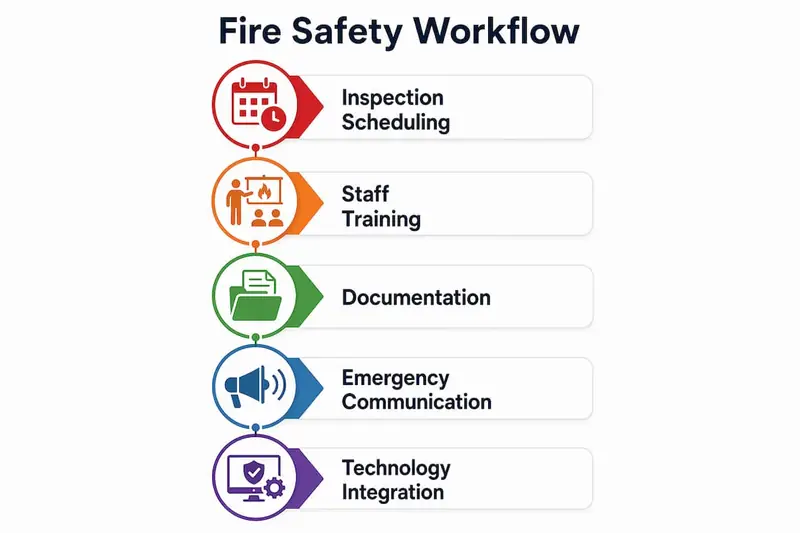
A hospitality fire safety workflow runs on four pillars: inspection scheduling, documentation, staff training, and emergency communication. Each pillar has defined standards, and failure in any one of them creates compliance gaps that auditors and, more importantly, fires will expose.
NFPA inspection requirements mandate a tiered schedule: weekly alarm testing, quarterly sprinkler flow tests, semi-annual kitchen suppression checks, and annual system-wide certifications. That schedule is not optional. Documentation must be retained for at least five years, and any gap in records is treated as a missed inspection during an audit.
The industry term for managing this end to end is “fire safety management,” and it covers everything from the physical systems to the people who operate them. Hospitality managers who treat fire safety management as a calendar exercise rather than an operational system consistently fall behind on documentation, not on the inspections themselves.
| Inspection type | Frequency | Responsible role |
|---|---|---|
| Fire alarm testing | Weekly | Facilities manager |
| Sprinkler flow test | Quarterly | Certified fire technician |
| Kitchen suppression check | Semi-annual | Licensed suppression contractor |
| Full system certification | Annual | Third-party fire inspector |
| Documentation review | Ongoing | Safety coordinator |
Pro Tip: Set calendar reminders 30 days before each inspection deadline. Late scheduling is the most common reason hotels miss quarterly sprinkler tests, not lack of budget.
How to effectively train hospitality staff on fire safety protocols
Staff training is the human layer of fire safety management in hotels, and it fails most often when it is treated as a one-time onboarding task. Every team member needs induction training on their specific role during a fire event, followed by annual refresher sessions that reflect any system or protocol changes.
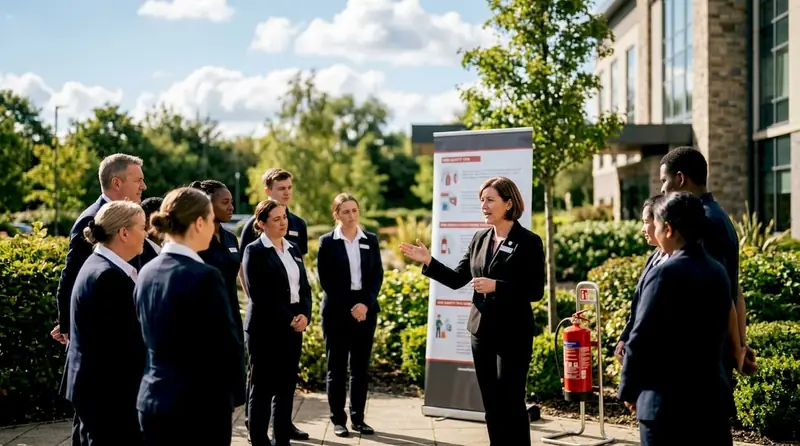
Emergency drill procedures for hotels follow a defined rhythm. Semi-annual evacuation drills last approximately 45 minutes and test the full guest and staff evacuation chain. Quarterly tabletop crisis simulations run about 60 minutes and focus on decision-making under pressure. Monthly security system tests confirm that alarm panels, intercoms, and notification systems are functioning correctly.
Role-specific training matters more than generic fire safety awareness. A front desk agent needs to know how to initiate the emergency notification chain within 15 minutes of a confirmed alarm. A housekeeper needs to know which stairwells to direct guests toward and which doors to keep closed. A kitchen supervisor needs to understand when to activate the suppression system manually versus waiting for automatic deployment.
- Induction training: Cover evacuation routes, assembly points, alarm panel locations, and role-specific duties before any new hire works a solo shift.
- Annual refresher: Update staff on any system changes, new NFPA guidance, or lessons learned from the previous year’s drills.
- Quarterly tabletop exercises: Simulate scenarios like a kitchen fire during peak service or a nighttime alarm with full occupancy.
- Monthly system checks: Confirm that every staff member with a safety role has verified contact information on file.
For a detailed framework on building this training program, the 2026 staff fire safety guide from Reliable-fire-protection covers role-based responsibilities and drill scheduling in depth.
Pro Tip: Assign a peer safety champion on each shift. Peer-to-peer reinforcement increases protocol retention far more effectively than annual classroom sessions alone.
How should hotels communicate with guests during a fire emergency?
Guest communication during a fire emergency is where many hotels lose control of the situation. The standard that prevents panic is the “single voice” principle: every staff member communicates the same message, at the same time, through the same chain of command. Managers must avoid speculation. Partial information delivered early is better than silence while staff wait for full confirmation.
“Consistent, verified messaging during fire emergencies maintains calm and increases trust. Managers are advised to communicate early with partial information rather than delay for complete details. Speculation from any staff member breaks the chain and creates panic.”
Multilingual emergency instructions are a legal and practical requirement. Guest-facing safety materials should appear in at least 3–4 languages based on your property’s typical guest demographics, commonly including English, the local language, German, and Russian or Mandarin depending on location. These instructions belong on the back of every guest room door, not just in the welcome packet.
Front desk protocols reinforce the printed materials. A brief safety orientation at check-in, covering the nearest exit and assembly point, takes under 60 seconds and significantly improves guest compliance during an actual evacuation. Digital channels, including SMS alerts and in-room display systems, extend the communication reach for guests who are not near a staff member when an alarm sounds.
How can technology replace manual fire safety tracking?
Compliance failure most often results from disorganized documentation rather than missed inspections. A hotel may complete every required test but still fail an audit because records are scattered across spreadsheets, email threads, and paper binders. Digital workflow platforms solve this by centralizing every inspection record, sign-off, and corrective action in one place.
Automated inspection platforms provide recurring task scheduling, advance alerts before deadlines, mandatory digital sign-offs, and corrective work order tracking. The practical result is that audit-ready reports generate in seconds rather than hours of manual compilation. For regional managers overseeing multiple properties, portfolio-level dashboards replace manual email status rounds with real-time compliance visibility across every location.
| Workflow element | Manual process | Digital process |
|---|---|---|
| Inspection scheduling | Calendar reminders, email chains | Automated recurring task alerts |
| Record keeping | Paper binders, spreadsheets | Centralized digital log with timestamps |
| Audit preparation | Hours of document gathering | Reports generated in under 60 seconds |
| Corrective actions | Verbal follow-up, informal tracking | Linked work orders with completion tracking |
| Multi-property oversight | Weekly status emails | Real-time dashboard with gap alerts |
One critical detail that digital systems also address: verified contact information for every crisis team role. Monthly verification of 24/7 reachable contacts reduces emergency response times by up to 70%. That number reflects how much time is lost during an actual emergency when a manager cannot reach the right person immediately.
Pro Tip: Before selecting any digital platform, confirm it generates reports in the format your local fire marshal accepts. Some jurisdictions require specific documentation structures that generic platforms do not support out of the box.
For properties using addressable alarm systems, understanding how those systems feed data into your compliance workflow is worth reviewing. The role of addressable alarms in commercial fire safety explains how zone-specific alerts reduce response time and simplify post-incident reporting.
Key Takeaways
A structured hospitality fire safety workflow built on NFPA-compliant inspection schedules, role-specific staff training, and digital documentation is the most reliable way to maintain compliance and protect guests year-round.
| Point | Details |
|---|---|
| Follow NFPA inspection intervals | Weekly, quarterly, semi-annual, and annual checks are mandatory, with five-year record retention. |
| Train staff by role, not just by topic | Each team member needs specific duties, not just general fire awareness. |
| Apply the single voice principle | Consistent messaging from all staff during an emergency prevents panic and maintains trust. |
| Display multilingual guest instructions | Post emergency information in at least 3–4 languages on every guest room door. |
| Replace paper logs with digital platforms | Automated systems generate audit-ready reports in seconds and eliminate documentation gaps. |
What I’ve learned about fire safety culture in hospitality
Most hotels treat fire safety as a compliance project with a finish line. That framing is the root cause of most violations I see. Fire safety is an ongoing operational priority, not a box to check before an inspection. The properties that consistently pass audits without scrambling are the ones where safety protocols are integrated into daily operations, the same way housekeeping standards or food safety checks are.
The technology piece is genuinely underused. Regional managers who oversee multiple properties often have no real-time visibility into which locations are behind on inspections until an audit is already scheduled. A centralized dashboard changes that dynamic completely. It shifts the manager’s role from reactive to preventive, which is where fire safety management should always operate.
The guest communication gap surprises me most. Hotels invest heavily in alarm hardware and suppression systems, then post a single English-language evacuation card in the room. For a property with international guests, that card is functionally useless for a significant portion of the occupancy. Multilingual instructions and a 60-second check-in briefing cost almost nothing and dramatically improve evacuation compliance.
Fire safety culture starts with the general manager modeling the behavior. When leadership treats drills as interruptions and documentation as administrative overhead, staff follow that lead. When leadership treats a quarterly drill as seriously as a revenue review, the entire team’s behavior shifts.
— Results
How Reliable-fire-protection supports your fire safety program
Reliable-fire-protection works with Houston-area hospitality managers to build fire safety programs that hold up under inspection and under pressure.
Their certified team covers fire alarm system installation and maintenance, sprinkler inspections, kitchen suppression systems, and fire extinguisher programs, all documented to meet NFPA standards and local code requirements. For properties managing complex inspection schedules, Reliable-fire-protection’s technicians provide the certified sign-offs that digital compliance platforms require. Their sprinkler compliance workflow guide gives hospitality managers a clear framework for quarterly and annual sprinkler maintenance. Contact Reliable fire protection to schedule an inspection or request a free quote for your property.
FAQ
What is a hospitality fire safety workflow?
A hospitality fire safety workflow is a structured system that coordinates fire prevention, scheduled inspections, staff training, and emergency response into a repeatable operational process. It covers everything from NFPA-mandated inspection intervals to multilingual guest communication protocols.
How often do hotels need fire safety inspections?
NFPA standards require weekly alarm tests, quarterly sprinkler flow tests, semi-annual kitchen suppression checks, and annual full-system certifications, with all records retained for at least five years.
What should hotel fire drills include?
Hotel fire drills should include semi-annual full evacuation exercises lasting approximately 45 minutes, quarterly tabletop crisis simulations of about 60 minutes, and monthly security system tests to verify alarm and notification functions.
Why do hotels fail fire safety audits?
Compliance failures most often result from disorganized or missing documentation rather than missed inspections. Digital record-keeping systems that generate audit-ready reports eliminate this risk.
How many languages should emergency instructions appear in?
Guest emergency instructions should appear in at least 3–4 languages based on the property’s typical guest demographics. Common combinations include English, the local language, German, and either Russian or Mandarin depending on the guest mix.