
TL;DR:
- Fire safety training teaches employees to prevent, detect, and respond to workplace fires, reducing damages significantly. It is a legal requirement, emphasizing role-specific instruction, hands-on practice, and thorough documentation to ensure real preparedness. Regular updates and drills improve both compliance and emergency response effectiveness.
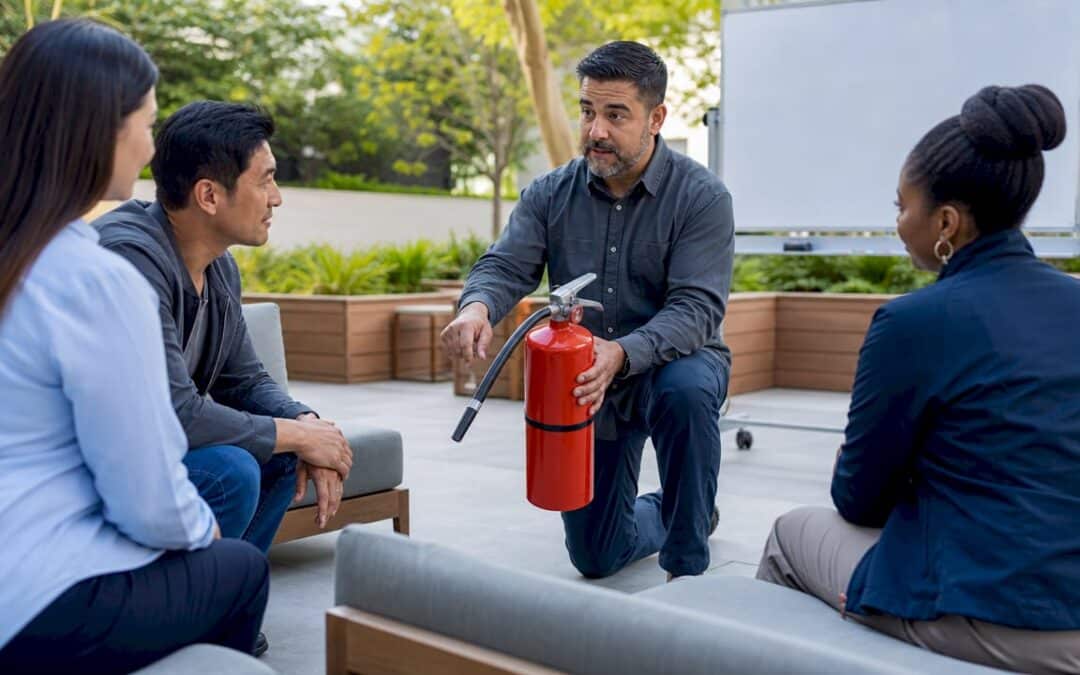
Staff fire safety training is defined as a structured program that teaches employees how to prevent, detect, and respond to workplace fires in compliance with OSHA and NFPA standards. Every business owner and manager in the United States is legally required to implement it. Trained employees who act at the incipient stage cause 97% less damage than untrained staff or those who wait for fire departments. That single statistic reframes how to train staff fire safety from a compliance checkbox into a genuine risk management priority.
How to train staff on fire safety: who needs it and why
Fire safety training is not optional for any workplace. OSHA 29 CFR 1910.157 requires annual general education for all employees with access to fire extinguishers, plus hands-on training for designated fire responders both initially and every year after. Non-compliance carries penalties of up to $16,131 per violation after april 2026. That financial exposure alone makes a structured training program a sound business decision.
The importance of fire safety training goes beyond fines. Over 5,000 worker injuries and 200 deaths occur annually in the United States from workplace fires. A well-trained workforce reduces that risk directly and measurably.
Who exactly needs training
Not every employee needs the same depth of instruction. The key distinction is between general staff and designated fire responders.
- General employees: All staff members who work in areas with fire extinguishers. They need annual education on alarm response, evacuation routes, and when not to fight a fire.
- Designated fire responders: Employees assigned to use extinguishers or assist with evacuation. They require hands-on physical training initially and every year after.
- Fire wardens and floor managers: These roles carry additional responsibilities, including sweeping floors, confirming headcounts, and coordinating with emergency services.
- Receptionists and front-of-house staff: Their focus is on directing visitors and guests to exits, not fire suppression.
- Temporary and contract workers: OSHA mandates training for temporary workers too. Skipping this group is one of the most common compliance gaps managers overlook.
Role-specific training tailored to actual job duties improves memorability and real-world usefulness compared to generic all-staff sessions. A warehouse floor manager and a receptionist face entirely different fire scenarios. Training them identically wastes time and leaves critical gaps.
What are the key components of effective fire safety training?
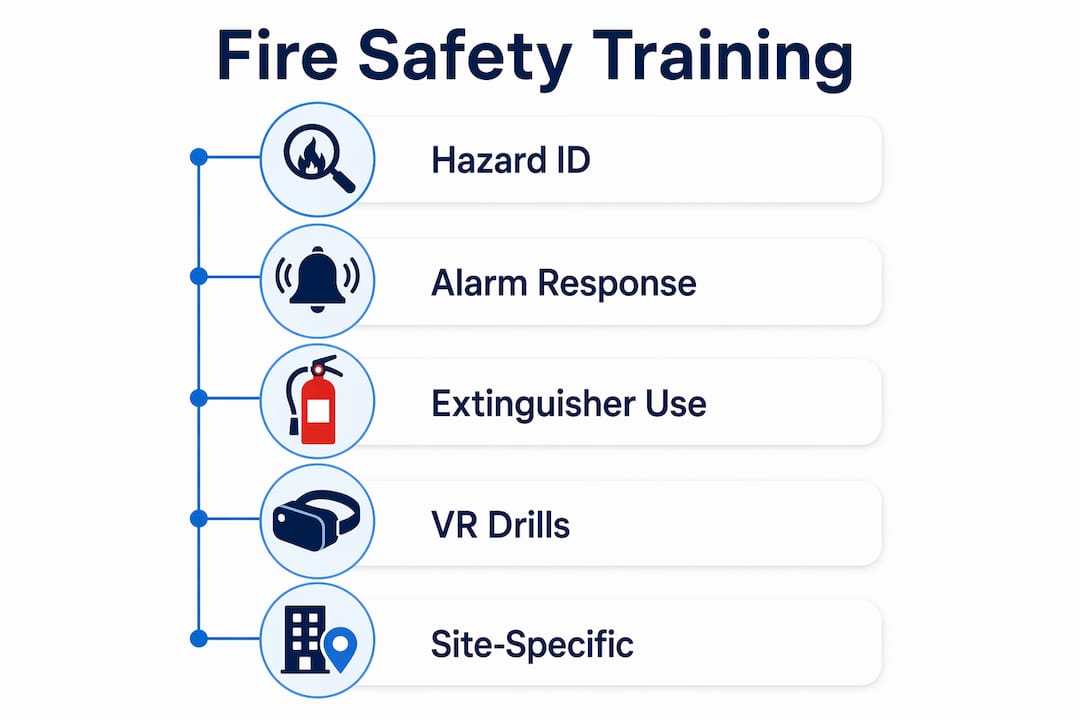
Effective fire safety training covers five core areas: fire prevention, alarm response, evacuation procedures, extinguisher use, and site-specific hazard awareness. Each component builds on the last. Skipping any one of them leaves employees unprepared for the specific moment they need to act.
1. Fire prevention and hazard identification
Start every training cycle with hazard identification. Employees who recognize risks, such as overloaded electrical panels, improperly stored flammables, or blocked exits, prevent fires before they start. Walk staff through your actual facility, not a generic floor plan.
2. Alarm response and evacuation procedures
Employees must know exactly what to do within the first 30 seconds of hearing an alarm. That means knowing the nearest exit, the assembly point, and who to report to. Site-specific evacuation routes and fire alarm locations increase employee engagement and operational usefulness far more than generic advice does.
3. Hands-on fire extinguisher training using the PASS technique
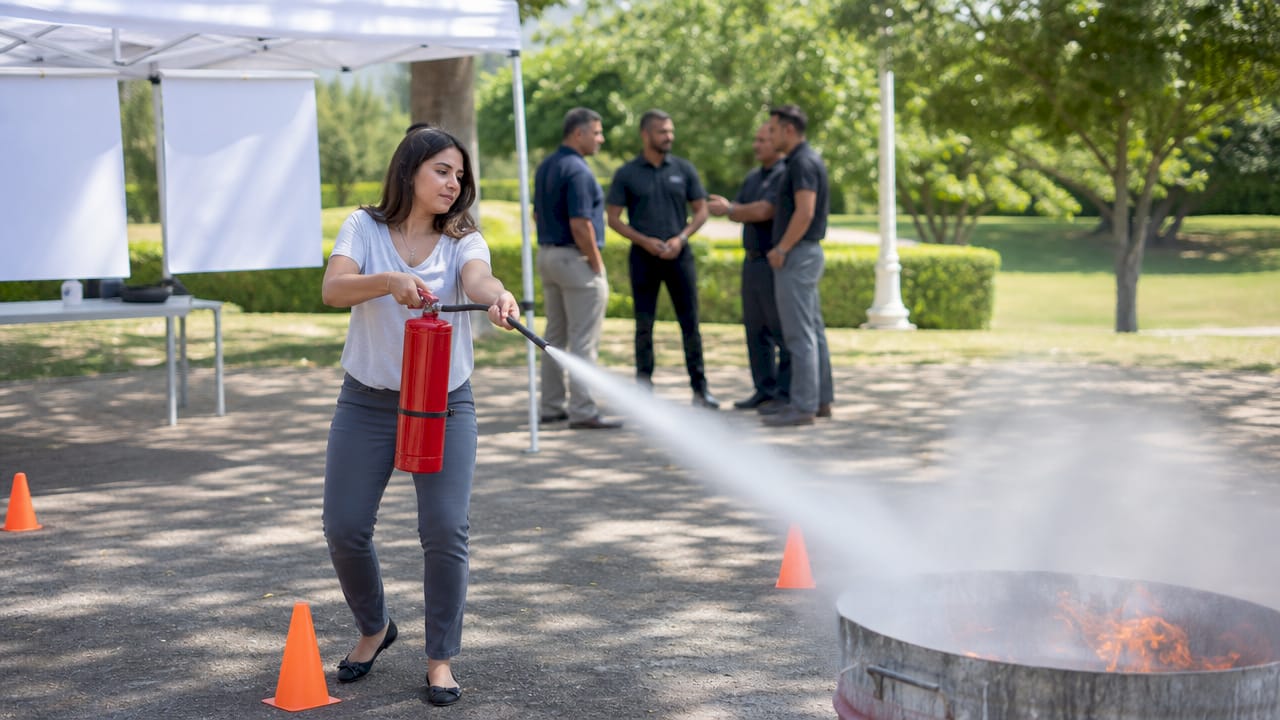
The PASS technique (Pull, Aim, Squeeze, Sweep) is the industry standard for portable extinguisher use. Watching a demonstration does not satisfy OSHA training requirements. OSHA inspectors routinely cite employers for lacking physical competency evidence. Every designated responder must physically practice with a real or simulated extinguisher. Pair this with a review of extinguisher types and uses so staff know which unit to grab for which fire class.
4. VR/AR refreshers combined with live-fire drills
Virtual reality and augmented reality tools work well for periodic refresher training. They let employees practice scenarios without the cost of live exercises. However, hands-on physical practice is mandatory and cannot be fully replaced by virtual methods. Schedule at least one live-fire drill annually to build genuine muscle memory.
5. Site-specific content tied to your actual workplace
Generic corporate training modules fail in real emergencies. Effective trainers discuss workplace-specific risks and often bring instructors with fire service experience for credibility. Map your training content to your building’s actual layout, your specific equipment, and the hazards your industry creates.
Pro Tip: Invite your local fire marshal to participate in at least one annual drill. Their presence adds authority, and they often identify hazards your internal team has stopped noticing.
How often should you schedule and document fire safety training?
Training frequency and documentation are the two areas where most managers fall short during OSHA inspections. Annual refresher training is the baseline requirement. High-risk environments such as chemical storage facilities, commercial kitchens, and industrial plants warrant quarterly refreshers.
The schedule below covers the minimum compliant framework for most workplaces:
| Training Event | Frequency | Who It Applies To |
|---|---|---|
| General fire safety education | Annual | All employees |
| Hands-on extinguisher training | Annual (initial + yearly) | Designated responders |
| Evacuation drills | At least annual | All employees |
| Refresher after operational change | Immediate | Affected staff |
| New hire orientation training | On hire | All new employees |
Operational changes trigger immediate retraining requirements. Annual refreshers alone are insufficient when workplace hazards or layout change. A warehouse reorganization, new machinery installation, or a change in stored materials all mandate retraining before employees return to those areas.
Documentation is not optional. Key records to maintain include:
- Employee names and job titles
- Training dates and content covered
- Instructor credentials
- Attendance sign-in sheets
- Competency assessment results
OSHA inspectors request detailed training records after incidents. Using a digital learning management system (LMS) to track attendance, content, and completion simplifies compliance audits significantly. Cloud-based LMS platforms also flag employees who are overdue for refreshers, which removes the burden of manual tracking from your team.
Pro Tip: Store training records for a minimum of three years. Some state-level regulations require longer retention periods, so check your local requirements in addition to federal OSHA standards.
What are the most common fire safety training mistakes?
The biggest mistake managers make is treating fire safety training as a one-time annual event rather than an ongoing program. The real goal is building muscle memory so employees react instinctively in emergencies. A 45-minute video once a year does not build that.
Overreliance on passive formats
Video-only training feels efficient. It is not compliant for designated responders, and it does not prepare anyone to act under pressure. Passive training formats alone are insufficient. OSHA expects physical demonstration of skills, especially from employees assigned to fight fires.
Using generic training content
Generic all-staff training overlooks critical distinctions in role responsibilities and building-specific safety measures. A module built for a retail store does not address the hazards in a commercial kitchen or a fabrication shop. Customize content to your facility or hire a trainer who will.
Failing to retrain after changes
Managers often complete annual training in january and consider the year done. Then they install new equipment in july and never update the training. Training must evolve with operational changes. New equipment or layout changes mandate immediate retraining for affected staff.
Ignoring documentation gaps
Verbal confirmation that training happened is worthless during an OSHA inspection. Written records, digital or paper, are the only evidence that counts. Assign one person to own training records and audit them quarterly. For Houston-area managers, the fire safety training compliance guide from Reliable-fire-protection covers 2026-specific documentation requirements in detail.
Key takeaways
Effective staff fire safety training requires role-specific content, hands-on physical practice, and documented records updated after every operational change.
| Point | Details |
|---|---|
| Role-specific training works better | Tailor content to each job function rather than running identical sessions for all staff. |
| Hands-on practice is mandatory | OSHA requires physical competency evidence; video-only training does not satisfy this requirement. |
| Retrain after operational changes | New equipment, layout changes, or new hazards trigger an immediate retraining obligation. |
| Document everything digitally | Use an LMS to track attendance and completion; OSHA inspectors will ask for records after incidents. |
| Annual is the minimum, not the goal | High-risk environments need quarterly refreshers, and all workplaces need drills tied to real scenarios. |
Why compliance alone is not enough
I have seen managers run technically compliant fire safety programs that would fail completely in a real emergency. The paperwork was perfect. The drills were scheduled. The OSHA boxes were checked. But when I asked employees what they would actually do if the alarm sounded during a busy shift, the answers were vague and inconsistent.
The problem is that compliance-focused training optimizes for the inspection, not the emergency. A 30-minute annual session covers the legal minimum. It does not build the instinctive, automatic response that saves lives when smoke fills a corridor and people are panicking.
The programs that actually work share three traits. They use instructors with real fire service experience, not just certified trainers reading from a script. They run drills at unexpected times, not pre-announced sessions where everyone knows to walk calmly to the parking lot. And they debrief after every drill, identifying what went wrong and fixing it before the next cycle.
Managers who view fire safety training as an ongoing operational process rather than an annual task see a measurable difference in how their teams respond. That shift in mindset is the single most valuable thing you can take from this article.
— Results
Fire safety solutions from Reliable-fire-protection
Training your staff is one side of workplace fire safety. The other side is making sure your building’s fire protection systems are ready to perform when it matters.

Reliable fire protection serves Houston-area businesses with professionally installed and maintained fire alarm systems, fire extinguishers, suppression systems, and sprinkler installations. Every system is installed to NFPA standards and backed by certified technicians who understand local compliance requirements. Whether you need a new fire alarm for a growing facility or a full inspection of your existing suppression setup, Reliable-fire-protection provides the equipment and expertise that makes your training program complete. Contact Reliable-fire-protection for a free quote tailored to your property and compliance needs.
FAQ
What does OSHA require for fire safety training?
OSHA 29 CFR 1910.157 requires annual general education for all employees with access to fire extinguishers and hands-on training for designated fire responders, both initially and every year after. Non-compliance can result in penalties of up to $16,131 per violation.
How often should fire safety drills be conducted?
Most workplaces must conduct at least one evacuation drill per year, but high-risk environments benefit from quarterly drills. Drills should also be scheduled immediately after significant changes to the building layout or operations.
Can online or video training replace hands-on fire safety training?
No. OSHA requires physical demonstration of skills for designated fire responders, and video-only training does not satisfy that requirement. Virtual tools can supplement refresher training but cannot replace live, hands-on practice.
Do temporary workers need fire safety training?
Yes. OSHA mandates fire safety training for temporary and contract workers, not just permanent employees. Failing to train this group is one of the most common compliance gaps found during inspections.
What records do I need to keep for fire safety training?
Maintain records of employee names, training dates, content covered, instructor credentials, and attendance sign-in sheets. OSHA inspectors request these records after incidents, and digital LMS platforms make retrieval straightforward.