
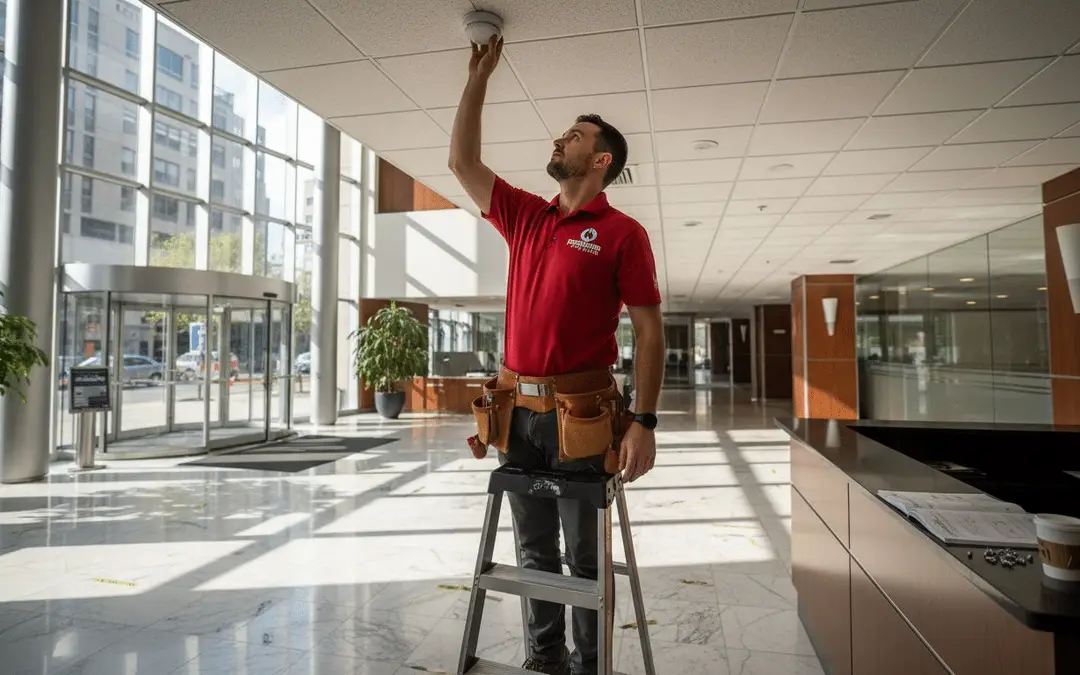
Protecting Houston properties from fire risk is more than just a box to check for local managers—it is a legal responsibility and a matter of life safety. Complex city codes, unique building layouts, and changing fire hazards mean that choosing the right fire alarm system is rarely straightforward. This guide walks Houston property managers through each step, from assessing building-specific fire risks to understanding local code and ensuring their fire protection measures fully meet compliance requirements.
Table of Contents
- Step 1: Assess Your Building’s Fire Risks
- Step 2: Determine Local Code and Regulatory Needs
- Step 3: Evaluate System Features and Technical Options
- Step 4: Select a Certified Installer and Service Partner
- Step 5: Verify Installation, Testing, and Compliance
Quick Summary
| Key Point | Explanation |
|---|---|
| 1. Assess unique fire risks | Identify your property’s specific hazards to tailor the fire alarm system effectively and increase safety. |
| 2. Review local regulations | Understand Houston’s fire safety codes to ensure compliance and avoid potential legal issues related to fire alarm systems. |
| 3. Evaluate fire alarm features | Compare different system technologies to choose an alarm that meets your property’s specific protection needs and operational capabilities. |
| 4. Choose a qualified installer | Verify the credentials and experience of potential fire alarm installers to ensure professional and compliant installation. |
| 5. Conduct thorough testing and verification | Regularly test and document your fire alarm system to maintain compliance with regulations and ensure its effectiveness as a safety measure. |
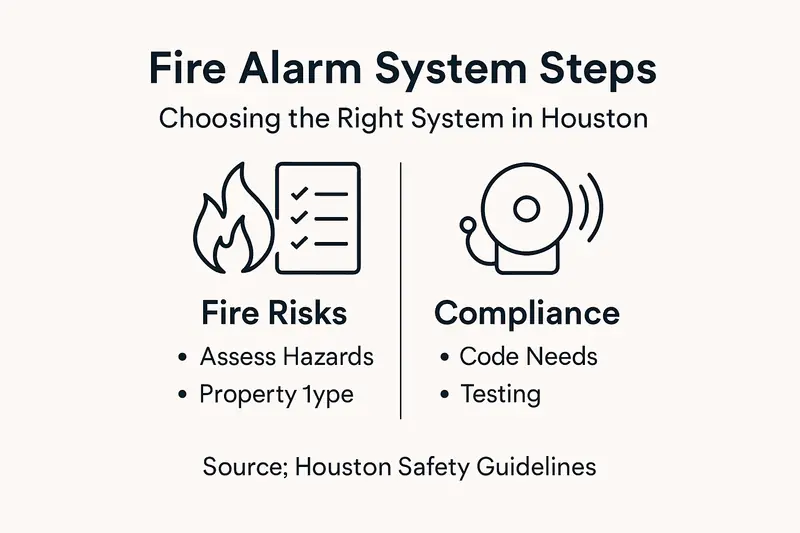
Step 1: Assess Your Building’s Fire Risks
Understanding your Houston property’s unique fire risks is the critical first step in selecting an appropriate fire alarm system. Fire safety risk assessments help property managers identify potential hazards and develop targeted protection strategies.
Effective fire risk assessment involves a comprehensive evaluation of multiple building characteristics. You’ll want to systematically examine key factors that could compromise safety:
- Building occupancy type (commercial, residential, industrial)
- Total square footage
- Number of floors and exit routes
- Electrical system complexity
- Presence of flammable materials
- Current fire suppression infrastructure
Professional fire safety experts recommend conducting a detailed walkthrough to document potential risk zones. This means carefully inspecting areas like electrical panels, storage spaces, and mechanical rooms where fire hazards might concentrate. Pay special attention to older buildings, which may have outdated wiring or insufficient safety systems.
Fire risks are not one-size-fits-all. Each Houston property requires a customized safety approach.
Documenting these risk factors provides a solid foundation for selecting the most appropriate fire alarm system. The goal is creating a comprehensive safety strategy that addresses your specific property’s unique characteristics and potential vulnerabilities.
Pro tip: Consider hiring a certified fire protection specialist to conduct a professional risk assessment for the most accurate and comprehensive evaluation.
Step 2: Determine Local Code and Regulatory Needs
Navigating Houston’s fire alarm system requirements demands a thorough understanding of local regulations and safety standards. Houston Construction Code provides critical guidelines that property managers must carefully review to ensure full compliance.
Identifying the specific regulatory requirements involves several key considerations:
- Local fire safety ordinances specific to Houston
- Building occupancy classifications
- Required documentation and permitting processes
- Minimum fire alarm system performance standards
- Inspection and maintenance protocols
- Specific electrical and installation codes
Property managers should focus on obtaining the most recent version of the city’s fire protection codes. This typically involves consulting directly with the Houston Permitting Center or downloading the official city code documentation. Comprehensive code review is essential to understanding the precise requirements for your specific property type.
Fire code compliance isn’t optional. It’s a critical safety requirement for Houston properties.
Each building type – whether commercial, industrial, or multi-unit residential – has unique regulatory requirements. Some properties might need more advanced detection systems, while others require specific alarm configurations based on their usage and potential fire risks.
Pro tip: Consider scheduling a consultation with a local fire code compliance expert who can provide detailed guidance specific to your Houston property’s classification.
Step 3: Evaluate System Features and Technical Options
Selecting the right fire alarm system requires a deep understanding of available technical components and their specific capabilities. Fire alarm system components play a crucial role in ensuring comprehensive property protection and early detection.
When evaluating technical options, property managers should consider multiple critical system features:
- Detection technology types (smoke, heat, multi-sensor)
- Notification methods (audible alarms, visual signals)
- Control unit capabilities
- Power supply redundancy
- Communication and monitoring protocols
- Integration with existing building systems
Modern fire alarm systems offer two primary configuration approaches: conventional and addressable systems. Conventional systems divide the building into zones, while addressable systems provide precise location identification for each detection device. This granular detail can significantly impact emergency response times and overall safety effectiveness.
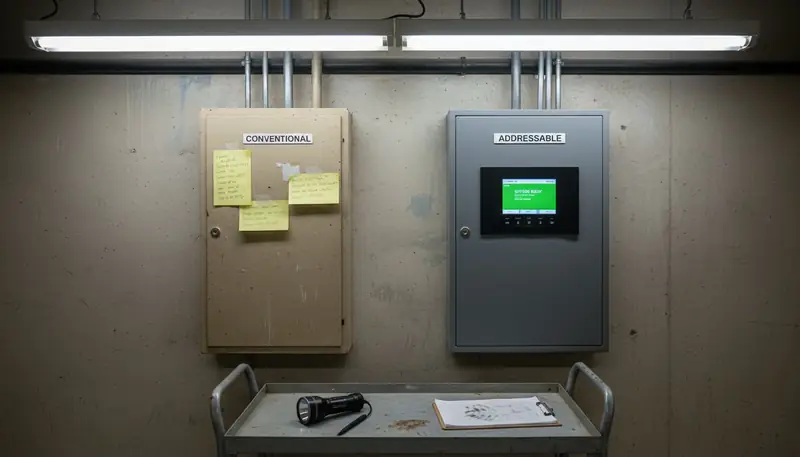
Here’s a quick comparison of fire alarm system configurations and their benefits:
| System Configuration | Identification Accuracy | Scalability | Typical Use Case |
|---|---|---|---|
| Conventional | Zone-level only | Limited | Small buildings |
| Addressable | Device-level precision | High | Large properties |
Not all fire alarm systems are created equal. Choose technology that matches your specific property requirements.
Technical evaluation should also include assessing secondary power supplies, compatibility with local emergency services, and potential future scalability. Consider systems that offer remote monitoring capabilities, allowing real-time tracking and rapid response to potential fire risks.
Pro tip: Request detailed technical demonstrations from multiple vendors to compare system performance and understand nuanced differences in feature sets.
Step 4: Select a Certified Installer and Service Partner
Choosing the right fire alarm system installer goes beyond technical capabilities – it requires verifying professional credentials and regulatory compliance. Fire alarm installation licenses are critical indicators of a technician’s qualifications and expertise.
When evaluating potential installation partners, property managers should focus on several key criteria:
- Current Texas state fire alarm technician licensing
- Documented professional certifications
- Proven experience with similar property types
- References from local Houston businesses
- Insurance and bonding status
- Comprehensive service and maintenance capabilities
Professional verification involves more than checking surface-level credentials. Sophisticated property managers will conduct thorough background checks, including confirming license status through official state databases and requesting comprehensive documentation of past installation projects.
For reference, here are key certifications and credentials to look for in a fire alarm installer:
| Credential Type | What It Means | Business Impact |
|---|---|---|
| State License | Legal operation in Texas | Ensures regulatory compliance |
| Professional Certification | Specialized training and skills | Higher installation quality |
| Insurance/Bonding | Financial protection | Reduces project liability |
Certification is not just a piece of paper. It represents a commitment to professional standards and safety.
Beyond initial installation, consider the long-term service relationship. A reputable fire alarm installer should offer ongoing maintenance, emergency support, and system upgrades. Look for partners who demonstrate technical expertise and a proactive approach to fire safety management.
Pro tip: Request proof of recent continuing education and request to speak with previous clients to validate the installer’s actual field performance.
Step 5: Verify Installation, Testing, and Compliance
Ensuring your fire alarm system meets all regulatory requirements involves a comprehensive verification process that goes beyond initial installation. Inspection and testing procedures are critical for maintaining safety and regulatory compliance.
Property managers should focus on the following key verification steps:
- Comprehensive system functionality testing
- Documentation of installation specifications
- Compliance with local Houston building codes
- Formal certification and permitting
- Detailed performance documentation
- Independent third-party verification
Technical verification requires meticulous attention to detail. This includes reviewing installation logs, conducting systematic performance tests, and ensuring all components meet or exceed manufacturer and regulatory specifications. Property managers should request detailed documentation demonstrating each system’s compliance with local safety standards.
A properly verified fire alarm system is your first line of defense against potential catastrophic losses.
The verification process should include both initial installation inspection and ongoing maintenance protocols. This means scheduling regular professional assessments, maintaining comprehensive maintenance records, and proactively addressing any potential system vulnerabilities.
Pro tip: Maintain a dedicated compliance file with all inspection reports, test results, and certification documents to streamline future audits and insurance reviews.
Secure Your Houston Property with Expert Fire Alarm Solutions
Choosing the right fire alarm system for your Houston property means addressing all the challenges of fire risk assessment, local code compliance, and advanced technical features. If you want peace of mind knowing your building meets every safety standard while benefiting from cutting-edge detection technology and professional installation, Reliable Fire Protection is your trusted local partner. We specialize in tailored fire protection strategies that consider your property’s unique needs and regulatory requirements.
Don’t leave your fire safety to chance. Visit our Fire Protection – Reliable Fire Protection page to explore our comprehensive services and discover how our certified experts ensure flawless installation, regular testing, and ongoing maintenance. Take the next step toward securing your property now by contacting us at Reliable Fire Protection for a free consultation and quote. Your safety cannot wait.
Frequently Asked Questions
What are the first steps in assessing fire risks for my property in Houston?
Understanding your property’s unique fire risks is essential. Begin by conducting a fire safety risk assessment that evaluates factors like building occupancy, square footage, and the presence of flammable materials. This initial assessment will guide you in selecting a suitable fire alarm system.
How can I determine the local codes and regulations for fire alarm systems in Houston?
Reviewing the Houston Construction Code is crucial to ensure compliance with fire alarm system requirements. Consult the Houston Permitting Center for the latest regulations and focus on the specific documentation and performance standards required for your property’s classification.
What system features should I consider when choosing a fire alarm system?
Focus on critical features such as detection technology, notification methods, and control unit capabilities. Evaluate whether you need a conventional or addressable system based on your property’s size and layout to enhance safety and emergency response.
How do I choose a qualified installer for my fire alarm system?
Select an installer by verifying their Texas state fire alarm technician licensing, certifications, and experience with similar property types. Request references from local businesses and ensure they offer comprehensive service and maintenance capabilities.
What steps should I take to verify the installation and compliance of my fire alarm system?
Conduct comprehensive system functionality testing and ensure documentation reflects installation specifications. Schedule regular inspections and maintain a compliance file with all relevant reports to facilitate audits and demonstrate adherence to safety standards.
How often should I conduct maintenance on my fire alarm system?
Regular maintenance for your fire alarm system is vital to ensure ongoing compliance and functionality. Aim for professional inspections at least once a year, with quarterly safety checks to identify and address potential issues promptly.