
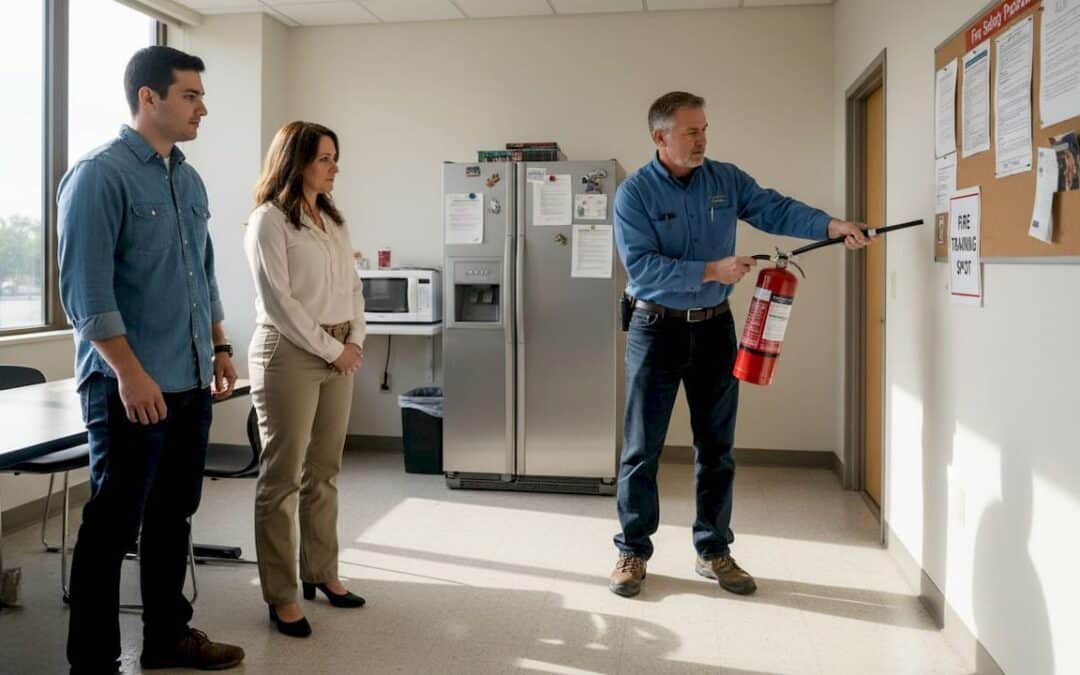
US nonresidential fires caused $3.16 billion in property damage in a single year, along with 130 deaths and over 1,200 injuries. For Houston business owners and property managers, those numbers translate directly into legal exposure, insurance risk, and real human cost. Yet fire safety training is one of the most overlooked line items in a property management budget. This guide breaks down what Houston law actually requires, what effective training looks like in practice, and why the best operators treat training as a competitive advantage rather than a checkbox.
Table of Contents
- Understanding Houston fire safety training laws
- How fire safety training lowers risk and saves lives
- What effective fire safety training looks like
- Recordkeeping, inspection, and audit readiness
- Why fire safety training is worth more than compliance
- Take the next step with proven Houston fire safety solutions
- Frequently asked questions
Key Takeaways
| Point | Details |
|---|---|
| Legal training is mandatory | Houston businesses face steep fines without annual and site-specific fire safety training. |
| Training prevents disasters | Quality training can cut fire incidents by up to 50% and greatly reduce injuries and fatalities. |
| Hands-on wins over passive | Interactive drills yield much better results than passive programs like online videos. |
| Good records avoid penalties | Keeping thorough, organized training records protects you during inspections and claims. |
| Exceed requirements for real safety | Going beyond compliance offers significant safety, culture, and insurance benefits. |
Understanding Houston fire safety training laws
Fire safety training is not optional in Texas. OSHA 29 CFR 1910.157 legally requires businesses to train any employee expected to use a portable fire extinguisher. That same standard ties into OSHA 29 CFR 1910.38 and .39, which mandate written emergency action plans and fire prevention plans for most commercial workplaces. If you manage a property with employees or tenants, these rules apply to you.
Houston layers its own requirements on top of federal standards. The Houston training mandates under the Houston Fire Code and Texas OSHA require quarterly drills for high-rise buildings, annual fire safety instruction for multi-family properties with more than 16 units, and training records kept for a minimum of three years. The Houston Fire Marshal’s office conducts both scheduled and surprise inspections, and they check documentation, not just equipment.
Penalties for non-compliance are steep. Violations can run from $500 to over $2,500 per citation, and repeat offenses escalate quickly. Beyond fines, a gap in training records can void an insurance claim after an incident, which is a financial consequence that dwarfs the cost of the training itself.
Here is a quick reference for required training frequency by property type:
| Property type | Required training frequency | Record retention |
|---|---|---|
| High-rise commercial | Quarterly drills | 3 years |
| Multi-family (>16 units) | Annual instruction | 3 years |
| General commercial workplace | Annual or upon hire | 3 years |
| Industrial/hazardous occupancy | Semi-annual or more | 3 years |
Key compliance obligations to keep on your radar:
- Written emergency action plan posted and accessible to all occupants
- Designated fire safety coordinators trained and documented
- Extinguisher training for any staff member assigned to use one
- Evacuation route maps updated after any floor plan change
- Coordination with the Houston Fire Marshal for high-occupancy properties
“Non-compliance is not just a fine risk. It is a liability that follows you into every insurance claim, every lease renewal, and every incident investigation.”
Review the Houston fire safety regulations page for a full breakdown of local code requirements by occupancy type.
How fire safety training lowers risk and saves lives
Compliance gets you past an inspection. Good training actually keeps people safe, and the data backs that up clearly. Training reduces fire incidents by up to 50% in well-documented programs. The HomeSafe initiative, a community-based fire safety program, recorded an 80% reduction in fire rates, a 60% increase in functioning alarms, and a 40% drop in casualties among participating properties.

Those are not marginal improvements. They represent the difference between a contained incident and a catastrophic one.
Initiative effectiveness research consistently shows that properties with regular, structured training programs experience fewer injuries, faster evacuation times, and lower property damage per incident. The mechanism is straightforward: trained occupants make faster decisions, use equipment correctly, and avoid the panic-driven behaviors that turn small fires into large ones.
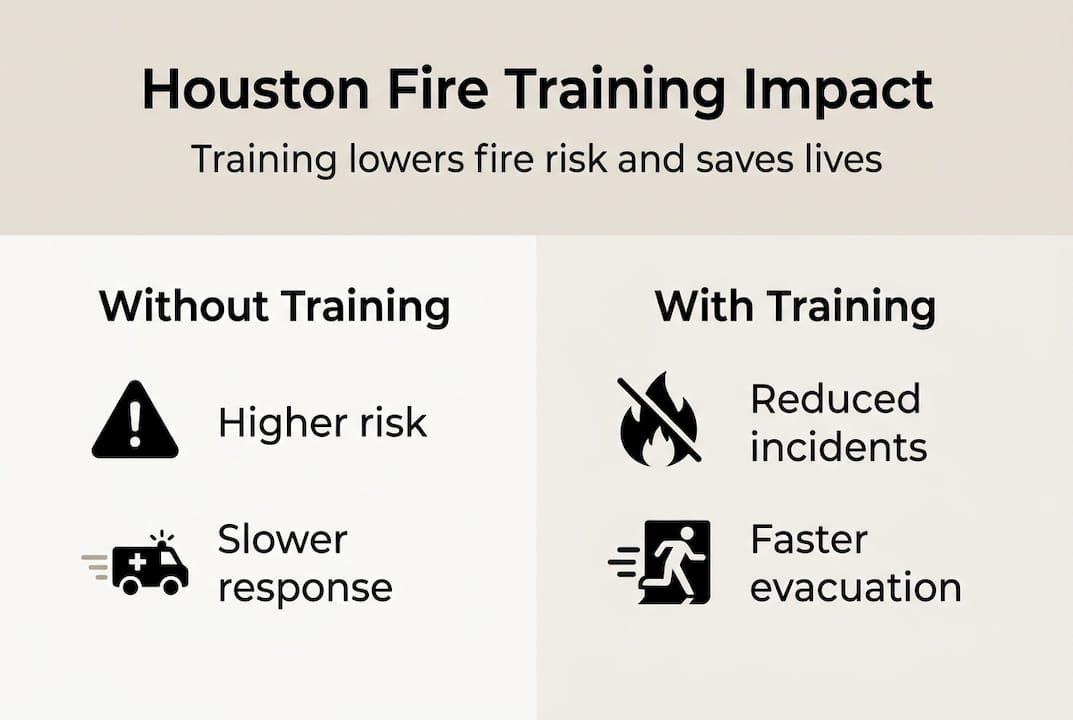
Here is a comparison of outcomes with and without structured training:
| Outcome metric | Without training | With structured training |
|---|---|---|
| Incident rate reduction | Baseline | Up to 50% lower |
| Casualty rate | Baseline | Up to 40% lower |
| Functioning alarm rate | Variable | Up to 60% higher |
| Evacuation time | Slower, disorganized | Faster, coordinated |
Hands-on training consistently outperforms passive methods. When occupants physically practice using an extinguisher or walk an evacuation route, muscle memory forms. That memory activates under stress. Reading a pamphlet does not produce the same result.
Buildings that pair strong training with up-to-date annual fire safety inspections see the best outcomes because both the people and the equipment are ready.
Pro Tip: A single annual training session is the legal floor, not the ceiling. Schedule brief quarterly refreshers of 15 to 20 minutes to keep procedures fresh without disrupting operations. Pair them with equipment walkthroughs to reinforce both knowledge and habit.
For a full list of steps you can take right now, the compliance tips resource covers practical actions by building type.
What effective fire safety training looks like
Not all training programs deliver the same results. Passive methods like video modules, door hangers, and printed guides have measurable limitations. Research shows that door hangers increased risk by 12% in some studies, likely because they create a false sense of preparedness without building real skills. The refresher absence gap in effectiveness sits at 43.5%, meaning properties that skip refreshers lose nearly half the benefit of their initial training.
Effective training is site-specific, interactive, and documented. Here is a step-by-step approach to building a program that actually works:
- Conduct a site assessment. Walk every floor, identify hazards, map exits, and note equipment locations before designing any drill.
- Assign roles. Designate floor wardens, evacuation coordinators, and a primary contact for the fire marshal. Put names in writing.
- Run live drills. Practice full evacuations, not just announcements. Time them. Debrief afterward with specific feedback.
- Train on equipment. Every staff member who might use an extinguisher should physically operate one in a controlled setting.
- Schedule refreshers. Build quarterly or semi-annual reviews into your property calendar. Treat them like lease renewals: non-negotiable.
- Document everything. Attendance sheets, drill reports, and equipment checks all go into the compliance file.
- Update materials after changes. New tenants, renovations, or equipment upgrades require updated training content.
Common pitfalls to avoid:
- Using the same generic slide deck for every building type
- Skipping drills because the building “has not had an incident”
- Failing to train new staff within their first 30 days
- Relying on digital signage alone without live practice
Pro Tip: Customize your drill scenarios to your actual building. A warehouse has different risks than a mid-rise office. Generic drills build generic habits, and generic habits fail in real emergencies.
Use the fire prevention checklist to audit your current program, and review fire safety systems to make sure your equipment matches your training plan.
Recordkeeping, inspection, and audit readiness
You can run the best training program in Houston and still face serious consequences if you cannot prove it happened. Documentation is not bureaucratic overhead. It is your legal shield during an audit, a claim, or a lawsuit.
The standard retention period for training documentation is three years. That means every drill report, attendance log, and equipment inspection record needs to be stored and retrievable. High-occupancy properties face stricter scrutiny, and the fire marshal will ask for records going back multiple cycles.
Must-have records for every audit:
- Signed attendance sheets for every training session
- Drill completion reports with dates, times, and participant counts
- Equipment inspection logs tied to each training event
- Written emergency action plan with revision dates
- Certificates or credentials for any designated fire safety coordinator
- Correspondence with the Houston Fire Marshal’s office
When a surprise inspection happens, and in Houston it will, you want a single organized file that answers every question before it is asked. Inspectors are not looking to fail you. They are looking for evidence that you take safety seriously. A clean, complete record set communicates exactly that.
Pro Tip: Move your training logs to a cloud-based system. Digital records are harder to lose, easier to share with inspectors on the spot, and simple to audit internally before the fire marshal arrives.
For a full picture of what Houston inspectors check, review the testing requirements and best practices resources to close any gaps before your next inspection cycle.
Why fire safety training is worth more than compliance
Here is something most compliance guides will not tell you: the property managers who invest in genuine fire safety training are not doing it to avoid fines. They are doing it because it changes the culture of a building.
When tenants and staff see regular, serious drills, they trust the property. That trust shows up in lease renewals, in lower turnover, and in the kind of word-of-mouth reputation that no marketing budget can buy. Insurance carriers notice it too. Properties with documented training histories often qualify for better rates and face fewer disputes after claims.
The checklist approach, doing just enough to pass an inspection, creates a dangerous illusion of safety. It satisfies the fire marshal but leaves occupants unprepared for the moment when preparation actually matters. We have seen it firsthand in Houston: buildings with perfect paperwork and undertrained occupants make avoidable mistakes during real incidents.
The proven best practices that separate good operators from great ones are not complicated. They just require consistency and genuine commitment rather than minimum effort. Training is where that commitment becomes visible.
Take the next step with proven Houston fire safety solutions
Fire safety training is one of the highest-return investments a Houston property manager can make, and you do not have to build a program from scratch. Reliable Fire Protection works with commercial and residential property owners across Houston to design training programs, conduct inspections, and keep compliance records current.

Start with the Houston training services overview to see what a structured program looks like for your property type. Use the fire extinguisher checklist to audit your current equipment readiness, and browse fire safety products to fill any gaps. Our team is ready to help you move from compliance to genuine protection.
Frequently asked questions
What are the legal fire safety training requirements for Houston businesses?
Houston businesses must follow OSHA 29 CFR 1910.157 and Houston Fire Code rules, including annual training for most commercial properties and recordkeeping for at least three years. Penalties for violations range from $500 to over $2,500 per citation.
How often do fire safety drills and training need to happen in Houston?
High-rise properties require quarterly drills; multi-family buildings with more than 16 units need annual instruction, per Houston Fire Code. General commercial workplaces must train employees at least annually or upon hire.
Why is hands-on fire safety training more effective than online modules?
Hands-on training builds muscle memory and faster decision-making under stress, while passive methods show a 43.5% effectiveness gap compared to active, interactive programs. Real practice produces real preparedness.
What documents should I keep for fire safety training compliance?
Maintain all training records for three years, including attendance logs, drill reports, equipment inspection records, and your written emergency action plan. These are the first documents a Houston fire marshal will request during an audit.