TL;DR:
- Properly maintained fire systems reduce death risk by up to 99 percent and property damage by 90 percent.
- Delaying repairs can lead to legal, insurance, safety, and property loss consequences.
- Consistent management and quick action are key to ensuring fire safety and compliance.
Properly maintained fire systems reduce death risk by up to 99% and cut property damage by up to 90%. That’s not a minor improvement. That’s the difference between a close call and a catastrophe. Yet many Houston property owners and managers treat fire system repairs as something to schedule “when things slow down.” This guide breaks down exactly why that mindset is dangerous, what the real-world consequences look like locally, and what practical steps you can take right now to protect your tenants, your building, and your bottom line.
Table of Contents
- Why timely fire system repairs are critical
- The hidden dangers of delay: Real-world risks in Houston
- Compliance and insurance: Timeliness matters more than ever
- Best practices for Houston property owners and managers
- The real reason fire systems fail isn’t what you think
- Connect with Houston’s fire system repair specialists
- Frequently asked questions
Key Takeaways
| Point | Details |
|---|---|
| Immediate repairs save lives | Prompt action reduces fire deaths by up to 99% and minimizes property loss. |
| Delays increase legal and financial risk | Postponed repairs can result in code violations and denied insurance claims. |
| Management is key to protection | A strong maintenance program matters more than equipment age in preventing failures. |
| Houston-specific compliance matters | Staying on top of local rules ensures safety and shields your investment. |
Why timely fire system repairs are critical
The numbers are hard to argue with. Active, well-maintained fire systems reduce fatalities by 99%, property damage by 90%, and commercial property loss by 71%. Those aren’t projections. They reflect real outcomes across thousands of fire incidents where maintained systems made the difference.
“Properly maintained fire systems reduce death risk by up to 99% and property damage by up to 90%.” The math is simple: repair delays cost lives.
For Houston property owners, the stakes are especially high. The city’s building stock ranges from aging warehouses in the East End to newer mixed-use developments in Midtown, and each property type carries its own fire risk profile. When a sprinkler head corrodes, a control panel malfunctions, or a valve gets stuck closed, the window for a safe response shrinks fast.
Delaying repairs doesn’t just put lives at risk. It creates a chain of financial and legal consequences that can follow a property for years. Understanding maintenance for equipment protection is the first step toward avoiding those outcomes.
Here’s what’s actually at stake when you push repairs down the priority list:
- Tenant safety: A failed system during a fire means people can’t rely on the protection they assume is there.
- Legal liability: If an injury or fatality occurs and records show deferred repairs, you face serious exposure in civil court.
- Insurance complications: Carriers can deny claims when systems weren’t maintained or repaired per code.
- Code violations: Houston Fire Department inspectors can issue notices of violation, fines, or even occupancy restrictions.
- Property loss: Without suppression, a small kitchen fire can consume an entire floor before the fire department arrives.
The importance of fire alarms extends beyond alerting occupants. They’re part of an interconnected system where every component depends on the others working correctly. One weak link is all it takes.
The hidden dangers of delay: Real-world risks in Houston
Most property owners picture fire system failure as a dramatic equipment breakdown. The reality is far more mundane and far more preventable. According to fire safety industry research, maintenance gaps and human error cause the vast majority of fire protection failures, not defective parts.
In Houston, common failure scenarios include closed sprinkler valves that were never reopened after maintenance, smoke detectors that were disabled during a renovation and never turned back on, and inspection records that lapsed because a property changed management. None of these require a manufacturing defect. They just require someone not following through.
| Type of delay | Potential consequence |
|---|---|
| Skipped annual inspection | Undetected system faults, code violation |
| Deferred sprinkler head replacement | System fails to activate during a fire |
| Ignored alarm panel fault codes | False sense of security, delayed response |
| Closed control valve not reopened | Total suppression failure |
| Missed detector battery replacement | No warning during nighttime fire |
The table above shows why Houston fire system maintenance isn’t optional. Each delay type maps directly to a real outcome that could have been avoided with a simple repair or inspection.
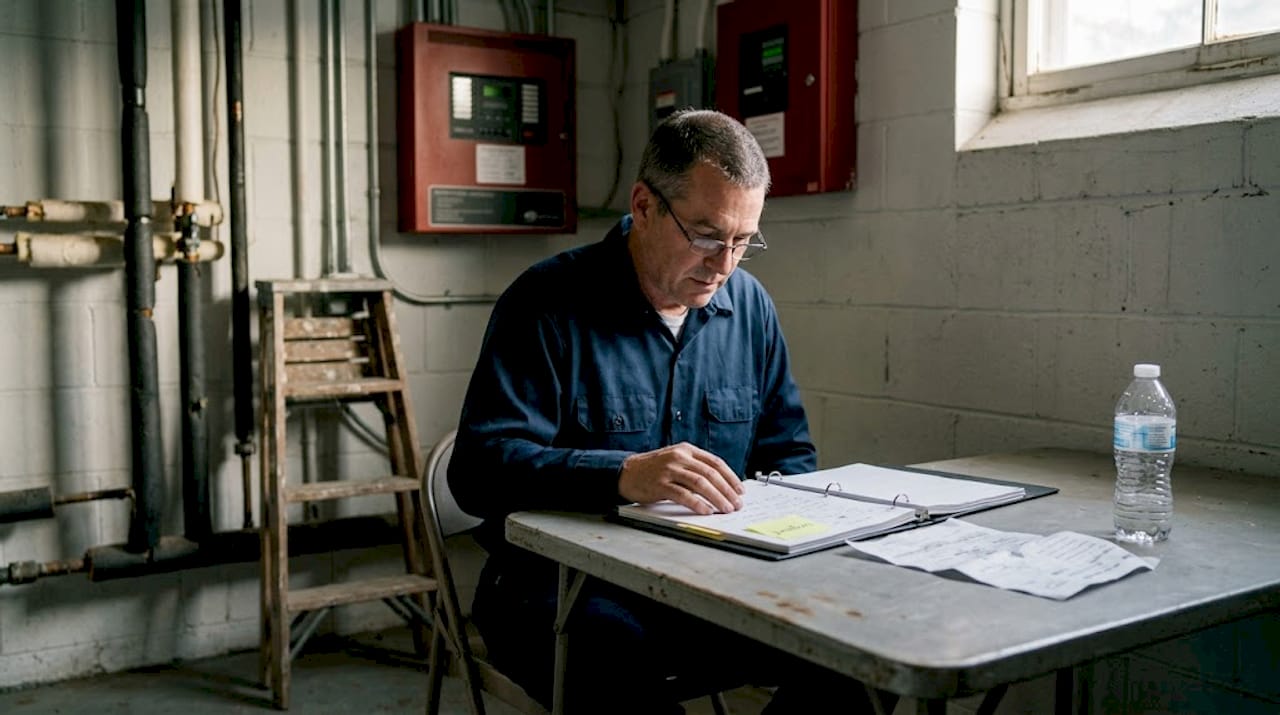
Pro Tip: Keep a written or digital log of every issue you notice, no matter how small. A flickering panel light or a sprinkler head with visible corrosion should be documented with the date and reported to a certified technician immediately. That log also protects you legally if a dispute arises later.
If you suspect any fire system issue at your property, take these steps right away:
- Notify your fire protection contractor and request an emergency inspection.
- Document the issue with photos and written notes, including the time and location.
- Check whether the affected system zone needs to be placed on a fire watch per Houston Fire Code.
- Review your last annual system testing records to identify any prior warnings.
- Notify your insurance carrier if the issue could affect coverage.
Waiting even 24 to 48 hours to address a known fault can shift a manageable repair into a compliance emergency.
Compliance and insurance: Timeliness matters more than ever
Beyond technical failures, the administrative costs of delay are real. Houston follows the International Fire Code with local amendments, and the Houston Fire Department enforces regular inspections for commercial properties. When a violation is found and repairs aren’t completed within the required timeframe, fines escalate and reinspection fees add up fast.
Proper maintenance directly impacts insurance claims and legal compliance. Insurance carriers increasingly require documented proof of regular inspections and prompt repairs. If a fire occurs and your records show a known deficiency that wasn’t addressed, your carrier has grounds to reduce or deny the claim entirely.
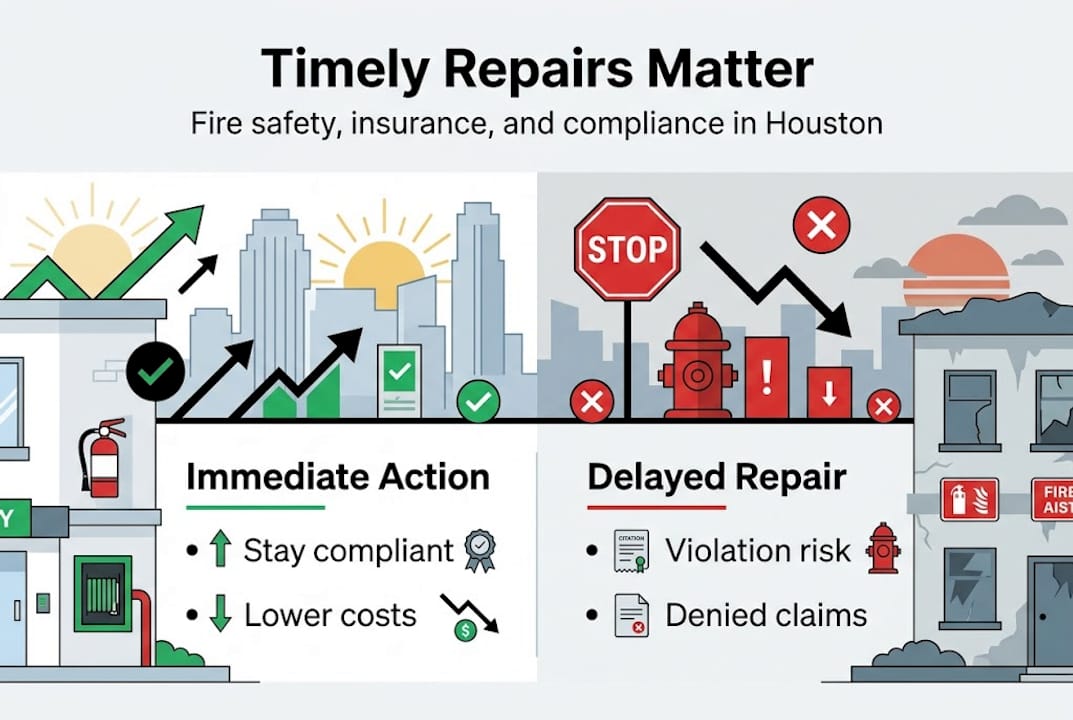
| Scenario | Immediate repair | Delayed repair |
|---|---|---|
| Code compliance | Maintained | Violation risk |
| Insurance claim outcome | Likely approved | Potential denial |
| Reinspection fees | Minimal | Accumulating |
| Legal liability | Reduced | Elevated |
| Tenant trust | Preserved | Damaged |
The comparison is stark. Acting quickly doesn’t just protect people. It protects your financial position and your reputation as a property owner or manager.
There’s also a direct connection between a well-maintained system and lowering insurance premiums. Carriers reward properties with documented maintenance histories because they represent lower risk. That’s money back in your pocket every year.
Here are three steps to protect your compliance and insurance standing after a repair need is identified:
- Document immediately. Record the date, nature of the issue, and who identified it. This creates a paper trail showing you acted in good faith.
- Contact a licensed fire protection contractor within 24 hours. Houston code often requires fire watch procedures if a system is impaired. Knowing this ahead of time prevents surprises.
- Request a written repair report. After the work is done, get documentation that includes the technician’s license number, work performed, and system status. File it with your inspection records.
These three steps take less than an hour to initiate and can save you from a five-figure insurance dispute or code enforcement action.
Best practices for Houston property owners and managers
Now that you understand the risks and obligations, let’s focus on proven solutions for staying safer. The goal isn’t to make fire system management complicated. It’s to make it consistent.
Consistent maintenance programs are the single most effective way to prevent fire protection failures. That means building a routine, not just reacting to problems.
Follow this checklist when a repair need is identified:
- Log the issue immediately with date, location, and description.
- Determine whether the system is impaired and whether fire watch is required.
- Contact your licensed contractor and schedule the repair.
- Notify your insurance carrier if coverage may be affected.
- Confirm the repair in writing and update your maintenance records.
- Schedule a follow-up inspection to verify the fix held.
For ongoing protection, these fire alarm maintenance tips apply across most Houston property types:
- Test smoke and heat detectors quarterly.
- Inspect sprinkler heads visually every month for corrosion, paint, or physical damage.
- Verify all control valves are in the open position after any maintenance work.
- Keep a 12-month inspection calendar posted in your maintenance office.
- Train staff and tenants to report any unusual alarm sounds, panel lights, or visible system damage.
Pro Tip: Build a relationship with a local, certified fire protection contractor before you need one urgently. Having a trusted contact for Houston fire alarm repairs means faster response times and a technician who already knows your system’s history.
Empowering your staff and tenants to spot problems early is one of the most underused tools in fire safety. A maintenance worker who knows what a corroded sprinkler head looks like, or a tenant who reports a chirping detector, can trigger a repair before it becomes a failure.
The real reason fire systems fail isn’t what you think
Here’s the uncomfortable truth most fire safety articles skip: the equipment almost never fails on its own. As the industry puts it, sprinkler systems rarely fail from mechanical issues. The process breaks down from poor management.
We’ve seen this pattern repeatedly. A property changes ownership. The new manager doesn’t know the inspection schedule. A year passes. Then two. The system looks fine from the outside, but nobody has tested it. When a fire starts, the closed valve from last year’s plumbing work is still closed.
The fix isn’t a better sprinkler head. It’s a better handoff process. It’s a log that travels with the building, not the manager. It’s a culture where every person on site understands that a fault code on the panel is never “probably nothing.”
Building that culture takes intentional effort. It means making fire system program management part of your standard operating procedures, not an afterthought. One-off repairs matter, but they only work inside a system that catches the next problem before it becomes a crisis.
Connect with Houston’s fire system repair specialists
Knowing what to do is only half the equation. Having the right team to do it is the other half. At Reliable Fire Protection, we work with Houston property owners and managers every day to keep systems compliant, functional, and ready when it counts.
Whether you want to understand how fire alarm systems work or need fast service through our Houston alarm repair services, we’re ready to help. Our team also handles sprinkler maintenance services for properties of all sizes across Houston. Reach out today for a free quote and let’s make sure your fire protection program is built to protect, not just to pass inspection.
Frequently asked questions
How quickly should fire system repairs be completed after a problem is found?
Repairs should be initiated immediately because even short delays raise the risk of noncompliance and greater damage if a fire occurs. Delayed repairs significantly increase risk to both occupants and property.
What are the consequences for delaying fire system repairs in Houston?
Delaying repairs can lead to city code violations, insurance claim denials, and a much higher risk of injury or total property loss. Legal, insurance, and safety consequences all follow from inaction.
Are equipment defects or maintenance program errors more likely to cause fire system failures?
Most failures trace back to missed inspections or management errors, not faulty hardware. Program and human error cause the majority of real-world fire protection failures.
How do timely repairs affect insurance coverage?
Timely repairs keep your system compliant and give your insurance carrier documentation that you acted responsibly, which helps ensure claims are accepted after a fire event. Proper maintenance is crucial for maintaining valid coverage.