
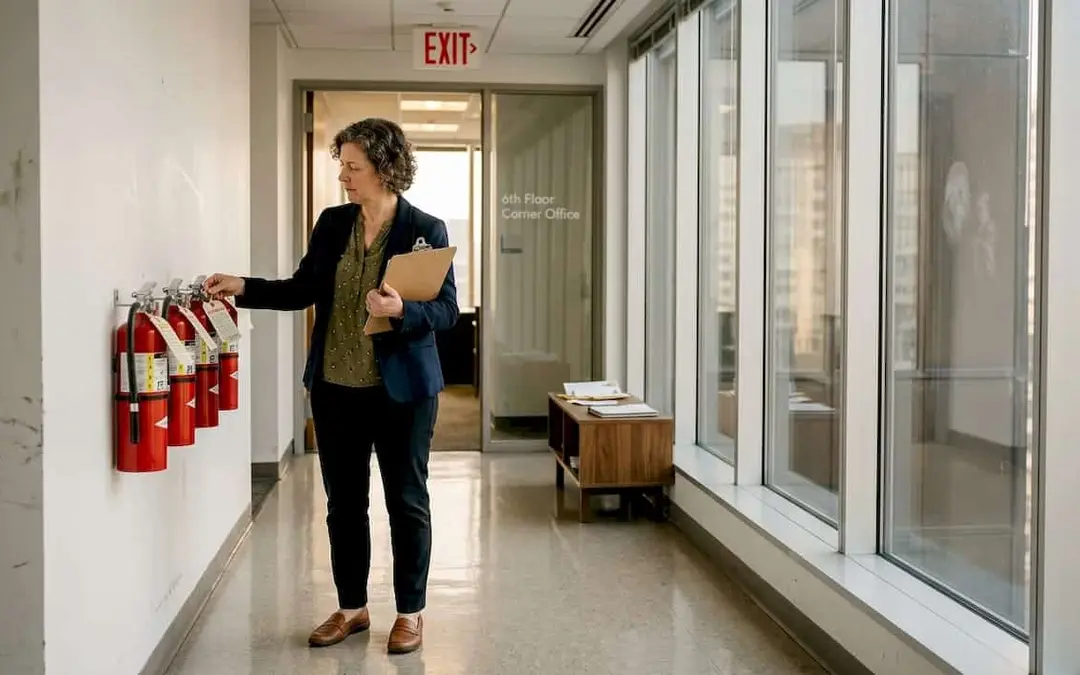
Many Houston business owners assume their fire extinguishers and sprinkler systems will work when disaster strikes, but poorly maintained equipment fails when you need it most. Studies show that sprinklers controlled fires 88% of the time when properly maintained, yet neglected systems contribute to devastating property losses and regulatory violations. Regular maintenance is not optional under Houston Fire Code, and skipping inspections exposes your business to fines, shutdowns, and catastrophic fire damage. This guide explains exactly why maintaining fire equipment protects your property, ensures compliance with 2026 regulations, and saves lives.
Table of Contents
- Understanding The Legal Requirements For Fire Equipment Maintenance In Houston
- How Proper Maintenance Drastically Reduces Fire Risks And Property Damage
- Routine Maintenance Tasks And Timelines For Houston Properties
- Expert Tips To Optimize Fire Equipment Reliability And Avoid Costly Pitfalls
- Reliable Fire Protection Services For Houston Business Owners
- Frequently Asked Questions
Key takeaways
| Point | Details |
|---|---|
| Legal compliance | Maintenance ensures adherence to Houston Fire Code, IFC, and NFPA standards, avoiding costly fines and shutdowns. |
| Dramatic risk reduction | Properly maintained systems reduce property loss by 71% and deaths by over 50% compared to neglected equipment. |
| Mandatory schedules | Monthly visual checks and annual professional servicing are required by law for extinguishers and sprinklers. |
| Financial protection | Regular maintenance lowers insurance premiums and maximizes claims while preventing expensive emergency repairs. |
| Expert oversight | Professional inspections catch minor defects before they cause catastrophic failures during actual fires. |
Understanding the legal requirements for fire equipment maintenance in Houston
Houston Fire Code mandates strict compliance with International Fire Code (IFC) and National Fire Protection Association (NFPA) standards for all commercial properties. Fire equipment maintenance ensures regulatory compliance with NFPA 10 for extinguishers and NFPA 25 for sprinklers, protecting businesses from enforcement actions by the Houston Fire Marshal. Property managers who ignore these requirements face inspection failures, monetary penalties, and potential closure orders that devastate operations.
The Houston Fire Marshal conducts random inspections and responds to complaints, checking documentation of maintenance records during visits. Businesses must demonstrate completed monthly visual inspections for extinguishers and maintain detailed logs of professional annual servicing. For sprinkler systems, NFPA 25 requires inspection frequencies ranging from weekly gauges checks to annual main drain tests and five-year obstruction investigations. Missing any scheduled inspection creates immediate non-compliance that inspectors will flag.
Penalties for violations escalate quickly in Houston. First-time offenders typically receive citations with 30-day correction periods, but repeat violations trigger fines starting at $500 per violation and can exceed $2,000 for serious infractions. Properties with life safety hazards face immediate closure until corrections are verified. The Fire Marshal maintains violation records that affect future inspections, insurance ratings, and business licensing renewals.
Key NFPA timeline requirements include:
- Monthly visual extinguisher inspections by property staff
- Annual professional extinguisher maintenance and recharging
- Hydrostatic testing every 5 to 12 years depending on extinguisher type
- Weekly sprinkler gauge and valve checks
- Quarterly alarm testing for sprinkler systems
- Annual main drain flow tests and full system inspections
| Equipment Type | Inspection Frequency | Professional Service | Testing Interval |
| — | — | — |
| Fire Extinguishers | Monthly visual | Annual maintenance | Hydrostatic 5-12 years |
| Sprinkler Systems | Weekly gauges | Annual full inspection | Obstruction 5 years |
| Alarm Devices | Quarterly function test | Annual certification | Component replacement varies |
Pro Tip: Create digital maintenance calendars synced to multiple staff phones to ensure no inspection deadline passes unnoticed, reducing the risk of surprise violations during Fire Marshal visits.
Understanding fire safety regulations Houston requires recognizing that compliance is not a one-time achievement but an ongoing operational responsibility. Documentation proves due diligence during inspections and liability claims. Businesses that treat maintenance as optional discover too late that the costs of non-compliance far exceed preventive service investments.
How proper maintenance drastically reduces fire risks and property damage
The statistics on maintained versus neglected fire equipment reveal a stark difference in outcomes. Research shows properly maintained sprinklers reduce property loss by 71% and deaths by more than 50% compared to properties with failed or absent systems. When sprinklers activate as designed, they control fires in 88% of incidents, containing damage to the room of origin and allowing safe evacuation. These numbers translate directly to saved businesses, preserved jobs, and protected lives in Houston commercial properties.
Maintenance failures cause the majority of fire protection system breakdowns during actual emergencies. Corrosion in sprinkler pipes creates blockages that prevent water flow when heat triggers activation. Pressure loss in fire extinguishers renders them useless despite appearing intact on visual inspection. Dust accumulation on smoke detectors causes false alarms that lead property managers to disable systems entirely, eliminating protection when real fires start. Each maintenance task addresses specific failure modes that statistics prove are common and deadly.
Smoke alarm performance data reinforces the maintenance imperative beyond sprinklers and extinguishers. Analysis shows smoke alarm absence or maintenance failure accounts for 60% of home fire deaths, with 37% from absent alarms and 23% from maintenance-related failures like dead batteries. Commercial properties face similar risks when detection systems lack regular testing and component replacement. The compounding effect of multiple neglected systems creates catastrophic vulnerability.
Key maintenance impacts on fire outcomes include:
- Functional sprinkler heads that activate within seconds of reaching design temperature
- Adequate water pressure and flow to suppress flames before spreading beyond origin room
- Charged extinguishers ready for immediate use by trained staff during incipient stage fires
- Sensitive smoke detection that alerts occupants and emergency services at earliest smoke production
- Clear valve access and proper positioning that prevents accidental shutoff of protection systems
Maintaining fire protection equipment is not about regulatory box-checking. It is about ensuring the systems you invested in actually function during the critical seconds that determine whether a small fire becomes a total loss.
The fire protection best practices Houston businesses follow recognize that equipment degradation is inevitable without intervention. Seals dry out, valves corrode, pressure vessels lose charge, and electronic components fail over time. Maintenance restores systems to design specifications before deterioration causes failure. Property managers who understand this principle shift from reactive emergency repairs to proactive reliability management.
Insurance claims data supports the financial case for maintenance beyond regulatory compliance. Properties with documented maintenance programs experience faster claims processing and higher settlement rates because insurers recognize reduced moral hazard. Conversely, fire damage claims on properties with lapsed maintenance face scrutiny and potential denial based on neglect. Learning fire damage claims tips reveals how maintenance records become critical evidence during the claims process.
Routine maintenance tasks and timelines for Houston properties
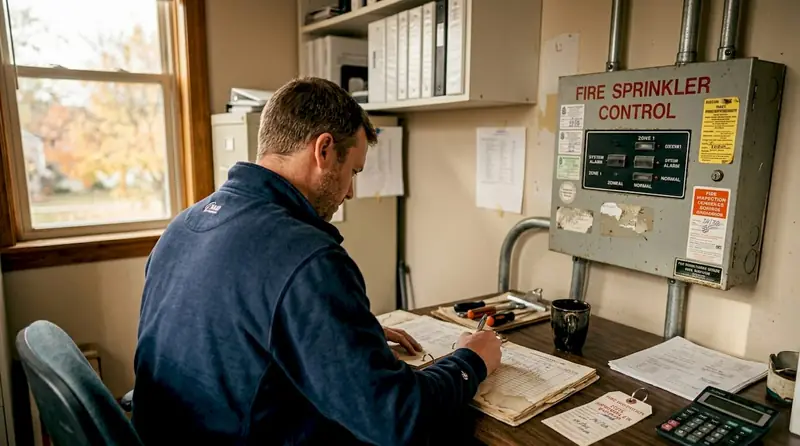
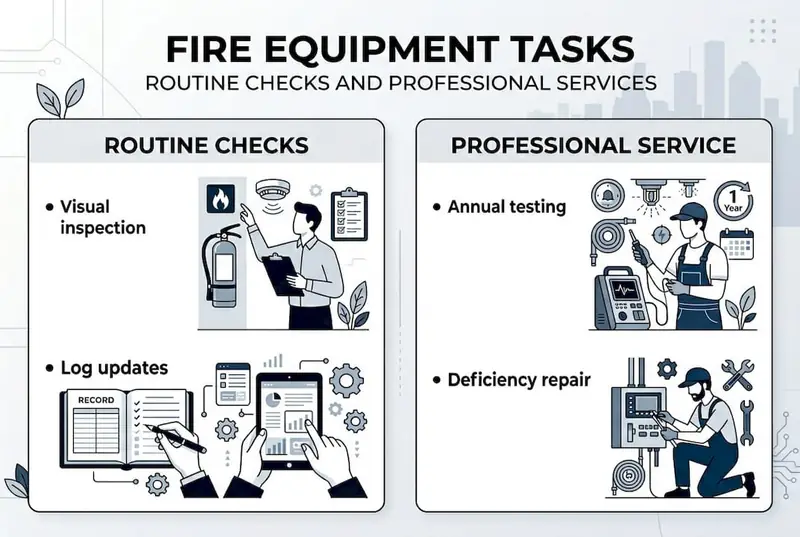
Implementing effective fire equipment maintenance requires understanding the specific tasks property staff can perform versus those requiring certified professionals. Monthly visual inspections of fire extinguishers involve checking pressure gauges, inspecting for physical damage, verifying accessibility, and confirming inspection tags are current. These tasks take minutes per extinguisher but catch obvious problems like missing pins, damaged hoses, or blocked access that would prevent emergency use. Annual professional service goes deeper, including internal examination, pressure testing, and recharging that only licensed technicians can perform.
Sprinkler system maintenance operates on multiple timelines reflecting different component vulnerabilities. NFPA 25 mandates inspection frequencies from weekly gauge checks to five-year obstruction investigations, creating a complex schedule that requires systematic tracking. Weekly tasks include verifying valve positions and gauge readings to catch tampering or pressure loss. Quarterly inspections test alarm devices and examine exposed piping for leaks or damage. Annual inspections involve main drain flow tests, full system walkthroughs, and documentation updates that certified professionals must complete.
Monthly fire extinguisher maintenance checklist:
- Verify extinguisher is in designated location and accessible
- Check pressure gauge reads in green operational range
- Inspect hose, nozzle, and pin for damage or obstruction
- Confirm inspection tag shows current annual service date
- Remove any objects blocking access within required clearance
- Document inspection date and findings in maintenance log
Annual sprinkler system professional service includes:
- Main drain flow test to verify adequate water supply pressure
- Alarm device activation and response verification
- Internal pipe inspection for corrosion and obstruction
- Valve operation testing and lubrication
- Gauge calibration and replacement if needed
- Complete documentation update and deficiency reporting
| Maintenance Type | Frequency | Performed By | Key Tasks |
|---|---|---|---|
| Extinguisher Visual | Monthly | Property Staff | Pressure, access, damage check |
| Extinguisher Service | Annual | Licensed Professional | Internal exam, recharge, testing |
| Sprinkler Gauges | Weekly | Property Staff | Pressure and valve position |
| Sprinkler Alarms | Quarterly | Certified Technician | Activation and response test |
| Sprinkler Full Inspection | Annual | Licensed Professional | Flow test, pipe exam, documentation |
| Hydrostatic Testing | 5-12 years | Certified Facility | Pressure vessel integrity |
Pro Tip: Color-code maintenance calendars by task type (visual, professional, testing) to quickly identify which tasks are due and which vendor to contact, preventing confusion that leads to missed deadlines.
Hydrostatic testing represents the most intensive maintenance requirement, subjecting extinguisher pressure vessels to extreme pressure to verify structural integrity. Testing intervals range from five years for stored pressure extinguishers to twelve years for carbon dioxide units. Many businesses find replacement more cost effective than testing older units, but regulations require the testing decision point. Sprinkler systems require obstruction investigations every five years using specialized inspection methods to detect internal pipe blockages invisible during normal inspections.
The sprinkler maintenance Houston professionals recommend emphasizes documentation as critical as physical tasks. Inspectors want to see completed checklists, dated signatures, and deficiency correction records proving systematic attention. Digital maintenance management systems streamline record keeping and generate automatic reminders, reducing the administrative burden while improving compliance. Properties that treat documentation casually face the same penalties as those skipping physical inspections.
Balancing in-house tasks with professional services optimizes costs while maintaining compliance. Property staff handle frequent simple checks that catch obvious problems, while annual professional services provide deep expertise for complex testing and certification. Understanding which tasks require licensing prevents costly mistakes like unauthorized extinguisher recharging that voids certifications. Reviewing fire extinguisher inspection Houston guidelines clarifies these boundaries and helps property managers allocate budgets appropriately.
Expert tips to optimize fire equipment reliability and avoid costly pitfalls
Achieving maximum reliability from fire protection systems requires going beyond minimum compliance to embrace best practices that prevent the most common failure modes. Analysis shows maintenance achieves 99% reliability when properly executed, but most failures trace to overlooked valve positioning and improper equipment storage rather than catastrophic component breakdown. Valve checks must verify not just that valves are open, but that tamper devices function and valve wheels turn freely without excessive force indicating internal corrosion.
Storage conditions dramatically affect fire extinguisher reliability over time. Units mounted in direct sunlight or near heat sources experience accelerated pressure loss and seal degradation. Extinguishers in high-vibration areas like loading docks require more frequent pressure checks because constant movement loosens fittings. Coastal Houston properties face accelerated corrosion from salt air, necessitating additional protective measures and shortened service intervals. Recognizing environmental factors allows property managers to customize maintenance beyond generic schedules.
Minor visual defects that staff dismiss during monthly checks often signal developing failures that cause complete breakdown during fires. A slightly low pressure gauge reading indicates a slow leak that will render the extinguisher useless within months. Small amounts of corrosion on sprinkler heads suggest internal pipe deterioration that will cause future blockages. Dents or scratches on extinguisher bodies may indicate previous impacts that weakened pressure vessel integrity. Training staff to report and investigate minor anomalies prevents major failures.
Expert maintenance best practices include:
- Photographing equipment during inspections to document condition changes over time
- Maintaining spare extinguishers to swap during service periods, ensuring continuous protection
- Scheduling professional services during slow business periods to minimize operational disruption
- Establishing vendor relationships before emergencies to ensure priority response
- Budgeting for proactive replacement before equipment reaches end of service life
- Cross-training multiple staff members on inspection procedures to prevent single-point knowledge gaps
Pro Tip: Request detailed written reports from professional service providers explaining any deficiencies found and recommended corrections, creating documentation that proves proactive management during insurance claims and regulatory inquiries.
The cost-benefit analysis of maintenance reveals impressive returns on investment. Properties with maintained systems experience 50% to 71% reduction in property loss compared to those with failed or absent protection, translating to hundreds of thousands in preserved assets for typical commercial buildings. Insurance premium reductions for properties with documented maintenance programs often exceed annual maintenance costs within three to five years. Avoided regulatory fines and business interruption losses add additional financial benefits that dwarf maintenance expenses.
Common pitfalls that undermine maintenance programs include inconsistent documentation, staff turnover that breaks institutional knowledge, and deferred corrections of identified deficiencies. Properties that complete inspections but fail to fix discovered problems gain no reliability benefit and still face regulatory violations. Maintenance programs require leadership commitment and adequate budgeting to succeed, not just procedural compliance. Treating fire protection as an operational priority rather than a facilities afterthought drives the cultural change necessary for sustained reliability.
Leveraging professional expertise through partnerships with qualified fire system maintenance Houston providers offers the most reliable path to compliance and protection. Certified technicians bring specialized knowledge of evolving codes, testing equipment for complex diagnostics, and liability insurance that protects property owners from service-related claims. The modest cost of professional services provides substantial value compared to the risks of amateur maintenance or complete neglect.
Reliable fire protection services for Houston business owners
Navigating Houston’s complex fire safety requirements while managing daily business operations creates challenges that professional support resolves efficiently. Reliable Fire Protection specializes in comprehensive maintenance programs tailored to Houston Fire Code and NFPA 2026 standards, ensuring your property stays compliant while maximizing equipment reliability. Our certified technicians handle everything from routine inspections to emergency repairs, providing the expertise and documentation that protects your business from regulatory violations and fire losses.
Our fire system maintenance Houston services include complete inspection scheduling, deficiency correction, and digital record keeping that simplifies compliance verification. We offer flexible service agreements matching your property’s specific needs, from monthly monitoring to annual certifications. Emergency response capabilities ensure rapid support when equipment failures occur, minimizing downtime and maintaining continuous protection. Our sprinkler system inspection Houston expertise covers all NFPA 25 requirements, while our fire extinguisher inspection Houston programs handle everything from monthly visual checks to hydrostatic testing. Contact us today for a free assessment and discover how professional maintenance protects your Houston property investment.
Frequently asked questions
Why is it essential to maintain fire extinguishers regularly?
Regular maintenance prevents extinguisher failures during actual fires when pressure loss, seal degradation, or internal corrosion render units inoperable despite normal appearance. Monthly visual checks catch obvious problems like physical damage or blocked access, while annual professional service verifies internal condition and recharges units to design specifications. Houston Fire Code mandates these inspections, making maintenance both a safety necessity and legal requirement that protects businesses from fines and liability.
What are the risks of skipping fire sprinkler inspections?
Neglected sprinkler systems fail to activate or provide adequate water flow during fires, allowing flames to spread beyond containment and causing catastrophic property damage that maintained systems prevent. Properties with lapsed inspections face Houston Fire Marshal citations, monetary fines starting at $500, and potential closure orders until corrections are verified. Insurance claims on properties with inadequate maintenance records face denial or reduced settlements, compounding financial losses from fire damage.
How often should businesses in Houston perform fire equipment maintenance?
Fire extinguishers require monthly visual inspections by property staff and annual professional maintenance by licensed technicians, with hydrostatic testing every five to twelve years depending on unit type. Sprinkler systems need weekly gauge and valve checks, quarterly alarm testing, annual comprehensive inspections, and five-year obstruction investigations per NFPA 25 standards. Creating detailed maintenance calendars and documentation systems ensures no required inspection passes unnoticed, maintaining continuous compliance with Houston regulations.
Can regular maintenance reduce insurance premiums for my property?
Insurers recognize that maintained fire protection systems dramatically reduce claim frequency and severity, rewarding properties with documented maintenance programs through lower premiums and better coverage terms. Properties demonstrating proactive fire safety management often qualify for premium reductions that exceed annual maintenance costs within three to five years. Maintenance records also strengthen insurance claims by proving due diligence, helping maximize settlements and avoid denial based on neglect when fire damage claims occur despite proper precautions.