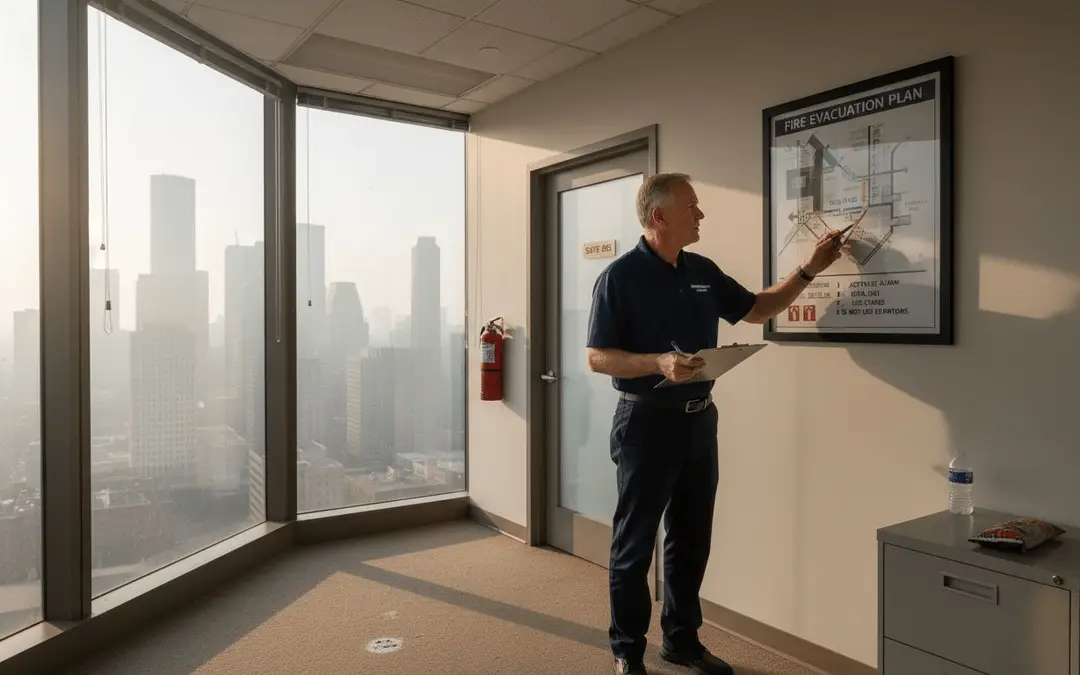
Commercial properties in Houston face daily challenges that go far beyond routine maintenance. Keeping tenants safe from fire hazards requires more than installing alarms or checking extinguishers. Property managers must stay ahead of evolving risks, legal requirements, and persistent myths that cloud how fire protection really works. This guide explains the science behind fire safety, highlights common misconceptions, and shows how proactive strategies can build a safer, more compliant property.
Table of Contents
- Defining Fire Safety And Common Myths
- Major Fire Risks In Commercial Properties
- Fire Protection Systems And Their Roles
- Houston Fire Codes And Legal Duties
- Financial And Legal Impacts Of Negligence
Key Takeaways
| Point | Details |
|---|---|
| Understanding Fire Safety | Fire safety is a comprehensive approach encompassing prevention, detection, and response strategies. |
| Addressing Common Myths | Misconceptions about fire safety can lead to dangerous assumptions; ongoing education is crucial. |
| Legal Compliance is Essential | Property managers in Houston must adhere to fire codes, including permits, inspections, and training. |
| Financial Risks of Negligence | Negligence in fire safety can result in significant financial and legal consequences for property managers. |
Defining Fire Safety and Common Myths
Fire safety represents a comprehensive approach to preventing, detecting, and responding to potential fire hazards in properties. At its core, fire safety involves understanding the fundamental science of fire and implementing strategic protective measures to safeguard lives and assets. Fire safety practices encompass multiple layers of protection, ranging from building design to emergency response protocols.
Contrary to popular misconceptions, fire safety isn’t just about having fire extinguishers or smoke alarms. It’s a dynamic system involving prevention, detection, and mitigation strategies. Some common myths about fire safety include:
- Fires only happen to other people
- Smoke alarms are unnecessary in small spaces
- All fire extinguishers work the same way
- Modern buildings are completely fireproof
These misconceptions can lead to dangerous assumptions. Houston property managers must recognize that fire safety is a critical, ongoing responsibility that requires active management and continuous education. Effective fire safety demands understanding how fires start, spread, and can be controlled in various building environments.
Fire prevention involves identifying potential risks and implementing proactive strategies to minimize fire likelihood. This includes:
- Regular equipment maintenance
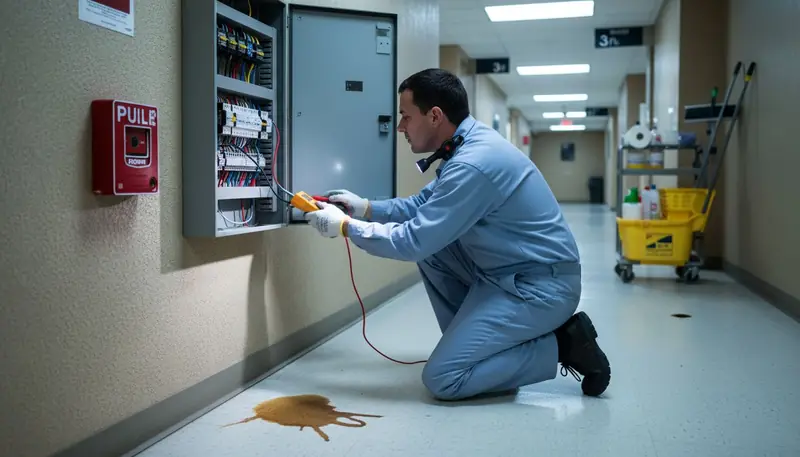
- Proper electrical system inspections
- Controlling combustible material storage
- Implementing strict safety protocols
Fire safety isn’t about eliminating fire risk completely, but about managing and mitigating potential dangers effectively.
Pro tip: Conduct quarterly fire safety assessments and ensure all staff are trained in basic emergency response procedures.
Major Fire Risks in Commercial Properties
Commercial properties in Houston face complex and diverse fire risks that demand comprehensive prevention strategies. Industrial fire risks stem from multiple potential sources, making proactive identification and management crucial for property safety.
The most significant fire hazards in commercial settings typically include:
- Electrical system malfunctions
- Combustible material accumulation
- Improperly maintained heating equipment
- Flammable chemical storage
- Inadequate waste management procedures
- Faulty machinery and shop equipment
Electrical systems represent one of the most prevalent fire risks in commercial properties. Aging wiring, overloaded circuits, and equipment failures can quickly escalate into dangerous situations. Houston businesses must implement rigorous electrical maintenance protocols to minimize these potential threats.
Workplace environments create unique fire scenarios that require targeted prevention approaches. Workplace fire prevention demands comprehensive risk assessments that address:
- Identifying potential ignition sources
- Controlling combustible material volumes
- Maintaining clear emergency evacuation routes
- Installing proper fire detection systems
- Conducting regular safety training
Commercial fire risks are not static – they evolve with changing workplace technologies and environments.
Pro tip: Schedule monthly equipment inspections and maintain detailed maintenance logs to proactively identify potential fire hazards before they become critical risks.
Fire Protection Systems and Their Roles
Fire protection systems represent a critical defense mechanism for safeguarding commercial properties against potential fire disasters. Fire protection technologies integrate multiple components designed to detect, alert, suppress, and minimize fire-related damages.
These comprehensive systems typically encompass several key elements:
- Fire alarm systems
- Automatic sprinkler networks
- Smoke detection mechanisms
- Emergency notification protocols
- Fire suppression equipment
- Evacuation guidance systems
Active fire protection involves dynamic systems that respond immediately when fire risks emerge. These technologies work continuously to identify potential threats, alert occupants, and actively intervene to control fire spread. Sprinkler systems, for instance, can contain fires within minutes, dramatically reducing potential property damage.
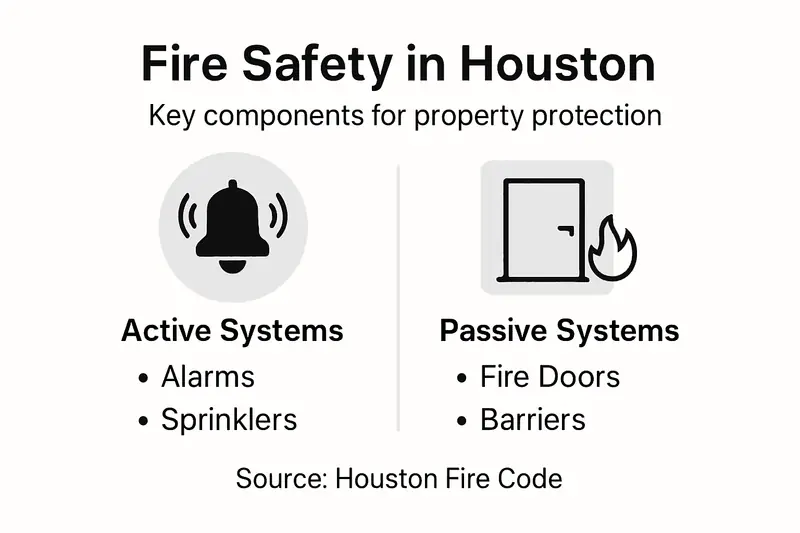
Integrated fire protection approaches combine both passive and active strategies to create multilayered safety networks. This comprehensive method includes:
Here’s a comparison of active and passive fire protection strategies and their impact on commercial properties:
| Protection Type | Primary Function | Typical Technologies | Business Impact |
|---|---|---|---|
| Active Protection | Immediate fire detection/action | Alarms, sprinklers, suppression | Reduces property damage quickly |
| Passive Protection | Contain fire/spread prevention | Fire doors, barriers, materials | Buys time for evacuation |
| Integrated Approach | Combines both for resilience | Total system integration | Maximizes overall safety, compliance |
- Structural fire barriers
- Heat-resistant building materials
- Automated detection systems
- Suppression technology
- Emergency communication networks
Fire protection is not just about equipment – it’s about creating a holistic safety ecosystem that anticipates and mitigates potential risks.
Pro tip: Conduct annual comprehensive system audits to ensure all fire protection components are functioning optimally and meet current safety standards.
Houston Fire Codes and Legal Duties
Property managers and business owners in Houston face complex legal responsibilities when it comes to fire safety compliance. Houston fire code requirements represent a comprehensive framework designed to protect public safety and minimize potential fire risks in commercial and residential properties.
The key legal obligations for Houston properties typically include:
- Obtaining required fire safety permits
- Maintaining up-to-date fire protection systems
- Conducting regular safety inspections
- Implementing approved fire prevention strategies
- Documenting system maintenance and compliance
- Ensuring employee fire safety training
Legal compliance extends beyond simple paperwork. The Houston Fire Department mandates strict adherence to the 2021 International Fire Code, with specific local amendments that became effective January 1, 2024. Fire permit regulations require property owners to secure appropriate documentation for fire alarm systems, sprinkler installations, and other critical safety infrastructure.
The legal framework for fire safety in Houston encompasses multiple critical components:
- Comprehensive fire system permitting
- Mandatory periodic inspections
- Detailed documentation requirements
- Strict enforcement of safety standards
- Significant penalties for non-compliance
Fire code compliance is not optional – it’s a fundamental legal and ethical responsibility for property managers.
Pro tip: Maintain a dedicated compliance folder with all fire safety permits, inspection reports, and maintenance records to streamline regulatory requirements and demonstrate proactive safety management.
Financial and Legal Impacts of Negligence
Fire safety negligence can result in catastrophic financial and legal consequences for Houston property managers and business owners. The potential risks extend far beyond immediate property damage, encompassing complex legal liabilities, substantial financial penalties, and long-term reputational harm.
The most significant financial risks associated with fire safety negligence include:
- Massive property damage expenses
- Potential lawsuit settlements
- Increased insurance premium rates
- Regulatory fines and penalties
- Business interruption costs
- Legal defense expenditures
Legal liability represents a critical concern for property managers. Workplace fire safety standards establish clear expectations for risk management, with potential consequences ranging from substantial monetary penalties to criminal charges in cases of extreme negligence.
The financial implications of fire safety failures can be devastating and typically involve multiple cost dimensions:
This table summarizes the financial and legal consequences of fire safety negligence for property managers:
| Consequence Type | Short-Term Impact | Long-Term Risk |
|---|---|---|
| Financial | Repairs, fines, lost revenue | Higher insurance, lost tenants |
| Legal | Lawsuits, regulatory sanctions | Criminal liability, damaged reputation |
| Operational | Business interruption | Lasting operational downtime |
- Direct property replacement expenses
- Business interruption and lost revenue
- Employee compensation claims
- Legal defense and settlement costs
- Potential long-term insurance premium increases
Negligence is not just a financial risk – it represents a fundamental breach of professional responsibility.
Pro tip: Invest in comprehensive fire safety documentation and regular professional assessments to demonstrate proactive risk management and potentially reduce legal and financial vulnerabilities.
Protect Your Houston Property with Trusted Fire Safety Solutions
Understanding the critical role of fire safety in Houston properties means addressing common challenges like electrical hazards, combustible material management, and compliance with local fire codes. If you want to eliminate these risks and create a resilient safety environment, Reliable Fire Protection offers expert services tailored to meet your property’s unique needs. From advanced fire alarm systems to sprinkler installations, their comprehensive fire protection solutions help you stay ahead of evolving threats and legal responsibilities.
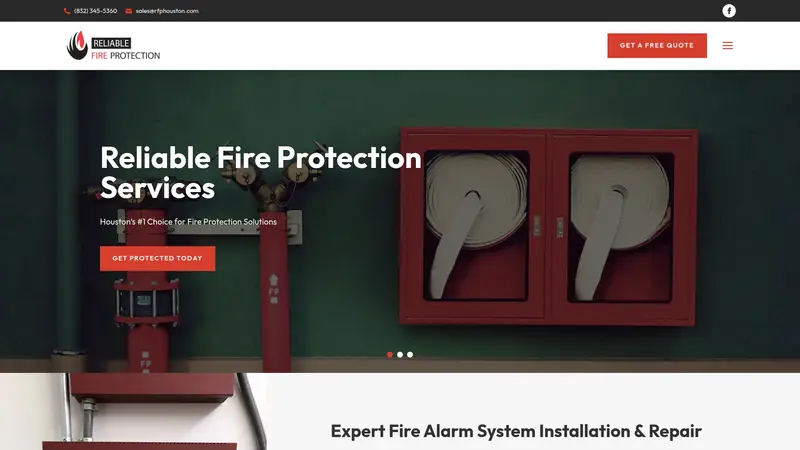
Don’t wait until an emergency happens. Explore how professional fire protection can safeguard your business or residence today. Visit Fire Protection – Reliable Fire Protection to learn about cutting-edge systems and Reliable Fire Protection to request your free quote. Take action now to ensure safety, compliance, and peace of mind for your Houston property.
Frequently Asked Questions
What are the fundamental components of fire safety?
Fire safety involves prevention, detection, and mitigation strategies, including building design, fire alarm systems, automatic sprinkler networks, and emergency response protocols.
How can commercial properties identify common fire risks?
Common fire risks include electrical system malfunctions, accumulation of combustible materials, improperly maintained heating equipment, and inadequate waste management procedures. Regular inspections and risk assessments are vital for identification.
What is the difference between active and passive fire protection systems?
Active fire protection systems respond immediately to fire threats with alarms and suppression technologies, while passive systems focus on containing fire spread using barriers and heat-resistant materials.
What are the legal obligations for fire safety compliance?
Legal obligations typically include obtaining fire safety permits, conducting regular safety inspections, maintaining fire protection systems, documenting compliance, and providing fire safety training to employees.
Recommended
- 7 Fire Safety Best Practices for Houston Property Managers
- Fire Safety Regulations Explained: Impact on Houston Property Managers
- Commercial Fire Safety Basics: Protecting Houston Properties
- What Is a Fire Inspection and Why Compliance Matters
- Fire Alarm System University Place TX
- Fire Alarm System Bellaire TX