

TL;DR:
- Sprinkler systems can reduce fire deaths by up to 90 percent and property damage by 60 percent.
- Proper maintenance and regular inspections are essential to ensure sprinkler effectiveness during emergencies.
- Installing and maintaining sprinklers support compliance, lower insurance premiums, and provide long-term safety benefits.
Sprinkler systems reduce fire deaths by 90% and injuries by 32%, yet many Houston property owners still treat them as an optional upgrade rather than a core safety investment. That gap in thinking can cost lives. Whether you manage a single-family rental, a mid-rise apartment complex, or a commercial warehouse, the evidence is clear: sprinkler systems are among the most effective tools available for protecting people and property. This guide walks you through the real-world impact of sprinklers, how they connect to Houston’s fire safety regulations, how to choose the right system, and how to keep it performing when it matters most.
Table of Contents
- The true impact of sprinkler systems on fire outcomes
- Beyond compliance: How sprinkler systems support Houston safety regulations
- Choosing the right sprinkler system for your property’s needs
- Maximizing sprinkler system effectiveness: Maintenance and common pitfalls
- Why upfront costs are outweighed by long-term value
- Partnering with experts for total fire protection
- Frequently asked questions
Key Takeaways
| Point | Details |
|---|---|
| Reduces fire risks | Sprinkler systems lower the risk of death, injury, and property loss during fires. |
| Ensures compliance | Sprinkler systems help meet Houston regulatory fire safety requirements for properties. |
| Needs ongoing upkeep | Regular maintenance is essential to keep sprinkler systems effective and code compliant. |
| Value outweighs cost | The financial and life safety benefits of sprinklers far outpace initial installation expenses. |
The true impact of sprinkler systems on fire outcomes
When a fire breaks out, every second counts. Sprinkler systems respond automatically, without waiting for someone to call 911 or for a fire truck to arrive. That speed is what makes them so effective. The data behind their performance is not just impressive, it is genuinely hard to argue against.
Properties with sprinklers see 60% less property damage and contain 94% of fires to the room where they started. That means a kitchen fire stays in the kitchen instead of consuming the entire building. For a Houston property owner, that difference can mean the gap between a manageable insurance claim and a total loss.
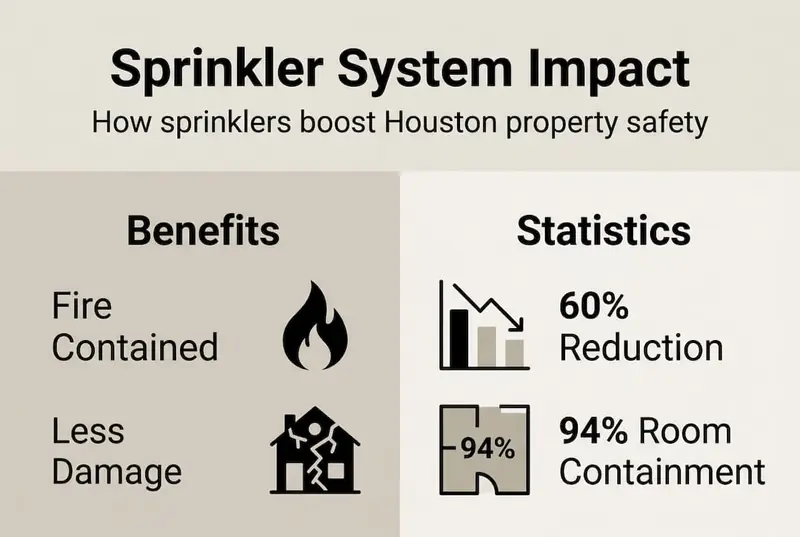
Here is a quick look at how sprinkler-protected buildings compare to unprotected ones:
| Outcome | Without sprinklers | With sprinklers |
|---|---|---|
| Fire death risk | Baseline | Reduced by up to 90% |
| Injury risk | Baseline | Reduced by 32% |
| Property damage | Baseline | Reduced by 60% |
| Fire contained to origin room | Rare | 94% of cases |
One fact that surprises many property managers: the overwhelming majority of fires are controlled by just one or two sprinkler heads. You do not need the entire system to activate for the fire to be stopped. That also means far less water damage than most people expect, a common misconception that holds some owners back from installing systems in the first place.
“Sprinkler systems do not just slow fires down. They stop them before they become catastrophic, giving occupants time to escape and limiting the damage that reaches your walls, floors, and foundation.”
For Houston specifically, dense residential developments and mixed-use commercial zones create conditions where fire can spread quickly between units. A single uncontrolled fire in a connected structure can affect dozens of tenants and neighboring businesses. The fire sprinkler systems explained resource on our site breaks down exactly how different system types address these scenarios. The bottom line is that the data does not just support sprinkler installation. It demands it.
Beyond compliance: How sprinkler systems support Houston safety regulations
Understanding the life-saving role of sprinklers, the next step is seeing how they fit into Houston’s regulatory landscape. Houston follows the International Fire Code alongside local amendments, and sprinkler requirements apply broadly to new commercial construction, multi-family residential buildings above a certain size, and many retrofit situations triggered by major renovations.
Sprinklers support both safety and regulatory compliance in new construction and retrofits, which means a properly installed and maintained system does double duty. It protects people and keeps you on the right side of the fire marshal.
Here is how properties with modern sprinkler systems compare to those without them during inspections:
| Inspection factor | Properties without sprinklers | Properties with modern sprinklers |
|---|---|---|
| Code compliance status | Frequently flagged | Typically compliant |
| Inspection frequency | Higher scrutiny | Streamlined reviews |
| Insurance premiums | Standard or elevated | Often reduced |
| Occupancy permit risk | Higher | Lower |
Key compliance benefits of having a sprinkler system in place include:
- Simplified annual fire inspections with documented system records
- Reduced liability exposure in the event of a fire incident
- Faster occupancy permit approvals for new or renovated properties
- Lower friction with the Houston Fire Department during routine visits
- Stronger position when negotiating property insurance coverage
The sprinkler systems compliance page on our site outlines the specific local codes that apply to different property types. If you want a step-by-step view of how to move from installation to full compliance, the sprinkler system compliance workflow walks you through the entire process.
Pro Tip: Start a dedicated maintenance log the day your system is installed. Record every inspection, test, and repair with dates and technician names. Inspectors love organized records, and it removes guesswork during annual reviews.
Choosing the right sprinkler system for your property’s needs
With compliance in mind, property managers must next determine which system best fits their unique scenarios. Not every building needs the same solution, and choosing the wrong system type can mean either overspending or leaving gaps in protection.

System selection should be tailored to property use and layout to maximize benefits. The four main types you will encounter are wet pipe, dry pipe, pre-action, and deluge systems. Each one suits different environments.
Here is a straightforward approach to evaluating which system fits your property:
- Identify your occupancy type. Residential buildings typically use wet pipe systems because they are simple, reliable, and cost-effective. Warehouses or facilities with freezing risk may need dry pipe systems.
- Map your building layout. Large open spaces like parking garages or atriums may call for deluge systems that cover wide areas quickly. Smaller, compartmentalized spaces work well with standard wet pipe setups.
- Assess your specific hazards. Data centers and server rooms often use pre-action systems to prevent accidental discharge from damaging equipment. Kitchens in commercial properties may need specialized suppression systems.
- Set a realistic budget range. Wet pipe systems are the most affordable upfront. Dry pipe and pre-action systems cost more to install and maintain but are necessary in certain environments. Factor in long-term insurance savings when comparing costs.
- Consult a licensed fire protection contractor. A certified professional can review your building plans, identify code requirements, and recommend the system that delivers the best protection per dollar spent.
The choosing fire sprinkler system guide on our site goes deeper on each system type with real property examples. You can also browse fire safety equipment examples to see how sprinklers fit alongside other protection tools.
Pro Tip: If you manage multiple properties, standardize on one system type where possible. It simplifies staff training, parts inventory, and contractor relationships across your portfolio.
Maximizing sprinkler system effectiveness: Maintenance and common pitfalls
Once the right system is selected, ongoing maintenance is crucial for real-world protection. A sprinkler system that has not been properly maintained may fail at the worst possible moment. Regular maintenance is critical to guaranteeing sprinkler performance during an emergency, and Houston’s environment adds extra pressure on system components.
Houston’s high humidity accelerates corrosion inside pipes, especially in older steel systems. The city’s water supply also contains minerals that can build up inside pipes and reduce flow rates over time. These are not hypothetical concerns. They are real failure modes that show up during inspections.
Core maintenance tasks every property owner should schedule:
- Quarterly visual inspections of all sprinkler heads for corrosion, paint overspray, or physical damage
- Annual flow tests to verify water pressure meets design specifications
- Five-year internal pipe inspections to check for sediment buildup or corrosion
- Immediate replacement of any sprinkler head that shows signs of leaking, rust, or mechanical damage
- Backflow preventer testing at least once per year to protect the water supply
Common mistakes that undermine system performance:
- Painting over sprinkler heads, which blocks heat sensors and prevents activation
- Storing items too close to sprinkler heads, reducing coverage radius
- Skipping annual inspections because the system looks fine from the outside
- Failing to update the system after building renovations that change room layouts
The sprinkler maintenance workflow and the sprinkler inspection guide on our site give you structured checklists for staying on top of these tasks.
Pro Tip: Set recurring calendar reminders for quarterly visual checks and annual professional inspections. Treat them like rent collection. They are not optional, and missing them has real consequences.
Why upfront costs are outweighed by long-term value
Let’s tackle the biggest hesitation most property owners bring to us: the upfront cost. We hear it constantly. Sprinkler installation feels expensive, especially for older buildings that require retrofitting. But the financial picture changes dramatically when you look past the installation invoice.
Investment in sprinklers is consistently justified by real-world outcomes, according to NIST research. Insurance carriers recognize this too. Many offer meaningful premium reductions for sprinkler-protected properties, and those savings compound year after year. Add in the reduced risk of catastrophic property loss, lower liability exposure, and the protection of tenant lives, and the math shifts decisively.
We have seen property managers in Houston initially resist sprinkler retrofits, then watch a neighboring unprotected building suffer a fire that triggered months of lost rental income, litigation, and rebuilding costs. The protected properties nearby? Business as usual the next morning. That contrast is not anecdotal. It reflects what why sprinklers matter data shows consistently across thousands of fire incidents. The upfront cost is real. The long-term return is larger.
Partnering with experts for total fire protection
If you are ready to boost your property’s protection and compliance, partnering with the right experts makes all the difference. Sprinkler systems are not a DIY project. Proper installation, testing, and ongoing inspection require licensed professionals who understand Houston’s codes and your specific building type.

At Reliable Fire Protection, we handle everything from initial system design to installing fire sprinklers and ongoing sprinkler inspection Houston services. We know Houston’s fire codes inside and out, and we work with both residential and commercial property managers to build protection plans that meet every requirement. Whether you need a new installation or want to bring an existing system into compliance, our sprinkler compliance workflow process makes the path forward clear and stress-free. Reach out today for a free consultation.
Frequently asked questions
How much can sprinklers reduce property damage in a fire?
Sprinkler systems can reduce property damage by up to 60% compared to buildings without them, largely because they contain fires to the room of origin in 94% of cases.
Are sprinkler systems required in all Houston commercial buildings?
Not all buildings are required to have sprinklers, but sprinklers support compliance requirements that apply to most new commercial construction and many larger multi-family properties based on size, use, and local fire codes.
What type of maintenance do fire sprinkler systems need?
The most important tasks include quarterly visual inspections, annual flow tests, and replacing damaged components promptly. Regular maintenance is what separates a system that works from one that fails during an actual emergency.
Is investing in sprinklers worth the cost for older properties?
Yes. Investment in sprinklers is consistently justified by insurance savings, reduced liability, and the protection of occupants and assets, all of which outweigh the initial installation cost over time.
Recommended
- Fire Sprinkler Systems Explained: Protecting Houston Properties
- Sprinkler Maintenance: Protecting Houston Properties Safely
- Why install sprinklers in Houston properties in 2026
- Sprinkler System Inspection Guide for Houston Properties
- Fire Alarm System University Place TX
- Fire Alarm System Services in Bellaire, TX