

More than 1,300 American businesses experience a serious fire each day, often with devastating results for property and lives. For Houston business owners and property managers, keeping up with fire safety compliance is not just about following the rules, it is about protecting your livelihood and the people who depend on your establishment. Discover practical strategies and proven solutions that help Houston businesses stay one step ahead of fire dangers and stay compliant.
Table of Contents
- What Fire Detection Systems Do
- Major Types of Fire Detectors
- How Detection Technology Works
- NFPA 72 Compliance and Houston Rules
- Risks of Poor Maintenance or Non-Compliance
Key Takeaways
| Point | Details |
|---|---|
| Comprehensive Detection | Fire detection systems use advanced sensors to actively monitor and respond to potential fire hazards. |
| Detector Types | Different types of detectors, such as ionization and photoelectric, are crucial for identifying various fire scenarios. |
| Regulatory Compliance | Adherence to NFPA 72 and local Houston regulations is essential to prevent legal and operational risks. |
| Maintenance Importance | Regular inspections and maintenance are vital to ensure functionality and compliance, avoiding severe consequences. |
What Fire Detection Systems Do
Fire detection systems are mission-critical safety technologies designed to protect Houston businesses from potentially devastating fire emergencies. These advanced systems do far more than simply sound an alarm – they actively monitor building environments for potential fire risks and provide comprehensive protection strategies.
At their core, fire detection systems combine sophisticated sensors, control panels, and notification devices to accomplish three primary objectives: detection, alert, and response. Detection involves using specialized sensors like smoke detectors, heat sensors, and carbon monoxide monitors strategically placed throughout a facility to identify potential fire hazards. These sensors continuously scan the environment, tracking temperature changes, smoke particles, and other indicators that might signal an emerging fire threat.
When a potential fire is detected, the system immediately triggers a multi-layered response. This includes local alarms to alert building occupants, automatic notifications to local fire departments, and potential activation of supplementary safety systems like sprinklers or ventilation controls. Modern fire alarm systems can simultaneously unlock emergency exits, shut down electrical systems, and initiate building-wide evacuation protocols to maximize occupant safety and minimize potential property damage.
Pro tip: Schedule quarterly professional inspections of your fire detection system to ensure all components are functioning correctly and meeting current safety standards.
Major Types of Fire Detectors
Fire detection systems utilize multiple specialized detector types to provide comprehensive protection for Houston businesses. Fire detection technologies include several critical sensor varieties that identify different fire characteristics, each designed to detect specific fire indicators and environmental conditions.
The two primary smoke detector categories are ionization and photoelectric detectors. Ionization detectors respond rapidly to flaming fires, while photoelectric detectors excel at identifying smoldering, slow-burning fires. This complementary approach ensures businesses have multiple layers of fire detection protection. Other specialized detector types include:
- Heat Detectors: Triggered by significant temperature increases
- Flame Detectors: Identify visible fire emissions
- Gas Detectors: Sense fire-related chemical changes
- Combination Detectors: Integrate multiple sensing technologies
The selection of fire detection equipment depends on specific building characteristics, potential fire risks, and local safety regulations. Different environments require tailored detection strategies to ensure maximum safety and rapid emergency response.
Pro tip: Consult fire safety professionals to design a detection system that matches your specific building layout and potential hazard profile.
Here’s a comparison of primary fire detector types and their best-use scenarios:
| Detector Type | Typical Detection | Best Application |
|---|---|---|
| Ionization | Flaming fires | Kitchens, warehouses |
| Photoelectric | Smoldering fires | Offices, sleeping areas |
| Heat | Sudden temperature rise | High-dust or steam areas |
| Flame | Visible fire emissions | Fuel storage, chemical plants |
| Gas | Hazardous gases | Laboratories, industrial plants |
| Combination | Multiple fire indicators | Large, diverse facilities |
How Detection Technology Works
Fire detection technology operates through sophisticated sensing mechanisms designed to identify potential fire threats quickly and accurately. Detection systems use specialized initiating devices that sense critical indicators of fire, including smoke, heat, and specific gas emissions, transforming environmental data into actionable safety alerts.
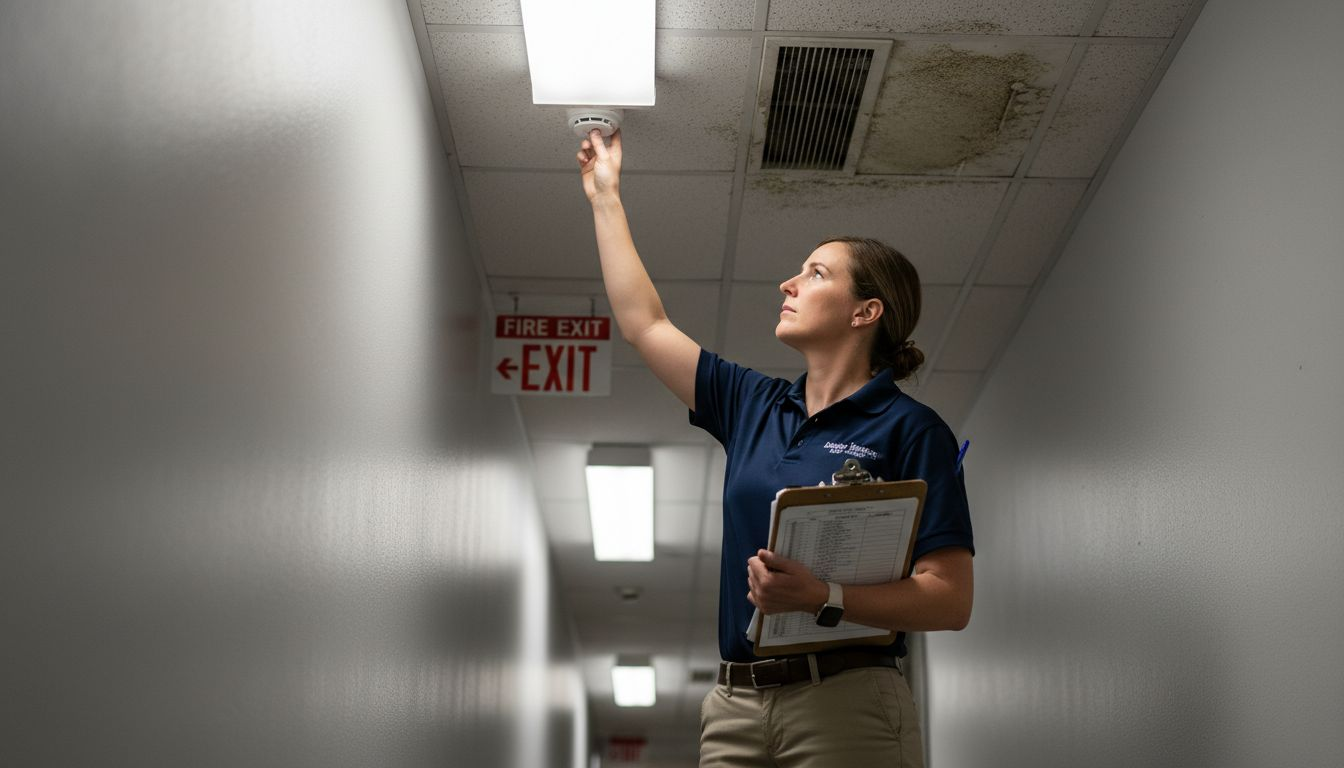
Smoke detectors specifically employ two primary sensing technologies: optical (photoelectric) and ionization detection methods. Optical detectors use light-sensitive chambers that recognize smoke particles by measuring light scattering, while ionization detectors monitor electrical currents disrupted by combustion particles. This dual approach allows for comprehensive fire detection across different fire stages and materials.
The core functionality of detection technology involves a multi-step process:
- Sensing: Specialized sensors continuously monitor environmental conditions
- Signal Processing: Detected anomalies are interpreted by control units
- Verification: Advanced systems cross-check multiple sensor inputs
- Alarm Triggering: Immediate notifications are sent when fire risks are confirmed
Modern detection systems go beyond simple alarms, integrating with building management systems to provide real-time monitoring, automatic emergency responses, and detailed incident reporting for Houston businesses.
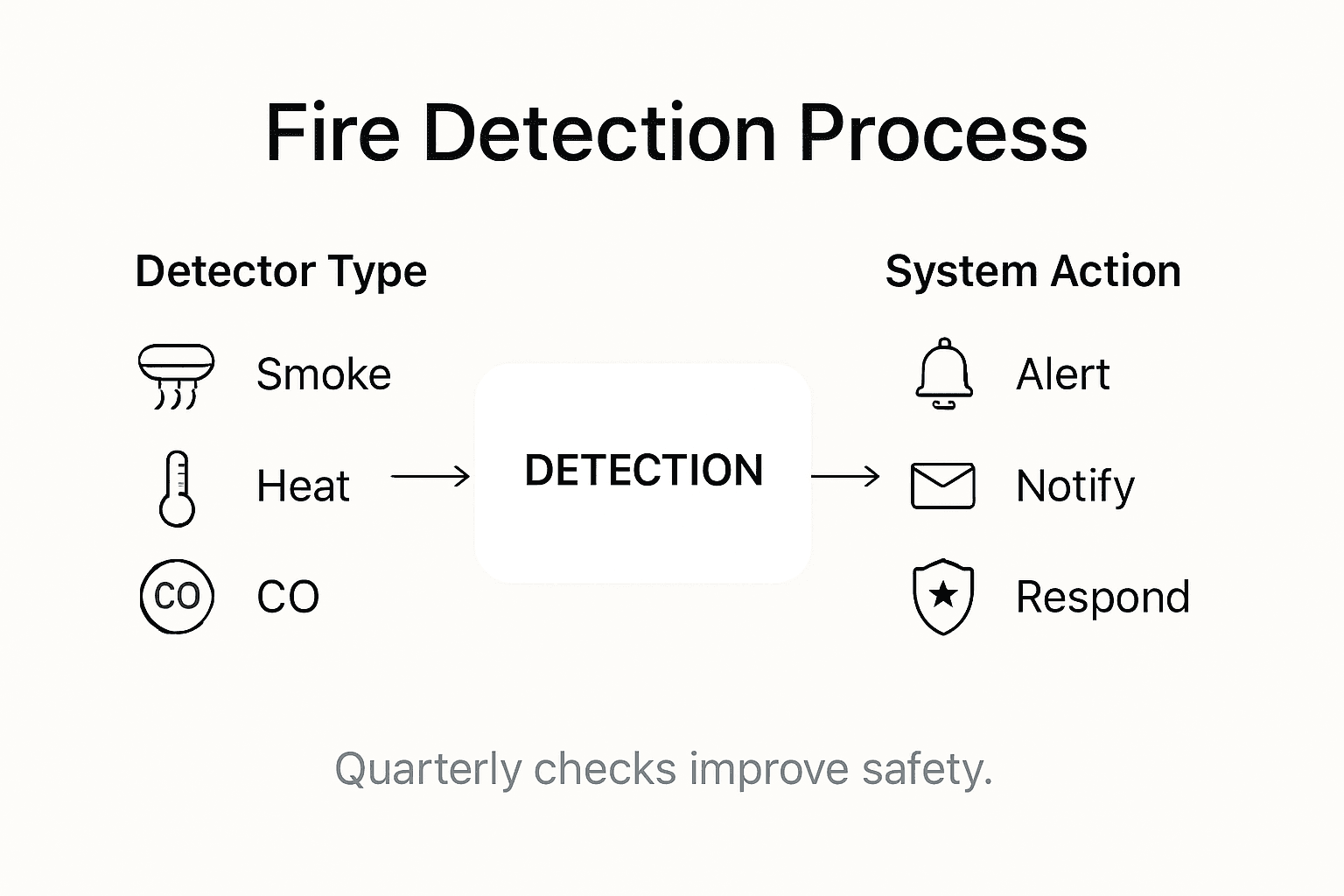
Pro tip: Conduct monthly visual inspections of your detection sensors and annually schedule professional calibration to ensure optimal system performance.
NFPA 72 Compliance and Houston Rules
Fire detection compliance is a critical requirement for Houston businesses, involving intricate national and local regulatory standards. NFPA 72 establishes comprehensive national guidelines for fire alarm and detection systems, with specific jurisdictional modifications implemented at the local level.
The City of Houston mandates strict adherence to NFPA 72 standards, supplemented by local amendments that govern fire alarm system installations, permitting, and inspections. These requirements encompass multiple critical aspects of fire protection:
- System Design: Detailed technical specifications
- Installation Protocols: Approved mounting and integration methods
- Documentation Requirements: Comprehensive system records
- Periodic Testing: Mandatory performance verification
- Inspection Compliance: Regular professional assessments
Business owners must navigate these complex regulations carefully, ensuring their fire detection systems meet both national NFPA standards and specific Houston municipal code requirements. This involves working with certified fire protection professionals who understand the nuanced local implementation of these safety regulations.
Pro tip: Schedule an annual comprehensive review with a certified fire protection specialist to confirm your system remains fully compliant with current NFPA 72 and Houston municipal regulations.
Risks of Poor Maintenance or Non-Compliance
Fire detection system failures represent a critical risk for Houston businesses, with potentially catastrophic consequences. Inadequate maintenance and non-compliance can lead to undetected fire hazards, significant property damage, and even life-threatening situations, transforming what might be a manageable incident into a complete operational disaster.
Building and fire codes mandate rigorous inspection, testing, and maintenance protocols to prevent system failures. The potential risks of neglecting these requirements include:
- Financial Losses: Extensive property damage and potential business interruption
- Legal Liability: Potential lawsuits from injured parties or regulatory penalties
- Insurance Complications: Potential coverage denial or increased premiums
- Occupancy Restrictions: Possible facility shutdown or operational limitations
- Safety Compromises: Increased risk to employee and customer lives
Beyond immediate safety concerns, non-compliant fire detection systems can trigger a cascading series of financial and legal challenges. Business owners may face substantial fines, increased insurance costs, potential litigation, and even complete operational shutdown if their fire safety systems do not meet established regulatory standards.
Pro tip: Maintain a comprehensive maintenance log and schedule quarterly professional inspections to proactively identify and address potential fire detection system vulnerabilities.
The table below summarizes major risks and business impacts of poor fire detection system maintenance:
| Risk Source | Immediate Impact | Business Consequence |
|---|---|---|
| Missed maintenance | Undetected fire hazards | Facility shutdown, legal fines |
| Regulatory non-compliance | Failed inspections | Insurance claim denial |
| Outdated components | Delayed emergency response | Increased property damage |
Protect Your Houston Business with Expert Fire Detection Solutions
Understanding fire detection basics is crucial for every Houston business owner who wants to prevent devastating fires and stay fully compliant with NFPA 72 and local regulations. With challenges like complex detection technologies and strict compliance rules, it can feel overwhelming to ensure your fire detection system performs flawlessly when it matters most. Reliable Fire Protection specializes in tailored fire alarm and detection system installations that address these exact concerns, helping you avoid risks from poor maintenance or non-compliance.

Take control of your fire safety today by partnering with a trusted, family-owned Houston company that offers certified expertise in advanced detection systems and ongoing support. Visit Reliable Fire Protection to schedule a free consultation or request a quote. Don’t wait until an emergency happens—ensure your building’s fire detection system provides fast, reliable alerts and full compliance now. Learn more about how we help Houston businesses meet safety standards and protect their property at Reliable Fire Protection services.
Frequently Asked Questions
What are the main functions of fire detection systems?
Fire detection systems primarily serve three functions: detection of potential fire hazards, alerting building occupants and emergency services, and enabling an appropriate response to fire emergencies through safety measures like activating sprinklers and unlocking exits.
What types of fire detectors are available, and how do they differ?
The main types of fire detectors include ionization detectors for flaming fires, photoelectric detectors for smoldering fires, heat detectors that respond to sudden temperature increases, flame detectors for visible fire emissions, and gas detectors for hazardous gas sensing. Combination detectors integrate multiple technologies for broader protection.
How does fire detection technology work?
Fire detection technology employs specialized sensors that continuously monitor for critical fire indicators such as smoke, heat, and gas emissions. The data collected is processed by control units to verify alarms before notifying occupants and emergency services.
Why is compliance with NFPA 72 important for businesses?
Compliance with NFPA 72 is crucial for ensuring the safety and reliability of fire detection systems. It establishes national guidelines for installation, inspection, and maintenance, which help prevent fire hazards and protect lives and property.