Protecting valuable Houston property from fire hazards involves more than just meeting basic codes. Hospitality and healthcare businesses face unique threats that require a tailored fire suppression strategy for every building. Careful assessment of risks and custom design are the foundation for safety and compliance, helping property managers and owners minimize liability while maintaining trust and operations. This step-by-step guide shows how each phase contributes to reliable, effective protection that matches real-world facility needs.
Table of Contents
- Step 1: Assess Property Requirements And Hazards
- Step 2: Design Customized Suppression System Plan
- Step 3: Install Fire Suppression Components
- Step 4: Test System Functionality And Compliance
- Step 5: Maintain And Monitor Suppression Systems
Quick Summary
| Key Point | Explanation |
|---|---|
| 1. Assess property hazards thoroughly | Conduct a detailed evaluation to identify hazard zones and associated risks specific to your property’s unique features. |
| 2. Design a tailored suppression plan | Create a customized fire suppression system plan that accounts for your property’s layout, usage patterns, and potential fire risks. |
| 3. Ensure professional installation | Engage certified technicians to install components correctly, ensuring reliability and adherence to safety standards. |
| 4. Conduct comprehensive system testing | Implement rigorous testing protocols to verify functionality and compliance of each component within the system. |
| 5. Maintain and monitor consistently | Schedule regular inspections and tracking to ensure ongoing reliability and performance of your fire suppression system. |
Step 1: Assess property requirements and hazards
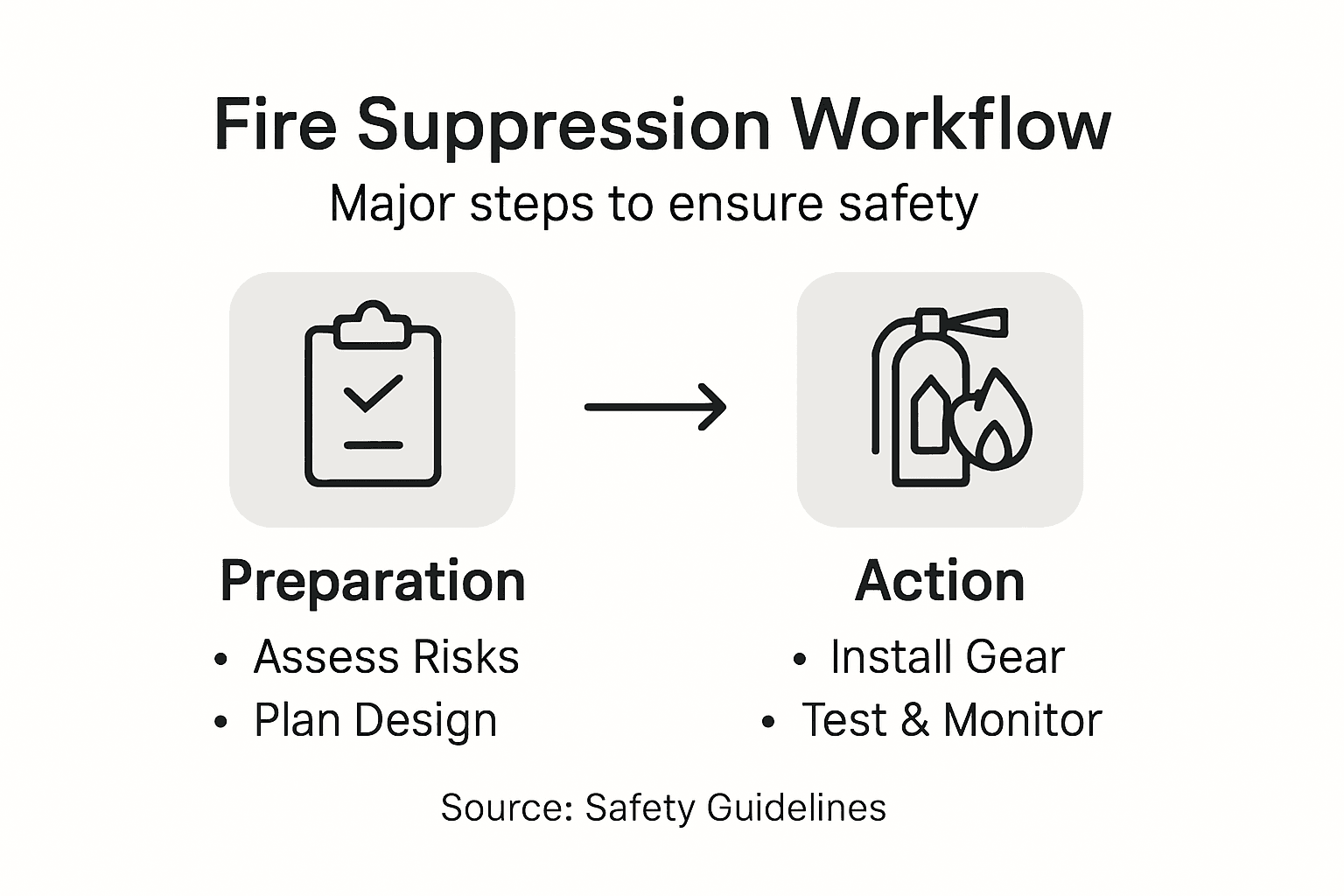
Preparing to implement a fire suppression system begins with a comprehensive assessment of your property’s unique hazards and protection needs. Comprehensive fire safety risk evaluation requires a systematic approach that identifies potential risks and determines the most appropriate protection strategies.
To effectively assess your property’s fire protection requirements, follow these key steps:
- Identify potential hazard zones within the building, such as electrical rooms, kitchens, storage areas, and mechanical spaces
- Document the types of materials and equipment present in each area
- Evaluate the building’s occupancy type and typical human traffic patterns
- Determine the specific fire risks associated with your property’s primary functions
Fire protection is not a one-size-fits-all solution. Each property demands a tailored approach that considers its unique architectural layout, operational characteristics, and potential ignition sources. Fire protection system standards recommend conducting a detailed risk assessment that examines multiple factors including:
- Building construction materials
- Electrical system configurations
- Presence of flammable liquids or gases
- Potential heat and spark generation points
Proper hazard assessment is the foundation of an effective fire suppression strategy.
The assessment phase provides critical insights that will guide your selection of appropriate fire suppression technologies, ensuring targeted and efficient protection for your specific property environment.
Pro tip: Consider hiring a certified fire protection professional to conduct an independent risk assessment for the most comprehensive and accurate evaluation of your property’s fire safety needs.
Step 2: Design customized suppression system plan
Designing an effective fire suppression system requires a strategic approach tailored to your property’s unique characteristics. Comprehensive fire protection design involves carefully analyzing multiple factors to create a targeted and efficient protection strategy.
To develop a customized suppression system plan, consider these critical design elements:
- Evaluate specific hazard classifications for different areas within your property
- Determine appropriate suppression agent types based on potential fire risks
- Select system configurations matching your building’s architectural layout
- Account for environmental conditions and potential equipment vulnerabilities
Your suppression system design must incorporate specific technical considerations. Fire protection system guidelines recommend examining several key components:
- Building occupancy and usage patterns
- Potential fire load and combustible material locations
- Electrical and mechanical system configurations
- Required response times and coverage areas
A well-designed fire suppression system balances technical precision with comprehensive safety coverage.
Successful system design requires collaboration between fire protection engineers, property managers, and safety professionals to ensure a holistic approach that meets all regulatory standards and provides maximum protection.

Pro tip: Document every design consideration and obtain professional certification to validate your fire suppression system’s compliance with local safety regulations.
Step 3: Install fire suppression components
Installing fire suppression components requires precision, expertise, and strict adherence to professional standards. Fire suppression installation protocols demand meticulous attention to detail to ensure system reliability and safety.
To successfully install your fire suppression system, follow these essential steps:
- Verify component compatibility with your specific property design
- Inspect all materials for manufacturing defects before installation
- Prepare mounting locations according to system design specifications
- Use certified installation techniques recommended by manufacturers
Professional installation involves multiple critical phases:
- Prepare mounting surfaces with appropriate structural reinforcement
- Position detection and suppression devices precisely
- Connect piping and electrical components
- Conduct initial system alignment checks
Proper installation is as crucial as the system design itself.
Fire safety system documentation emphasizes the importance of professional expertise during component placement. Certified technicians ensure that every connection, sensor, and suppression mechanism meets rigorous safety standards.
Pro tip: Always document each installation step and retain manufacturer certification records for future maintenance and insurance compliance.
Step 4: Test system functionality and compliance
Verifying the effectiveness of your fire suppression system requires comprehensive testing and rigorous validation. Integrated system testing protocols ensure every component operates precisely as designed to protect your property.
To thoroughly test your fire suppression system, implement these critical evaluation steps:
- Conduct comprehensive functional tests for each system component
- Simulate multiple fire scenario conditions
- Verify sensor and detection mechanism responsiveness
- Document all test results and performance metrics
A systematic testing approach involves multiple critical phases:
- Perform initial activation tests for all suppression mechanisms
- Check electrical and mechanical interconnections
- Validate communication and alarm systems
- Review sensor calibration and sensitivity
Rigorous testing determines the difference between a theoretical and an actual life-saving system.
Fire protection system inspection guidelines recommend detailed documentation of every test performed, ensuring comprehensive compliance and future maintenance planning.
Pro tip: Schedule professional third-party verification annually to maintain insurance compliance and validate your system’s ongoing reliability.
Step 5: Maintain and monitor suppression systems
Continuous maintenance and monitoring are critical for ensuring your fire suppression system remains reliable and fully operational. Water-based system maintenance standards require systematic and proactive approaches to preserve system integrity and performance.
Implement a comprehensive maintenance strategy with these essential practices:
- Schedule routine professional inspections at recommended intervals
- Document and track all maintenance activities
- Check system components for signs of wear or potential failure
- Maintain accurate maintenance and repair records
Your monitoring program should include several critical elements:
- Perform quarterly visual system assessments
- Conduct annual comprehensive professional evaluations
- Test alarm and communication systems regularly
- Update maintenance logs with detailed findings
Consistent monitoring prevents potential system failures during critical moments.
Fire protection system maintenance guidelines emphasize the importance of structured, systematic approaches to preserving system reliability and ensuring regulatory compliance.
Pro tip: Create a digital maintenance tracking system to streamline documentation and ensure no inspection or maintenance task falls through the cracks.
Compare the impact of professional involvement at different stages:
| Phase | Professional Role | Impact on Outcome |
|---|---|---|
| Assessment | Certified fire risk evaluator | Accurate hazard identification |
| Design | Licensed fire protection engineer | Ensures code-compliant solutions |
| Installation | Certified installation technician | Proper and safe system setup |
| Inspection | Independent third-party inspector | Unbiased functional verification |
| Maintenance | Qualified fire system maintenance provider | Reliable long-term performance |
Here is a summary of key considerations for each fire suppression system implementation step:
| Step | Focus Area | Main Challenge | Professional Tip |
|---|---|---|---|
| Assessment | Risk identification | Overlooking hazards | Engage certified assessor |
| Design | Custom system planning | Technical compliance | Document all design decisions |
| Installation | Proper component setup | Incorrect placement | Retain installation certifications |
| Testing | Functional verification | Missed failure points | Use third-party validation |
| Maintenance | Ongoing reliability | Lapsed inspections | Use digital tracking systems |
Ensure Your Property’s Safety with Expert Fire Suppression Solutions
Identifying and managing fire hazards can feel overwhelming but it is crucial for protecting lives and property. This article highlights the importance of a tailored fire suppression workflow including hazard assessment, custom system design, precise installation, rigorous testing, and ongoing maintenance. At Reliable Fire Protection, we understand these critical steps and are here to help you overcome challenges such as accurate risk identification and maintaining system reliability. Our Houston-based team specializes in comprehensive fire safety services designed to meet your specific needs and ensure compliance with safety regulations.
Take the next step in securing your property by partnering with professionals who prioritize your safety with certified fire suppression systems. Explore our Fire Protection – Reliable Fire Protection services to customize your solution. Ready to protect your home or business with trusted expertise? Visit Reliable Fire Protection today to request a free quote and speak with our certified specialists about your fire suppression needs.
Frequently Asked Questions
What are the first steps in assessing property hazards for a fire suppression system?
Begin by identifying potential hazard zones within your property, such as kitchens or mechanical spaces. Document the materials present in these areas and evaluate the building’s occupancy type to understand the specific fire risks.
How can I design a customized fire suppression system plan for my property?
To design an effective plan, evaluate the specific hazard classifications for different areas and select appropriate suppression agents based on those risks. Collaborate with fire protection engineers to ensure the system is tailored to your building’s unique layout and requirements.
What is involved in the installation of fire suppression components?
Installing fire suppression components requires verifying compatibility with your property design and preparing mounting locations according to system specifications. Follow certified installation techniques to ensure that every component is placed accurately and safely.
How can I test the functionality of my fire suppression system?
Carry out comprehensive functional tests for each component of the system, including simulating various fire scenarios. Document all test results to verify that the system performs as intended and to identify any areas needing improvement.
What are the key elements of maintaining and monitoring fire suppression systems?
Implement a routine maintenance strategy that includes professional inspections and documented system assessments. Perform quarterly visual checks and maintain accurate logs to track all maintenance activities to ensure your system remains reliable over time.
Recommended
- Fire Suppression System Setup Guide: Complete Installation Steps
- Fire Suppression Agents: Protecting Houston Properties
- Fire Protection Explained: Safeguarding Houston Properties
- 7 Key Examples of Fire Safety Equipment for Properties
- 7 Essential Rental Property Maintenance Checklist Tips – Rental Income Insurance
- Fire Alarm System University Place TX
- Fire Alarm System Bellaire TX