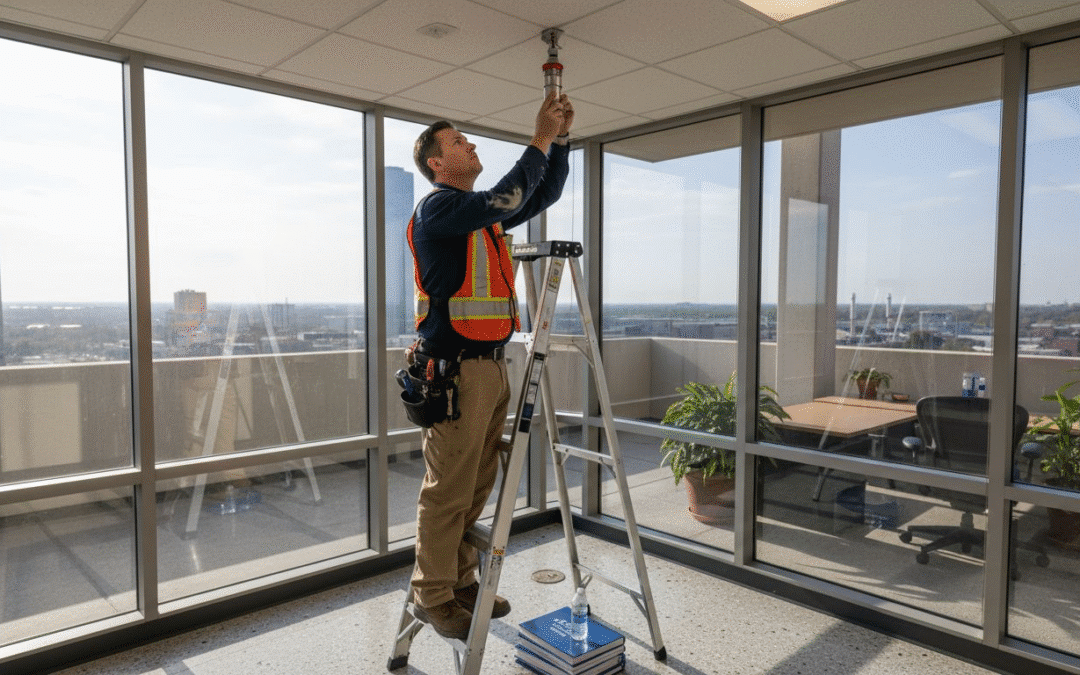
Commercial property managers in Houston know that protecting high-value assets requires more than just basic fire alarms. The wrong suppression system can mean costly damage to critical equipment, failed compliance inspections, or unexpected downtime. Choosing the right fire suppression agent makes all the difference, offering targeted protection for sensitive environments—and helping you stay ahead of evolving safety codes and regulations.
Table of Contents
- What Is A Fire Suppression Agent?
- Common Types And How They Work
- Key Applications In Commercial Settings
- Legal Codes And Houston Regulations
- Risks, Costs, And Maintenance Factors
Key Takeaways
| Point | Details |
|---|---|
| Understanding Fire Suppression Agents | Fire suppression agents are specialized substances that extinguish fires by disrupting combustion. They are essential in protecting sensitive environments from traditional water damage. |
| Types of Fire Suppression Systems | Common agents include Halocarbon, Inert Gas, and Carbon Dioxide, each suitable for specific applications and environments. Selection should be based on fire risk assessment. |
| Regulatory Compliance is Critical | Adhering to local fire codes, such as those in Houston, mandates regular inspections and maintenance of fire suppression systems to ensure safety and avoid legal penalties. |
| Investment in Maintenance | Ongoing maintenance and risk evaluations are crucial for ensuring the reliability of fire suppression systems, ultimately reducing potential financial losses from fire incidents. |
What Is a Fire Suppression Agent?
A fire suppression agent is a specialized substance designed to quickly extinguish fires by interrupting the fundamental combustion process. These advanced chemical compounds are engineered to neutralize fires in sensitive environments where traditional water-based systems could cause significant damage.
Fire suppression agents work by targeting one or more critical components of the fire tetrahedron, which includes fuel, heat, oxygen, and chemical chain reactions. Fire suppression systems operate through two primary application methods:
- Total Flooding: Completely filling an enclosed space with fire suppressant
- Local Application: Targeting specific fire-prone areas directly
The primary types of fire suppression agents include:
- Halocarbon Agents: Electrically nonconducting substances that evaporate without leaving residue
- Inert Gas Agents: Naturally occurring gases that reduce oxygen levels
- Carbon Dioxide Agents: Rapidly displacing oxygen to interrupt combustion
These agents are particularly crucial for protecting high-value or sensitive equipment in settings like data centers, telecommunications facilities, museums, and electrical rooms. Unlike water, these agents can extinguish fires without causing secondary damage to delicate equipment or valuable assets.
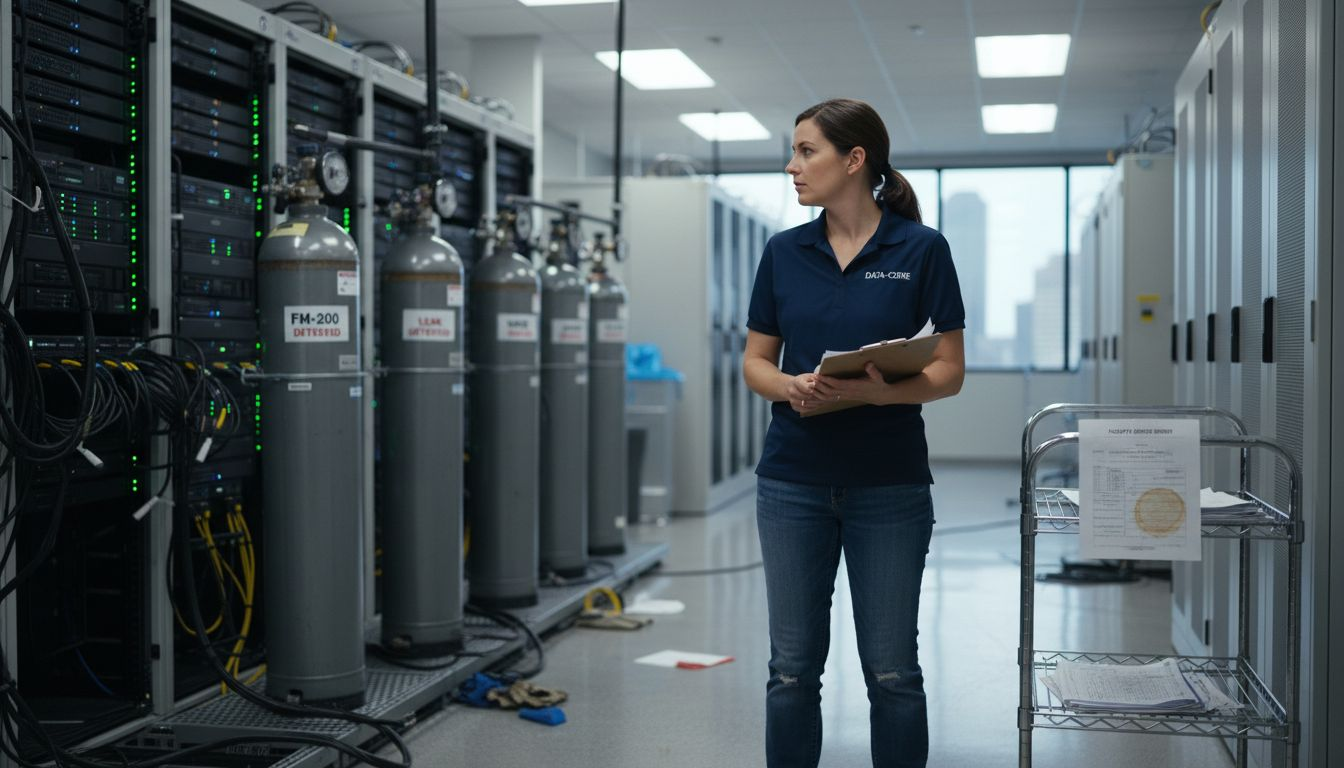
The following table highlights how fire suppression agents impact commercial operations:
| Agent Type | Impact on Sensitive Equipment | Speed of Suppression | Typical Use Case |
|---|---|---|---|
| Halocarbon Agents | No residue, safe for servers | Rapid | Data centers |
| Inert Gas Agents | Maintains equipment integrity | Moderate to fast | Telecommunication facilities |
| Carbon Dioxide | Prevents electrical damage | Very fast | Industrial control rooms |
Pro tip: Always consult fire safety professionals to determine the most appropriate suppression agent for your specific property and risk profile.
Common Types and How They Work
Fire suppression agents represent a diverse array of chemical and gaseous solutions engineered to combat different types of fires effectively. Gaseous fire suppression systems utilize sophisticated technologies that interrupt fire development through multiple mechanisms of action.
The primary categories of fire suppression agents include:
- Inert Gas Agents
- Comprised of naturally occurring gases like argon and nitrogen
- Reduce oxygen concentration to extinguish fires
- Ideal for enclosed spaces with electrical equipment
- Halocarbon Agents
- Chemically engineered compounds
- Absorb heat and interrupt chemical combustion chains
- Leave no residue after discharge
- Carbon Dioxide Agents
- Rapidly displace oxygen in fire zones
- Effective for Class B and electrical fires
- Quickly neutralize combustion without physical damage
Each suppression agent works by targeting fundamental components of the fire triangle: heat, fuel, or oxygen. Fire extinguisher types demonstrate how specialized agents can address specific fire risks, from cooking fires to electrical equipment emergencies.
The selection of an appropriate fire suppression agent depends on multiple factors, including the protected environment, potential fire sources, and specific risk profile of the space. Commercial properties like data centers, telecommunication facilities, and museums require nuanced approaches to fire protection.
Different fire suppression agents excel in unique scenarios, making professional assessment critical for optimal protection.
Pro tip: Consult certified fire safety professionals to conduct a comprehensive risk assessment and recommend the most suitable suppression agent for your specific property.
Key Applications in Commercial Settings
Commercial fire suppression represents a critical safety strategy for protecting high-value assets and sensitive environments. Clean agent fire suppression systems have revolutionized how businesses safeguard their most critical infrastructure against potential fire damage.
Key commercial settings that require specialized fire suppression solutions include:
- Data Centers
- Protect expensive server equipment
- Prevent electrical fire spread
- Minimize operational disruption
- Telecommunications Facilities
- Shield communication network infrastructure
- Maintain continuous communication systems
- Prevent catastrophic equipment failure
- Museums and Archives
- Preserve historical artifacts
- Protect irreplaceable collections
- Prevent damage from traditional water-based systems
- Laboratories
- Safeguard scientific research equipment
- Prevent chemical reaction risks
- Protect sensitive experimental setups
Gaseous fire suppression technologies offer unique advantages by rapidly extinguishing fires without causing secondary damage. These systems can quickly neutralize potential fire threats in environments where traditional water sprinklers would cause catastrophic equipment failure.
Specialized fire suppression agents can mean the difference between a minor incident and a total operational shutdown.
Pro tip: Conduct an annual comprehensive risk assessment to ensure your fire suppression system remains optimized for your specific commercial environment.
Legal Codes and Houston Regulations
Fire suppression regulations in Houston represent a comprehensive framework designed to ensure maximum safety for commercial and residential properties. Houston Fire Department standards provide strict guidelines that businesses must follow to maintain compliance and protect lives and assets.
Key regulatory components include:
- Fire Code Enforcement
- Based on 2015 International Fire Code
- Local amendments specific to Houston’s unique environment
- Comprehensive coverage of life safety requirements
- Inspection Requirements
- Mandatory periodic system evaluations
- Detailed documentation of maintenance records
- Strict protocols for equipment testing
- Compliance Zones
- Commercial building regulations
- High-rise facility standards
- Hazardous materials storage guidelines
Fire protection system maintenance is critically monitored by the Houston Fire Marshal’s office, which conducts regular inspections to ensure adherence to established safety protocols. Commercial property managers must maintain meticulous records and demonstrate ongoing system readiness.
Here’s a summary of maintenance and compliance requirements for fire suppression systems in Houston:
| Requirement Category | Key Expectation | Consequence of Non-Compliance |
|---|---|---|
| Regular Inspections | Annual certified system evaluation | Fines, loss of certification |
| Maintenance Documentation | Up-to-date records available onsite | Legal penalties, delayed operations |
| Adherence to Codes | Meet local and IFC standards | Liability in case of fire |
Compliance is not optional – it’s a legal requirement that protects both property and human life.
Pro tip: Schedule annual comprehensive fire system inspections with certified professionals to maintain regulatory compliance and avoid potential legal penalties.
Risks, Costs, and Maintenance Factors
Fire suppression systems represent a critical investment for commercial properties, balancing safety requirements with financial considerations. Fire suppression strategies require careful evaluation of risks, operational costs, and long-term maintenance requirements.
Key financial and operational factors include:
- Initial Installation Costs
- Equipment procurement
- System design and customization
- Professional installation fees
- Ongoing Maintenance Expenses
- Regular system inspections
- Component replacement
- Recertification and testing
- Potential Risk Factors
- System reliability
- Potential equipment failure
- Delayed activation risks
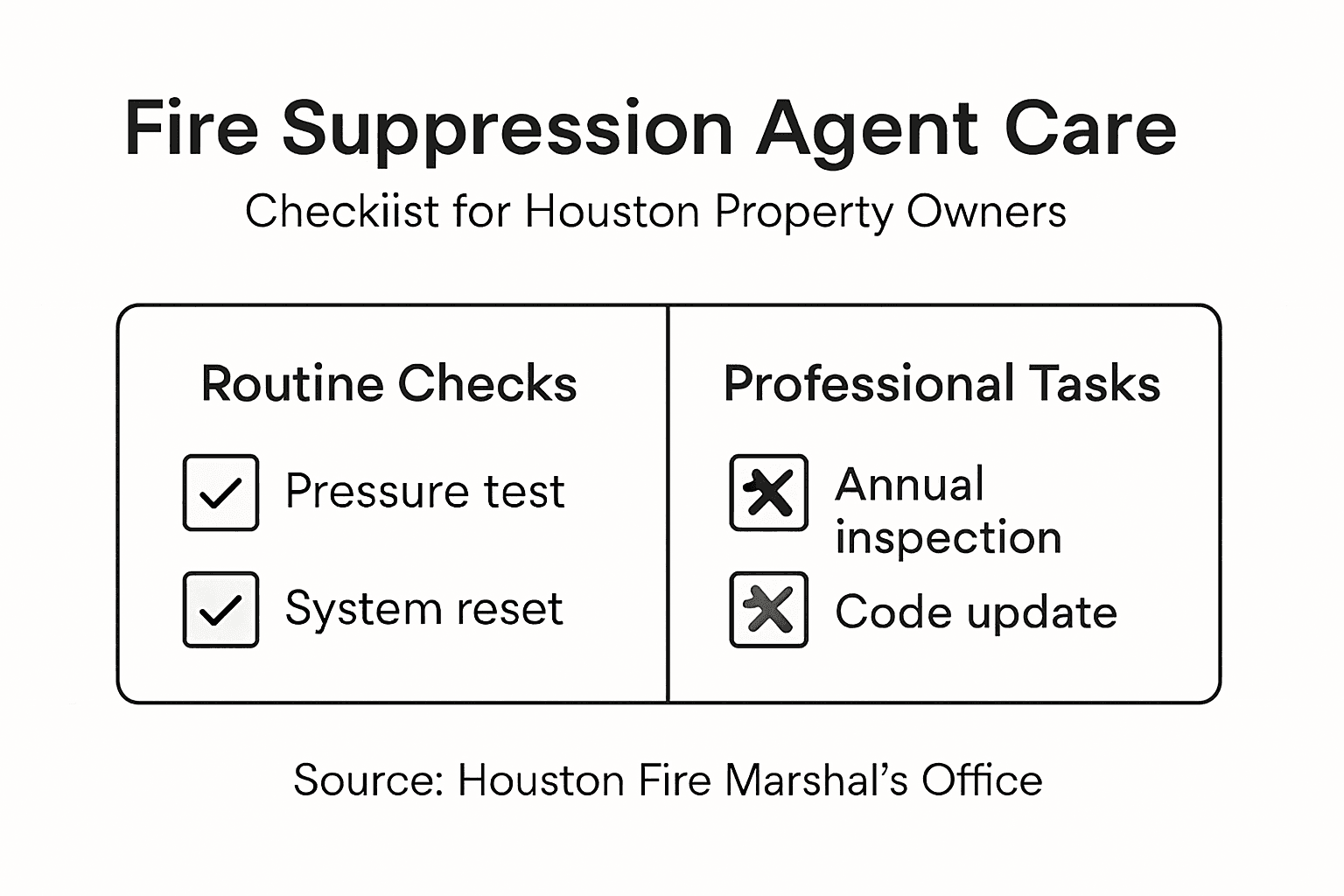
Room integrity testing becomes crucial for ensuring the effectiveness of gaseous suppression systems. Proper maintenance involves comprehensive leak testing and verifying structural integrity to guarantee optimal performance during critical moments.
Proactive maintenance is significantly more cost-effective than managing post-fire recovery and potential business interruption.
Pro tip: Create a detailed maintenance log and schedule professional inspections at least twice annually to minimize potential system failures and unexpected costs.
Protect Your Houston Property with Expert Fire Suppression Solutions
Understanding the importance of advanced fire suppression agents is the first step toward safeguarding your valuable assets from devastating fire damage. Commercial properties in Houston face unique fire safety challenges that require specialized agents like halocarbon, inert gases, and carbon dioxide to effectively protect sensitive environments without causing secondary harm.
At Reliable Fire Protection, we focus on tailored fire suppression systems designed to meet Houston’s strict regulatory standards. Our expertise ensures you maintain compliance while defending your data centers, telecommunications facilities, museums, or laboratories from costly fire incidents. Don’t leave your property vulnerable to fire risks when proven solutions are within reach.
Explore our comprehensive Fire Protection services that include installation, maintenance, and system inspections performed by certified professionals. Contact us today at Reliable Fire Protection for a free consultation so you can confidently protect your property with the right fire suppression system customized for your needs. Act now and secure your peace of mind before disaster strikes.
Frequently Asked Questions
What is a fire suppression agent?
A fire suppression agent is a specialized substance designed to extinguish fires quickly by interrupting the combustion process. These agents are specifically crafted for environments where traditional water-based systems may cause damage.
How do different types of fire suppression agents work?
Fire suppression agents work by targeting components of the fire tetrahedron, which includes heat, fuel, and oxygen. For instance, inert gas agents reduce oxygen levels, halocarbon agents absorb heat, and carbon dioxide agents displace oxygen to neutralize fires rapidly.
What are the key applications of fire suppression agents in commercial settings?
Key applications include protecting data centers, telecommunications facilities, museums, and laboratories. These environments require specialized agents to ensure safety without damaging sensitive equipment.
What are the legal requirements for fire suppression systems in commercial properties?
Legal requirements include adhering to local fire codes, conducting regular system inspections, and maintaining up-to-date maintenance documentation. Compliance is essential for ensuring safety and avoiding legal penalties.
Recommended
- Fire Protection Explained: Safeguarding Houston Properties
- Fire Suppression System Setup Guide: Complete Installation Steps
- Commercial Fire Protection: Safeguarding Houston Properties
- 7 Key Examples of Fire Safety Equipment for Properties
- Fire Alarm System University Place TX
- Fire Alarm System Bellaire TX