
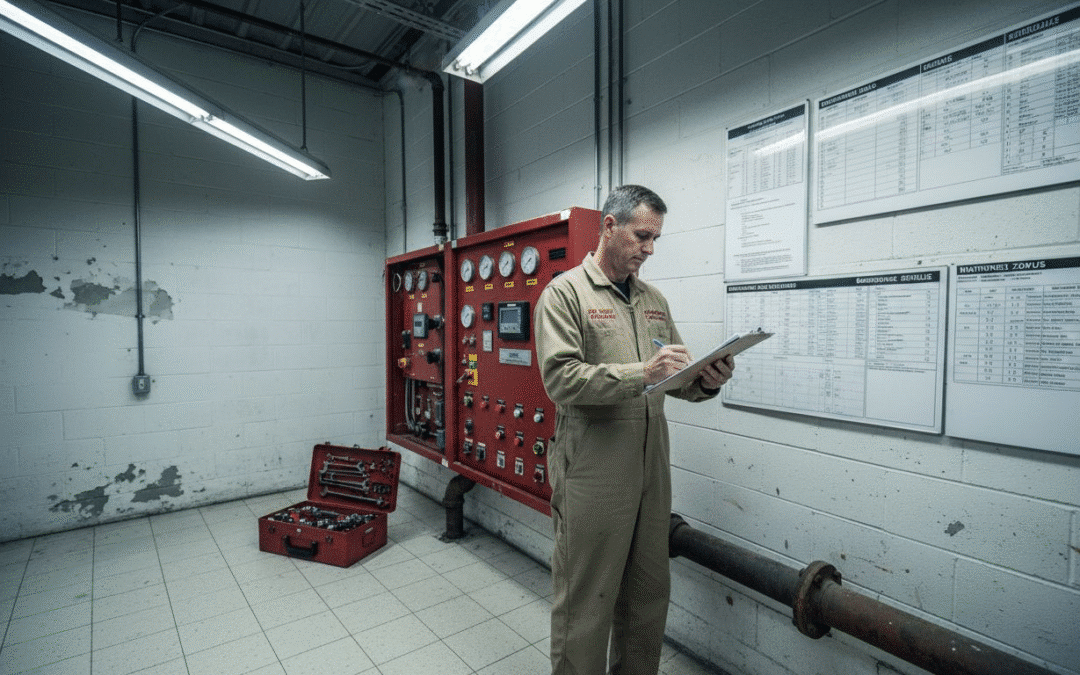
Managing commercial properties in Houston means navigating a maze of fire safety regulations while protecting your investment from potential liability. Overlooking even small details in sprinkler system inspection can leave your building exposed to costly compliance issues or operational failures. This clear, step-by-step guide empowers property managers to tackle every element of sprinkler system assessment, from system documentation to alarm device functionality, keeping your property both legally compliant and truly protected.
Table of Contents
- Step 1: Assess System Documentation And Compliance Requirements
- Step 2: Inspect Sprinkler Head Condition And Alignment
- Step 3: Examine Control Valves And Water Supply Readiness
- Step 4: Verify Alarm And Notification Device Functionality
- Step 5: Test System Operation And Reset Components
Quick Summary
| Key Point | Explanation |
|---|---|
| 1. Review Compliance Documentation | Systematically assess all sprinkler system records to ensure compliance with current safety regulations. |
| 2. Inspect Sprinkler Heads Thoroughly | Check each sprinkler head for damage and proper alignment to ensure effective operation during emergencies. |
| 3. Evaluate Control Valves and Water Supply | Confirm control valves function properly and assess water availability for emergency response. |
| 4. Test Fire Alarm Systems | Systematically test alarm devices for proper functionality to ensure effective emergency notifications. |
| 5. Conduct Comprehensive System Testing | Perform thorough operational tests to ensure all components function correctly and document the results. |
Step 1: Assess system documentation and compliance requirements
Evaluating your Houston property’s sprinkler system documentation is a critical first step in ensuring comprehensive fire safety. You will systematically review all existing records to confirm the system meets current safety compliance standards.
To thoroughly assess your sprinkler system documentation, follow these key steps:
- Locate and organize all original installation blueprints
- Collect comprehensive maintenance records
- Review historical inspection reports
- Verify system design matches current NFPA requirements
- Check credentials of previous maintenance personnel
Your documentation review should focus on critical elements like hydraulic calculations, system configuration details, and alignment with local fire safety regulations. Property managers must pay special attention to verifying plan specifications that demonstrate code compliance.
Thorough documentation assessment reduces liability risks and ensures your sprinkler system meets all current safety standards.
The process requires meticulous attention to detail and a systematic approach to cross-referencing existing documents against current regulatory requirements. Maintaining organized and up-to-date documentation is not just recommended – it’s a legal responsibility for property owners.
Pro tip: Create a dedicated digital folder for all sprinkler system documentation, ensuring quick access and backup in case of emergencies.
The following table highlights documentation types and how each supports fire protection compliance:
| Document Type | Compliance Role | Key Benefit |
|---|---|---|
| Installation Blueprint | Proves proper system layout | Helpful for upgrades |
| Maintenance Records | Confirms routine servicing | Tracks issue history |
| Inspection Reports | Verifies past code compliance | Identifies recurring problems |
| Credential Records | Validates expertise of personnel | Ensures qualified service |
| Hydraulic Calculations | Confirms design meets standards | Assures adequate water flow |
Step 2: Inspect sprinkler head condition and alignment
Carefully inspecting each sprinkler head is crucial for maintaining an effective fire protection system in your Houston property. You’ll systematically evaluate every sprinkler head’s physical condition and precise orientation to ensure optimal performance during potential emergency scenarios.
When conducting your visual sprinkler head inspection, focus on identifying these critical characteristics:
- Check for signs of physical damage
- Verify correct sprinkler head orientation
- Inspect for corrosion or paint coverage issues
- Assess clearance around each sprinkler head
- Look for potential fluid loss or leakage
Your detailed examination should prioritize identifying any deficiencies that could compromise fire protection effectiveness. Proper alignment and functionality are essential for ensuring water distribution during an emergency.
A thorough sprinkler head inspection can prevent potential system failures and protect lives and property.
Pay special attention to the sprinkler heads’ positioning, ensuring they are not obstructed by storage, ceiling tiles, or equipment. Even minor misalignments can significantly impact the sprinkler system’s performance during a critical moment.

Pro tip: Use a small mirror or smartphone camera to inspect hard-to-view sprinkler heads from different angles without requiring a ladder.
Step 3: Examine control valves and water supply readiness
Preparing your sprinkler system’s water supply and control mechanisms is a critical step in ensuring your Houston property’s fire protection readiness. You’ll systematically verify the operational integrity of control valves and assess the water supply system’s capacity to respond effectively during an emergency.
When examining control valve assemblies, focus on these essential inspection criteria:
- Confirm valves are fully open
- Check for signs of electrical supervision
- Inspect valve mechanisms for smooth operation
- Verify no visible leaks or corrosion
- Ensure clear access to all control points
Your water supply evaluation should thoroughly assess the system’s capability to deliver adequate water pressure. Water storage tank maintenance is crucial for guaranteeing continuous water availability during a potential fire scenario.
Proper control valve and water supply inspection can mean the difference between a contained incident and a catastrophic property loss.
Pay particular attention to municipal water connections, fire pump functionality, and overall system pressure. Even minor discrepancies in valve positioning or water supply can significantly compromise your sprinkler system’s effectiveness.
Pro tip: Document valve positions and water pressure readings during each inspection, creating a comprehensive maintenance history for future reference.
Step 4: Verify alarm and notification device functionality
Ensuring your fire alarm system communicates effectively is crucial for protecting your Houston property during emergencies. You’ll systematically test each notification device to confirm they trigger correctly and provide clear, comprehensive alerts across the entire facility.
When conducting fire alarm system tests, focus on these critical evaluation points:
- Check audible alarm volume and clarity
- Verify visual notification devices activate simultaneously
- Test manual pull stations for proper response
- Confirm control unit signal integrity
- Evaluate communication with monitoring services
Your comprehensive alarm verification should include thorough testing of both audible and visible notifications. Supervising station alarm requirements mandate precise signal handling and rapid emergency communication.
A fully functional alarm system can mean the difference between early warning and catastrophic delay during an emergency.
Pay special attention to notification device placement, ensuring every area of your property receives clear, unmistakable alerts. Systematic testing helps prevent potential communication failures that could compromise occupant safety.
Pro tip: Create a detailed testing log with timestamps and device performance notes to track your alarm system’s reliability over time.
Step 5: Test system operation and reset components
Testing your sprinkler system’s operational integrity is a critical final step in ensuring comprehensive fire protection for your Houston property. You’ll systematically verify each component’s functionality and reset the system to maintain optimal readiness.
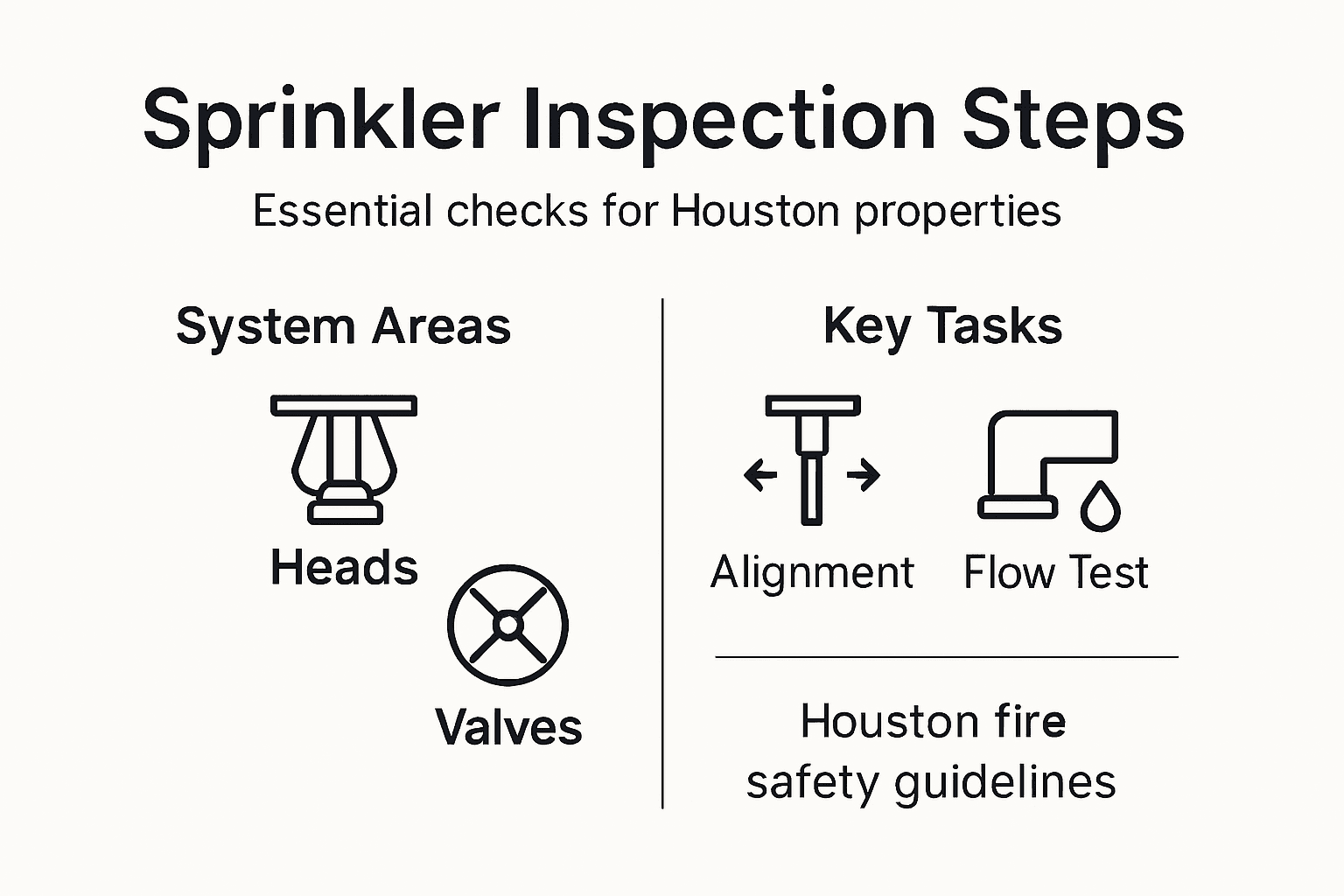
When conducting sprinkler system testing, focus on these comprehensive evaluation steps:
- Perform complete water flow testing
- Check valve and control mechanisms
- Verify alarm and notification systems
- Assess thermal response capabilities
- Document all test results meticulously
Your thorough testing should include comprehensive sprinkler head evaluations to confirm system reliability. Each component must undergo rigorous functional checks to guarantee peak performance during an emergency.
Systematic testing and proper reset procedures are your first line of defense against potential system failures.
Carefully document every test result, noting any irregularities or potential areas of concern. Pay special attention to resetting each component precisely to its original operational state, ensuring the system remains fully prepared for immediate response.
Pro tip: Use color-coded tags or digital tracking to mark tested components and track their most recent inspection date, preventing missed or overdue evaluations.
Here’s a summary of key inspection areas and their primary benefits for Houston property sprinkler systems:
| Inspection Area | Main Goal | Risk If Neglected | Added Value |
|---|---|---|---|
| Documentation Review | Ensure legal compliance | Increased liability, fines | Streamlined audits, lower risk |
| Sprinkler Head Inspection | Optimize fire response efficiency | Delayed activation, poor coverage | Reduced likelihood of failure |
| Control Valve Check | Guarantee water delivery readiness | Loss of pressure, system downtime | Maximized system reliability |
| Alarm Verification | Assure fast emergency communication | Delayed alerts, safety gaps | Increased occupant protection |
| System Testing & Reset | Confirm all parts function together | Undetected malfunctions | Consistent, reliable operation |
Enhance Your Houston Property’s Fire Safety with Expert Sprinkler Inspection and Maintenance
Sprinkler system inspections are essential for every Houston property owner committed to preventing fire emergencies and ensuring compliance with safety standards. This guide highlights how detailed reviews of documentation, sprinkler head conditions, control valves, and alarms can uncover hidden risks that place lives and assets in jeopardy. Don’t let outdated records or neglected components lead to costly failures when you need protection the most.
At Reliable Fire Protection, we specialize in comprehensive fire protection services tailored to Houston’s unique safety needs. Our certified team helps you verify compliance, conduct meticulous inspections, and perform thorough system tests that guarantee your sprinkler system operates flawlessly.

Protect your property and peace of mind today by partnering with a trusted local expert. Visit https://reliable-fire-protection.com to request your free quote or schedule a professional sprinkler system inspection now. Your safety cannot wait until the next emergency.
Frequently Asked Questions
What key documents should I review during a sprinkler system inspection?
To conduct a thorough inspection, review installation blueprints, maintenance records, inspection reports, and credentials of maintenance personnel. Organize these documents to quickly verify compliance with current safety standards.
How can I ensure my sprinkler heads are functioning properly?
Inspect each sprinkler head for physical damage, correct orientation, and any signs of corrosion or leaks. Schedule regular inspections to identify and address potential issues before they impact system performance.
What is the importance of checking control valves in a sprinkler system?
Control valves regulate water flow during emergencies, so confirming they are fully open and operational is essential for effective fire protection. Perform regular checks and document any findings to maintain optimal readiness.
How do I test the functionality of fire alarm devices in my property?
To ensure your fire alarm system communicates effectively, test each notification device for sound clarity, visual activation, and response from manual pull stations. Conduct this testing regularly to ensure the system operates correctly in emergencies.
What steps should I follow to test my sprinkler system’s overall operation?
Perform a complete water flow test, check all control mechanisms, verify alarms, and document the results. This comprehensive testing ensures the system is reliable and ready to respond effectively during an emergency.
How often should I inspect and maintain my sprinkler system?
Aim to inspect your sprinkler system at least once every six months, ensuring that all components are functioning properly. Create a maintenance schedule to stay on track and reduce the risk of unexpected failures.