TL;DR:
- Fire-resistant materials delay fire spread and protect structures but are not completely fireproof.
- Houston homes benefit from specific rated materials like fiber cement siding, brick, and Class A roofing.
- Combining passive materials with active systems and proper maintenance creates a comprehensive fire safety strategy.
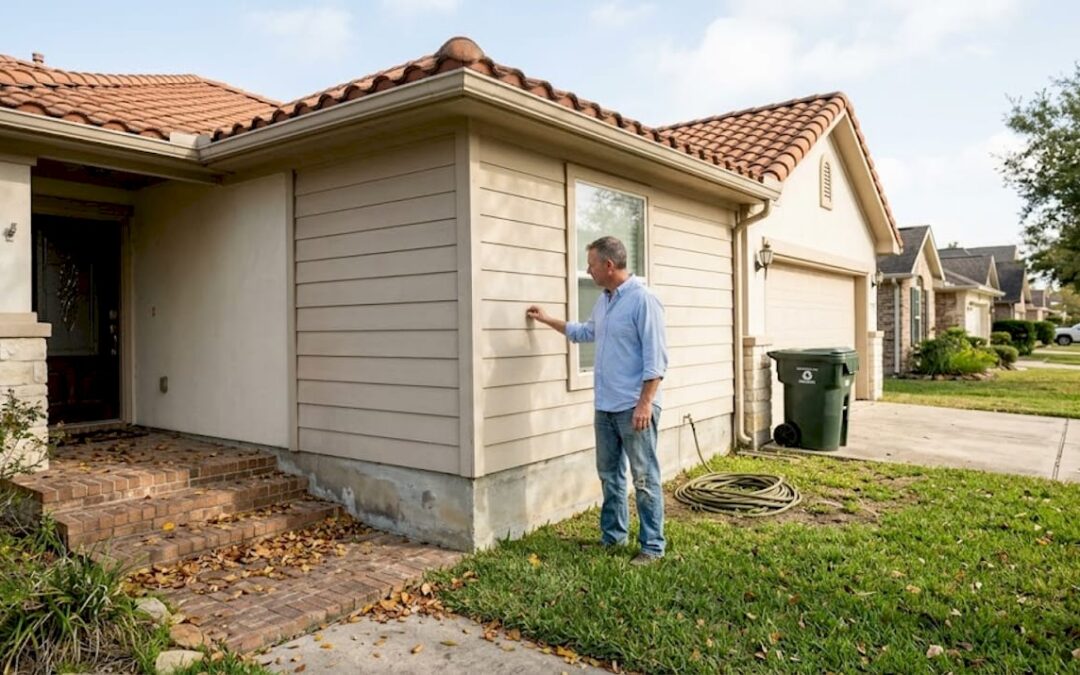
No material in your home is truly fireproof. That word gets thrown around in product descriptions and renovation guides constantly, but it creates a dangerous illusion of invulnerability. The real goal of fire-resistant construction is to slow a fire down, protect your family’s escape route, and keep your structure standing long enough for help to arrive. Houston homeowners face a specific set of challenges: dense neighborhoods, humid Gulf Coast weather, and an evolving set of local building codes that demand more than a basic understanding of materials. This guide breaks down what fire-resistant materials actually do, which ones work best in Houston, and how to combine them with active safety systems for real protection.
Table of Contents
- What does ‘fireproof’ really mean for your home?
- Types of fire-resistant materials: Options for Houston homes
- How fire-resistant materials work: Science, ratings, and Houston codes
- Choosing and installing fireproof materials in Houston: Real-world tips
- Beyond materials: Integrated fire safety defenses for Houston homes
- Why resilient design, not just materials, matters for Houston homes
- Get expert help for fireproofing your Houston home
- Frequently asked questions
Key Takeaways
| Point | Details |
|---|---|
| Fireproof means safer, not invincible | Fire-resistant materials slow fire spread and buy precious time, but no home is fireproof. |
| Choose proven materials | Class A roofing, concrete, fiber cement, and mineral wool insulation offer top-notch protection for Houston homes. |
| Understand local codes | Houston has unique fire codes; always check permitting requirements before upgrading. |
| Layer materials for best results | Multi-layered assemblies and combining different materials provide superior defense than any single solution. |
| Integrate passive and active systems | For full home safety, combine fire-resistant upgrades with sprinklers, alarms, and regular maintenance. |
What does ‘fireproof’ really mean for your home?
Many homeowners assume that fireproof means a fire simply cannot take hold. That assumption is both understandable and genuinely dangerous. No residential material on the market is completely impervious to fire. What fire-resistant materials actually do is buy time.
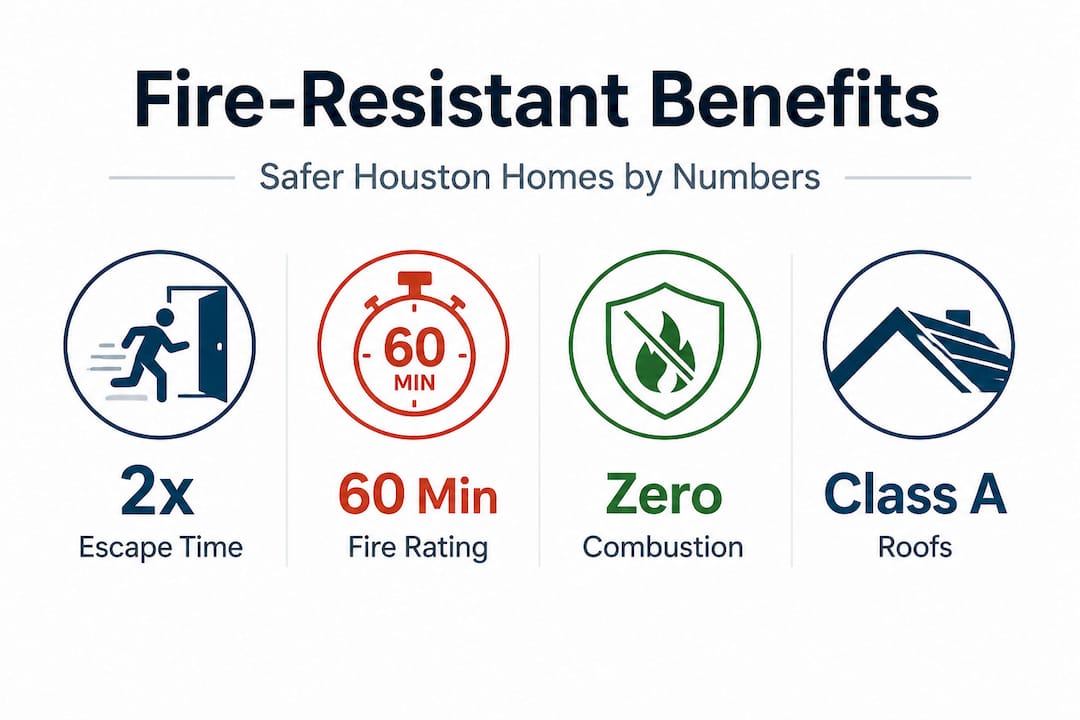
Fireproof materials in homes primarily slow fire spread, maintain structural integrity, and provide evacuation time rather than being truly impervious to fire. That distinction matters enormously. A 60-minute fire rating on a wall assembly means the wall holds up for roughly an hour under standardized test conditions, giving occupants time to escape and firefighters time to respond. It does not mean the wall survives forever.
Understanding passive fire protection helps clarify this further. Passive systems are built into the structure itself: the walls, the roof, the floors. They work silently, without anyone flipping a switch. Active systems like sprinklers and alarms require activation. Both matter, but passive protection is your first line of defense.
Here are the core myths versus facts every Houston homeowner should know:
- Myth: Fireproof materials make a home immune to fire damage.
Fact: They delay damage and protect structure, not prevent fire entirely. - Myth: One fireproof product protects the whole home.
Fact: Assemblies (layers of materials working together) determine real-world ratings. - Myth: Fire-resistant upgrades are only for new construction.
Fact: Retrofitting existing Houston homes with upgraded materials is both practical and code-compliant.
“The goal is not to build a home that cannot burn. The goal is to build a home that burns slowly enough to save lives.”
Houston’s urban density adds urgency to this conversation. Homes sit close together, fire can jump quickly between structures, and response times vary by neighborhood. Getting your passive defenses right is not optional.
Types of fire-resistant materials: Options for Houston homes
Understanding the limits of “fireproof” materials, let’s explore the top options available for Houston homes. The good news is that the market offers a strong range of materials suited to different parts of your home and different budget levels.
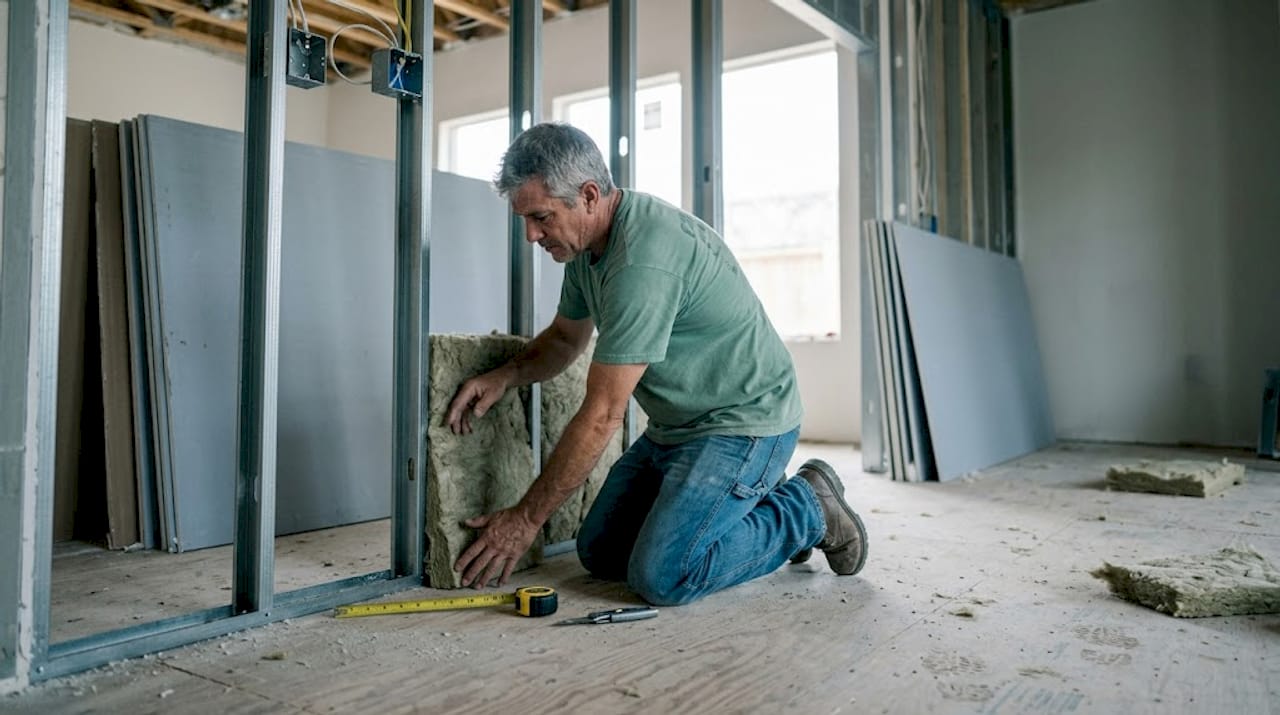
Common fire-resistant materials include concrete (non-combustible with low thermal conductivity), steel with intumescent coatings (protects until 1500°F), gypsum board Type X (releases steam to slow heat, with 1-hour ratings in assemblies), fiber cement siding (Class A rating), brick and masonry (withstands 1200°F), and Class A roofing like metal or clay tiles.
Here is a quick comparison of the most common options:
| Material | Fire rating | Best use in home | Houston climate note |
|---|---|---|---|
| Concrete | Non-combustible | Foundations, walls | Excellent in humidity |
| Type X gypsum board | 1-hour (in assembly) | Interior walls, ceilings | Widely available locally |
| Fiber cement siding | Class A | Exterior walls | Resists moisture and fire |
| Brick and masonry | Withstands 1200°F | Exterior walls, fireplaces | Low maintenance in heat |
| Steel with intumescent coating | Up to 1500°F | Structural framing | Needs proper coating upkeep |
| Class A metal roofing | Highest rating | Roof | Reflects heat, storm-resistant |
| Clay or concrete tiles | Class A | Roof | Handles Gulf Coast storms |
| Mineral wool insulation | Class A, noncombustible | Walls, attic | Moisture-resistant, mold-resistant |
A few points deserve extra attention for Houston specifically. Fiber cement siding handles the Gulf Coast’s humidity exceptionally well while also delivering that Class A fire rating. It does not warp, rot, or ignite easily. Brick and masonry are time-tested choices in older Houston neighborhoods and remain among the most reliable exterior options available.
Class A roofing deserves special mention because your roof is your home’s most vulnerable surface during a wildfire or ember storm. Metal roofing and clay tiles both carry the highest fire resistance classification and can be the single most impactful upgrade you make to an existing home.
Pro Tip: If you are planning fire system upgrades alongside material changes, coordinate the timing. Running new wiring or sprinkler lines before closing up walls with new drywall saves significant labor costs.
Mineral wool insulation is one of the most underrated choices on this list. It is noncombustible, moisture-resistant, and performs well in Houston’s humid attic spaces where standard fiberglass batts can absorb moisture and lose effectiveness over time.
How fire-resistant materials work: Science, ratings, and Houston codes
Selecting the best materials requires understanding how they are designed, rated, and regulated. You do not need a degree in materials science, but knowing the basics helps you ask better questions when working with contractors and inspectors.
Materials like gypsum release bound water as steam when exposed to heat, which slows temperature rise on the unexposed side. Intumescent coatings expand dramatically when heated, forming a thick insulating char layer around steel framing. Concrete and masonry absorb heat through sheer thermal mass, slowing the transfer of dangerous temperatures to the interior. Fire ratings such as ASTM E119 measure the time to failure across three criteria: load-bearing capacity, integrity (no cracks or gaps), and insulation (temperature on the unexposed side). Class A roofing is tested under UL 790 and ASTM E108 standards for resistance to severe fire exposure.
Here is how the main rating systems break down:
| Rating system | What it measures | Applies to |
|---|---|---|
| ASTM E119 | Time to structural failure (REI) | Walls, floors, ceilings |
| UL 790 / ASTM E108 | Roofing fire resistance (Class A/B/C) | Roofing materials |
| ASTM E84 | Flame spread and smoke development | Interior finishes |
| IRC / IFC | Minimum construction standards | All Houston residential builds |
Houston follows the International Residential Code (IRC) and International Fire Code (IFC) with local amendments. Those amendments matter. The City of Houston Permitting Center publishes updates, and what applies to a new build in Katy may differ from retrofit requirements in Midtown.
Here is a numbered checklist for Houston homeowners navigating code compliance:
- Identify which version of the IRC and IFC Houston currently enforces.
- Check the Houston Permitting Center for any local amendments to national standards.
- Confirm your contractor pulls the required permits before work begins.
- Request documentation of material ratings (UL listings, ASTM certifications) from your supplier.
- Schedule inspections at the required stages, not just at project completion.
- Keep all certificates and inspection records in a home file for insurance purposes.
One statistic worth knowing: homes with properly rated wall and ceiling assemblies give occupants significantly more escape time than homes with standard construction. That extra time is not abstract. It is the difference between making it out and not.
Choosing and installing fireproof materials in Houston: Real-world tips
To apply what we have learned on a real Houston home, here is how to make the smartest, code-compliant upgrades. The most common mistake homeowners make is treating fire resistance as a single product purchase rather than a system-level decision.
Houston homeowners should verify amendments at the Houston Permitting Center, use MgO (magnesium oxide) panels for humid or mold-prone multifamily settings, and consult the Fire Marshal for retrofits and compliance in high-occupancy residential buildings. MgO panels are worth knowing about even for single-family homes in Houston’s wetter neighborhoods. They resist mold, moisture, and fire simultaneously, which makes them a practical upgrade for garage walls or utility rooms.
Here is a practical checklist for evaluating where to upgrade first:
- Roof: Replace with Class A metal or clay tile roofing if your current material is rated B or C.
- Attic: Add mineral wool insulation and seal all penetrations where utilities enter.
- Garage: Install Type X gypsum board on walls and ceilings shared with the living space.
- Kitchen: Use Type X drywall behind appliances and upgrade to fire-rated door assemblies.
- Exterior walls: Consider fiber cement siding or brick veneer over combustible sheathing.
- Utility entry points: Seal gaps around pipes, wires, and HVAC penetrations with fire-rated caulk or intumescent collars.
Pro Tip: Review fire prevention tips before finalizing your upgrade plan. Small behavioral changes, like keeping the garage clear of combustibles, multiply the effectiveness of structural improvements significantly.
One mistake to avoid is using the wrong insulation type in concealed spaces. Foam plastic insulation requires a thermal barrier (typically gypsum board) to be code-compliant in most Houston applications. Skipping that barrier is a common permit failure. Use the fire prevention checklist to confirm you have covered all the bases before calling for inspection.
Assemblies matter more than individual materials. A single sheet of Type X drywall provides some protection, but a properly designed assembly combining drywall, mineral wool insulation, and fire-rated framing delivers a rated 1-hour or 2-hour system. That layered approach is what the code is actually measuring.
Beyond materials: Integrated fire safety defenses for Houston homes
Finally, fireproof materials are just one part of the strategy. Let’s examine how they work alongside other critical home safety systems.
Key benchmarks show that 5/8-inch Type X gypsum provides roughly 60 minutes of separation, concrete thickness directly determines its fire rating, and fiber cement carries a Class A flame spread index. Homes with Class A roofs are three times more likely to survive wildfire exposure. Sprinklers reduce fire deaths by 89% and property loss by 55% according to NFPA data. Treated wood chars at approximately 0.7 mm per minute, which is a predictable and manageable rate that structural engineers can design around.
Here is a numbered list of the top integrated defenses every Houston home needs:
- Class A roofing to stop ember ignition at the most vulnerable surface.
- Type X gypsum assemblies in garages, kitchens, and shared walls.
- Residential fire sprinkler system for active suppression when fire starts.
- Interconnected smoke alarms on every level and in every sleeping area.
- Mineral wool insulation in attic and wall cavities for passive thermal protection.
- Fire-rated doors at garage-to-home and utility room entries.
- Sealed penetrations throughout the structure to stop fire from traveling through gaps.
“Materials slow the fire. Sprinklers fight it. Alarms wake you up. You need all three working together.”
Review fire protection best practices to understand how these systems interact in a real Houston home environment. Regular maintenance matters just as much as initial installation. Sprinkler heads need annual inspection. Smoke alarms need battery checks and replacement every 10 years. Using creating a fire safety checklist as a seasonal reminder keeps all your defenses current.
Why resilient design, not just materials, matters for Houston homes
After years of working with Houston homeowners on fire safety, one thing stands out clearly: the homeowners who feel the most confident are not the ones who spent the most on materials. They are the ones who thought about fire safety as a system and then maintained it consistently.
No home is truly fireproof. Resilient design focuses on defensible space, sealed vents, and multi-layer assemblies rather than any single product. Fire ratings do not capture ember intrusion, smoke toxicity, or the cumulative effect of deferred maintenance. Mineral wool is the preferred insulation choice because it is both Class A rated and noncombustible. Foam plastics without proper thermal barriers remain a genuine risk even in otherwise well-upgraded homes.
What most guides miss is the role of small gaps. A fire-rated wall assembly with an unsealed electrical outlet becomes a pathway for smoke and heat. A Class A roof with an unscreened attic vent becomes an ember trap. Resilient design means thinking about the whole envelope of your home, not just the most visible surfaces.
The government fire safety tips for Houston property managers emphasize the same principle: layered, maintained defenses outperform any single premium product. What Houston homeowners can start doing this year is simple. Audit your attic vents, check your roofing classification, confirm your garage drywall is Type X, and schedule a sprinkler inspection. Those four steps alone put you ahead of most homes in your neighborhood.
Get expert help for fireproofing your Houston home
Choosing the right materials is only half the job. Proper installation, code-compliant assemblies, and integrated active systems require expertise that goes beyond a weekend project.
At Reliable Fire Protection, we work with Houston homeowners every day to close the gap between good intentions and real fire safety. Understanding how fire alarm systems work is a great starting point, and pairing that knowledge with the right fire system upgrades turns passive materials into a complete defense strategy. Our team handles everything from sprinkler installation to alarm systems, and we know Houston’s local codes inside and out. Browse our full range of fire safety products and services or contact us today for a free quote tailored to your home.
Frequently asked questions
Which areas of my Houston home should I prioritize for fireproof upgrades?
Focus first on the roof, attic, garage, exterior siding, kitchen, and any area where utilities enter the structure. Prioritizing Class A roofing and Type X gypsum in garages and kitchens addresses the highest-risk zones while meeting IRC and IFC requirements.
What’s the most effective fire-resistant roofing for Houston homes?
Class A roofing, such as metal or clay tiles, is the gold standard for fire resistance and durability in Houston’s climate. Class A roofing materials like metal and clay tiles provide the highest fire rating available for residential use.
Do fire-resistant materials eliminate the need for sprinklers and alarms?
No, fire-resistant materials should be paired with active systems like sprinklers and alarms for complete home protection. Sprinklers reduce deaths by 89% and property loss by 55%, numbers that passive materials alone cannot achieve.
How can I confirm my upgrades comply with Houston fire codes?
Check amendments at the Houston Permitting Center or consult your local Fire Marshal to ensure full compliance. Verifying local amendments before starting any retrofit project prevents costly rework and permit failures.
Are there materials I should avoid in high-humidity or storm-prone Houston homes?
Yes, avoid foam plastics without proper barriers and consider MgO panels or mineral wool for humid or storm-prone areas. Mineral wool insulation is noncombustible, Class A rated, and handles moisture far better than standard foam products in Houston’s climate.
Recommended
- Fire prevention checklist for Houston properties 2026
- Fire safety training: protecting Houston properties in 2026
- Government fire safety tips for Houston managers 2026
- Top fire prevention tips for Houston property owners
- Fire Alarm System University Place TX
- Fire Alarm System Services in Bellaire, TX