TL;DR:
- Tenant fire safety involves maintaining safe conditions inside units, such as testing alarms and keeping exit paths clear. It is a legal responsibility that requires cooperation with inspections and proper daily habits to prevent fire hazards in buildings. Neglecting these duties can lead to legal penalties, lease termination, or increased fire risks for tenants and neighbors.
The role of tenant fire safety is the set of daily responsibilities tenants hold to prevent fire hazards and protect everyone in their building. Fire safety compliance for tenants is not passive. You are legally required to maintain safe conditions inside your unit, cooperate with inspections, and avoid actions that put your neighbors at risk. Fire safety law holds that whoever controls a space is responsible for its safety conditions. That principle places real, enforceable duties directly on you as a renter.
What is the role of tenant fire safety in apartments?
Tenant fire safety covers three core areas: equipment maintenance, daily habits, and cooperation with your building’s safety systems. Each area carries legal weight. Ignoring any one of them can result in fines, lease termination, or criminal charges.
Routine alarm testing and clear exit paths are tenant legal responsibilities, not optional best practices. They protect your safety and your tenancy at the same time. Understanding this distinction is the first step toward taking your responsibilities seriously.
Here is what fire safety compliance for tenants looks like in practice:
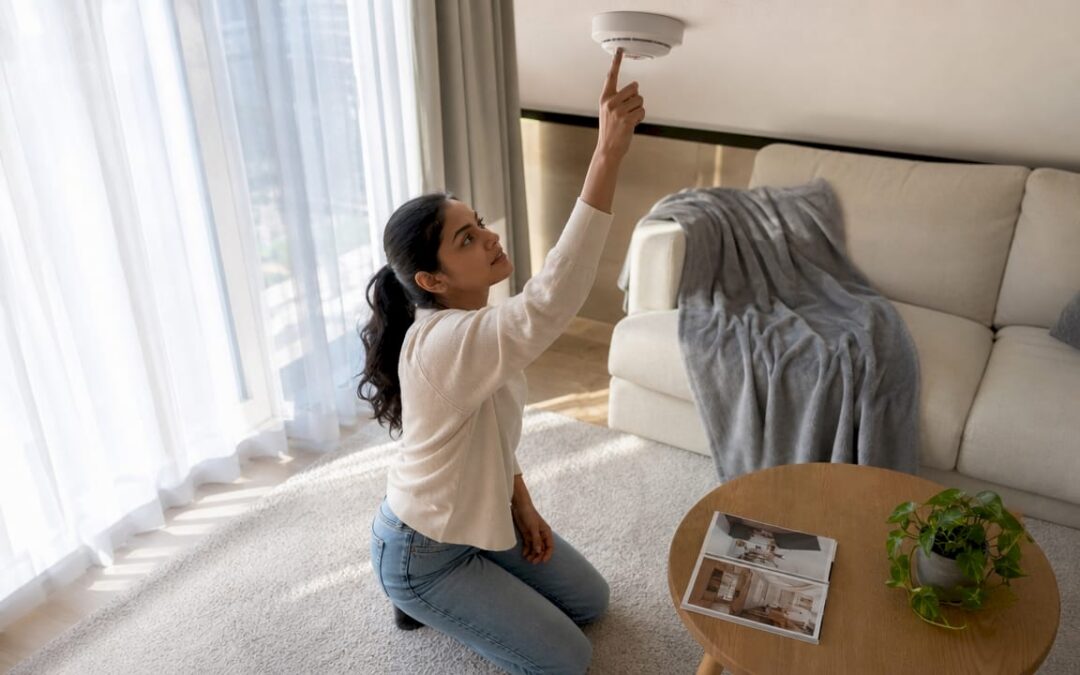
- Test smoke and carbon monoxide alarms monthly. Replace batteries when the alarm chirps. Tenants should keep spare batteries and address a chirping alarm within 24–48 hours to avoid gaps in detection.
- Keep your exit routes clear. Furniture, boxes, and clutter inside your unit must never block a door or hallway leading to an exit.
- Never tamper with or disable alarms. This includes covering detectors to stop cooking smoke from triggering them.
- Report faults promptly. If a smoke alarm fails or a fire door is damaged, notify your landlord or property manager in writing the same day.
- Use appliances safely. Never leave cooking unattended, avoid overloading electrical outlets, and unplug appliances when not in use.
- Allow access for inspections. When your landlord or a technician schedules a fire safety inspection, you are required to provide access.
Pro Tip: Set a recurring monthly calendar reminder to test every smoke alarm in your unit. A 10-second test takes less effort than replacing everything you own.
How do tenant responsibilities intersect with landlord duties?
Fire safety in a multi-unit building is a shared effort, and the line between tenant and landlord duties is clearer than most renters realize. Fire safety is a continuous coordination effort between both parties, not a one-time setup or a responsibility that shifts entirely to one side.
Landlords own the structural and shared systems. They must install smoke alarms on every floor, maintain sprinkler systems, and conduct gas safety checks every 12 months along with electrical inspections every five years. Under Awaab’s Law, serious fire hazards must be fixed within 24 hours in certain residential sectors. That is a strong legal protection for you as a renter.
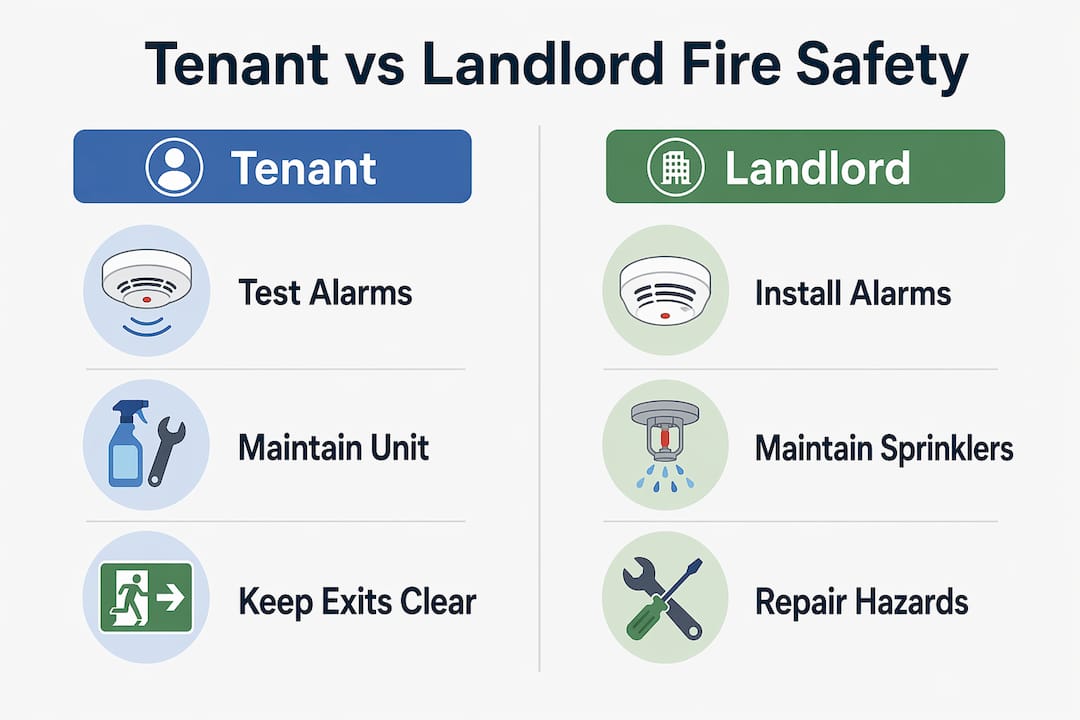
Tenants own the conditions inside their units and their daily behavior. You cannot contract your way out of this. Lease agreements cannot override fire safety laws. Even if a lease clause tries to shift liability, the legal duty stays with the person who controls the space.
| Responsibility | Tenant | Landlord |
|---|---|---|
| Install smoke alarms on each floor | No | Yes |
| Test alarms monthly | Yes | No |
| Maintain sprinkler systems | No | Yes |
| Keep unit exit routes clear | Yes | No |
| Schedule gas and electrical checks | No | Yes |
| Report faults promptly | Yes | No |
| Allow access for inspections | Yes | No |
One point most renters miss: refusing access for mandatory inspections of shared systems like sprinklers can cause whole-building compliance loss. Your refusal does not just affect you. It can expose every tenant in the building to legal risk and reduced safety coverage.
What fire prevention and emergency tips should every tenant follow?
Prevention is simpler than recovery. Most apartment fires start from a small number of causes: unattended cooking, overloaded electrical outlets, and misused fire doors. Addressing these three areas alone removes the majority of your fire risk.

Propping fire doors open is one of the most dangerous and common tenant mistakes. Fire doors create compartments that slow the spread of fire and smoke. When you wedge one open, you eliminate that protection for every resident on your floor. Close fire doors every time, without exception.
Communal hallways blocked by bikes, boxes, or prams become deadly trip hazards in zero-visibility smoke conditions. A clear hallway that takes two seconds to walk through in daylight can take two minutes to navigate in a fire. That difference costs lives.
Here are the emergency preparedness steps every renter should complete:
- Locate your building’s evacuation plan. Find it posted in common areas and read it fully. Know whether your building uses a “Stay Put” or simultaneous evacuation policy.
- Walk your escape route. Do this in daylight so you can navigate it without thinking in an emergency.
- Identify two exits. Your primary exit and a secondary one in case the first is blocked.
- Know where the nearest fire extinguisher is. Check out types of fire extinguishers so you understand which type applies to which fire.
- Prepare a go-bag. Keep ID, medications, phone charger, and a small amount of cash in one place you can grab in under 30 seconds.
- Share your plan with household members. Every person in your unit should know the route and the meeting point outside.
Pro Tip: The most overlooked fire risk in apartments is the dryer lint trap. Clean it after every single load. Lint fires spread fast and are entirely preventable.
You can also review a fire prevention checklist to make sure your unit covers all the basics.
What legal consequences can tenants face for ignoring fire safety?
Neglecting fire safety duties carries real legal consequences, not just moral ones. Tampering with or disabling smoke alarms can result in fines up to $50,000 in Ontario. That figure reflects how seriously fire safety law treats interference with detection equipment.
Beyond fines, ignoring fire safety duties can lead to lease termination, liability for property damages, and in serious cases criminal penalties. A tenant whose negligence causes a fire that damages neighboring units faces civil suits from affected residents and potential criminal charges. Your fire safety liability is separate from your landlord’s. One does not cancel out the other.
The practical takeaway is straightforward. Fulfilling your tenant fire prevention responsibilities protects you legally and physically. Skipping them creates exposure on both fronts. No lease clause, verbal agreement, or building manager instruction removes your personal duty to maintain safe conditions inside your unit.
Key Takeaways
Tenants hold direct legal responsibility for fire safety inside their units, and no lease clause can transfer that duty to a landlord.
| Point | Details |
|---|---|
| Monthly alarm testing | Test smoke and carbon monoxide alarms every month and replace batteries within 48 hours of a chirp. |
| Fire door discipline | Never prop or wedge fire doors open; closed doors slow fire and smoke spread across the building. |
| Clear exit routes | Keep hallways and unit exits free of bikes, boxes, and clutter at all times. |
| Inspection cooperation | Allow access for all mandatory fire safety inspections to protect building-wide compliance. |
| Legal penalties are real | Tampering with alarms can result in fines up to $50,000; negligence can lead to eviction and criminal charges. |
Fire safety is a culture, not a checklist
Most tenants treat fire safety as something that happens to them rather than something they actively maintain. That mindset is the root of most preventable apartment fires. I have seen buildings where every landlord-installed system worked perfectly and a fire still spread because a tenant propped a fire door open with a shoe.
The shared responsibility model only works when both sides take it seriously. Landlords who install and maintain proper systems deserve tenants who respect those systems daily. When you test your alarm, clear your hallway, and close your fire door, you are not just following rules. You are protecting the family next door who may not even know your name.
The biggest misconception I encounter is that fire safety is the landlord’s job. Legally and practically, that is only half true. Your landlord controls the structure. You control your behavior inside it. Neither half works without the other.
Renters who engage proactively with their building’s fire safety setup, ask questions about evacuation plans, and report hazards immediately are the ones who survive fires with their property and their neighbors intact. Fire safety awareness for tenants is not about fear. It is about knowing your role and playing it every day.
— Results
Reliable-fire-protection: fire safety systems for your building
Understanding your responsibilities as a tenant starts with understanding the systems your building relies on.
Reliable fire protection is a Houston-based fire safety company with certified expertise in fire alarm systems, sprinkler installations, fire extinguishers, and advanced detection solutions. Whether you are a tenant wanting to understand how your building’s alarm system works or a property manager looking to bring a building into full compliance, Reliable-fire-protection provides the technical knowledge and hands-on service to get it done right. Reach out for a free quote and find out what your property actually needs.
FAQ
What are a tenant’s main fire safety responsibilities?
Tenants must test smoke alarms monthly, keep exit routes clear, avoid tampering with alarms or fire doors, report faults promptly, and allow access for mandatory inspections. These are legal duties, not suggestions.
Can a lease agreement remove a tenant’s fire safety duties?
No. Lease agreements cannot override fire safety law. The legal duty to maintain safe conditions inside a rental unit stays with the tenant regardless of what a lease clause states.
What happens if a tenant disables a smoke alarm?
Tampering with or disabling a smoke alarm can result in fines up to $50,000 in some jurisdictions, plus potential lease termination and criminal liability if the tampering contributes to a fire.
How quickly must landlords fix serious fire hazards?
Under Awaab’s Law, serious fire hazards in certain residential sectors must be repaired within 24 hours. Tenants should report hazards in writing to create a documented record of the request.
Why is propping a fire door open so dangerous?
Fire doors create compartments that contain fire and smoke. Propping one open removes that barrier, allowing fire and smoke to spread rapidly across the building and putting every resident at risk.
Recommended
- Fire Safety Regulations Explained: Impact on Houston Property Managers
- Why Fire Safety Matters for Houston Properties
- 7 Fire Safety Best Practices for Houston Property Managers
- Fire Safety Equipment Explained: Houston Compliance Impact
- Fire Alarm System University Place TX
- Fire Alarm System Bellaire TX