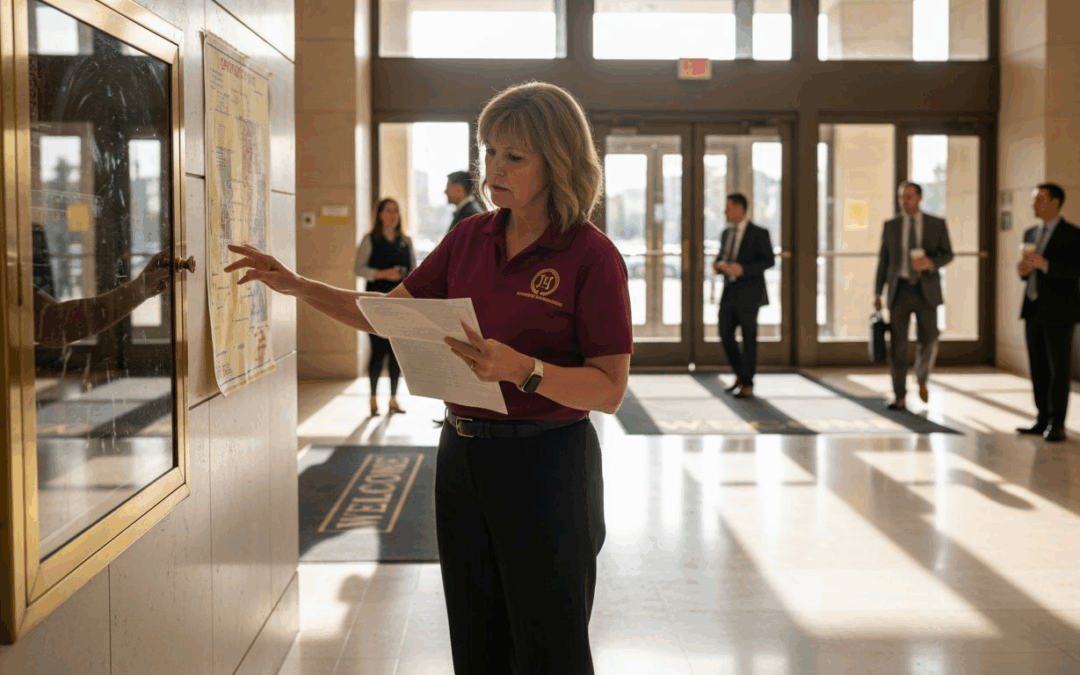
Most American commercial property managers know that even a single code violation can turn into a major liability. Houston’s evolving fire safety requirements pose serious challenges for operators of multi-tenant buildings striving to protect tenants and avoid costly penalties. With new fire codes and over $10 billion in annual fire-related property losses nationwide, this guide demystifies the latest standards and offers strategies to keep your building compliant, your stakeholders protected, and your peace of mind intact.
Table of Contents
- Defining Commercial Fire Safety Standards
- Types of Fire Protection Systems
- Houston Fire Safety Codes And Compliance
- Responsibilities Of Property Managers
- Common Fire Safety Risks And Mistakes
Key Takeaways
| Point | Details |
|---|---|
| Importance of Compliance | Adhering to commercial fire safety standards is crucial to protect property and ensure the safety of employees in Houston’s business environment. |
| Proactive Risk Management | Conducting regular fire safety audits and risk assessments can help identify and mitigate potential hazards effectively. |
| Responsibility of Property Managers | Property managers play a vital role in maintaining safety protocols, ensuring compliance, and coordinating emergency response strategies. |
| Common Risks to Avoid | Addressing common fire safety mistakes, such as blocked exits and malfunctioning alarms, is essential to prevent emergencies in commercial properties. |
Defining Commercial Fire Safety Standards
Commercial fire safety standards represent a critical framework of guidelines designed to protect property, employees, and assets in Houston’s diverse business landscape. These standards, established by authoritative organizations like the National Fire Protection Association, provide comprehensive requirements for fire prevention, detection, and suppression in commercial environments.
The standards encompass multiple critical dimensions of fire safety, including building design, equipment installation, maintenance protocols, and emergency response strategies. ASTM International standards complement these requirements by defining specific testing methodologies for building materials, ensuring they meet rigorous fire resistance and flammability criteria. These standards help commercial property managers systematically mitigate potential fire risks through structured, scientifically validated approaches.
Key elements of commercial fire safety standards typically include:
- Mandatory fire alarm system specifications
- Sprinkler system design requirements
- Emergency exit and evacuation pathway regulations
- Electrical system safety protocols
- Material flammability testing guidelines
Pro tip: Schedule an annual comprehensive fire safety audit to ensure your commercial property remains compliant with the latest national and local fire protection standards.
Types of Fire Protection Systems
Fire protection systems are sophisticated networks of technologies designed to detect, alert, and suppress fires in commercial properties. Fire protection systems encompass both active and passive components that work together to ensure comprehensive safety for buildings, employees, and assets in Houston’s diverse commercial landscape.
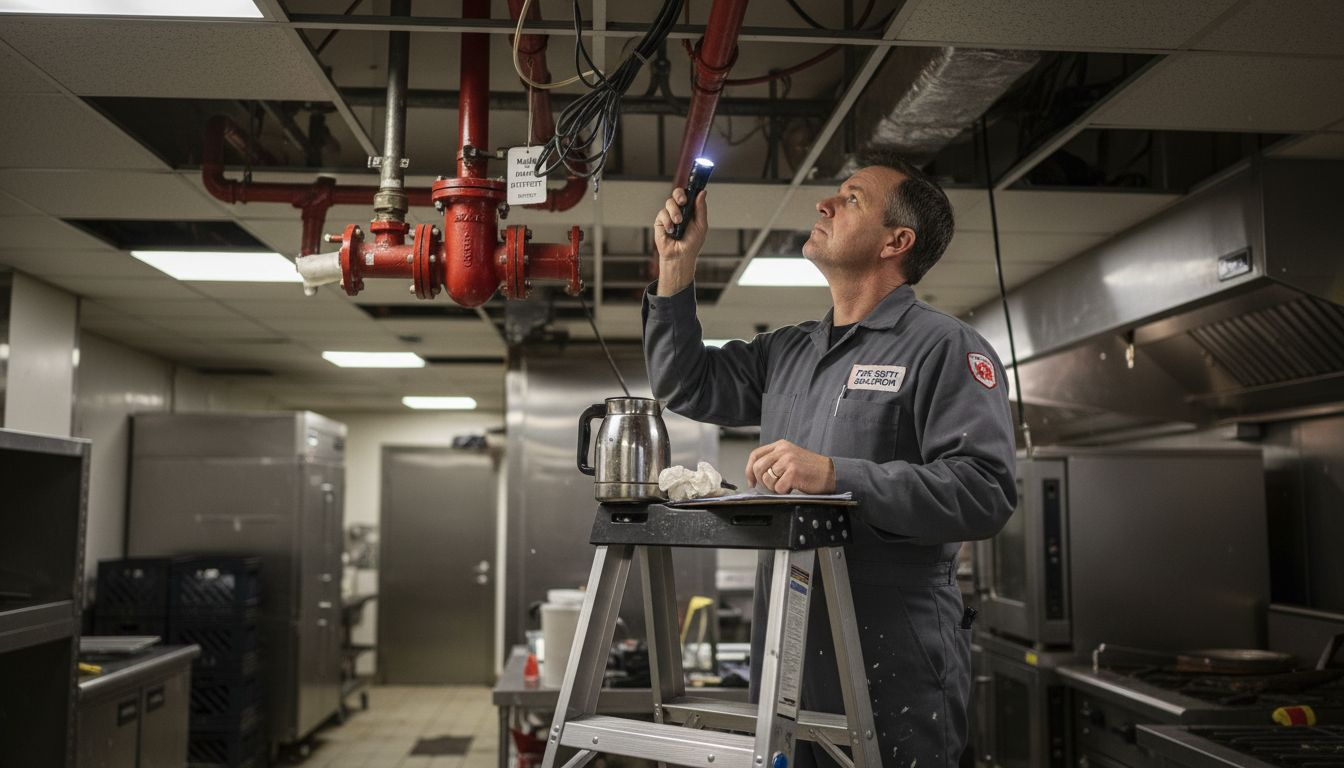
Commercial properties typically rely on several key types of fire protection systems. Sprinkler systems represent a primary defense mechanism, with variations including wet pipe, dry pipe, and pre-action configurations tailored to specific environmental needs. Fire suppression technologies also include specialized gaseous agent systems particularly useful in areas where water damage could cause significant secondary problems, such as server rooms or data centers.
The primary categories of fire protection systems include:
- Fire Alarm Systems: Detect and signal fire presence
- Sprinkler Systems: Automatically suppress fire spread
- Fire Suppression Systems: Neutralize fire using water or specialized agents
- Portable Fire Extinguishers: Provide manual fire control options
- Smoke Detection Systems: Early warning mechanisms
Pro tip: Conduct a comprehensive fire risk assessment to determine the most appropriate combination of fire protection systems for your specific commercial property.
Here’s a summary of fire protection system types and their optimal use cases in commercial properties:
| System Type | Example Use Environments | Key Business Value |
|---|---|---|
| Sprinkler System | Warehouses, retail stores | Minimizes property damage |
| Smoke Detection System | Office buildings, hotels | Early threat identification |
| Gaseous Suppression System | Data centers, server rooms | Prevents water-related loss |
| Fire Alarm System | High-rise, public spaces | Rapid evacuation alerting |
| Portable Fire Extinguishers | Kitchens, workshops | Immediate hazard response |
Houston Fire Safety Codes and Compliance
Houston’s fire safety regulations represent a complex and comprehensive framework designed to protect commercial properties and their occupants. Fire safety codes establish stringent requirements for building design, fire protection systems, and emergency preparedness that all commercial properties must meticulously follow.
The 2021 Houston Fire Code provides detailed guidelines that vary based on building occupancy, height, and intended use. Commercial property managers must navigate a multifaceted compliance landscape that includes submitting detailed construction documents, obtaining specific permits, and ensuring precise installation of fire protection systems. Houston Fire Marshal Office plays a critical role in this process, conducting thorough facility inspections and enforcing fire safety regulations across the city.
Key compliance requirements for Houston commercial properties include:
- Comprehensive fire alarm system documentation
- Sprinkler system design and installation certifications
- Emergency exit and evacuation pathway standards
- Regular system maintenance and inspection logs
- Hazardous materials storage and handling protocols
Pro tip: Maintain a comprehensive digital archive of all fire safety compliance documentation to streamline annual inspections and demonstrate proactive safety management.
Responsibilities of Property Managers
Property managers serve as critical guardians of fire safety in commercial buildings, bearing comprehensive responsibilities that extend far beyond routine maintenance. Property management fire safety roles encompass a multifaceted approach to protecting tenants, assets, and building infrastructure through proactive risk management and compliance strategies.
The core responsibilities include maintaining rigorous documentation, implementing comprehensive safety protocols, and ensuring continuous compliance with local fire safety regulations. Property managers must develop and regularly update emergency response plans, conduct systematic safety inspections, and coordinate with fire prevention authorities to identify and mitigate potential hazards. Institutional safety enforcement requires a detailed understanding of fire codes, building systems, and potential risk factors specific to each commercial property.
Key responsibilities for property managers include:
- Developing comprehensive emergency evacuation plans
- Maintaining and documenting fire protection system inspections
- Conducting regular safety training for tenants and staff
- Ensuring compliance with Houston fire safety codes
- Managing maintenance of fire suppression and detection equipment
- Coordinating with local fire prevention authorities
Pro tip: Create a digital fire safety management system that centralizes all compliance documentation, inspection records, and emergency protocols for quick access and easy demonstration of regulatory adherence.
Compare the roles of property managers versus fire safety regulators for ensuring commercial fire protection:
| Stakeholder | Main Responsibilities | Impact on Safety |
|---|---|---|
| Property Managers | Inspections, training, documentation | Improves daily compliance |
| Fire Safety Regulators | Code enforcement, facility audits | Ensures legal requirements |
| Local Fire Authorities | Emergency response, risk assessment | Reduces incident severity |
| Building Owners | Investment in systems, upgrades | Long-term safety investment |
Common Fire Safety Risks and Mistakes
Commercial properties face numerous fire safety challenges that can compromise employee safety and property integrity. Fire safety risks often emerge from seemingly minor oversights that can rapidly escalate into catastrophic scenarios, making proactive identification and mitigation crucial for Houston businesses.
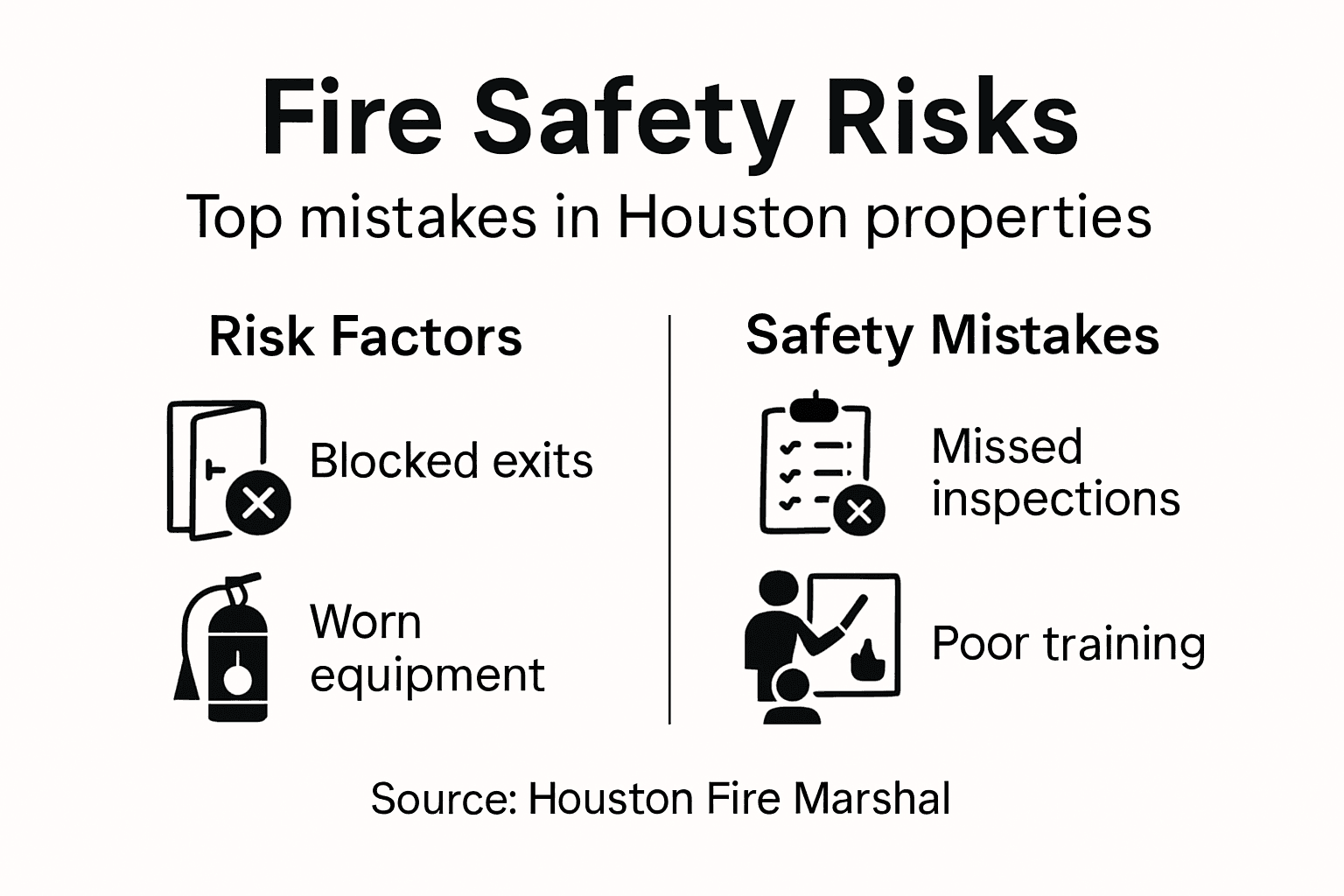
Understanding the most prevalent fire safety mistakes helps property managers develop comprehensive prevention strategies. Common fire safety errors frequently involve human behaviors and systemic negligence that create unnecessary risks. These mistakes range from improper equipment maintenance to inadequate emergency preparedness, each potentially compromising the safety of building occupants.
Critical fire safety risks include:
- Blocked or obstructed fire exits
- Malfunctioning smoke detectors
- Improper storage of flammable materials
- Lack of regular fire safety training
- Disabled or tampered fire suppression systems
- Inadequate emergency evacuation plans
Pro tip: Conduct quarterly comprehensive fire safety audits that systematically assess and document potential risks, ensuring your commercial property remains compliant and prepared for potential emergencies.
Enhance Your Houston Property’s Fire Safety with Reliable Fire Protection
Navigating the complex landscape of commercial fire safety standards and Houston fire codes can be overwhelming. If you are concerned about ensuring your fire alarm systems, sprinkler installations, and emergency evacuation plans meet regulatory compliance while protecting your property and employees, Reliable Fire Protection offers the expert support you need. We understand the critical importance of preventing common fire safety mistakes such as obstructed exits and malfunctioning detectors.
Take control of your fire protection strategy today by partnering with a trusted Houston-based company specializing in comprehensive fire protection solutions. With our certified installations, regular system maintenance, and emergency response planning, you can safeguard your commercial property from devastating fire risks. Visit Reliable Fire Protection now for a free quote and discover how our family-owned team combines local expertise with advanced technology to keep your business compliant and secure.
Frequently Asked Questions
What are commercial fire safety standards?
Commercial fire safety standards are guidelines designed to protect properties and occupants from fire hazards in commercial environments. They cover aspects like fire prevention, detection, and suppression, ensuring comprehensive fire safety measures are in place.
What types of fire protection systems are commonly used in commercial properties?
Common fire protection systems in commercial properties include fire alarm systems, sprinkler systems, fire suppression systems, portable fire extinguishers, and smoke detection systems. Each has specific applications based on the environment and needs of the business.
What are the main responsibilities of property managers regarding fire safety?
Property managers are responsible for maintaining fire safety compliance, developing emergency response plans, conducting safety inspections, coordinating tenant training, and ensuring that fire protection systems are regularly inspected and maintained.
How can businesses identify and mitigate common fire safety risks?
Businesses can identify and mitigate common fire safety risks by conducting regular audits to check for blocked exits, malfunctioning detectors, improper storage of flammable materials, and ensuring that emergency plans are in place and communicated to all occupants.
Recommended
- Fire Protection Explained: Safeguarding Houston Properties
- Commercial Fire Safety: Protecting Houston Businesses
- 7 Must-Have Fire Safety Equipment Tips for Houston Managers
- 7 Key Examples of Fire Safety Equipment for Properties
- Fire Protection Company Cinco Ranch TX
- Fire Alarm System Services Cinco Ranch TX