
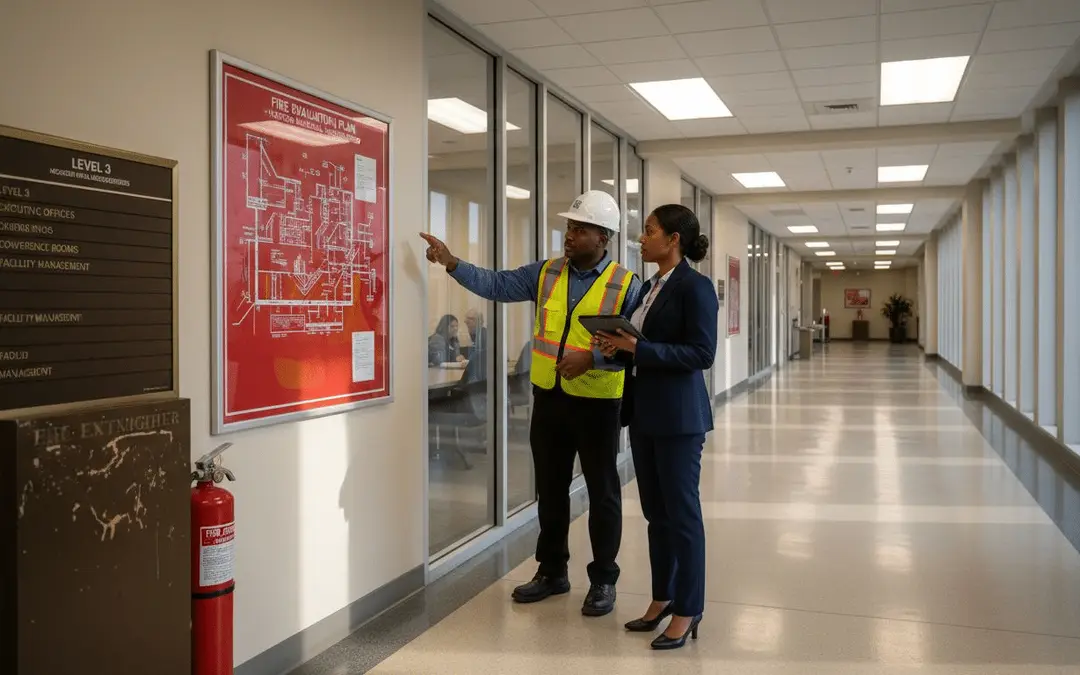
The risks facing Houston government facilities demand more than standard fire safety measures. Facilities managers must juggle evolving compliance standards, rigorous inspections, and advanced detection technologies to protect employees and public assets. Staying ahead means mastering local codes and national mandates, especially as federal laws like the Federal Fire Prevention and Control Act shape protocols. This guide clarifies the complex world of government fire safety protocols, offering actionable strategies to strengthen emergency readiness and meet every regulatory expectation.
Table of Contents
- Defining Fire Safety For Government Facilities
- Building Types And Fire Protection Solutions
- Houston Fire Codes And Legal Standards
- Essential Fire Detection And Alarm Systems
- Emergency Planning And Staff Responsibilities
- Inspection, Maintenance, And Liability Risks
Key Takeaways
| Point | Details |
|---|---|
| Comprehensive Fire Safety Protocols | Government facilities require extensive fire safety measures beyond standard commercial regulations, including advanced technologies and thorough training. |
| Tailored Fire Protection Solutions | Fire protection strategies must be customized for different building types, addressing unique safety challenges. |
| Regulatory Compliance | Adhering to federal, state, and local fire codes is essential for ensuring public safety and minimizing liability risks. |
| Continuous Improvement and Maintenance | Regular audits and maintenance of fire safety systems are crucial for identifying potential vulnerabilities and ensuring operational readiness. |
Defining Fire Safety for Government Facilities
Fire safety for government facilities represents a complex, mission-critical framework designed to protect personnel, assets, and public infrastructure from potential fire hazards. Government fire safety protocols go far beyond standard commercial building requirements, encompassing comprehensive strategies that integrate advanced technologies, rigorous training, and strategic emergency preparedness.
The Federal Fire Prevention and Control Act establishes fundamental guidelines for protecting government properties. Under this legislation, fire safety involves multiple critical components:
- Comprehensive fire detection and alarm systems
- Robust emergency communication networks
- Strategically designed evacuation routes
- Regular personnel safety training
- Advanced fire suppression technologies
Government facilities must adhere to strict standards defined by the General Services Administration (GSA). These standards mandate continuous upgrading of fire protection systems, including modern fire alarm mechanisms, emergency voice communication infrastructure, and comprehensive sprinkler installations. The ultimate goal is reducing life-safety hazards while ensuring personnel can safely evacuate during emergency scenarios.
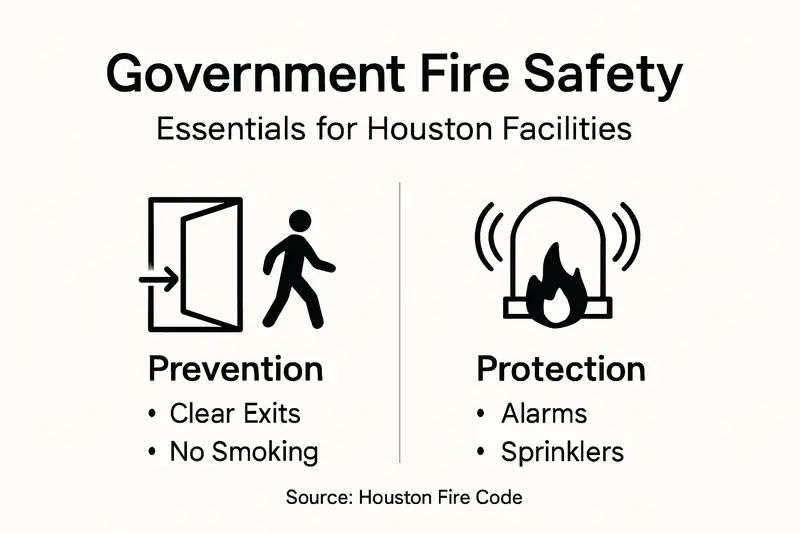
Fire risk mitigation in government buildings requires a multilayered approach that addresses prevention, detection, and response capabilities. Houston’s government facilities must navigate complex regulatory landscapes, integrating local fire codes with federal safety standards to create comprehensive protection strategies.
Pro Tip: Conduct quarterly comprehensive fire safety audits to ensure all systems remain current and functional, identifying potential vulnerabilities before they become critical risks.
Building Types and Fire Protection Solutions
Fire protection solutions in Houston’s government buildings must be tailored to the unique characteristics of different facility types, recognizing that each structure presents distinct fire safety challenges. Government building categories range from administrative offices and courthouses to emergency response centers and public utility facilities, each requiring specialized fire protection strategies.
The fire protection systems for Houston buildings must account for multiple critical factors:
- Occupancy load and population density
- Building construction materials
- Presence of critical infrastructure and sensitive equipment
- Potential evacuation complexity
- Specific operational risks
High-risk government facilities like emergency operations centers demand more sophisticated fire protection approaches. These buildings typically require integrated systems that combine:
- Advanced smoke detection technology
- Compartmentalized fire suppression zones
- Redundant communication and alarm systems
- Emergency power backup
- Strategic evacuation route designs
Houston’s municipal buildings, ranging from city halls to public libraries, present unique fire safety challenges that demand comprehensive and adaptable protection strategies. The complexity increases with specialized facilities like data centers, forensic laboratories, and emergency management headquarters, which house critical infrastructure and sensitive equipment that require precise, targeted fire prevention methods.
Here’s a comparison of fire safety priorities for different types of government buildings in Houston:
| Building Type | Primary Fire Safety Concern | Technology Emphasis |
|---|---|---|
| Administrative Offices | Safe personnel evacuation | Standard alarms, sprinklers |
| Emergency Operations Center | Maintaining operations during crisis | Redundant systems, backup power |
| Data Centers | Protecting sensitive equipment | Advanced detection, gas suppression |
| Public Libraries | Preserving public assets | Compartmentalization, alarms |
| Forensic Laboratories | Containment of hazardous materials | Specialized suppression systems |
Fire protection is not a one-size-fits-all solution but a nuanced approach tailored to each building’s specific requirements and operational context.
Pro Tip: Conduct annual comprehensive risk assessments that map out potential fire scenarios specific to each government building type, enabling more targeted and effective fire protection strategies.
Houston Fire Codes and Legal Standards
Fire codes and legal standards for government buildings in Houston represent a complex framework of local, state, and federal regulations designed to ensure maximum public safety. Municipal fire regulations are meticulously crafted to address the unique architectural and operational challenges of government facilities, incorporating multiple layers of compliance requirements.
Fire safety regulations for Houston properties encompass several critical components that government buildings must address:
- Comprehensive building construction standards
- Mandatory emergency evacuation protocols
- Specialized fire detection and suppression requirements
- Regular safety system inspections
- Detailed documentation and reporting procedures
The U.S. legal framework provides a robust foundation for fire safety standards, with federal guidelines intersecting closely with local Houston municipal codes. Government building compliance involves navigating multiple regulatory levels:
- Federal fire prevention recommendations
- Texas state building codes
- Houston municipal fire safety ordinances
- National Fire Protection Association (NFPA) guidelines
- Specific agency-level safety requirements
Local enforcement mechanisms play a crucial role in ensuring these standards are consistently maintained. Houston’s fire marshals and building inspectors conduct rigorous assessments to verify that government facilities meet all necessary fire safety criteria, with particular attention to high-risk areas and critical infrastructure.
Compliance is not just about following rules, but about creating a comprehensive safety ecosystem that protects personnel and public assets.
Pro Tip: Develop a comprehensive compliance tracking system that maps all fire code requirements across federal, state, and local levels to ensure no regulatory gaps exist.
Essential Fire Detection and Alarm Systems
Fire detection systems form the critical first line of defense for government buildings in Houston, representing sophisticated technological networks designed to protect lives and infrastructure. Modern alarm technologies go far beyond simple sound-based warnings, integrating complex sensor networks and intelligent response mechanisms that can dramatically reduce potential fire damage.
The fire detection basics for Houston businesses reveal several key technological components essential for comprehensive building protection:
- Multi-sensor smoke and heat detectors
- Addressable alarm communication systems
- Automated emergency notification platforms
- Integrated building management interfaces
- Real-time monitoring and reporting capabilities
Government facilities require advanced detection technologies that provide rapid, precise threat identification. These systems typically incorporate multiple layers of protection:
- Thermal imaging sensors
- Ionization and photoelectric smoke detectors
- Carbon monoxide monitoring systems
- Wireless communication networks
- Centralized control and reporting interfaces
Federal regulations mandate strict standards for these systems, ensuring they provide reliable, instantaneous threat detection. Houston’s government buildings must implement alarm systems that not only detect fires rapidly but also facilitate immediate, coordinated evacuation protocols.
Effective fire detection is about creating an intelligent, responsive safety ecosystem that anticipates and neutralizes potential threats before they escalate.
Pro Tip: Schedule quarterly comprehensive system diagnostics to verify all fire detection components remain fully operational and calibrated to maximum sensitivity.
Emergency Planning and Staff Responsibilities
Emergency preparedness represents a critical organizational mandate for Houston government facilities, requiring comprehensive planning and proactive staff training to ensure rapid, coordinated responses during fire incidents. Effective emergency protocols go beyond simple evacuation procedures, demanding sophisticated communication strategies and individual staff accountability.
Fire safety workplace hazards necessitate multiple layers of organizational preparation:
- Comprehensive staff training programs
- Clear emergency communication protocols
- Designated evacuation team responsibilities
- Regular risk assessment procedures
- Continuous skills maintenance and certification
Staff responsibilities in government buildings are multifaceted and require specific, actionable knowledge:
- Understand building-specific evacuation routes
- Recognize and report potential fire hazards
- Participate in mandatory emergency drills
- Maintain clear emergency exit pathways
- Follow established chain of command during emergencies
Government facilities must implement rigorous training mechanisms that transform theoretical knowledge into practical, instinctive emergency responses. This involves creating a culture of safety awareness where every staff member understands their role in preventing and responding to potential fire incidents.
Emergency preparedness is not about perfection, but about creating a resilient, adaptive response system that can protect lives under unpredictable circumstances.
Pro Tip: Conduct quarterly tabletop emergency simulation exercises that challenge staff to respond to progressively complex fire scenario challenges, ensuring continuous skill refinement and organizational readiness.

Inspection, Maintenance, and Liability Risks
Regulatory compliance represents a complex landscape of responsibilities for Houston government facilities, where systematic inspection and maintenance directly correlate with potential legal and financial risks. Understanding the intricate relationship between fire safety systems and organizational liability is crucial for preventing catastrophic financial and human consequences.
Fire safety testing requirements demand comprehensive documentation and proactive management strategies:
- Detailed maintenance record keeping
- Regular professional system assessments
- Comprehensive equipment performance tracking
- Timely repair and replacement protocols
- Documentation of all inspection activities
Liability risks in government buildings emerge from multiple potential failure points:
- Inadequate equipment maintenance
- Delayed system repairs
- Incomplete inspection documentation
- Failure to address known safety deficiencies
- Lack of staff training on safety protocols
Government facilities must develop robust risk management frameworks that transform reactive maintenance into proactive safety strategies. This involves creating systematic processes that not only meet legal requirements but anticipate potential vulnerabilities before they become critical issues.
Below is a summary of key compliance responsibilities and their organizational impact:
| Compliance Task | Organizational Impact | Documentation Requirement |
|---|---|---|
| Routine System Inspections | Early hazard detection | Maintain updated inspection logs |
| Staff Safety Training | Faster, coordinated emergency response | Record attendance, certification |
| Maintenance Record Keeping | Reduces liability, ensures reliability | Detailed service logs for each system |
| Compliance Tracking | Prevents regulatory violations | Cross-referenced code checklists |
Liability is not just a legal concept, but a comprehensive commitment to protecting personnel, infrastructure, and public trust.
Pro Tip: Implement a digital tracking system that provides real-time monitoring of fire safety equipment status, generating automatic alerts for required maintenance and potential compliance gaps.
Enhance Fire Safety in Your Houston Government Facility Today
Government buildings face unique challenges in fire safety including complex evacuation routes, advanced detection requirements, and strict compliance with multiple regulatory standards. Addressing these pain points requires specialized solutions that focus on prevention, rapid detection, and reliable suppression systems. Whether your facility needs upgraded alarm systems, sprinkler installations, or tailored emergency planning support Reliable Fire Protection is here to help protect your personnel and critical infrastructure.

Explore our comprehensive Fire Protection services crafted specifically for Houston government facilities. Don’t wait for an emergency to test your preparedness. Visit Reliable Fire Protection now for a free consultation and take the crucial step toward ensuring your building’s fire safety compliance and resilience. Act now to secure peace of mind with trusted local experts.
Frequently Asked Questions
What are the key components of fire safety for government buildings?
Fire safety for government buildings includes comprehensive fire detection and alarm systems, robust emergency communication networks, strategically designed evacuation routes, regular personnel safety training, and advanced fire suppression technologies.
How do fire codes affect government facilities in Houston?
Houston’s fire codes and legal standards ensure that government facilities comply with multilayered regulations, including federal guidelines, state building codes, and local ordinances, which aim to maximize public safety and reduce potential fire hazards.
What types of fire detection systems are essential for government buildings?
Essential fire detection systems for government buildings include multi-sensor smoke and heat detectors, addressable alarm communication systems, automated emergency notification platforms, and real-time monitoring systems to ensure rapid threat identification and response.
How can government facilities effectively prepare for fire emergencies?
Effective emergency preparedness involves comprehensive staff training, clear emergency communication protocols, designated evacuation responsibilities, regular risk assessments, and continuous skills maintenance through drills and simulations.
Recommended
- Fire Safety Regulations Explained: Impact on Houston Property Managers
- Why Fire Safety Matters for Houston Properties
- Commercial Fire Safety Basics: Protecting Houston Properties
- Fire Safety Testing Requirements for Houston Properties
- Brandwerende Kozijnen: Veiligheid en Wetgeving in België en Nederland
- Fire Alarm System University Place TX
- Fire Alarm System Bellaire TX