
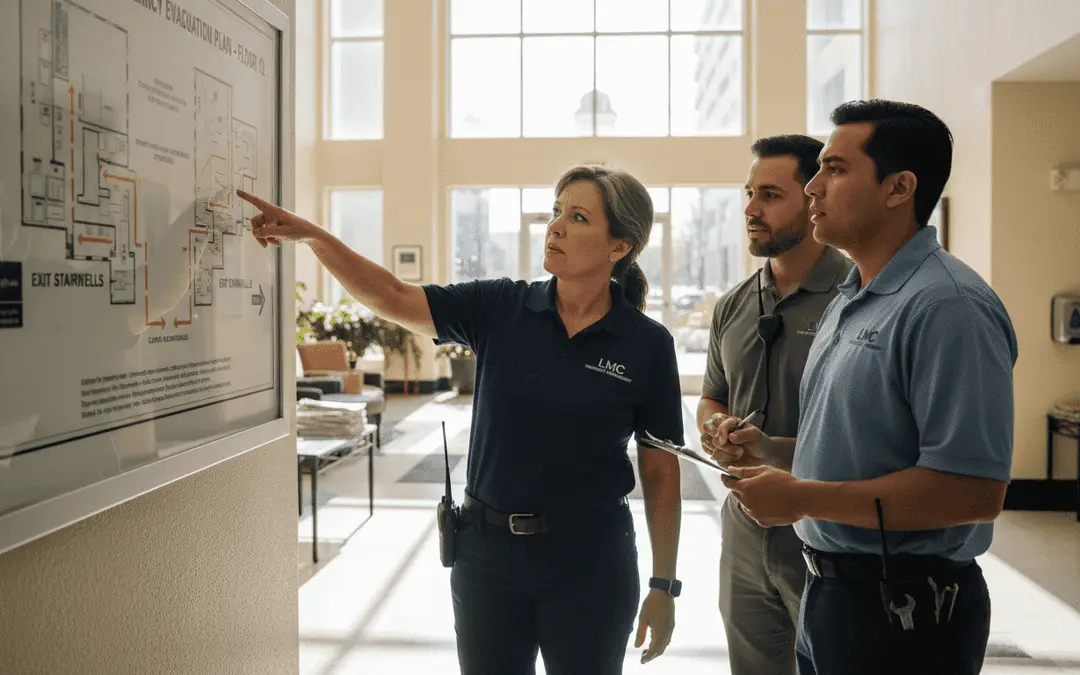
Meeting stricter fire safety standards in Houston is no longer just about checking boxes. With 2025 bringing enhanced fireproof material rules, advanced smoke alarm standards, and more frequent inspections, property managers must update their systems to protect residents and businesses from mounting risks. Understanding these updated regulations is the key to preventing costly penalties, reducing liability, and showing your commitment to safety in every corner of your property.
Table of Contents
- What Fire Safety Regulations 2025 Mean
- Key NFPA Code Updates and Standards
- New Compliance Requirements for Houston Properties
- Cybersecurity, Digital Monitoring, and System Testing
- Risks, Liabilities, and Cost Implications
Key Takeaways
| Point | Details |
|---|---|
| Updated Regulations | Fire safety regulations in Houston have become stricter, focusing on evacuation procedures, fire detection, suppression equipment, and compliance documentation. |
| Compliance Deadlines | Most properties must comply by July 1, 2025, with no grace periods for implementation delays. |
| Financial Implications | Non-compliance can lead to significant fines, insurance premium increases, and potential liability for incidents. |
| Cybersecurity Necessities | Fire safety systems must now include robust cybersecurity measures to prevent digital attacks, along with real-time monitoring capabilities. |
What Fire Safety Regulations 2025 Mean
Houston property managers are facing new demands in 2025. The updated fire safety regulations aren’t just bureaucratic checkboxes anymore—they directly impact how you protect occupants and avoid costly penalties.
These regulations establish baseline requirements across your property. Think of them as a comprehensive safety framework that covers everything from how people escape during an emergency to how your equipment stays functional year-round.
Key Requirements for Houston Properties
The 2025 updates focus on four critical areas:
- Evacuation procedures: Clear pathways, signage, and staff training for swift exits
- Fire detection systems: Functional alarms that alert occupants immediately
- Suppression equipment: Maintained sprinklers, extinguishers, and advanced systems
- Documentation standards: Records proving compliance and regular maintenance
OSHA’s fire safety standards outline comprehensive requirements including evacuation plans, fire prevention protocols, and fire protection equipment maintenance tailored to your specific property type.
What changed in 2025? The regulations became stricter about timing and accountability. You can’t just install equipment and forget about it anymore—inspections must happen more frequently, and documentation must be meticulous.
Your property’s fire safety rating now directly affects insurance premiums, tenant satisfaction, and liability exposure in case of incidents.
Residential properties face different standards than commercial buildings. A multi-family apartment complex needs different evacuation routes than an office tower, and those differences are now spelled out in more detail.
Strict compliance measures also apply to your fire alarm systems and emergency procedures. Property managers must now maintain detailed records showing when systems were tested, who performed the work, and what results came back.
Here’s how residential and commercial property compliance standards differ in 2025:
| Requirement Area | Residential Properties | Commercial Properties |
|---|---|---|
| Evacuation Protocols | Simple routes, less signage required | Multiple routes, detailed signage |
| Alarm System Upgrade | Interconnected smoke alarms | Advanced alarm/control integration |
| Sprinkler Inspections | Annual testing in most cases | Quarterly in high-risk areas |
| Documentation Needs | Basic logs for alarms and drills | Detailed system-wide documentation |
| Emergency Drills | Annual required, more for large complexes | Quarterly mandatory for all |
Why Timing Matters This Year
Houston’s 2025 regulations emphasize ensuring safe exit routes and maintaining functional detection systems across all property types. Properties that haven’t updated their systems since 2023 are already behind schedule.
The penalties for non-compliance have increased significantly. Fines now range from $500 per violation for minor issues to $15,000+ for serious deficiencies, plus potential liability if someone gets hurt.
Pro tip: Schedule your fire safety audit before the busy season—many Houston properties are scrambling for inspections in Q2, which means availability drops and costs increase.
Key NFPA Code Updates and Standards
The National Fire Protection Association (NFPA) updates its codes every three years, and the 2025 changes directly affect Houston properties. These aren’t minor tweaks—they represent significant shifts in how fire safety systems must operate.
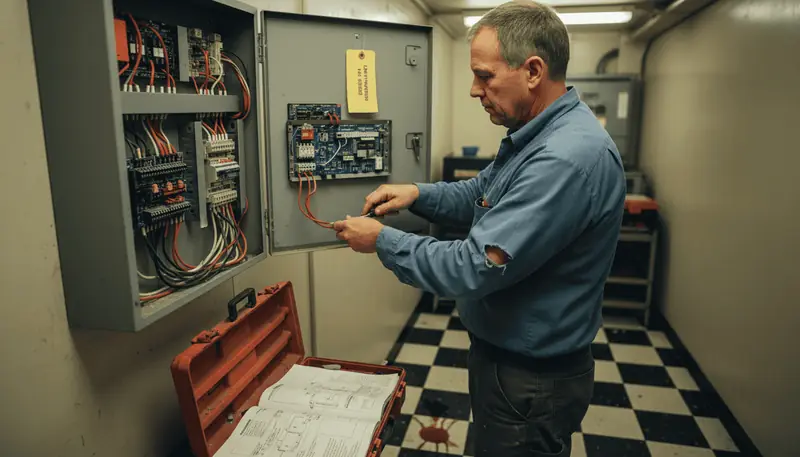
NFPA 72, the standard for fire alarm systems, now requires faster response times and better integration with building management systems. This means your alarm system needs to communicate more efficiently with emergency responders and occupant notification systems.
What Changed in NFPA 101 and Beyond
The Life Safety Code (NFPA 101) introduced stricter requirements for:
- Exit signage: Enhanced visibility with new brightness standards
- Occupant load calculations: More accurate capacity limits based on space type
- Accessibility compliance: Better accommodations for mobility-impaired occupants
- Emergency lighting: Extended duration and improved reliability
NFPA 13 updates now mandate shorter inspection intervals for sprinkler systems in Houston commercial properties. What used to require annual inspections now demands quarterly testing in high-risk areas.
Fire protection industry standards specify detailed requirements for system installation, maintenance, and documentation that align with these updated codes.
NFPA codes establish the minimum acceptable safety level—Houston’s local amendments often require more stringent measures, so federal standards are your floor, not your ceiling.
Residential properties face updated requirements under NFPA 72 for interconnected smoke alarms. Properties built before 2015 need to upgrade their systems to meet current standards for alarm responsiveness.
Documentation becomes critical under the updated codes. You must maintain detailed records showing testing dates, inspection results, and corrective actions taken—and these records must be accessible for audits.
Compliance Timeline for Houston
Most Houston properties must achieve compliance by mid-2025. Buildings with complex systems may request extensions, but you need documentation showing your compliance plan.
Non-compliance carries serious consequences. Fines exceed $1,000 per day of violation, and insurance companies may deny claims if systems don’t meet current NFPA standards.
Pro tip: Contact your local Houston Fire Marshal’s office now to confirm which specific NFPA editions your property type must follow—some buildings must comply with multiple standards simultaneously.
New Compliance Requirements for Houston Properties
Houston property managers now face a completely updated compliance landscape in 2025. The new requirements aren’t scattered across different regulations—they’re consolidated into a single comprehensive framework that affects every aspect of fire safety.
Your property must now meet stricter standards for detection, suppression, and emergency response. These changes apply whether you manage a five-story apartment complex or a commercial office building.
What You Must Implement Immediately
The 2025 compliance requirements include:
- Advanced smoke alarm standards: Interconnected systems with faster response capabilities
- Enhanced sprinkler regulations: More frequent testing and upgraded system components
- Fireproof materials: Upgraded construction standards for new work and renovations
- Emergency evacuation protocols: Detailed plans with quarterly drills instead of annual ones
Advanced smoke alarm standards now require systems that detect fires faster and communicate across entire buildings. This means older standalone alarms won’t cut it anymore—you need integrated networks.
More frequent fire drills are no longer optional. Houston properties must conduct quarterly evacuation drills and document every single one with dates, times, and participant counts.
Your emergency evacuation plans now require detailed floor-by-floor analysis, specific assembly areas, and documented procedures for assisting occupants with mobility challenges.
Sprinkler system regulations demand shorter inspection cycles. High-risk commercial properties need quarterly inspections instead of annual ones, with written reports filed for audit purposes.
Timeline and Documentation Requirements
Most Houston properties have until July 1, 2025 to achieve full compliance. You cannot wait until December—that deadline is firm, with no grace periods for slow implementation.
Documentation becomes your proof of compliance. You must maintain records showing:
- Alarm system testing dates and results
- Sprinkler inspections with detailed findings
- Fire drill dates with attendance logs
- Any maintenance or repairs performed
- Training completion for staff members
Failing to document your compliance efforts creates massive liability. If an incident occurs and you cannot prove you followed procedures, insurance companies will likely deny your claim.
Pro tip: Create a compliance calendar now marking all quarterly deadlines—drills in January, April, July, and October ensure you never miss a requirement and can batch inspections efficiently.
Cybersecurity, Digital Monitoring, and System Testing
Fire safety systems are no longer just physical equipment anymore. Digital monitoring now plays a central role in 2025 compliance, and cybersecurity threats targeting these systems are becoming increasingly common.
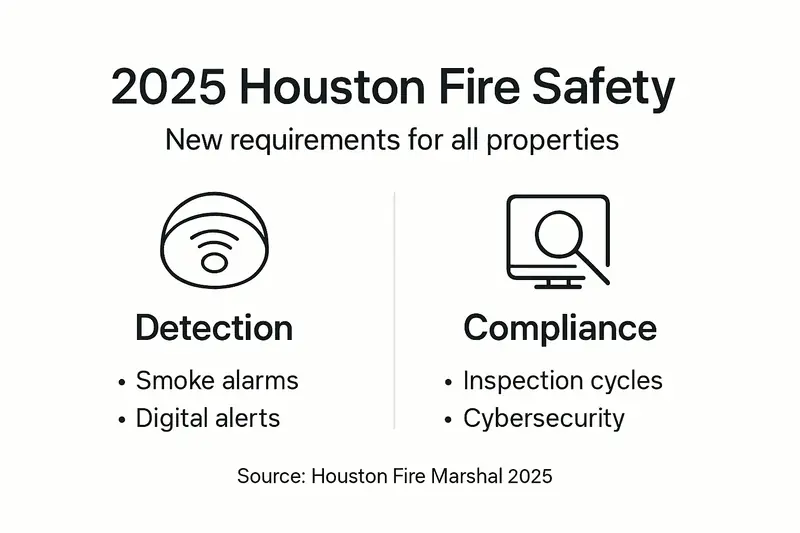
Houston properties must now secure their fire alarm and suppression systems against digital attacks. A hacked system is essentially a non-functional system, leaving your property completely vulnerable.
Digital Monitoring Requirements
Your fire safety systems must now include:
- Real-time monitoring capabilities: Systems that send instant alerts to emergency responders
- Remote system diagnostics: Ability to check system status without visiting the property
- Automated testing protocols: Systems that run self-tests and report results digitally
- Data encryption standards: All system communications must use military-grade encryption
Fire system monitoring now includes continuous digital oversight with 24/7 cloud-based tracking. Your building’s fire systems must communicate with monitoring centers in real time, not just alert occupants.
Automated testing has become mandatory for commercial properties. Systems must run self-diagnostics weekly and generate digital reports documenting every test result, battery condition, and sensor functionality.
Digital monitoring systems create a permanent audit trail proving your property maintained fire safety standards throughout the year—this protects you legally if incidents occur.
Cybersecurity and System Integrity
Fire alarm systems are now vulnerable to the same cyberattacks that target other building networks. Hackers can disable alerts, manipulate sensor readings, or lock property managers out of their own systems.
You must implement multi-factor authentication for all system access. Single passwords no longer meet compliance standards—staff need secondary verification through mobile devices or security keys.
Testing and Verification Protocols
Your monitoring provider must now complete quarterly remote tests of all system components. These tests verify that sensors respond, alarms sound, and alerts reach emergency responders without delays.
Documentation becomes your evidence of testing compliance:
- Monthly self-test reports from your system
- Quarterly remote verification from your monitoring provider
- Annual physical inspection reports
- Cybersecurity vulnerability scans
Failing cybersecurity standards creates immediate compliance violations. Insurers may deny claims if your systems were hacked due to inadequate security measures.
Pro tip: Schedule cybersecurity audits for your fire systems at the same time as physical inspections—most providers offer bundled services at reduced costs when done together.
Risks, Liabilities, and Cost Implications
Non-compliance with 2025 fire safety regulations creates serious financial and legal consequences for Houston property managers. This isn’t just about avoiding fines—it’s about protecting your property, tenants, and your own legal standing.
The costs of compliance are real, but the costs of non-compliance are devastating. You’re making a choice between spending money on safety now or facing catastrophic expenses later.
Financial Costs of Compliance
Increased upfront expenses for property upgrades include system installations, frequent inspections, and ongoing maintenance that didn’t exist under previous regulations. Most Houston properties face $15,000 to $75,000 in initial upgrades, depending on building size and current system status.
Ongoing costs add up quickly:
- Quarterly inspections: $500–$1,200 per visit for commercial properties
- Monthly monitoring services: $40–$100 per month per building
- Annual testing and certification: $2,000–$8,000 depending on system complexity
- Staff training programs: $3,000–$6,000 annually for larger properties
These expenses are tax-deductible as safety maintenance, but budgeting matters. Properties that ignore costs until July face emergency contractors charging triple rates.
Below is a summary of fire safety compliance costs and associated risks:
| Expense or Risk | Typical Cost/Impact | Consequence of Non-Compliance |
|---|---|---|
| System Upgrade | $15,000–$75,000 initial | Fines, coverage denial |
| Quarterly Inspections | $500–$1,200 per visit | Compounding monthly penalties |
| Staff Training | $3,000–$6,000 annually | Inadequate emergency response |
| Insurance Premiums | Up to 50% higher if noncompliant | Total coverage loss, lawsuits |
| Lawsuit Risk | $500,000 average settlement | Personal liability, property loss |
Liability and Penalty Exposure
Non-compliance penalties start at $500 per violation and escalate rapidly. A single property with multiple system failures faces cumulative fines exceeding $15,000 monthly until corrected.
Insurance implications are severe:
- Premium increases: 25–50% higher rates for non-compliant properties
- Coverage denial: Insurance companies refuse claims if systems didn’t meet codes
- Liability lawsuits: If someone gets injured in a fire, you’re personally liable if negligence is proven
A single fire injury lawsuit costs $500,000 on average—compliance spending looks cheap by comparison.
Property damage liability becomes your personal responsibility if systems weren’t maintained to code. Courts routinely award damages exceeding property value when negligence is documented.
Cost-Benefit Analysis for Houston Properties
Spending $40,000 today on upgrades prevents potential lawsuits worth millions tomorrow. Insurance premium reductions also recover compliance costs within 3–5 years for most properties.
Non-compliance creates compounding liability. Each month of violation adds legal exposure, higher fines, and increased incident risk.
Pro tip: Request quotes from three fire safety providers now and negotiate bundled pricing for upgrades plus ongoing monitoring—volume commitments often reduce costs by 20–30% compared to individual services.
Secure Your Houston Property with Expert Fire Safety Solutions Today
The 2025 fire safety regulations present new challenges for Houston property managers who need to meet stricter standards for alarms, sprinkler inspections, and emergency protocols. Falling behind puts your property at risk of costly fines, increased insurance premiums, and serious liability in case of fire incidents. Don’t let compliance complexity overwhelm you or leave your occupants vulnerable.
Reliable Fire Protection specializes in guiding Houston residential and commercial properties through these essential changes. With expert fire alarm system installations, advanced digital monitoring, and proactive sprinkler maintenance services, we help you stay ahead of tighter documentation and testing requirements. Our certified team ensures your property meets all NFPA and local Houston safety codes while protecting your investment and tenants.
Explore Our Fire Protection Services to learn how we can simplify compliance for you.
Get your free quote now and avoid last-minute penalties with trusted Houston fire safety expertise.
Frequently Asked Questions
What are the key changes in fire safety regulations for Houston properties in 2025?
The key changes include stricter requirements for evacuation procedures, enhanced fire detection systems, more frequent inspections of suppression equipment, and established documentation standards to prove compliance.
How often do fire alarm systems need to be inspected under the new regulations?
Under the updated regulations, fire alarm systems require more frequent inspections. For commercial properties, the inspections may be required quarterly, while residential properties typically need annual inspections.
What are the financial implications of non-compliance with fire safety regulations?
Non-compliance can lead to significant fines that range from $500 for minor issues to over $15,000 for serious deficiencies. Additionally, insurance companies may deny claims if property owners cannot prove compliance, leading to substantial financial liability.
What documentation is required to show compliance with the fire safety regulations?
The required documentation includes records of alarm system testing dates and results, inspection reports for sprinklers, logs of fire drill dates and attendance, maintenance performed, and training completion for staff members.
Recommended
- Fire Protection Standards 2025: Houston Compliance Impact
- Fire Safety Regulations Explained: Impact on Houston Property Managers
- Fire Protection Best Practices for Houston 2025
- Fire Safety Testing Requirements for Houston Properties
- Fire Alarm System University Place TX
- Fire Alarm System Bellaire TX