Choosing the right fire suppression system for your Houston business is more complex than ever with new technologies and 2025 compliance requirements. Fast-changing codes and industry innovations mean standard solutions may no longer fit your property’s risks or sensitive assets. This guide unpacks the core concepts of modern fire suppression so you can select solutions that not only meet Houston regulations but also protect your investment and reputation.
Table of Contents
- Core Concepts Of Fire Suppression Technologies
- Types Of Suppression Systems And Innovations
- Smart Detection, Monitoring, And Response Features
- Houston Fire Safety Codes And Compliance In 2025
- Risks, Costs, And Eco-Friendly Solutions
Key Takeaways
| Point | Details |
|---|---|
| Understanding Fire Suppression | Fire suppression operates on the principle of removing one of the three components necessary for combustion: fuel, oxygen, or heat. Knowing these fundamentals aids effective system selection. |
| Traditional vs. Emerging Technologies | While traditional water-based and chemical suppression systems are common, emerging technologies like acoustic suppression offer non-invasive, residue-free alternatives for sensitive environments. |
| Compliance with Local Codes | Adhering to the latest Houston fire codes is essential for safety and legality; failing to comply can lead to inspections failures and increased liability. |
| Cost-Benefit Analysis | Conduct thorough cost-benefit analyses considering installation, maintenance, potential water damage, and environmental impacts to make informed system choices. |
Core Concepts Of Fire Suppression Technologies
Fire suppression isn’t magic—it’s applied science. Understanding the fundamentals helps you choose systems that actually protect your Houston property and meet local regulations.
Every fire requires three elements to exist: fuel, oxygen, and heat. Remove any one, and combustion stops. Fire suppression technologies work by eliminating one of these components, disrupting what fire safety professionals call the combustion triangle.
How Traditional Suppression Works
Water remains the most common suppression agent because it tackles multiple elements simultaneously. It cools flames below ignition temperature while displacing oxygen through steam creation. Foam concentrates create a blanket that blocks oxygen access. Chemical agents interrupt the chemical chain reaction burning requires.
Each method has distinct advantages:
- Water systems: Cost-effective, reliable for standard commercial spaces
- Foam suppressants: Superior for flammable liquid fires common in industrial Houston facilities
- Chemical agents: Ideal for electrical equipment and data centers where water damage is unacceptable
- Gaseous suppressants: Effective in enclosed spaces without leaving residue
According to fire suppression science research, these traditional approaches have dominated for decades because they’re proven and well-understood.
Emerging Technologies in 2025
Acoustic fire suppression represents a newer frontier. Instead of agents, acoustic fire extinguishing technologies utilize sound waves to disrupt combustion. The technology works non-invasively and leaves no residue—advantages for sensitive environments.
These systems displace oxygen and disturb flame patterns through acoustic waves. They’re particularly useful for:
- Electronics and equipment sensitive to water damage
- Confined spaces where traditional agents present risks
- Applications requiring minimal environmental impact
What Houston Properties Need to Know
Your building type determines which concepts apply most. Warehouse operations benefit from foam-based systems for chemical fires. Office buildings typically need water sprinklers plus detection. Data centers increasingly adopt gaseous or acoustic solutions.
Understanding these core concepts helps you work with fire safety professionals to select systems matching your property’s risk profile and regulatory requirements.
Pro tip: Contact a local fire safety specialist to assess which suppression mechanism best suits your specific facility type and Houston location—one-size-fits-all approaches miss critical protection gaps.
Types Of Suppression Systems And Innovations
Houston property managers face real choices when selecting suppression systems. Different technologies serve different risks—choosing wrong wastes money and leaves gaps in protection.
Water-based systems dominate because they’re reliable and cost-effective. However, emerging technologies offer specialized protection for specific environments and hazards.
Water-Based Systems
Wet pipe systems remain the standard for most Houston commercial buildings. Water stays in pipes at all times, ready to discharge immediately when heat triggers sprinkler heads.
Dry pipe systems work differently—compressed air fills pipes instead of water. When a head activates, air vents, and water flows. This approach protects spaces subject to freezing or where water damage poses severe risks.
Pre-action systems add a detection layer. The system requires both heat detection and sprinkler head activation before water discharges. This dual-trigger design prevents accidental water damage while maintaining fast response times.
Advanced and Specialized Systems
Fire suppression systems now include innovative options beyond traditional sprinklers. Deluge systems flood entire areas with water simultaneously—critical for high-hazard spaces like paint rooms or chemical storage.
Gaseous suppression agents work without water. These systems discharge inert gases or chemical agents that suppress combustion without damaging sensitive equipment. Data centers, server rooms, and electronics manufacturing increasingly rely on this technology.

Water-mist technology represents a newer innovation. Fine water mist cools flames and displaces oxygen more efficiently than traditional sprinklers, using significantly less water.
Here’s a high-level comparison of traditional and advanced fire suppression systems for Houston properties:
| Suppression System Type | Ideal Applications | Environmental Impact | Maintenance Needs |
|---|---|---|---|
| Water-based Sprinklers | Offices, retail, schools | High water usage | Annual inspections needed |
| Foam Suppressants | Chemical storage, factories | Potential chemical runoff | Frequent refills required |
| Gaseous Agents | Data centers, museums | Minimal residue | Leak and pressure tests |
| Water-mist Systems | Tech facilities, hospitals | Low water consumption | Filter and nozzle checks |
| Acoustic Suppression | Electronics labs, archives | No physical residue | Sensor calibration checks |
Choosing the Right System for Your Property
Selection depends on multiple factors:
See the main drivers influencing fire suppression system selection in Houston:
| Selection Factor | Impact on System Choice | Example Consideration |
|---|---|---|
| Building Use | Determines needed suppression type | Warehouse vs. office space |
| Local Code Requirements | Mandates certain technologies | Sprinklers required in schools |
| Environmental Concerns | Guides toward eco-friendly options | Water conservation priorities |
| Budget Constraints | Limits initial and ongoing expenditures | Balancing cost with reliability |
| Sensitive Asset Protection | Promotes non-water solutions | Electronics or archives |
- Building contents: Electronics require gaseous or water-mist systems
- Space type: Warehouses need deluge; offices use standard wet pipe
- Environmental concerns: Water-mist systems minimize water usage and damage
- Regulatory requirements: Houston codes vary by facility classification
- Budget constraints: Water systems cost less upfront; specialized systems offer long-term protection value
The right suppression system balances immediate fire control with minimal collateral damage to your property and operations.
Reliable Fire Protection can assess your specific needs and recommend systems matching your Houston location’s unique requirements and local compliance standards.
Pro tip: Request a site assessment from a qualified technician who can identify your facility’s actual fire risks rather than applying generic recommendations—this prevents costly system mismatches.
Smart Detection, Monitoring, And Response Features
Modern fire suppression isn’t just about water discharge anymore. Smart technology transforms how Houston properties detect threats, monitor conditions in real-time, and respond faster than ever before.
Today’s systems connect detection with monitoring and suppression in one integrated network. This coordination dramatically reduces response time and improves outcomes.
How Smart Detection Works
Smart fire detection systems use multiple sensors working together rather than relying on a single trigger. These systems combine temperature sensors, smoke detectors, and air quality monitors to identify fire conditions early.
Artificial intelligence analyzes sensor data to distinguish real fires from false alarms. A burnt piece of toast won’t trigger unnecessary evacuation—actual combustion will.
The technology processes environmental parameters through IoT architectures. This means sensors communicate instantly with a central system that evaluates risk.
Real-Time Monitoring and Cloud Integration
Monitoring happens continuously. Unlike traditional systems that wait for a sprinkler head to activate, smart systems track building conditions 24/7.
Cloud-based processing enables remote access. Property managers in Houston can monitor their facilities from anywhere using mobile apps. Alerts arrive instantly when conditions change.
Predictive capabilities represent a major advancement. Systems don’t just detect fires—they identify pre-fire conditions before combustion begins:
- Temperature trending toward ignition
- Unusual smoke concentrations
- Electrical equipment overheating
- Chemical reaction indicators
Smart detection systems reduce false alarms while catching genuine threats earlier, protecting both your property and emergency response resources.
Coordinated Response
When a threat is detected, the system acts automatically. IoT and embedded smart alert systems trigger suppression while simultaneously notifying occupants and emergency services.
This coordination saves critical seconds. Instead of waiting for a sprinkler head to reach temperature, the system activates suppression based on multiple data points confirming actual fire conditions.
Multi-zone monitoring lets you target specific areas. If fire starts in one warehouse section, only that zone’s suppression activates initially, minimizing water damage elsewhere.
Integration With Houston Compliance Standards
Smart detection features support compliance with local fire codes. Automated monitoring creates detailed logs proving your systems functioned correctly—essential during inspections.
Documentation happens automatically. Every sensor reading and system action gets recorded, providing evidence of proper maintenance and operation.
Pro tip: Install smart monitoring systems with mobile app access so you receive immediate notifications during hours you’re off-site—early awareness means faster response and less damage.
Houston Fire Safety Codes And Compliance In 2025
Houston’s fire codes changed significantly in 2025. Property managers who don’t understand these updates risk non-compliance, failed inspections, and potential liability.
The city adapted the International Fire Code to fit Houston’s specific needs and risks. These standards directly impact what suppression systems you must install and maintain.
Key 2025 Code Updates
Houston Fire Marshal Office standards now mandate stricter requirements for suppression system design and installation. Building retrofits must meet updated specifications, not older codes from when construction began.
Alarms and sprinklers face enhanced inspection protocols. Your systems must function reliably, with documentation proving regular maintenance and testing.
Hazardous materials storage requires specialized suppression planning. If your Houston facility handles chemicals, paints, or flammable liquids, code compliance becomes more complex.
Harris County Updates Affecting Your Property
Harris County fire codes emphasize protection for vulnerable populations including schools and assisted living facilities. If your property serves these populations, expect stricter suppression requirements.
Emergency power for fire suppression systems is now mandatory. During power outages, your system must continue operating. This affects pump stations and control panels.
New inspection mandates require rigorous testing:
- Fire alarm system functionality checks quarterly
- Sprinkler system pressure tests annually
- Suppression agent verification and refill documentation
- Backup power system load testing
- Complete system integration verification
Compliance isn’t optional—it’s your legal responsibility and directly impacts your insurance coverage and liability exposure.
What Property Managers Must Do Now
Schedule compliance audits immediately. A qualified fire safety professional should assess your existing systems against 2025 standards and identify gaps.
Document everything. Maintain detailed records of all inspections, maintenance, and system updates. These records prove compliance during audits.
Update system designs if necessary. Older installations may not meet 2025 requirements without modifications or upgrades.
Train your staff. Building occupants and maintenance personnel need to understand evacuation procedures and system limitations.
Pro tip: Contact the Houston Fire Marshal Office directly with your facility information to receive specific compliance requirements tailored to your property type—generic checklists miss location-specific regulations.
Risks, Costs, And Eco-Friendly Solutions
Fire suppression systems protect your Houston property, but they come with real costs—financial, environmental, and operational. Understanding these tradeoffs helps you make informed decisions.
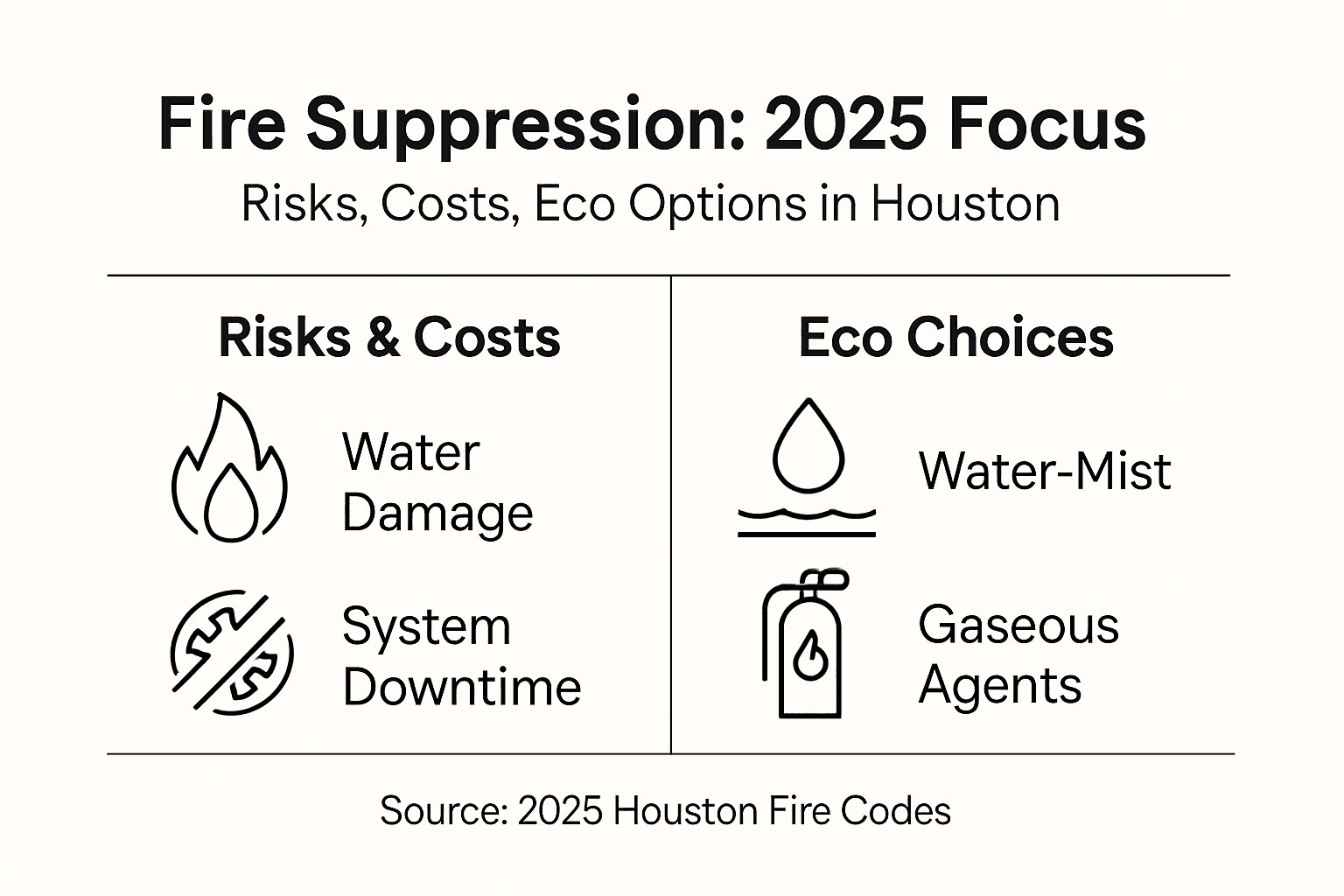
There’s a tension between suppression effectiveness and long-term consequences. The systems that work fastest sometimes create problems you didn’t anticipate.
Understanding Suppression Costs
Initial installation runs $15,000 to $50,000+ depending on building size and system type. Annual maintenance adds $500 to $2,000 per year for inspections, testing, and agent refills.
Water damage from suppression activation often exceeds fire damage itself. A single accidental discharge can cost $30,000 to $100,000 in inventory loss and remediation.
Downtime during system repairs impacts operations. Many Houston businesses don’t account for this hidden cost when budgeting.
Environmental and Ecological Considerations
Aggressive fire suppression strategies create unintended consequences over time. While suppression controls immediate fires, it can increase fuel accumulation, leading to more severe fire conditions later.
Suppression activities themselves cause environmental damage:
- Water pollution from chemical suppressants
- Soil erosion from suppression vehicle movement
- Impacts on local water resources and aquifers
- Vehicle emissions during emergency response
- Residue cleanup and disposal costs
Sustainable fire management approaches balance suppression effectiveness with ecological health. Minimum-impact strategies reduce environmental damage while maintaining protection.
The most cost-effective long-term strategy combines reliable suppression with prevention that reduces fire risk in the first place.
Eco-Friendly Suppression Options
Water-mist systems use 90% less water than traditional sprinklers. They suppress fires efficiently while minimizing environmental impact and water waste.
Gaseous suppressants leave no residue. They don’t require extensive cleanup, reducing disposal costs and environmental contamination.
Modular systems allow targeted suppression. Instead of flooding entire buildings, you activate only zones with actual fire, reducing waste and damage.
Regular maintenance prevents accidental discharges. Proper inspection schedules catch leaks and pressure problems before they cause water damage.
Making Smart Financial Choices
Balancing cost and protection requires matching system complexity to actual risk. Over-engineering costs more without proportional safety gains.
Invest in prevention first. Better building design, material selection, and occupant training reduce fire likelihood more cost-effectively than advanced suppression systems.
Pro tip: Request a full cost-benefit analysis from your fire safety provider that includes installation, maintenance, potential water damage, and environmental impacts—this reveals the true expense of different system choices.
Ensure Houston Fire Suppression Compliance With Expert Solutions
Navigating the complex and evolving fire suppression technologies in 2025 can feel overwhelming. From understanding water-mist systems and gaseous agents to meeting Houston’s strict fire codes and eco-friendly demands, the challenge lies in selecting the right system that protects your property without costly mistakes or non-compliance risks. With terms like acoustic suppression and smart detection becoming part of the conversation, having a trusted partner to translate these technical concepts into practical, effective fire protection solutions is essential.
At Reliable Fire Protection, we specialize in tailored fire safety services designed to align perfectly with your Houston property’s unique needs and regulatory requirements. Whether you need advanced suppression systems, smart integrated detection, or routine maintenance to meet the latest codes, our certified team delivers reliable protection with care and professionalism. Learn more about our full range of fire protection services at Fire Protection – Reliable Fire Protection.
Don’t wait until your next inspection or an emergency to act. Secure your peace of mind by partnering with experts who understand Houston’s latest fire suppression standards. Visit Reliable Fire Protection now to request a free consultation and ensure your property’s safety and compliance today.
Frequently Asked Questions
What are the core elements that fire suppression technologies address?
Fire suppression technologies work by removing one of the three essential components of combustion: fuel, oxygen, or heat. This disruption is known as the combustion triangle, and effective suppression systems eliminate one of these elements to stop the fire.
What types of fire suppression systems are available for commercial properties?
Common fire suppression systems include water-based systems (wet, dry, and pre-action), foam suppressants for flammable liquids, gaseous agents for sensitive equipment, and emerging technologies like acoustic suppression systems.
How do smart detection systems enhance fire safety in buildings?
Smart detection systems use multiple sensors to monitor temperature, smoke, and air quality in real-time, allowing for early detection of fire conditions. They can minimize false alarms by using AI to analyze data and initiate response actions automatically.
What are the compliance requirements for fire suppression systems in Houston?
Under the updated Houston fire codes, property managers must ensure their fire suppression systems meet specific design, installation, and inspection standards. This includes maintaining thorough documentation for inspections, ensuring backup power systems are operational, and implementing stricter requirements for hazardous material storage.