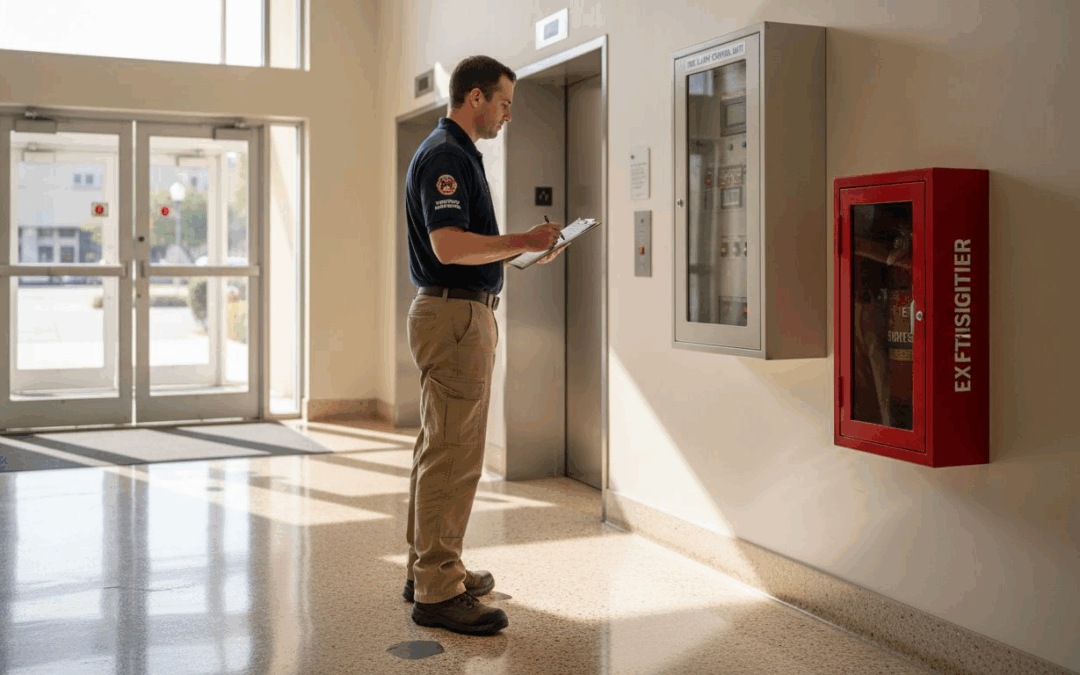
Every american commercial property manager in Houston faces strict fire safety standards, yet only about 35 percent of buildings pass their first fire system inspection. Keeping tenants safe and staying compliant with the latest Houston and national regulations depends on diligent fire system maintenance. Get practical insights on how systematic inspections and documented procedures protect your investment and reduce risk.
Table of Contents
- What Is Fire System Maintenance?
- Types of Fire Protection Systems
- Inspection, Testing, and Maintenance Processes
- Legal Standards and Houston Requirements
- Owner Responsibilities and Documentation
- Risks, Costs, and Common Mistakes
Key Takeaways
| Point | Details |
|---|---|
| Importance of Maintenance | Regular fire system maintenance is essential for ensuring safety and compliance in Houston properties. Schedule inspections at least twice a year. |
| Active vs. Passive Systems | Understanding the difference between active and passive fire protection systems is crucial for effective safety strategies. Both play vital roles in minimizing fire risks. |
| Legal and Documentation Obligations | Property owners are responsible for maintaining detailed records of inspections and maintenance to comply with Houston Fire Code regulations. Documentation is key for legal protection. |
| Proactive Risk Management | Regular assessments and immediate attention to system deficiencies can prevent costly repairs and enhance safety. Adopt a proactive approach to fire system management. |
What Is Fire System Maintenance?
Fire system maintenance represents a critical safety strategy for protecting Houston commercial properties through systematic inspection, testing, and repair of fire protection equipment. Fire protection systems require ongoing professional monitoring to ensure they function precisely during emergency scenarios.
At its core, fire system maintenance involves comprehensive evaluations of key safety components like fire alarms, sprinkler systems, suppression mechanisms, and detection equipment. Professional technicians systematically assess these interconnected systems to verify their operational readiness, identifying potential vulnerabilities before they compromise building safety. This proactive approach helps Houston property managers mitigate risks and maintain compliance with stringent local and national fire safety regulations.
The maintenance process typically includes several critical steps: visual inspections, functional testing, component calibration, repair or replacement of worn equipment, and detailed documentation of all maintenance activities. Specialized fire protection engineers conduct thorough assessments using advanced diagnostic tools to evaluate system performance, ensuring every component meets rigorous safety standards. Regular maintenance not only prevents potential equipment failures but also provides property owners with documented evidence of their commitment to occupant safety.
Pro tip: Schedule comprehensive fire system maintenance at least twice annually, with additional targeted inspections following any significant building modifications or environmental changes.
Types of Fire Protection Systems
Fire protection systems are sophisticated safety networks designed to detect, suppress, and control fire risks in Houston commercial and residential buildings. Fire protection systems encompass both active and passive technologies that work together to safeguard lives and property against potential fire hazards.
Active fire protection systems require direct intervention to function and include critical components such as fire alarms, sprinkler networks, and suppression mechanisms. These dynamic systems immediately respond to fire conditions by triggering alerts, releasing extinguishing agents, or controlling fire spread. Water-based sprinkler systems represent a primary example, with variations including wet pipe, dry pipe, pre-action, and deluge configurations tailored to specific building environments and risk profiles.
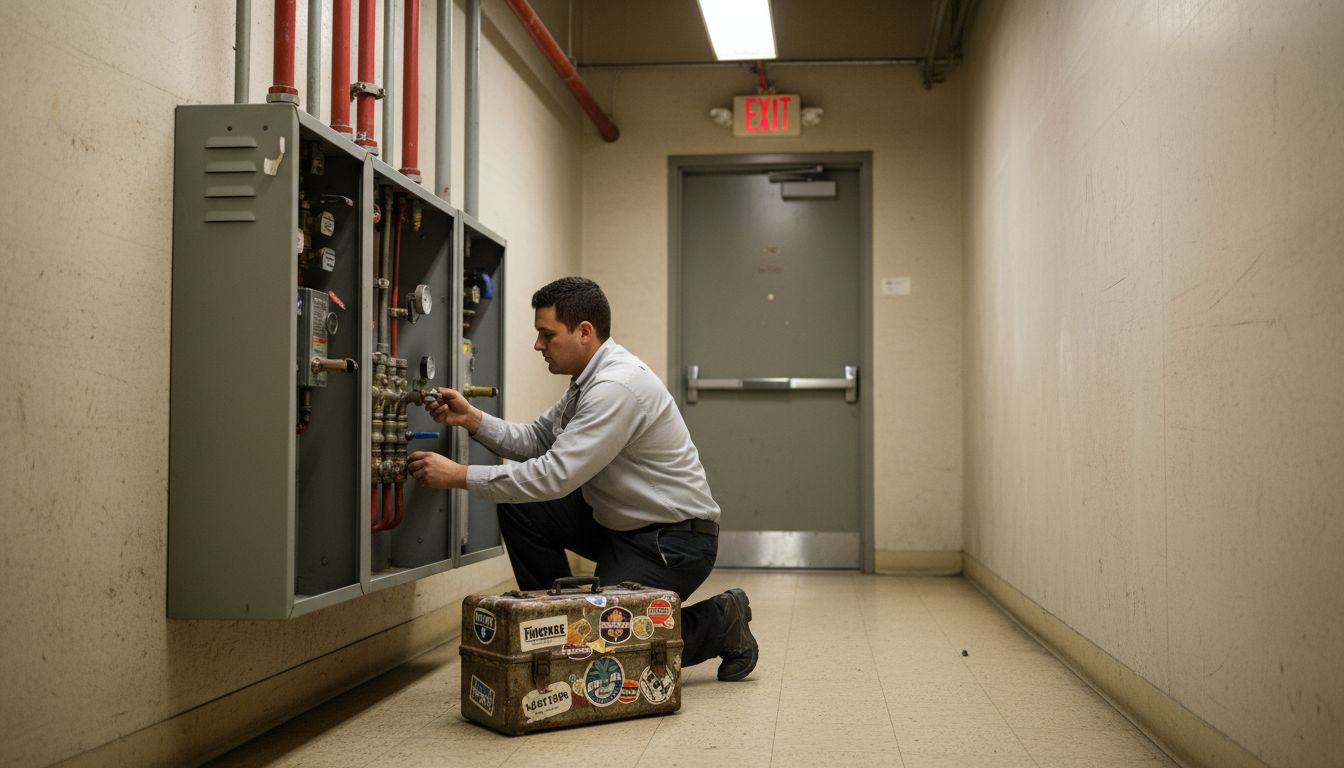
Passive fire protection systems, in contrast, are built directly into a building’s structural design to contain and minimize fire damage. These systems include fire-resistant walls, floors, and specialized barriers that compartmentalize spaces to prevent rapid fire and smoke propagation. Houston property managers often integrate both active and passive systems to create comprehensive fire safety strategies that meet local building codes and insurance requirements.
Here’s a comparison of active and passive fire protection systems and their roles in building safety:
| System Type | Main Purpose | Example Components | Business Impact |
|---|---|---|---|
| Active | Detect and suppress fires | Alarms, sprinklers | Immediate fire response, alerts |
| Passive | Contain and slow fire spread | Fire walls, barriers | Limits damage, supports evacuation |
Pro tip: Conduct a professional assessment of your specific fire protection needs, as different building types and occupancy levels require customized system configurations.
Inspection, Testing, and Maintenance Processes
Inspection, testing, and maintenance (ITM) represent the cornerstone of effective fire protection system management for Houston property owners. Fire alarm system standards require comprehensive protocols to ensure reliable performance and regulatory compliance, protecting both lives and property from potential fire risks.
The ITM process involves three critical components: initial acceptance testing, periodic functional evaluations, and routine maintenance inspections. Certified fire protection technicians systematically assess each system component, checking for potential mechanical failures, electrical issues, or performance degradations. This includes detailed examinations of fire alarms, sprinkler networks, suppression mechanisms, and related emergency response equipment. Each assessment generates comprehensive documentation that tracks the system’s operational status, identifies potential vulnerabilities, and ensures ongoing reliability.
Professional ITM procedures follow strict national standards, with specific requirements varying based on system type, building occupancy, and local regulatory guidelines. Technicians utilize advanced diagnostic tools and follow meticulous checklists to verify every aspect of fire protection systems. These evaluations typically include visual inspections, functional testing of mechanical components, electrical system checks, sensor calibration, and verification of communication and alert mechanisms. By conducting thorough and regular maintenance, property managers can prevent potential system failures and demonstrate proactive safety management.
Pro tip: Maintain a detailed maintenance log for each fire protection system, documenting every inspection, test result, and repair to streamline future compliance verification and insurance reporting.
Legal Standards and Houston Requirements
Fire protection system regulations in Houston represent a complex framework of local and national safety standards designed to protect commercial and residential properties. Houston Fire Code requirements establish comprehensive guidelines that mandate specific protocols for fire system design, installation, testing, and maintenance.
The Houston Fire Marshal Office plays a critical role in enforcing these stringent safety regulations. Property owners must navigate a detailed compliance process that involves submitting precise construction documents, obtaining necessary permits, and undergoing thorough system inspections. These requirements cover multiple aspects of fire protection, including fire alarm systems, sprinkler networks, suppression mechanisms, and emergency communication infrastructure. Each system must meet exacting standards that address potential fire risks specific to Houston’s unique urban environment.
Compliance involves more than simply installing fire protection equipment. Property managers must maintain meticulous documentation, demonstrate regular system testing, and ensure all components meet or exceed the 2021 Houston Fire Code specifications. This includes periodic professional assessments, comprehensive maintenance records, and proactive system upgrades to address evolving safety technologies and regulatory standards. Failure to comply can result in significant penalties, potential legal liabilities, and increased risk to occupant safety.
Pro tip: Schedule an annual comprehensive review with a certified fire protection specialist to ensure your property remains fully compliant with the latest Houston fire safety regulations.
Owner Responsibilities and Documentation
Property owners in Houston bear significant legal and operational responsibilities for maintaining fire protection systems. Building owner maintenance requirements mandate comprehensive oversight of fire safety infrastructure, ensuring consistent performance and regulatory compliance.
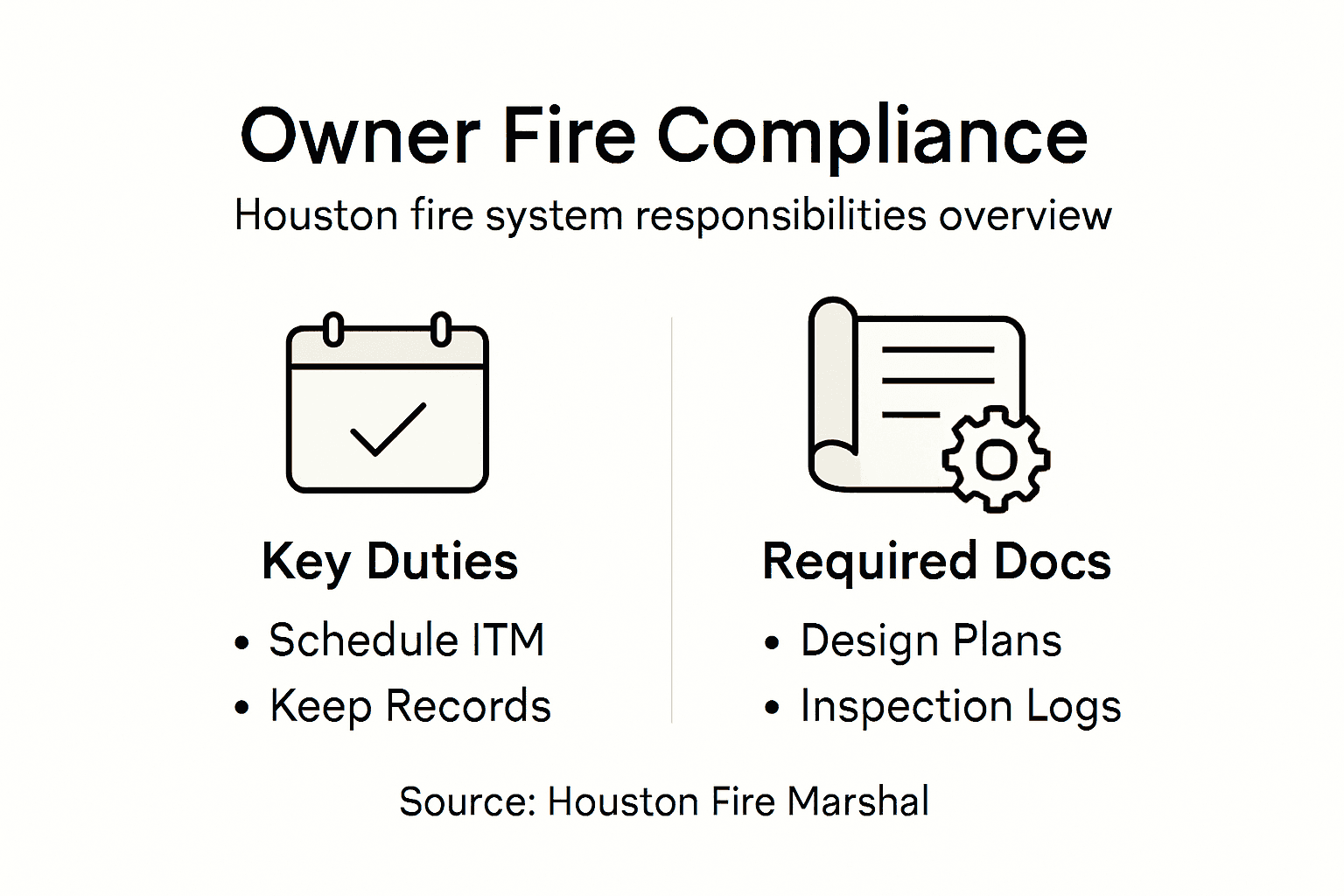
The documentation process involves maintaining detailed records that demonstrate proactive system management. This includes comprehensive logs tracking all inspections, tests, maintenance activities, repairs, and system modifications. Houston property owners must preserve these documents for a minimum of three years, making them readily available for potential fire marshal reviews or insurance audits. Proper documentation serves as critical evidence of due diligence, potentially mitigating legal risks and demonstrating a commitment to occupant safety.
Key documentation responsibilities encompass multiple critical elements. Owners must retain original system design plans, installation certificates, manufacturer specifications, maintenance reports, repair records, and annual inspection documentation. Each record must be systematically organized, dated, and signed by certified technicians. These documents not only ensure regulatory compliance but also provide a historical track record of the fire protection system’s integrity, performance, and ongoing maintenance strategy.
Use this summary table to understand key owner responsibilities and their compliance benefits:
| Responsibility | Required Record Type | Compliance Benefit |
|---|---|---|
| Schedule periodic inspections | Inspection logs | Meets fire code requirements |
| Document repairs and changes | Repair records | Proof of legal diligence |
| Maintain design certificates | Installation documents | Eases insurance audits |
| Organize digital backups | Electronic maintenance logs | Supports quick inspections |
Pro tip: Digitize all fire protection system documentation and maintain both physical and electronic backup copies to ensure comprehensive record preservation and easy accessibility during inspections.
Risks, Costs, and Common Mistakes
Fire protection system failures represent substantial financial and safety risks for Houston property owners. Fire system maintenance challenges can lead to catastrophic consequences, including potential loss of life, significant property damage, and devastating legal and financial repercussions.
The financial implications of inadequate maintenance are profound. Property owners may face exponentially higher costs through emergency repairs, system replacements, regulatory penalties, increased insurance premiums, and potential litigation. Common mistakes include postponing routine inspections, ignoring minor system deficiencies, and failing to maintain comprehensive documentation. These oversights can transform a minor maintenance issue into a potentially multimillion-dollar liability, particularly in commercial properties where fire system reliability is critical to occupant safety.
Risk management requires a proactive approach that goes beyond basic compliance. Houston property managers must develop comprehensive strategies that include regular professional assessments, immediate deficiency resolution, staff training, and continuous system monitoring. This involves understanding potential system vulnerabilities, implementing robust maintenance protocols, and creating a culture of safety that prioritizes prevention over reactive measures. Technical expertise, consistent documentation, and a commitment to ongoing system optimization are essential for mitigating potential risks.
Pro tip: Conduct a comprehensive risk assessment of your fire protection systems annually, identifying potential vulnerabilities before they escalate into significant safety or financial challenges.
Secure Your Houston Property with Expert Fire System Maintenance
Managing fire system maintenance is not just about meeting Houston compliance requirements it is about safeguarding lives and property from costly risks caused by system failure. You deserve peace of mind knowing your fire alarms, sprinklers, and suppression systems are professionally inspected, tested, and maintained to perform flawlessly in emergencies. Reliable Fire Protection understands the high stakes and offers tailored solutions that cover every aspect of fire safety to keep your property secure and compliant.
Take control of your fire protection strategy now by consulting with certified specialists at Reliable Fire Protection. Explore our comprehensive Fire Protection services designed specifically for Houston clients. Don’t risk penalties, property damage, or worse delay your maintenance schedule and protect your investment today by requesting a free quote at Reliable Fire Protection. Act now to ensure your fire systems deliver reliable safety when it matters most.
Frequently Asked Questions
What is fire system maintenance?
Fire system maintenance involves the systematic inspection, testing, and repair of fire protection equipment to ensure operational readiness during emergencies and comply with safety regulations.
How often should I schedule fire system maintenance?
It is recommended to schedule comprehensive fire system maintenance at least twice a year, with additional inspections after any significant building modifications or environmental changes.
What are the types of fire protection systems?
Fire protection systems include both active systems, such as fire alarms and sprinklers that detect and suppress fires, and passive systems, which are built into the structure to contain fire and smoke.
What documentation is required for fire protection systems?
Property owners must maintain detailed records, including logs of inspections, repairs, maintenance activities, and system modifications, to demonstrate compliance with safety regulations and ensure proactive management.
Recommended
- Fire Safety System Components for Houston Buildings
- Fire Extinguisher Inspection Workflow for Houston Compliance
- Fire Alarm Inspection Guide for Safe Houston Properties
- 7 Must-Have Fire Safety Equipment Tips for Houston Managers
- Fire Protection Company Cinco Ranch TX
- Fire Alarm System Services Cinco Ranch TX