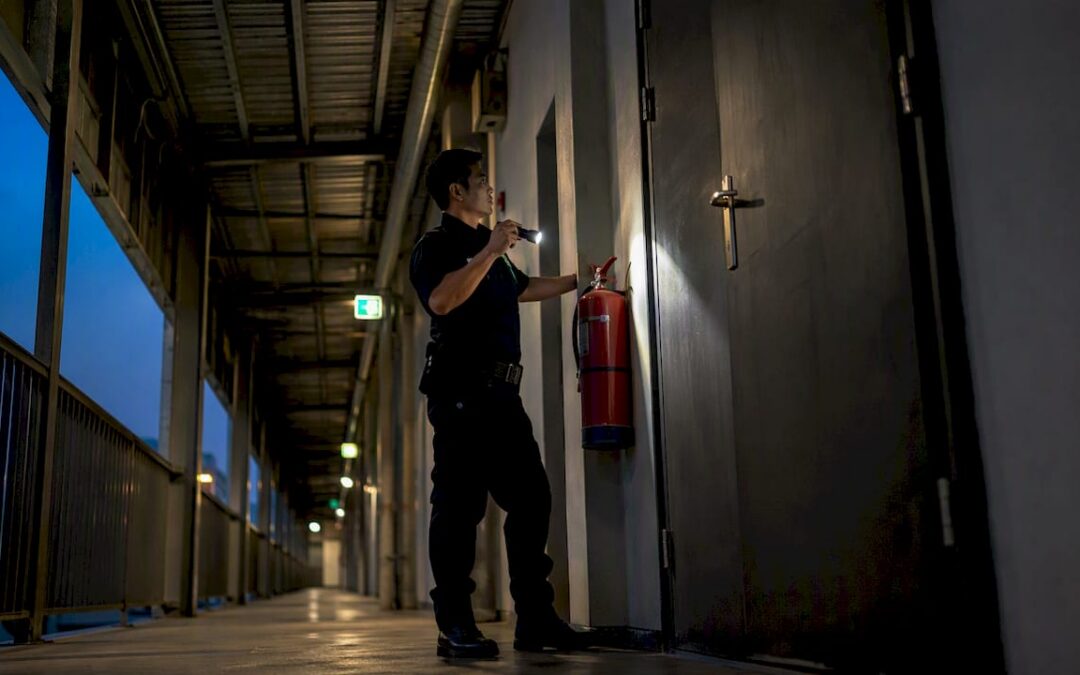
In Texas, a fire watch is required whenever a required fire protection system is out of service or hot work creates an elevated ignition risk, and the authority having jurisdiction can order one immediately. The owner or property manager is responsible for putting it in place. A compliant watch needs five things:
- Qualified, dedicated personnel with no other job duties during the watch
- Patrol rounds at a set interval determined by local rules, often ranging between quarter-hour and half-hour intervals
- A working means of communication with the fire department
- Continuous written logs of every round
- Prompt notification to the AHJ
Your local fire marshal may require stricter deadlines or shorter patrol intervals than the baseline described here.
Key Takeaways
Texas fire watch compliance depends on fast AHJ notification, qualified sole-duty personnel, documented patrol rounds, and prompt system restoration.
| Point | Details |
|---|---|
| Know your triggers | System outages past four hours, hot work, and AHJ orders all require an immediate fire watch. |
| Confirm local rules first | Patrol intervals, age minimums, and notification windows vary by city, so check with your fire marshal. |
| Assign sole-duty personnel | Watch officers cannot perform other jobs while on duty and must have a direct line to the fire department. |
| Log every round in real time | Record time, area, hazards, and actions taken, and retain logs for AHJ review. |
| Get systems restored fast | Reliable-fire-protection offers emergency alarm and sprinkler repair to shorten your time under a fire watch. |
Table of Contents
- When Does Texas Require a Fire Watch?
- What Codes and Agencies Set Fire Watch Rules in Texas?
- Who Can Perform a Fire Watch in Texas?
- What Are a Fire Watch Officer’s Duties on Site?
- When Must You Notify the Fire Department?
- How Do Local Fire Marshal Rules Differ Across Texas?
- Compliance Checklist: What to Do When a System Goes Down
- What Should a Fire Watch Log Include?
- A Provider’s Perspective on Fire Watch Compliance
- Get Help Restoring Your System Fast
- Sources
When Does Texas Require a Fire Watch?
The most common trigger is a sprinkler, standpipe, or fire alarm system going out of service. Most Texas municipal policies, including Victoria’s Fire Marshal guidelines, treat an outage beyond four hours as the point where a fire watch becomes mandatory, not optional.
Other triggers show up constantly on construction sites and in older buildings mid-renovation:
- Hot work (welding, cutting, torch-applied roofing) that creates sparks or slag near fire retardant materials or combustibles
- Active construction or demolition where standpipes or water supply are impaired
- A red or yellow tag posted by an inspector flagging a system deficiency
- Special events with elevated occupancy, or monitoring required after a fire incident
NFPA 241 governs fire watch triggers and minimum monitoring durations during construction, alteration, and demolition, and it requires a designated Fire Prevention Program Manager on qualifying projects, per NFPA’s own standard. None of this overrides local discretion. The AHJ can order a fire watch for any condition it judges an elevated risk, even one that doesn’t appear on a standard checklist.
What Codes and Agencies Set Fire Watch Rules in Texas?
Texas doesn’t run fire watch enforcement from one central rulebook. It layers national standards under state guidance and local code adoption, and your city’s specific amendments usually decide the fine print.
- NFPA 241 sets fire watch durations and FPPM responsibility for construction and hot work
- NFPA 25 governs fire watch and impairment procedures when sprinkler systems go down for testing or repair
- The International Fire Code, in whatever edition your city has adopted, supplies the base legal language most municipal fire marshals reference
- The Texas Department of Public Safety addresses when fire watch duties cross into private security licensing territory
- The Texas Department of Insurance / State Fire Marshal publishes statewide inspection contacts and code adoption guidance
The AHJ, typically your city or county fire marshal, enforces whichever IFC edition it has formally adopted, sets its own notification windows, and can amend the baseline rules to be stricter. That’s why the same outage can trigger different obligations in Houston versus a smaller municipality thirty miles away.
Who Can Perform a Fire Watch in Texas?
Not just anyone with a flashlight. Municipal policies typically set a minimum age of 18 or 21, require literacy in English, and require the person to be physically capable of walking continuous patrol routes. Victoria’s guidelines specifically require personnel be ambulatory and able to read English building signage and instructions, according to the Victoria FMO.
Sole duty is the rule that trips people up most. A watch officer cannot also run the front desk or answer maintenance calls. The job is to patrol, observe, and communicate, full stop.
Licensing gets more complicated when you bring in a third party. Some jurisdictions, including Prosper, require fire watch companies to hold a Texas DPS private security license or be a licensed alarm or sprinkler contractor, and to appear on the city’s approved provider list before they can be dispatched.
- Communication device with a direct line to 911 or the fire department
- Flashlight and familiarity with pull-station and extinguisher locations throughout the building
- AHJ approval of the individual or the contracted company, where required
Pro Tip: Confirm licensing requirements with your local fire marshal before hiring a third-party fire watch company. A provider that’s licensed in one Texas city isn’t automatically approved in another.
What Are a Fire Watch Officer’s Duties on Site?
Patrol frequency depends on occupancy. Victoria’s guidelines call for rounds at intervals typically applied every quarter hour in occupied buildings and every half hour in unoccupied ones, a split echoed in most Texas municipal policies. The University of Texas at Austin’s fire watch SOP applies a similar patrol structure and treats the watch as a sole-duty assignment with a direct communication requirement to the fire department.
Coverage has to include more than the lobby and hallways. Concealed spaces, storage rooms, mechanical rooms, rooftop equipment areas, and the hot work zone itself all need to be part of the route, not an afterthought.
| Occupancy or activity | Typical patrol interval | Key coverage areas |
|---|---|---|
| Occupied building, system outage | Every 15 minutes | All floors, exits, concealed spaces |
| Unoccupied or vacant building | Every 30 minutes | Perimeter, mechanical rooms, storage |
| Active hot work | Continuous during and 30+ minutes after | Work zone, adjacent combustibles, below/above work area |
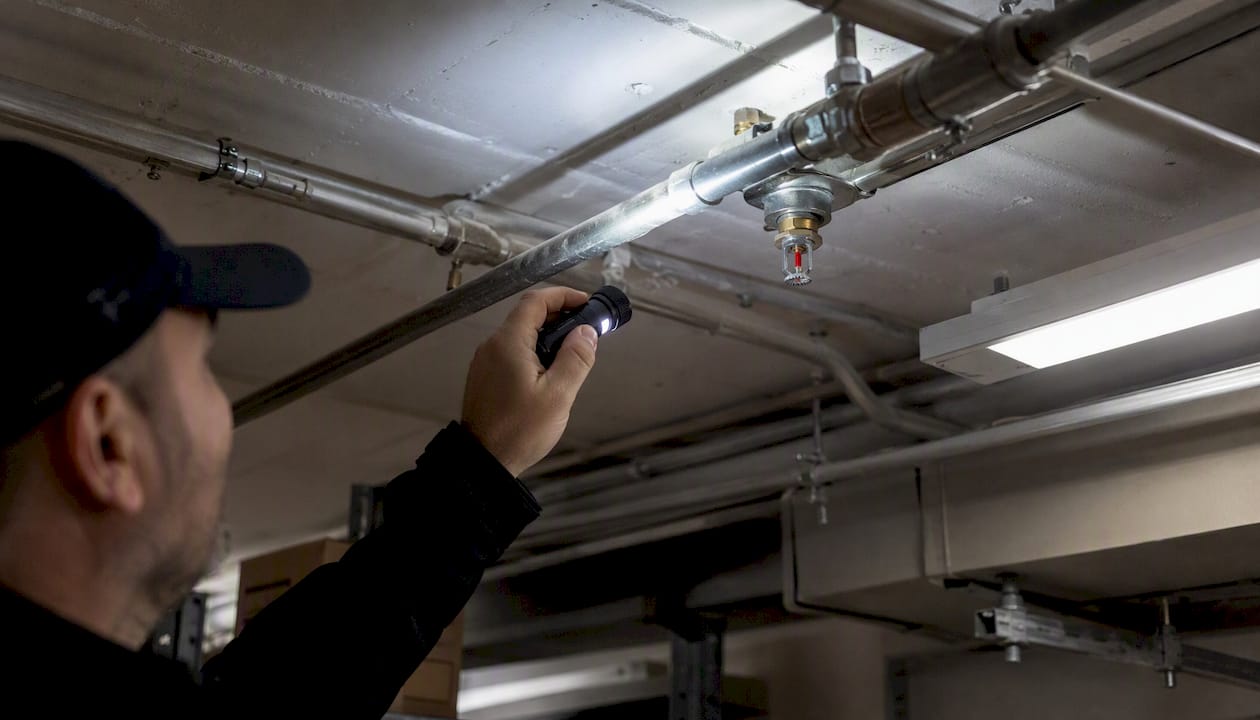
Every round gets logged: the time, the area checked, any hazard observed, and the action taken. Keep a working phone or radio, direct access to extinguishers, and either keys to locked areas or a plan for reaching them fast if something goes wrong.
When Must You Notify the Fire Department?
Bedford’s policy requires notification when a system will be down for more than four hours, a threshold that shows up across a lot of Texas municipal fire codes. That call needs to include the building address, the nature of the impairment, expected duration, and who’s covering the watch.
- Notify the monitoring company and fire department as soon as the outage is confirmed
- Start the fire watch immediately, or within whatever window your AHJ specifies
- The watch continues until the system is restored, tested, and certified functional
- Send a closeout notification to the AHJ once service resumes
Some jurisdictions shorten that four-hour window at their own discretion, particularly for occupied high-rises or healthcare facilities. Confirm the exact number with your local fire marshal rather than assuming the statewide norm applies.
How Do Local Fire Marshal Rules Differ Across Texas?
The four-hour notification rule, the 15/30-minute patrol split, and the licensed-provider requirement don’t apply uniformly everywhere. Bedford uses a Blue, Yellow, and Red tag system tied to its four-hour notification threshold. Victoria sets the patrol intervals and requires submitted logs. Prosper requires third-party companies to be pre-approved and on site within one hour of being ordered.
- Age minimums, patrol intervals, and notification channels all vary by city or county
- Some AHJs maintain an approved-vendor list for fire watch companies; others don’t
- Tag or color-coded systems for flagging impaired equipment aren’t universal
Pro Tip: Call your local Fire Marshal’s Office before an impairment happens, not during one. Ask for their written fire watch policy and keep it on file with your Fire Prevention Program documentation.
Compliance Checklist: What to Do When a System Goes Down
When a sprinkler or alarm system fails or hot work is scheduled, work through these steps in order:
- Notify your monitoring company and repair contractor immediately.
- Contact the AHJ per your local notification rule, generally within four hours.
- Assess occupancy and evacuate if the AHJ determines the risk warrants it.
- Assign qualified fire watch personnel with sole duty for the assignment.
- Confirm communication devices, extinguisher access, and defined patrol routes.
- Begin logging immediately, before the first patrol round even starts.
Once repairs finish:
- Test the restored system before putting it back in service
- Get formal certification from the servicing technician or contractor
- Notify the AHJ that the system is back online and the watch has ended
- Retain logs and submit copies if your jurisdiction requires it
A sprinkler system inspection before closeout confirms the repair actually holds under test conditions, not just on paper.
What Should a Fire Watch Log Include?
An AHJ reviewing your paperwork after an incident wants to see specific, timestamped entries, not a vague summary written after the fact.
| Log field | What to record |
|---|---|
| Date and shift times | Start and end time of the watch |
| Officer name and ID | Who conducted each patrol round |
| Patrol time and area | Exact time and specific zone checked |
| Hazards observed | Any condition needing attention or repair |
| Actions taken | Response to any hazard, including who was notified |
| Notifications | Time and method of AHJ or fire department contact |
| Signature | Officer initials confirming the round was completed |
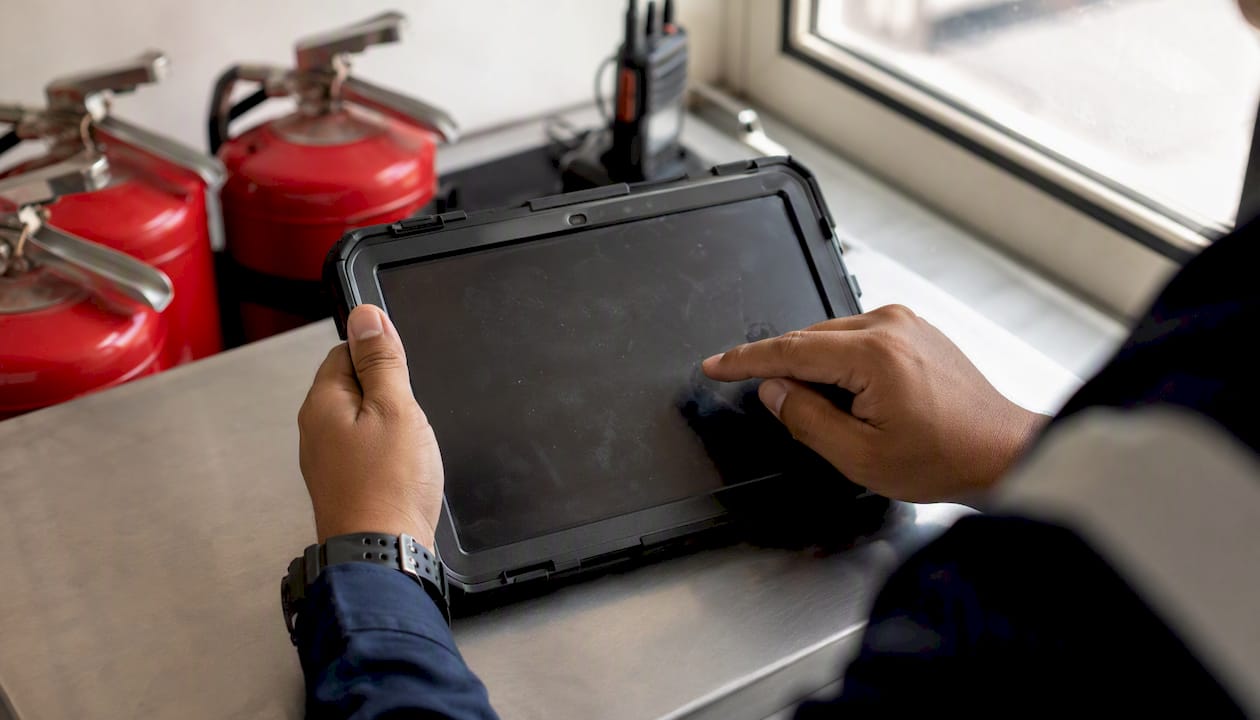
Fill it out in real time, round by round, and keep the physical or digital log on site for the duration of the watch.
Pro Tip: Cross-reference your log timestamps against your building’s CCTV or access-control system. It gives you a second, independent record if your fire watch documentation is ever questioned.
A Provider’s Perspective on Fire Watch Compliance
The gap we see most often isn’t ignorance of the rule, it’s timing. Managers wait until a system has been down for three hours to start making calls, then scramble to find qualified personnel with an hour left on the clock. Buildings that treat fire watch as part of routine fire alarm inspection planning, rather than an emergency afterthought, avoid nearly all of the compliance headaches described above.
Get Help Restoring Your System Fast
A fire watch buys you time, but it isn’t a fix. The fastest way off a fire watch is getting your system repaired, tested, and certified, and that’s where Reliable-fire-protection’s Houston-area crews come in. Unlike a generic staffing firm that only supplies watch personnel, Reliable-fire-protection can dispatch emergency repair technicians the same day your alarm or sprinkler system goes down, cutting the total time your building spends under watch.
Our team handles emergency fire alarm repair, sprinkler system troubleshooting, and post-repair testing and certification so you can close out your fire watch and notify the AHJ with confidence. We know Houston’s local fire marshal expectations and coordinate directly with inspectors during system restoration. If your building has a system impairment right now or you want a compliance review before one happens, request a free quote and get a technician on site.
Sources
- Policy Statement: Fire Watch (City of Bedford, TX)
- Fire Watch Requirements (Victoria, TX Fire Marshal’s Office)
- Fire Watch Performance Guidelines (Town of Prosper, TX)
- Fire & Safety Watch Services (Texas DPS)
- Texas Department of Insurance – Fire (State Fire Marshal resources)