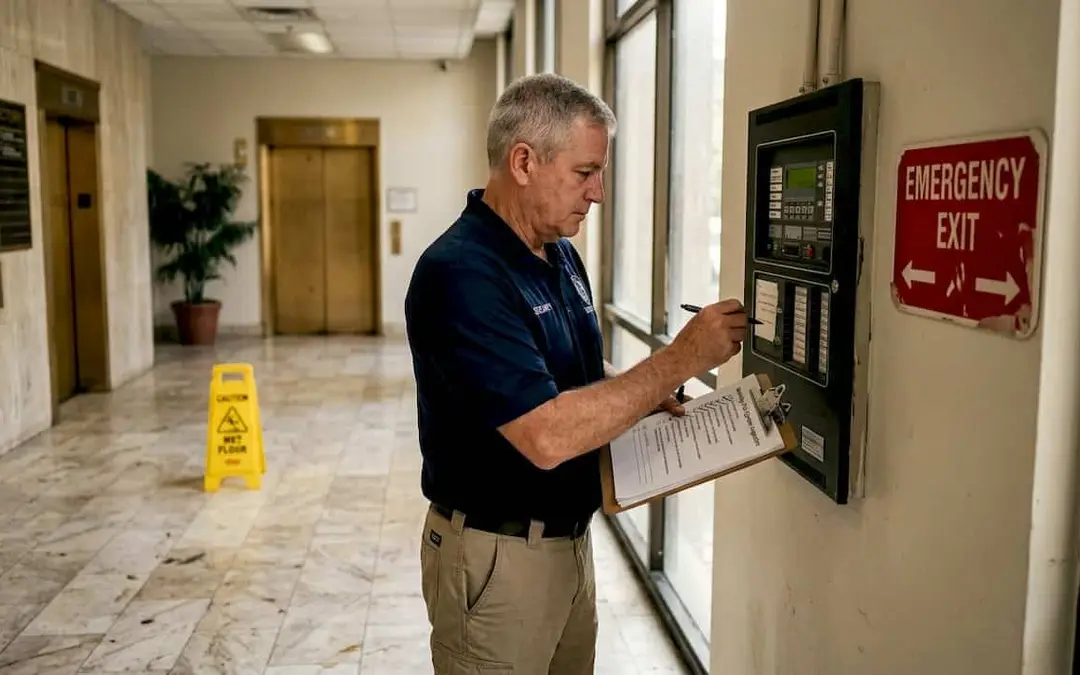
Failing a fire inspection is not just an inconvenience. It can trigger building closures, heavy fines, and liability exposure that no property owner wants. What surprises most Texas commercial property managers is that compliance failures rarely come from ignoring the rules entirely. They come from misreading which rules apply. Texas operates under a layered system of state and local fire codes, and annual inspections are mandatory for commercial buildings, with high-risk facilities facing quarterly requirements. This guide breaks down every layer of that system so you can move from confusion to full, documented compliance.
Table of Contents
- Understanding Texas fire codes and local amendments
- Step-by-step process for achieving code compliance
- Inspections, permits, and working with licensed professionals
- Common pitfalls and cost-saving strategies
- Our experience: What most Texas property managers overlook in fire code compliance
- Need expert help navigating Texas fire code compliance?
- Frequently asked questions
Key Takeaways
| Point | Details |
|---|---|
| Know your codes | Texas code compliance depends on both state and local amendments, so always verify which rules apply to your property. |
| Hire licensed professionals | Only licensed companies can perform inspections, ensure compliance, and help you avoid costly mistakes. |
| Document everything | Maintaining thorough records and following inspection schedules can reduce your risk of fines and cut insurance premiums. |
| Avoid shortcuts | Unlicensed contractors or missed local amendments can result in failed inspections and expensive delays. |
| Stay proactive | Regular training, system maintenance, and staying informed on reporting changes keep your property safe and legally protected. |
Understanding Texas fire codes and local amendments
The first thing to understand is that no single code governs every Texas commercial property. Three major frameworks shape your obligations, and each one interacts with the others in ways that can catch you off guard.
NFPA 101 (the Life Safety Code) focuses on occupant safety, egress, and emergency lighting. NFPA 1 (the Fire Code) addresses fire prevention, suppression systems, and hazardous materials. The International Fire Code (IFC) is a model code published by the International Code Council and adopted, with local amendments, by many Texas municipalities. The Texas State Fire Marshal’s Office (SFMO) uses the 2021 NFPA 101 and NFPA 1 as its primary inspection standards statewide, while local jurisdictions adopt the IFC with their own amendments, creating a patchwork of requirements across cities.
Here is a quick comparison of how major Texas jurisdictions approach fire code adoption:
| Jurisdiction | Primary code adopted | Notable amendments |
|---|---|---|
| SFMO (statewide) | 2021 NFPA 101 and NFPA 1 | Applies to state-licensed facilities |
| Houston | IFC 2021 with local amendments | Stricter high-rise provisions |
| Austin | IFC 2021 with local amendments | Enhanced wildland-urban interface rules |
| McKinney | IFC 2018 with local amendments | Additional sprinkler requirements |
When codes conflict, the more stringent standard always prevails. That means you cannot simply follow state rules and assume you are covered locally. Your occupancy type matters too. A warehouse, a restaurant, a medical clinic, and a hotel all face different requirements because they present different fire risks and occupant loads.
Common occupancy types and their key distinctions include:
- Assembly (A): Restaurants, theaters, houses of worship. High occupant density triggers stricter egress and suppression rules.
- Business (B): Office buildings. Generally moderate requirements, but alarm and exit signage standards still apply.
- Hazardous (H): Facilities storing flammable or toxic materials. Among the most regulated categories.
- Institutional (I): Hospitals, nursing homes. Highest life safety standards due to limited-mobility occupants.
- Mercantile (M): Retail stores. Sprinkler thresholds and exit requirements vary by square footage.
You can review state fire marshal rules directly to confirm which standards apply to your facility type. For a deeper look at how the Texas fire code compliance process works from start to finish, including city-specific guidance, that resource walks through the full picture. Understanding fire safety regulations in Houston specifically is essential if your property sits within city limits.
Pro Tip: Always contact your local Authority Having Jurisdiction (AHJ) before starting any fire system upgrade or renovation. They can tell you exactly which code edition and amendments apply to your specific address, saving you from costly rework.
Step-by-step process for achieving code compliance
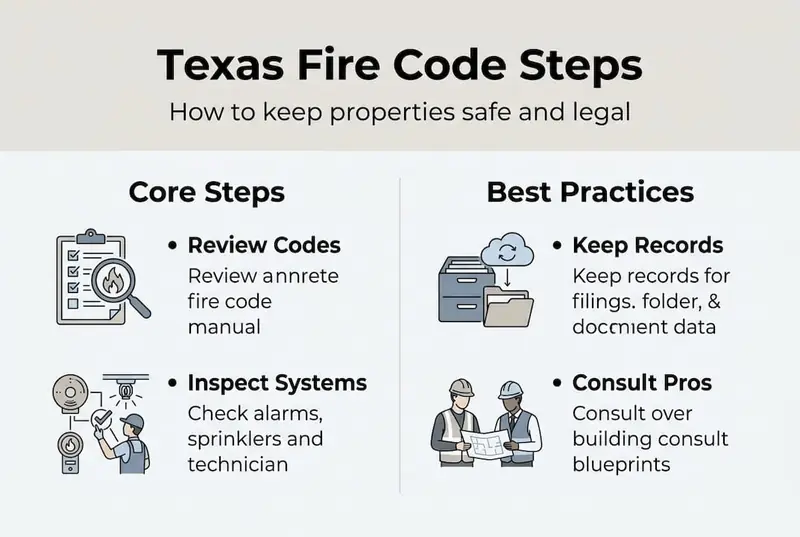
Knowing which codes apply is only half the battle. The other half is executing a repeatable process that keeps your property compliant year after year. Here are the six core steps every Texas commercial property owner should follow.
- Review applicable codes. Identify your occupancy type, then confirm which NFPA and IFC editions your local AHJ enforces. Do not assume last year’s standards still apply.
- Inventory all fire protection equipment. Walk the property and catalog every extinguisher, alarm panel, sprinkler head, suppression system, and exit sign. Note installation dates and last service records.
- Schedule required inspections and permits. Contact a licensed Texas fire protection company to schedule inspections. Pull any required permits before system modifications begin.
- Conduct a gap analysis. Compare your current equipment and documentation against code requirements. Identify deficiencies and prioritize corrections by risk level.
- Maintain thorough documentation. Keep inspection reports, service records, permit copies, and employee training logs organized and accessible. Inspectors will ask for them.
- Pass inspection and close the loop. After corrections, schedule your formal inspection. Once approved, set calendar reminders for the next required inspection cycle.
The compliance process reinforces that reviewing codes, inventorying equipment, and maintaining documentation are the three pillars that prevent most violations. For a detailed walkthrough of each stage, the step-by-step fire safety inspection guide is a practical companion resource.
Here is a quick reference for inspection and documentation frequency by risk level:
| Risk level | Inspection frequency | Documentation review |
|---|---|---|
| Standard commercial | Annual | Annual |
| High-risk (assembly, hazardous) | Quarterly | Semi-annual |
| State-licensed facilities | Per SFMO schedule | Annual |
| Post-incident or major renovation | Immediate reinspection | Immediate update |
One emerging change worth tracking is the transition to NERIS (the National Emergency Response Information System), which is replacing the older NFIRS reporting platform. Texas fire departments will increasingly use NERIS for incident and compliance reporting, so understanding its data requirements now puts you ahead of the curve. Check state fire marshal inspection bulletins for the latest rollout timelines.
Pro Tip: Proactive documentation does more than satisfy inspectors. It can reduce your liability insurance premiums by up to 25 percent and gives you leverage when negotiating policy renewals. Use the Houston fire prevention checklist to make sure nothing gets missed between formal inspections.
Inspections, permits, and working with licensed professionals
Not every inspection follows the same schedule. The trigger for an inspection can be a routine annual cycle, a change in occupancy, a renovation, a complaint, or a post-incident review. Understanding what triggers an inspection at your property type is essential.
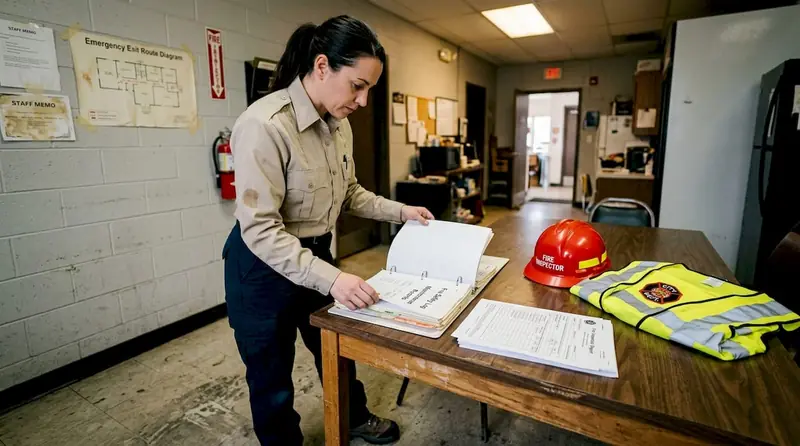
For most commercial buildings, annual inspections are required, while high-risk facilities may need quarterly checks. Hospitals, schools, and assembly spaces often face more frequent reviews because the consequences of a fire event are more severe.
When you are planning a system upgrade or new installation, these are the documents and permits you will typically need:
- Fire suppression system permit (required before installation begins)
- Alarm system permit (required for new panels or major modifications)
- Sprinkler modification permit (required for any head additions or relocations)
- Certificate of occupancy update (required if occupancy type changes)
- Contractor license verification (required to confirm your installer is state-licensed)
Using unlicensed contractors can lead to failed inspections or even closures. The risk is not worth the short-term savings.
Texas law requires that licensed fire protection companies perform all compliance inspections and system installations. This is not a technicality. It is a legal requirement that protects both the building occupants and the property owner from liability.
The AHJ (Authority Having Jurisdiction) is the local official, typically a fire marshal or building inspector, who has final say on whether your property passes. Their interpretation of the code is binding. If they say a sprinkler head placement does not meet clearance requirements, that is the standard you must meet, regardless of what the written code seems to say.
To prepare for inspection, focus on three areas: documentation readiness (have all records organized and dated), equipment readiness (test alarms, confirm extinguisher tags are current, verify exit lighting works), and staff readiness (conduct a fire drill and confirm employees know evacuation routes). The fire safety testing requirements page covers what inspectors specifically look for during system tests. For a broader overview of the certification process, the fire certification guide is worth reviewing before your next scheduled visit.
Common pitfalls and cost-saving strategies
Even property managers who take compliance seriously make avoidable mistakes. Here are the five most common ones we see across Texas commercial properties:
- Misinterpreting which code edition applies. Using an outdated code version because you did not check for local amendments is a frequent and fixable error.
- Poor or incomplete documentation. Records that are missing dates, signatures, or service details can cause an otherwise compliant property to fail inspection.
- Expired permits. Permits have expiration dates. Starting work on an expired permit is treated the same as working without one.
- Skipping routine maintenance. Fire extinguishers, alarm panels, and sprinkler systems all require scheduled service. Skipping a service cycle creates both a safety gap and a compliance gap.
- Failing to verify with the AHJ. Assuming your general contractor or installer knows the local amendments is a gamble. Verify directly.
Proactive maintenance and documentation can reduce insurance premiums by roughly 25 percent and help you avoid fines and closures that cost far more than the maintenance itself. The math is straightforward: a missed sprinkler inspection might cost a few hundred dollars to correct proactively, but a code violation citation and forced closure can run into tens of thousands.
The SFMO enforces NFPA 101 and NFPA 1 at the state level, while local fire marshals emphasize IFC compliance. Both frameworks reference NFPA standards for technical specifications, so the two systems overlap more than they conflict. Still, the nuances matter. A sprinkler spacing requirement under NFPA 13 may differ slightly from what a local IFC amendment specifies. Always confirm which takes precedence with your AHJ.
For properties subject to Texas A&M System oversight, Texas fire safety policies provide additional guidance on institutional compliance expectations.
Pro Tip: Routine staff fire safety training does more than satisfy a checkbox. Inspectors notice when employees know their evacuation routes and can locate extinguishers without hesitation. That level of preparedness signals a well-managed property and can accelerate the approval process. Explore how fire systems lower insurance premiums and review fire safety compliance tips to keep your costs in check.
Our experience: What most Texas property managers overlook in fire code compliance
After decades of working with commercial property owners across Texas, the pattern is consistent. The managers who struggle most with compliance are not the ones who ignore the rules. They are the ones who follow the rules they know about while missing the ones they did not know existed.
Jurisdictional amendments are the number one blind spot. A property owner who researched NFPA 101 thoroughly but never called the local AHJ to ask about city-specific additions is building a compliance strategy on an incomplete foundation.
The second issue is contractor selection. Choosing an unlicensed or out-of-area contractor to save money almost always creates bigger costs down the line. Failed inspections, permit rejections, and required rework are expensive. Licensed local professionals know the local AHJ, understand the current amendment cycle, and build relationships that make the approval process smoother.
Documentation is the silent compliance killer. We have seen properties with excellent fire systems fail inspections simply because the paperwork was disorganized or missing key dates. Build a documentation habit, not just a documentation file.
Pro Tip: Build a long-term relationship with a licensed local fire protection company. They will alert you to upcoming code changes before they take effect, not after. Reviewing fire safety best practices regularly keeps your team current and your property protected.
Need expert help navigating Texas fire code compliance?
Fire code compliance in Texas is manageable when you have the right team behind you. Getting it right the first time means fewer reinspections, lower insurance costs, and a building that is genuinely safer for everyone inside.
At Reliable Fire Protection, we handle everything from fire sprinkler system compliance and alarm installation to ongoing inspections and documentation support. We know the local AHJ relationships, the Houston-area amendments, and the licensing requirements that keep your property on the right side of every inspection. Whether you need a full system install or just want a compliance review before your next scheduled visit, we are ready to help. Contact us today for a free quote and let us take the complexity out of fire code compliance for your commercial property.
Frequently asked questions
Which fire codes apply to commercial buildings in Texas?
The SFMO uses NFPA 101 and NFPA 1 as its primary standards, but most Texas cities adopt the IFC with local amendments that may add stricter requirements. Always confirm which edition and amendments apply in your specific city.
How often do commercial properties require fire safety inspections?
Annual inspections are required for most commercial buildings, while high-risk properties such as hospitals and assembly spaces may face quarterly requirements. Renovation or occupancy changes can also trigger an immediate inspection.
What is the role of the AHJ in fire code compliance?
The local Authority Having Jurisdiction enforces the applicable code, approves permits, and issues the final pass or fail on your property. Their interpretation of any code provision is binding and overrides general assumptions about what the written standard means. Always verify local AHJ requirements before starting any project.
Can I perform fire system inspections without a licensed company?
No. Texas requires licensed fire protection companies for all compliance inspections and system installations. Using an unlicensed contractor puts your occupancy permit and liability coverage at serious risk.
How does proactive compliance impact insurance costs?
Proactive maintenance and documentation can reduce your liability insurance premiums by up to 25 percent, making compliance an investment that pays for itself over time.