Commercial property managers in Houston know that fire safety is not just a checkbox but a legal responsibility with real consequences. Texas law requires annual inspections for both public and private buildings, making compliance a priority for anyone overseeing multi-tenant properties. Staying on top of these inspections protects your liability, ensures tenant safety, and keeps your building aligned with Houston’s rigorous fire codes. This article clarifies the inspection process and provides actionable steps to help you confidently maintain fire safety standards.
Table of Contents
- Annual Fire Safety Inspections Explained
- Inspection Processes And What They Cover
- Houston Fire Code: Legal Duties And Standards
- Risks Of Noncompliance For Property Managers
- Maximizing Safety And Passing Every Inspection
Key Takeaways
| Point | Details |
|---|---|
| Legal Requirement | Annual fire safety inspections are mandated in Texas, ensuring compliance and protecting lives. |
| Thorough Evaluation | Inspections assess fire alarm systems, exits, emergency lighting, and more to identify hazards. |
| Documentation Importance | Maintaining organized inspection records and corrective actions is essential for liability protection. |
| Proactive Approach | Implementing ongoing maintenance and self-inspections helps ensure safety and enhances inspection success. |
Annual Fire Safety Inspections Explained
An annual fire safety inspection is a comprehensive evaluation of your building’s fire protection systems and compliance with local fire codes. Think of it as a health checkup for your property—it identifies problems before they become dangerous. These inspections cover everything from alarm systems to emergency exits, ensuring your tenants and assets remain protected.
Fire safety inspections are legally required across Texas. The state conducts annual inspections in both public and private buildings to verify code compliance and safeguard lives and property. Local fire departments in Houston enforce these requirements, meaning non-compliance isn’t just risky—it’s illegal.
What exactly gets inspected during these evaluations? Here’s what your property manager needs to know:
- Fire alarm systems – testing for proper activation and notification capability
- Sprinkler systems – verifying water pressure, pipe integrity, and coverage areas
- Fire exits and egress routes – ensuring clear pathways and properly functioning exit hardware
- Emergency lighting – checking backup power and visibility in dark conditions
- Fire extinguishers – confirming proper placement, charge levels, and accessibility
- Hazardous material storage – verifying compliance with flammable substance regulations
- Electrical systems – identifying potential fire hazards in wiring and equipment
An annual inspection isn’t a one-time checkbox—it’s your documented proof of due diligence that protects your liability and demonstrates tenant safety commitment.
As a property manager overseeing multi-tenant buildings, you’re liable for maintaining safe premises. Inspections create a paper trail showing you’re actively managing fire risks. When inspectors find violations, you’ll receive a detailed report with specific corrections needed and timelines for completion.
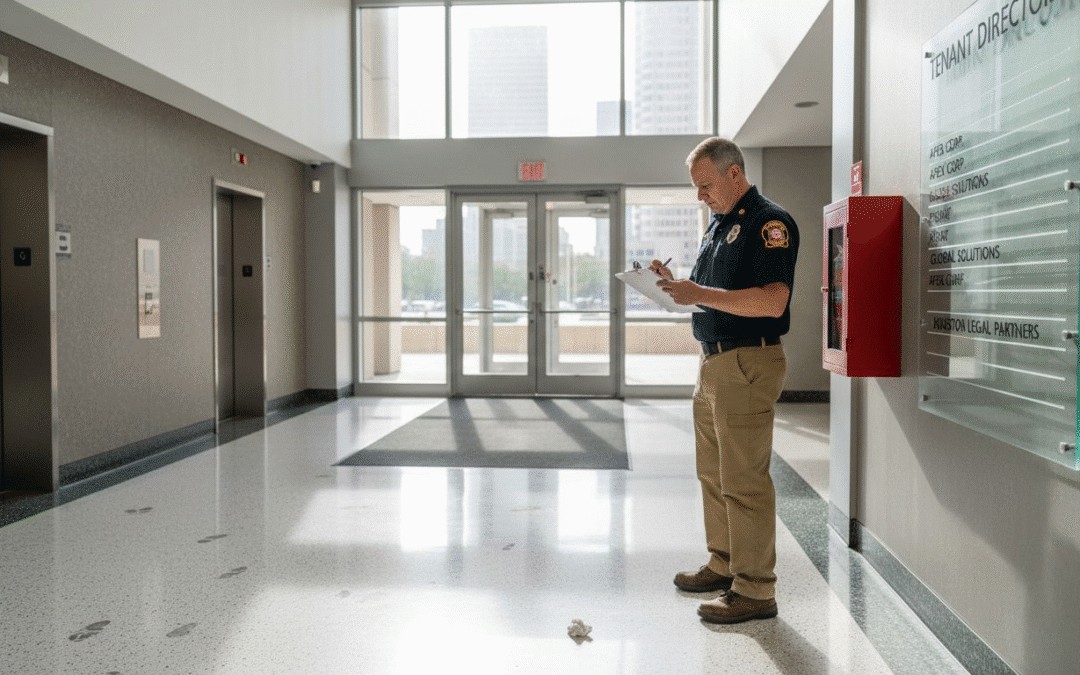
The inspection process typically takes a few hours, depending on building size and complexity. Your inspection team will examine system documentation, test equipment, and walk the entire property. They’ll look for blocked exits, missing signage, damaged equipment, and code violations you might have missed.
Houston’s fire code requirements align with national standards, but local amendments apply. This is where expertise matters—inspectors know exactly what Houston authorities expect. Understanding local testing requirements helps you prepare your systems and avoid costly corrections.
Documentation is critical. Keep all inspection reports, maintenance records, and corrective action completions organized and accessible. If a fire incident occurs, these records demonstrate you met your duty of care. They also help insurers verify your risk management efforts, potentially lowering premiums.
Pro tip: Schedule your annual inspection during your building’s slower season to minimize tenant disruption, and notify occupants at least two weeks in advance so they can prepare access to critical areas like mechanical rooms and rooftops.
Inspection Processes and What They Cover
Fire safety inspections follow a structured process designed to uncover both obvious hazards and hidden compliance violations. Inspectors don’t just glance at your sprinkler system—they conduct thorough evaluations of your entire building’s fire safety infrastructure and operational practices.
The inspection typically begins with a document review. Inspectors examine your maintenance records, previous inspection reports, and system certifications. They want proof that you’ve been maintaining equipment and addressing past violations. If records are missing or incomplete, that’s a red flag that can delay your passing the inspection.
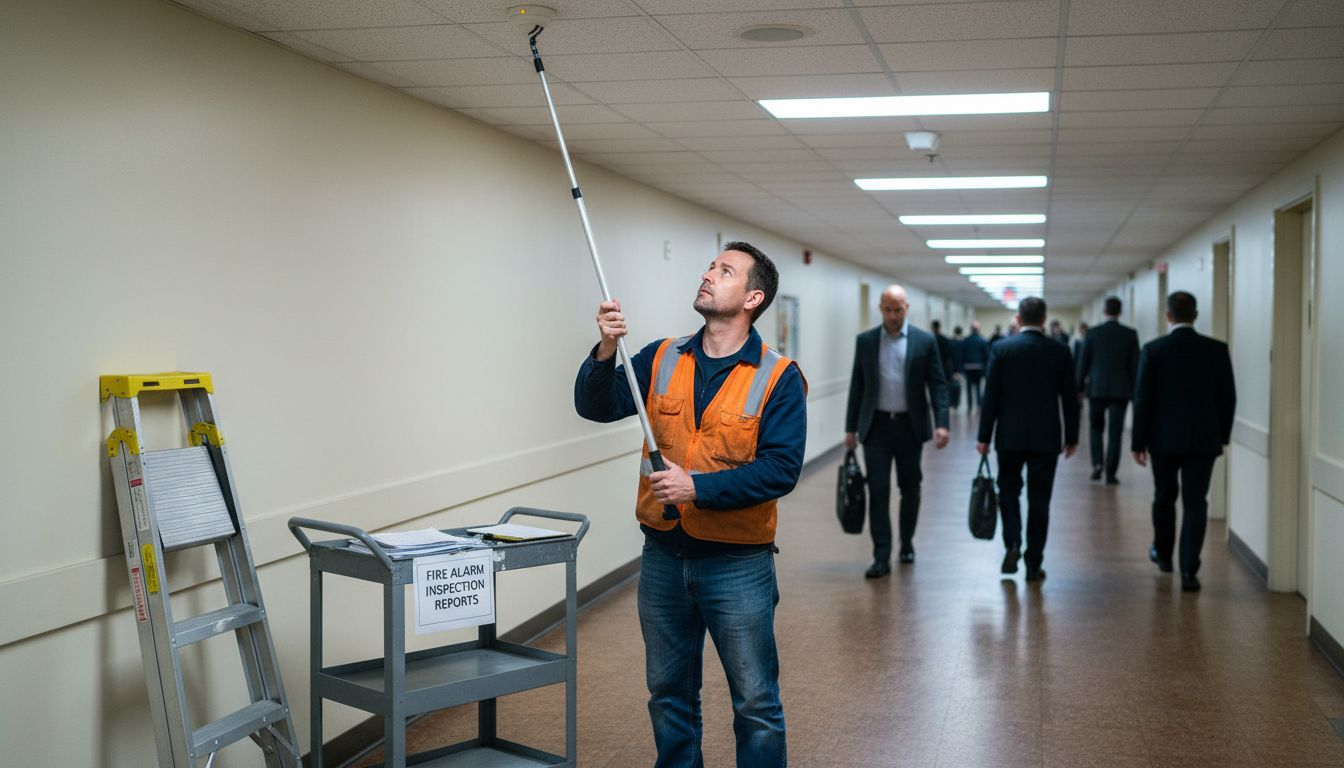
Next comes the physical walkthrough. Inspectors systematically examine your building, checking everything from hallways to mechanical rooms. They’re looking for infrastructure and behavioral violations that could compromise safety, including blocked exits, improper storage, and damaged fire-rated doors.
Here’s what inspectors specifically evaluate during their walkthrough:
- Fire exits and corridors – checking for obstructions, proper signage, and functioning hardware
- Stairways and emergency routes – ensuring clear paths and adequate emergency lighting
- Fire doors and barriers – verifying they close properly and seals are intact
- Sprinkler systems – testing water flow, checking pipe corrosion, and confirming coverage
- Fire alarm systems – testing audibility, reset functionality, and notification devices
- Electrical systems – identifying overloaded circuits, damaged wiring, or improper modifications
- Hazardous material storage – verifying compliance with chemical storage regulations
- Housekeeping conditions – ensuring no excessive clutter or combustible materials
A thorough inspection reveals problems before they become code violations—catching a blocked exit now prevents a citation and potential liability later.
Testing is a critical component. Inspectors may activate fire alarm systems to verify they function properly. They’ll test sprinkler coverage and check that water pressure meets code requirements. They might even simulate an evacuation scenario to ensure occupants can safely exit.
Once the inspection concludes, you’ll receive a detailed report. Violations are typically categorized by severity—immediate hazards requiring urgent correction versus minor issues with 30-day correction windows. Your responsibility is addressing each violation within the specified timeline and documenting corrections.
Different building types receive varying levels of scrutiny. Commercial occupancies follow specific code requirements depending on their use classification. A restaurant with a hood suppression system faces more detailed checks than an office building. High-risk properties may require additional inspections throughout the year.
Corrections aren’t optional—they’re mandatory. Document everything you fix, take photos, keep receipts, and maintain a timeline showing when work was completed. This documentation protects you if questions arise about your compliance efforts.
Pro tip: Create a pre-inspection checklist 2-3 weeks before your scheduled inspection and address obvious violations early, giving you time to correct deficiencies before the official evaluation begins.
Houston Fire Code: Legal Duties and Standards
Houston’s fire code isn’t just a suggestion—it’s a legal framework that defines your responsibilities as a property manager. Violating these standards exposes you to citations, fines, and significant liability if a fire incident occurs on your property.
Houston adopts fire safety standards based on national fire codes and prevention requirements established by industry authorities. These standards set minimum safety benchmarks that every commercial building must meet. Your property isn’t exempt just because it’s older or because you’ve “never had a fire.”
As a property manager, you have specific legal duties under Houston fire code. These aren’t optional responsibilities—they’re mandated obligations that, if ignored, can result in enforcement action and personal liability.
Your key legal duties include:
- Maintain fire protection systems – keeping sprinklers, alarms, and suppression systems in working order
- Conduct annual inspections – scheduling required fire safety evaluations and addressing violations
- Keep exits clear – ensuring emergency routes are never obstructed by furniture, storage, or debris
- Post safety signage – displaying exit signs and emergency procedures prominently throughout the building
- Document compliance – maintaining records proving you’ve met all code requirements
- Train occupants – ensuring tenants understand evacuation procedures and safety protocols
- Correct violations immediately – addressing any hazards identified during inspections without delay
Non-compliance with Houston fire code can result in fines up to thousands of dollars per violation, plus personal liability if someone is injured in a preventable fire.
The Texas State Fire Marshal’s Office enforces these standards statewide, and Houston’s local fire department conducts inspections to verify compliance. Failure to comply creates legal exposure on multiple fronts. Insurance companies may deny claims if they discover you neglected fire code requirements. In a lawsuit following a fire, your failure to maintain systems or address known hazards becomes evidence of negligence.
Different building types face varying requirements based on occupancy classification. A high-rise office building has stricter standards than a small retail space. Multi-tenant buildings like yours require more rigorous oversight because you’re responsible for protecting multiple occupants and businesses.
Documentation is your legal shield. Keep inspection reports, maintenance records, repair receipts, and violation correction timelines organized and accessible. If a fire occurs, these records demonstrate you acted responsibly and fulfilled your duty of care.
Violations aren’t just citations—they’re warnings that your building has gaps. Ignoring them signals negligence. Addressing them promptly shows due diligence and protects your liability position.
To help property managers understand their obligations, here’s a summary of key legal duties under Houston fire code and their practical effects:
| Legal Duty | What It Means in Practice | Potential Consequence of Noncompliance |
|---|---|---|
| Maintain fire protection systems | Schedule regular maintenance; test alarms | Malfunction during emergency; liability |
| Keep exits clear | Remove obstructions daily | Fines; blocked escape during fire |
| Post safety signage | Update and replace missing signs | Confusion in emergencies; citations |
| Train occupants | Hold annual fire drills and briefings | Unprepared tenants; increased injuries |
| Document compliance | Organize and archive all safety records | Insurance denial; legal vulnerability |
| Correct violations immediately | Fix issues within the recommended timeline | Multiple fines; repeated inspections |
Pro tip: Retain a qualified fire safety professional to conduct quarterly reviews of your systems and building conditions, creating a documented trail showing proactive management even between official inspections.
Risks of Noncompliance for Property Managers
Ignoring fire safety compliance isn’t just a regulatory headache—it’s a financial and legal catastrophe waiting to happen. Property managers who skip inspections or ignore violations face consequences that go far beyond a citation letter.
The most immediate risk is insurance jeopardy. When noncompliance impacts insurance coverage, insurers can deny claims, refuse renewal, or impose dramatically higher premiums. You could face a fire that leaves your building a total loss, only to discover your insurance won’t cover it because you failed fire safety inspections.
Financial penalties escalate quickly. Houston issues citations for fire code violations, with fines ranging from hundreds to thousands of dollars per violation. A single inspection might reveal multiple violations—blocked exits, non-functioning alarms, damaged sprinklers—each one generating separate fines that accumulate rapidly.
Here’s what noncompliance actually costs you:
- Insurance claim denials – refusing to pay for fire damage because you neglected inspections
- Premium increases – doubling or tripling your annual insurance costs if you maintain coverage at all
- Regulatory fines – citations from Houston Fire Department for each violation
- Loss of occupancy permits – ability to rent units or operate your business suspended
- Emergency closure orders – fire marshal authority to shut down operations until hazards are corrected
- Civil liability lawsuits – tenants or injured parties suing you for negligence
- Criminal prosecution – potential criminal charges if someone dies in a preventable fire
One fire in a noncompliant building can bankrupt a property manager through insurance denials, lawsuits, fines, and loss of rental income simultaneously.
Liability exposure intensifies dramatically when someone gets hurt. If a tenant is injured in a fire and you have documented evidence of known violations you failed to address, you’re essentially admitting negligence. Juries award substantial damages in these cases—often exceeding property value.
Tenant retention suffers too. Word spreads quickly when a building has fire safety problems. Occupants leave, rental rates drop, and your reputation takes years to recover. New tenants demand proof of compliance before signing leases.
The operational impact includes loss of revenue during closure orders, costs to remediate violations, and management time spent dealing with code enforcement. A single inspection violation can trigger multiple follow-up inspections, each one requiring building access and tenant coordination.
Worse, noncompliance creates a domino effect. One violation ignored leads inspectors to scrutinize everything else more carefully during future visits. You’ll fail subsequent inspections and face compounding penalties.
Pro tip: Document every fire safety action—inspections scheduled, violations corrected, systems maintained—and retain records for at least seven years, creating an undeniable record of your compliance efforts that protects you legally.
Maximizing Safety and Passing Every Inspection
Passing a fire safety inspection isn’t luck—it’s the result of systematic preparation and ongoing maintenance. Property managers who take a proactive approach to fire safety don’t just pass inspections; they genuinely protect their tenants and reduce liability exposure.
Start with a self-inspection routine. Don’t wait for the official inspector to find problems. Walk your building monthly using a checklist that mirrors what inspectors evaluate. Check exits for obstructions, test alarm systems, inspect sprinklers, and look for fire code violations. This catches issues before they become citations.
Maintenance is non-negotiable. Maintaining clear exit pathways and functional fire safety systems directly improves your inspection results. Schedule regular servicing for sprinkler systems, test fire alarms quarterly, and ensure all equipment has current certification tags. Document every maintenance action with dates and signatures.
Here’s what separates buildings that pass from those that don’t:
- Exit clarity – no stored furniture, boxes, or equipment blocking emergency routes
- System functionality – all alarms, sprinklers, and suppression systems actively maintained
- Housekeeping standards – minimal clutter, no combustible materials stored improperly
- Documentation – complete records of inspections, maintenance, and repairs readily available
- Occupant awareness – tenants trained on evacuation procedures and fire safety protocols
- Rapid corrections – violations from previous inspections permanently resolved, not ignored
Buildings that implement ongoing maintenance programs and conduct self-inspections consistently pass official evaluations with minimal violations.
Engage your tenants in fire safety. Conduct annual evacuation drills, distribute fire safety information, and encourage reporting of potential hazards. When occupants understand the importance, they help maintain safety standards between inspections.
Timing matters too. Schedule your annual inspection during your building’s slowest operational period. This minimizes tenant disruption and gives you maximum access to mechanical rooms, rooftops, and other inspection areas. Notify occupants at least three weeks in advance so they can prepare.
Pre-inspection preparation is critical. Two weeks before your scheduled inspection, conduct your own walkthrough and correct any obvious violations. Fix blocked exits, repair damaged equipment, and ensure all systems are operational. This eliminates easy citations inspectors would otherwise identify.
Implementing proactive fire safety programs with clear documentation demonstrates your commitment to compliance. Keep records organized and accessible—inspection reports, maintenance logs, correction timelines, and training documentation. When inspectors see this evidence of due diligence, they recognize you’re managing fire safety seriously.
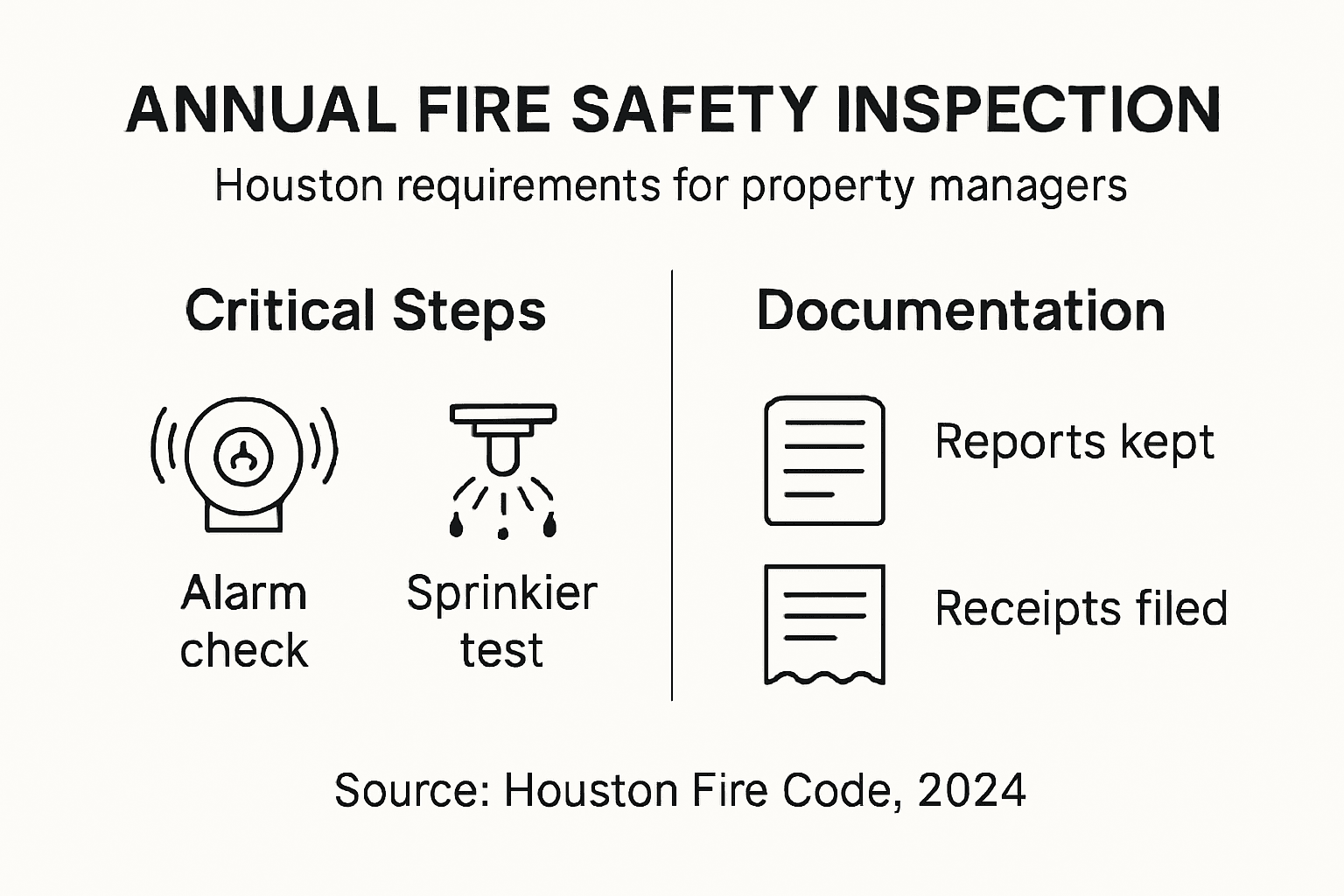
After each inspection, prioritize violations by severity. Address immediate hazards first, then work through items with 30-day correction windows. For each violation, document the corrective action with photos, receipts, and completion dates.
Below is a comparison of proactive versus reactive fire safety management approaches for property managers:
| Management Approach | Preparation Level | Impact on Safety | Inspection Success Rate |
|---|---|---|---|
| Proactive (ongoing review) | Issues identified early | Tenant risk minimized | High; fewer violations found |
| Reactive (after citations) | Issues addressed post-violation | Elevated risk, delayed fixes | Low; frequent repeat citations |
Pro tip: Develop a fire safety committee with representatives from maintenance, management, and tenant organizations to conduct quarterly reviews, identify emerging hazards, and coordinate corrective actions before official inspections.
Ensure Your Houston Building Meets Every Fire Safety Standard with Expert Support
Navigating the complexities of annual fire safety inspections can be overwhelming for property managers committed to protecting tenants and assets. Common challenges like maintaining fire protection systems, keeping exits clear, and documenting compliance require specialized knowledge and proactive maintenance. Don’t let hidden code violations or last-minute fixes put your property at risk or expose you to costly fines and liability.
Partnering with a trusted team like Reliable Fire Protection ensures you stay ahead of these critical safety demands. Our comprehensive Fire Protection services in Houston include expert fire alarm and sprinkler system installations, maintenance, and inspection preparation designed to help you pass inspections with confidence.
Take control of your fire safety compliance today. Contact Reliable Fire Protection for a free consultation and discover how our certified professionals can safeguard your building, protect lives, and provide peace of mind before your next annual fire safety inspection.
Frequently Asked Questions
What is an annual fire safety inspection?
An annual fire safety inspection is a comprehensive evaluation of a building’s fire protection systems to ensure compliance with local fire codes and to identify potential hazards before they become dangerous.
Why is it important to conduct fire safety inspections?
Conducting fire safety inspections is essential for protecting tenants and property from fire hazards. They help ensure that fire protection systems are functioning properly and that the building complies with safety regulations, reducing liability and insurance risks.
What happens during a fire safety inspection?
During a fire safety inspection, inspectors review documentation, perform physical walkthroughs, assess fire alarms, sprinkler systems, emergency exits, and other safety measures to identify any code violations or hazards that need to be corrected.
What are the consequences of not complying with fire safety inspection requirements?
Failure to comply with fire safety inspection requirements can result in fines, increased insurance premiums, loss of occupancy permits, and potential legal liability if a fire incident occurs. Ignoring violations can lead to significant repercussions for property managers.