

A single overlooked electrical panel or blocked exit can turn routine operations into a costly emergency for any Houston property manager. In a city where strict code enforcement and tenant safety go hand in hand, regular fire inspections offer more than peace of mind—they are the foundation of daily business continuity. By investing in comprehensive fire inspections, managers safeguard lives, maintain compliance with Houston regulations, and build trust among tenants in every multi-tenant building.
Table of Contents
- What Are Regular Fire Inspections?
- Key Types And Inspection Processes Explained
- Fire Code Compliance In Houston Buildings
- Risks, Penalties, And Legal Liabilities
- Insurance Benefits And Cost Savings Potential
Key Takeaways
| Point | Details |
|---|---|
| Importance of Regular Fire Inspections | Conducting regular fire inspections is essential for identifying potential hazards, ensuring compliance with safety regulations, and protecting lives and property. |
| Compliance and Documentation | Maintaining detailed documentation of inspections and compliance efforts is crucial for meeting legal obligations and demonstrating commitment to safety. |
| Financial Benefits | Proactive fire safety measures can lead to reduced insurance premiums, lower liability risks, and enhanced property value. |
| Penalties for Non-Compliance | Ignoring fire code regulations can result in substantial fines, legal liabilities, and increased insurance costs, emphasizing the need for proactive management. |
What Are Regular Fire Inspections?
Regular fire inspections are comprehensive safety assessments designed to evaluate buildings and facilities for potential fire hazards and compliance with local safety regulations. These systematic evaluations help identify risks before they escalate into dangerous situations, protecting lives and property in Houston’s diverse commercial landscape.
According to the National Fire Protection Association, these inspections involve trained professionals methodically examining buildings to ensure they meet critical fire safety standards. Key components of these inspections typically include:
- Checking fire alarm systems
- Verifying fire extinguisher functionality
- Assessing emergency exit routes
- Evaluating electrical system safety
- Inspecting potential ignition sources
- Reviewing building occupancy compliance
Fire inspectors systematically document potential risks, providing property managers with detailed insights into areas requiring immediate attention. Building safety isn’t just about identifying problems—it’s about creating proactive prevention strategies that minimize potential emergency scenarios.
Fire inspections are not optional—they are a critical investment in protecting human lives and property assets.
The International Labor Organization emphasizes that these inspections go beyond simple checklists. They represent a comprehensive risk management approach that helps organizations develop robust emergency preparedness protocols.
Pro tip: Schedule fire inspections at least twice annually and maintain detailed documentation of all assessment findings to demonstrate ongoing compliance and commitment to safety.
Here’s a summary of how regular fire inspections benefit key stakeholders:
| Stakeholder | Main Benefit | Long-Term Impact |
|---|---|---|
| Property Managers | Risk identification | Fewer emergencies, lower downtime |
| Business Owners | Insurance cost reduction | Increased asset value |
| Tenants/Occupants | Enhanced safety | Greater trust in property upkeep |
| Insurers | Accurate risk assessment | Fewer large claims paid out |
Key Types and Inspection Processes Explained
Fire inspections in Houston encompass a comprehensive range of system evaluations designed to ensure maximum safety across commercial and residential properties. These detailed assessments go far beyond simple visual checks, involving sophisticated testing and thorough documentation of critical fire protection infrastructure.
According to the National Fire Protection Association, fire inspections typically cover multiple critical systems, including:
- Fire alarm systems
- Sprinkler networks
- Fire and smoke dampers
- Emergency exit routes
- Electrical safety components
- Structural fire resistance elements
Inspection processes are meticulously structured, involving several key stages that ensure comprehensive safety evaluation. These typically include initial operational testing, periodic systematic inspections, and detailed compliance assessments that help identify potential vulnerabilities before they become serious risks.
Effective fire inspections are not about passing a checklist—they’re about creating a proactive safety environment that protects human lives.
The International Association of Fire Fighters outlines a comprehensive approach that involves examining multiple building aspects, including exterior conditions, means of egress, construction features, storage areas, and specialized systems like flammable liquid storage and fire suppression equipment.
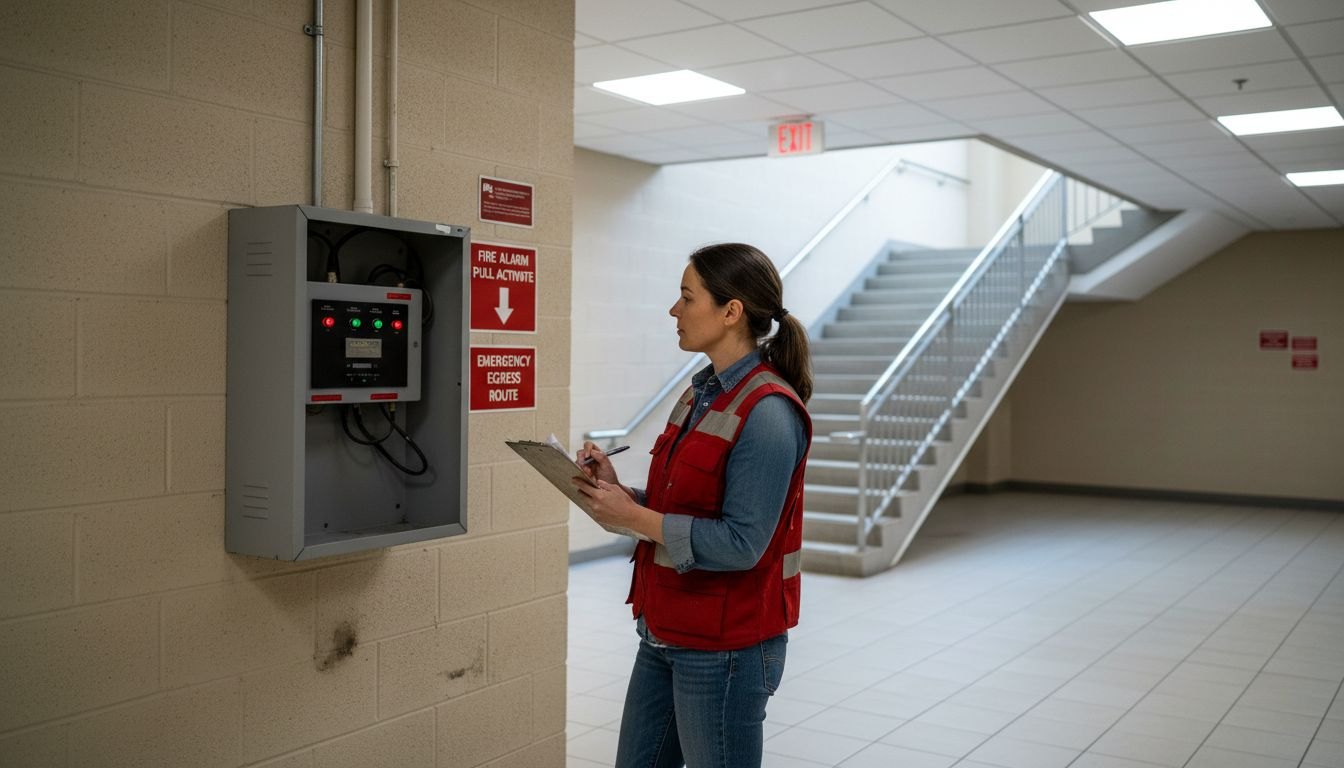
Each inspection type requires specific expertise and follows distinct protocols. Commercial properties might require more frequent and detailed assessments compared to residential buildings, reflecting the complexity of their fire protection needs.
Pro tip: Develop a comprehensive fire inspection tracking system that logs all inspection dates, findings, and required follow-up actions to maintain consistent safety standards.
Compare commercial and residential fire inspections below:
| Property Type | Inspection Frequency | Documentation Required |
|---|---|---|
| Commercial | Quarterly or semiannual | Detailed logs for each system |
| Residential | Annual or as mandated | Basic records of checks |
Fire Code Compliance in Houston Buildings
Fire code compliance is a critical responsibility for building owners and managers in Houston, representing a complex system of regulatory requirements designed to protect lives and property. Houston’s Building Code Enforcement establishes rigorous standards that govern everything from initial construction to ongoing maintenance of fire safety systems.
The city’s fire code compliance framework involves multiple comprehensive elements:
- Mandatory building permit reviews
- Systematic periodic inspections
- Detailed documentation requirements
- Strict enforcement of safety regulations
- Penalties for non-compliance
- Regular code updates and modernization
Regulatory standards are not static. Houston regularly updates its building and fire codes, incorporating amendments to the International Fire Code that address emerging safety technologies and local environmental conditions. These evolving standards ensure that fire protection strategies remain current and effective.
Compliance is not optional—it’s a fundamental responsibility that directly impacts human safety.
The Houston Permitting Center’s code amendment process ensures that local regulations remain adaptive and responsive to changing urban landscapes. Commercial and residential property managers must stay informed about these ongoing changes to maintain proper fire safety infrastructure.
Building code compliance requires a proactive approach. Property owners must anticipate inspections, maintain comprehensive documentation, and demonstrate consistent adherence to established safety protocols. Failure to comply can result in significant financial penalties and potential legal liabilities.
Pro tip: Maintain a dedicated compliance folder with all fire safety documentation, inspection reports, and equipment certifications to streamline future regulatory reviews.
Risks, Penalties, and Legal Liabilities
Navigating fire code compliance involves understanding the significant legal and financial consequences of non-compliance in Houston. Houston’s Building Code Enforcement takes violations extremely seriously, with a comprehensive framework designed to protect public safety and hold property owners accountable.
Potential penalties for fire code violations can include:
- Substantial monetary fines
- Immediate stop-work orders
- Mandatory corrective action requirements
- Potential criminal misdemeanor charges
- Suspension of occupancy permits
- Increased insurance liability
Legal exposure extends far beyond simple administrative penalties. Property owners can face significant financial and legal risks if fire code violations contribute to property damage, personal injury, or loss of life. The potential for civil litigation creates an additional layer of financial vulnerability for non-compliant building managers.
Fire code violations are not just regulatory infractions—they represent potential threats to human safety and substantial financial risk.
The City of Houston Code of Ordinances establishes clear guidelines for enforcement, emphasizing that building owners bear ultimate responsibility for maintaining safe environments. Repeated or willful violations can result in escalating penalties, including criminal charges and substantial financial penalties.
Insurance providers also play a critical role in enforcing compliance. Many commercial insurance policies include clauses that can void coverage or significantly increase premiums for properties with documented fire code violations. This creates additional financial motivation for proactive safety management.
Pro tip: Maintain a comprehensive compliance documentation system that tracks all inspections, repairs, and safety upgrades to demonstrate proactive risk management to both regulators and insurance providers.
Insurance Benefits and Cost Savings Potential
Navigating fire safety isn’t just about regulatory compliance—it’s a strategic financial decision that can significantly impact an organization’s bottom line. Regular fire inspections provide substantial economic advantages by demonstrating proactive risk management to insurance providers.
Key financial benefits of comprehensive fire safety programs include:
- Potential insurance premium reductions
- Lower liability risk exposure
- Reduced property damage costs
- Enhanced property value
- Improved risk assessment ratings
- Potential tax incentives for safety investments
Insurance underwriting considers fire safety as a critical risk assessment factor. Businesses with documented, consistent fire inspection histories often receive more favorable insurance terms, reflecting the reduced likelihood of catastrophic fire incidents.
Proactive fire safety is an investment, not an expense—with measurable financial returns.
The Public Protection Classification system allows insurers to quantify a property’s emergency preparedness, directly influencing insurance rates. Higher safety ratings translate into tangible cost savings, making regular fire inspections a financially prudent strategy.
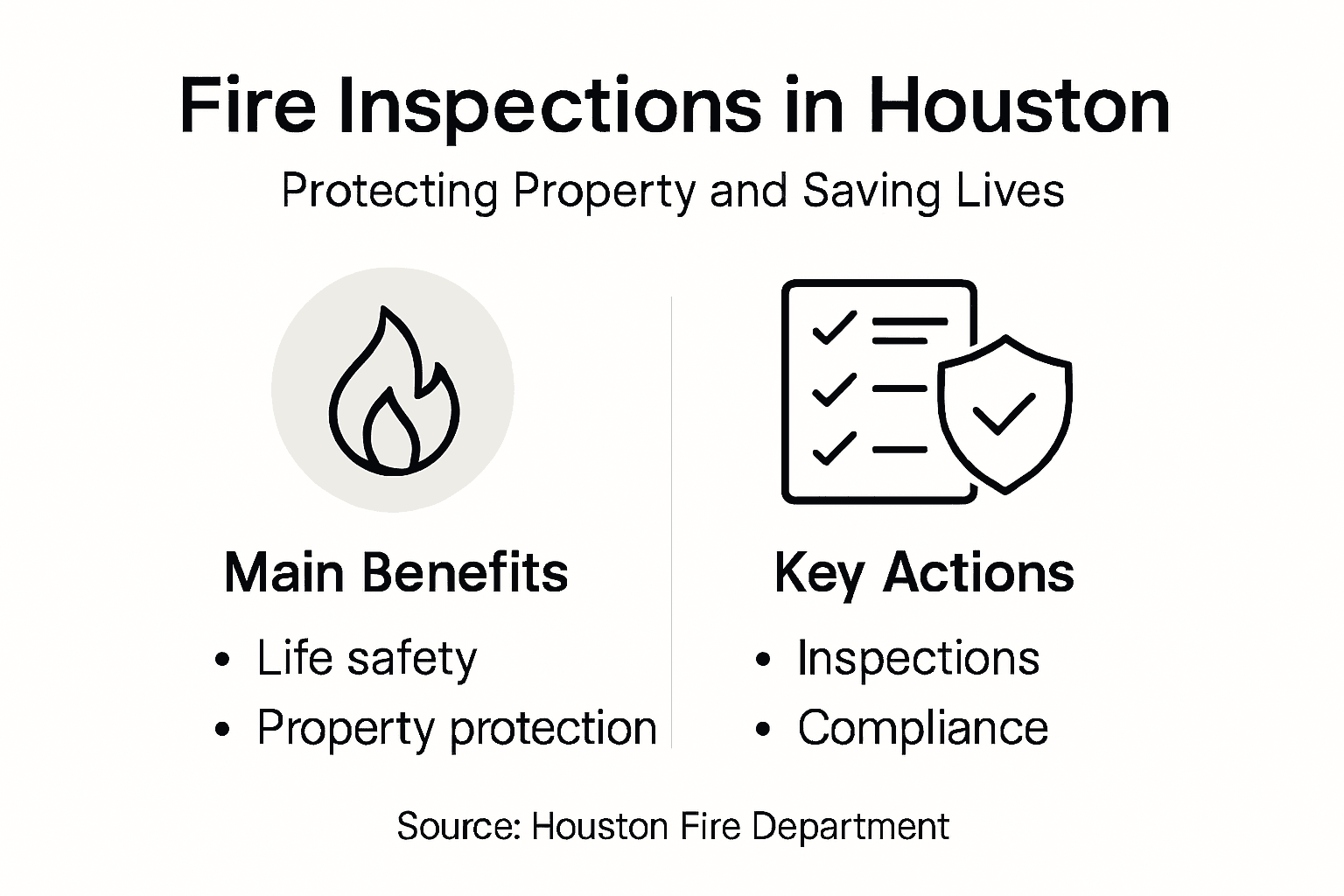
Insurance providers increasingly use advanced risk assessment models that reward organizations demonstrating comprehensive safety protocols. By maintaining meticulous inspection records and implementing recommended improvements, businesses can negotiate more competitive insurance packages and potentially reduce annual premiums.
Pro tip: Request a comprehensive fire safety audit that includes documentation demonstrating your proactive risk management approach to present to your insurance provider.
Protect Your Houston Property With Expert Fire Inspections
Regular fire inspections are vital to safeguarding your property from hidden hazards and ensuring full compliance with Houston fire codes. If you want to reduce risk, avoid penalties, and lower insurance costs you need a trusted partner who understands local regulations and offers comprehensive fire protection solutions. Key challenges include maintaining up-to-date documentation, identifying vulnerabilities, and ensuring all systems from fire alarms to sprinklers function flawlessly.
At Reliable Fire Protection, we specialize in delivering tailored services for both commercial and residential properties throughout Houston. Our certified team provides thorough inspections, expert system maintenance, and rapid response to keep your building safe and compliant. Don’t wait until a costly violation or emergency occurs. Learn more about how our range of fire protection services can help you stay ahead at Fire Protection – Reliable Fire Protection.

Take control of your fire safety today by partnering with a company that prioritizes your peace of mind. Visit Reliable Fire Protection to request a free quote or contact our experts. Ensure your Houston property stands strong against fire risks now.
Frequently Asked Questions
What are the key components of a regular fire inspection?
Regular fire inspections typically include checking fire alarm systems, verifying fire extinguisher functionality, assessing emergency exit routes, evaluating electrical system safety, inspecting potential ignition sources, and reviewing building occupancy compliance.
How often should fire inspections be conducted?
It is recommended to schedule fire inspections at least twice annually for commercial properties and annually for residential properties, depending on the specific requirements and complexity of the systems in place.
What are the benefits of fire code compliance?
Fire code compliance helps protect lives and property, reduces liability risks, enhances safety for occupants, and can lead to lower insurance premiums and improved property value.
What are the consequences of failing to comply with fire codes?
Failing to comply with fire codes can lead to substantial monetary fines, stop-work orders, mandatory corrective actions, potential criminal charges, and increased insurance liability, all of which can impact the safety and financial health of a property.
Recommended
- What Is a Fire Inspection and Why Compliance Matters
- Fire Safety Testing Requirements for Houston Properties
- Fire Alarm Inspection Guide for Safe Houston Properties
- Fire Safety Regulations Explained: Impact on Houston Property Managers
- Wildfire Insurance: What Every Sonoma County Homeowner Should Know – Jenkins Insurance Agency Inc.
- Tower Have Full Replacement House Insurance For Fire!
- Fire Alarm System University Place TX
- Fire Alarm System Bellaire TX