

More than 2,500 American lives are lost each year due to fire incidents, with inadequate alarm systems often being a culprit. For Houston property managers handling multi-family buildings, staying ahead of fire safety compliance is more than just following codes, it protects tenants and property investments. This guide delivers practical steps and expert strategies so you can confidently navigate fire alarm installation and ensure every American resident’s safety within your Houston complexes.
Table of Contents
- Step 1: Assess Property Needs And Compliance Requirements
- Step 2: Prepare Installation Sites And Gather Equipment
- Step 3: Install Control Panels And Wiring According To Codes
- Step 4: Mount Detectors, Alarms, And Notification Devices
- Step 5: Test System Functionality And Ensure Code Compliance
- Step 6: Document Installation And Schedule Regular Maintenance
Quick Summary
| Key Takeaway | Explanation |
|---|---|
| 1. Understand Local Compliance Requirements | Review the Houston Fire Code for specific regulations on fire alarm systems tailored to your building’s characteristics. |
| 2. Prepare Thoroughly for Installation | Select UL-listed devices and inspect potential installation sites to ensure optimal fire alarm performance and code adherence. |
| 3. Follow Wiring and Control Panel Standards | Adhere to National Electrical Code standards during installation to maintain circuit integrity and ensure reliable operation. |
| 4. Test All System Components | Conduct comprehensive testing of devices to verify functionality and compliance with NFPA 72 inspection protocols before finalizing installation. |
| 5. Maintain Documentation and Regular Maintenance | Keep detailed records of installation and testing, along with a structured maintenance schedule to ensure ongoing compliance and safety. |
Step 1: Assess Property Needs and Compliance Requirements
Assessing fire alarm installation requirements for Houston properties demands a strategic and systematic approach. Your goal is to understand the specific safety regulations that apply to your commercial building and ensure complete compliance with local fire codes.
Begin by carefully reviewing the Houston Fire Code Chapter 9 requirements, which establish detailed specifications for fire protection systems. These regulations mandate specific installation standards based on your building’s occupancy type, total area, and overall structure. Property managers must submit comprehensive construction documents to the Houston Fire Marshal Office for thorough plan reviews and inspections, ensuring that every fire alarm system meets rigorous life safety standards.
Carefully document your building’s unique characteristics such as square footage, number of occupants, multiple floors, and specific usage to determine the most appropriate fire alarm configuration. Each commercial property requires a custom approach tailored to its specific architectural layout and operational requirements. Consult with certified fire protection professionals who understand local Houston regulations to develop a precise installation strategy that meets all legal requirements.
Pro tip: Schedule a preliminary site assessment with a fire safety expert before beginning any installation to identify potential compliance challenges and streamline the permitting process.
Step 2: Prepare Installation Sites and Gather Equipment
Preparing for a fire alarm installation requires meticulous planning and precise equipment selection to ensure optimal safety performance. Your objective is to create a comprehensive preparation strategy that sets the foundation for a successful fire protection system implementation.
Begin by selecting UL-listed fire alarm devices that meet specific building requirements. Thoroughly inspect potential installation locations, considering factors like ceiling height, wall structure, electrical infrastructure, and potential signal interference. Focus on strategic placement near bedrooms, outside sleeping areas, and on each building level to maximize coverage. Verify that your selected devices are compatible with interconnected systems and meet local Houston fire code specifications.
Gather all necessary installation equipment including conduit, plenum-rated cabling, mounting hardware, control panels, and initiating devices. Design guidelines recommend using specific wiring standards that comply with UL and FM Global regulations. Create a detailed inventory checklist to ensure you have every component required for a professional installation. Double-check electrical requirements, mounting specifications, and system compatibility before beginning the installation process.
Pro tip: Create a detailed site map marking exact alarm placement locations and potential electrical routing paths to streamline your installation workflow and minimize unexpected complications.
Step 3: Install Control Panels and Wiring According to Codes
Installing fire alarm control panels and wiring represents a critical phase of your fire protection system implementation. Your primary goal is to ensure precise installation that meets all safety regulations and provides reliable emergency communication.
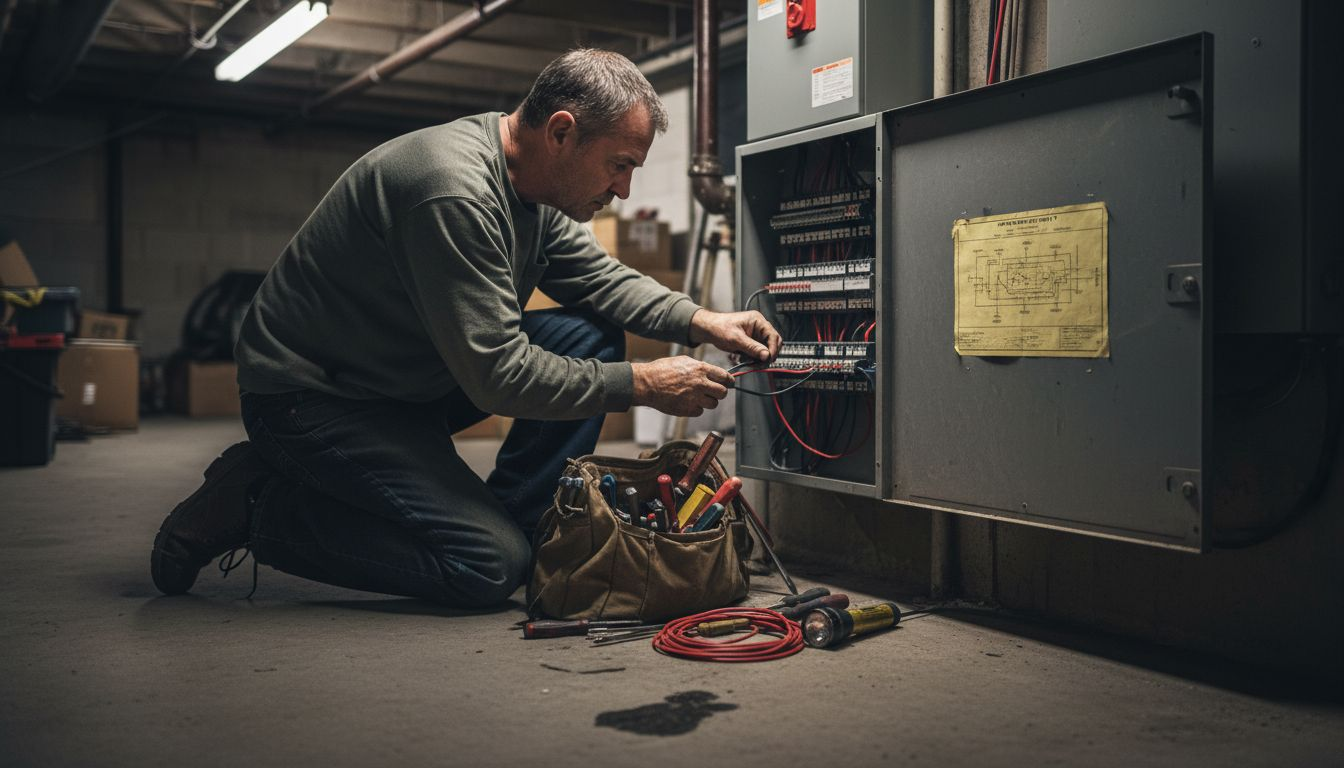
National Electrical Code wiring standards require meticulous attention to circuit integrity and survivability. Begin by selecting a centrally located control panel that provides maximum coverage and accessibility. Ensure the panel is addressable and sized appropriately for your specific building requirements. Use red plenum-rated cables exclusively for fire alarm circuits, installing them in conduit in exposed areas to maintain system reliability and meet regulatory standards.
Carefully route wiring to maintain circuit integrity, paying special attention to circuit survivability requirements. Plan for 25% spare capacity in both initiating and notification circuits, which allows for future system expansion and ensures long-term flexibility. Verify all connections meet NFPA 72 standards, using circuit integrity rated cables in high-risk zones to guarantee continued operation during fire conditions.
Pro tip: Color code and meticulously label all wiring connections to simplify future maintenance and troubleshooting efforts.
Step 4: Mount Detectors, Alarms, and Notification Devices
Mounting fire alarm devices requires precision and adherence to strict safety regulations to ensure comprehensive building protection. Your goal is to strategically place each component to maximize detection and notification capabilities.
Refer to NFPA 72 installation height guidelines when positioning your devices. Wall mounted pull stations and detectors should typically be installed between 42 and 54 inches from the finished floor. Ceiling mounted smoke and heat detectors require careful placement to avoid obstructions like air vents, ceiling fans, or light fixtures that could interfere with their sensing capabilities. Notification appliances like strobes and speakers should be mounted approximately 80 inches above the finished floor to ensure maximum visibility and audibility.
Fire alarm device placement demands consideration of environmental conditions and building layout. Select locations that provide clear line of sight for visual alarms and unobstructed sound paths for audio notifications. Consider ADA requirements when positioning devices to ensure accessibility for all building occupants. Test each device location for optimal coverage and adjust mounting positions to eliminate potential detection dead zones.
The following table highlights common fire alarm device types and their optimal placement recommendations:
| Device Type | Ideal Placement | Reason |
|---|---|---|
| Smoke Detector | Hallways, bedrooms, each level | Prompt smoke detection |
| Heat Detector | Kitchens, boiler rooms | Less false alarms in hot spots |
| Pull Station | Building exits, stairwells | Quick manual activation |
| Strobe Light | Corridors, restrooms, lobbies | Visual warning for all occupants |
| Speaker or Horn | Central hallways, large rooms | Audible alerts throughout building |
Pro tip: Use a laser level and measuring tape to ensure precise and consistent device mounting heights across your entire installation.
Step 5: Test System Functionality and Ensure Code Compliance
Testing your fire alarm system is the critical final stage that validates the entire installation and ensures your property meets all safety requirements. Your objective is to comprehensively verify every component functions precisely as designed.
NFPA 72 inspection protocols require systematic testing of all system components including initiating devices, notification appliances, power supplies, and supervisory signals. Conduct a comprehensive functional test by methodically activating each smoke detector, heat sensor, manual pull station, and audible alarm. Verify that notification devices trigger correctly and that the control panel accurately records and reports each activation. Check battery backup systems, communication pathways, and ensure all devices respond within expected time frames.
Certified fire alarm testing procedures demand meticulous documentation of every test result. Create a detailed log recording each device’s performance, noting any deviations from expected functionality. Verify that your installation meets local Houston fire code requirements and NFPA standards. Pay special attention to circuit integrity, signal transmission reliability, and overall system responsiveness. If any component fails testing, immediately address the issue and retest to ensure complete system compliance.
Pro tip: Schedule a professional third party inspection to validate your testing results and provide an independent verification of system performance.
Step 6: Document Installation and Schedule Regular Maintenance
Comprehensive documentation and proactive maintenance are essential to preserving your fire alarm system’s reliability and ensuring long term safety compliance. Your goal is to create a systematic record keeping process that supports ongoing system performance and meets regulatory requirements.
Fire protection system documentation standards require meticulous record keeping of device locations, installation dates, system configurations, and test results. Create a detailed digital and physical file that includes manufacturer specifications, installation certificates, system diagrams, and comprehensive testing logs. Each record should include precise details such as device serial numbers, installation dates, firmware versions, and specific mounting locations to facilitate future maintenance and potential system upgrades.
International Fire Code mandates maintaining inspection records for a minimum of three years. Develop a structured maintenance schedule that includes monthly device testing, annual battery replacements, and comprehensive system evaluations every ten years. Establish a digital and physical tracking system to monitor upcoming maintenance requirements, track historical performance, and ensure continuous compliance with local Houston fire safety regulations.
Pro tip: Utilize cloud based document management systems to create redundant backup of all fire alarm system documentation and simplify record retrieval during inspections.
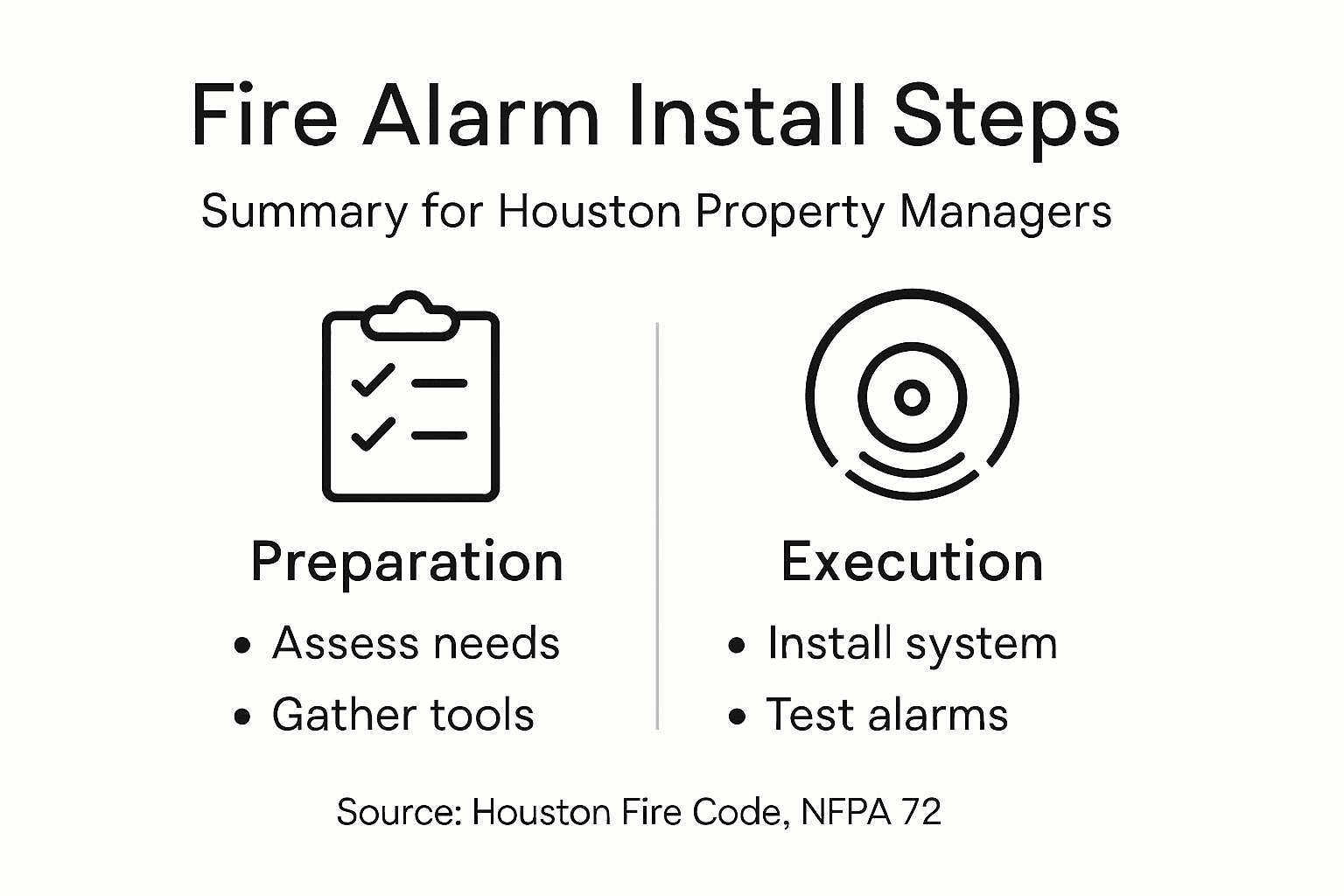
Here’s a concise summary of key fire alarm installation steps and their main objectives:
| Step | Main Objective | Critical Focus |
|---|---|---|
| Assess Needs | Comply with fire codes | Building characteristics, legal reviews |
| Site Preparation | Ensure readiness | Device selection, site inspection |
| Install Panels & Wiring | Safe, code-compliant installation | Central panel location, wiring standards |
| Mount Devices | Maximize detection, coverage | Correct heights, avoid obstructions |
| System Testing | Validate full functionality | Test every component, document results |
| Documentation & Maintenance | Ensure life-long compliance | Keep records, regular system upkeep |
Ensure Your Houston Property Meets Every Fire Alarm Installation Standard with Reliable Fire Protection
Navigating the complex fire alarm installation landscape in Houston requires expert guidance to meet all safety regulations and building codes. This detailed guide highlights critical steps from assessing property needs to thorough system testing and documentation. At Reliable Fire Protection, we understand the challenges property managers face in achieving reliable and code-compliant fire alarm systems that protect both people and assets.
Our Houston-based team specializes in tailored fire protection solutions that cover every stage of installation, ensuring your building is safe and fully compliant. Whether it’s precise control panel placement, professional device mounting, or comprehensive system testing, our experts deliver trustworthy services designed to streamline your fire safety upgrades.
Discover our full range of services on Fire Protection – Reliable Fire Protection and learn how our experienced family-owned company combines local knowledge with certification-backed expertise. Don’t wait until an emergency to verify your system’s effectiveness.
Take control of your fire safety today by contacting Reliable Fire Protection for a free consultation. Our prompt response team stands ready to assist Houston property managers in deploying proven fire alarm solutions that safeguard your building and comply with all local codes. Visit us now to schedule your assessment and protect what matters most.
Frequently Asked Questions
What steps should I take to assess fire alarm installation needs for my property?
Assess your property by reviewing the local fire codes and evaluating the building’s characteristics, such as size and occupancy type. Document these details and consult with certified fire protection professionals to ensure compliance and determine the best fire alarm configuration.
How can I prepare the installation site before starting my fire alarm system installation?
Prepare the installation site by inspecting potential locations for device placement, considering factors like ceiling height and electrical infrastructure. Create a detailed inventory checklist of all necessary equipment and a site map to streamline the installation process.
What are the key requirements for wiring and control panel installation?
Ensure the control panel is centrally located and compliant with National Electrical Code wiring standards. Use red plenum-rated cables for fire circuits, maintaining circuit integrity and planning for spare capacity to allow for future expansion.
How do I properly mount fire alarm devices for optimal functionality?
Follow installation height guidelines to mount devices correctly, ensuring that detectors and alarms are accessible and have clear lines of sight. Utilize tools like a laser level to confirm consistent mounting heights and avoid obstructions that could hinder the devices’ performance.
What is the process for testing the fire alarm system after installation?
Conduct a comprehensive functional test of the fire alarm system by activating each component and ensuring correct notifications. Document all results meticulously to validate compliance with local regulations and address any issues immediately.
How should I document the fire alarm installation and schedule maintenance?
Create a structured system for documenting device locations, installation dates, and testing logs to maintain compliance. Establish a maintenance schedule that includes regular inspections and updates to ensure ongoing functionality and safety.