
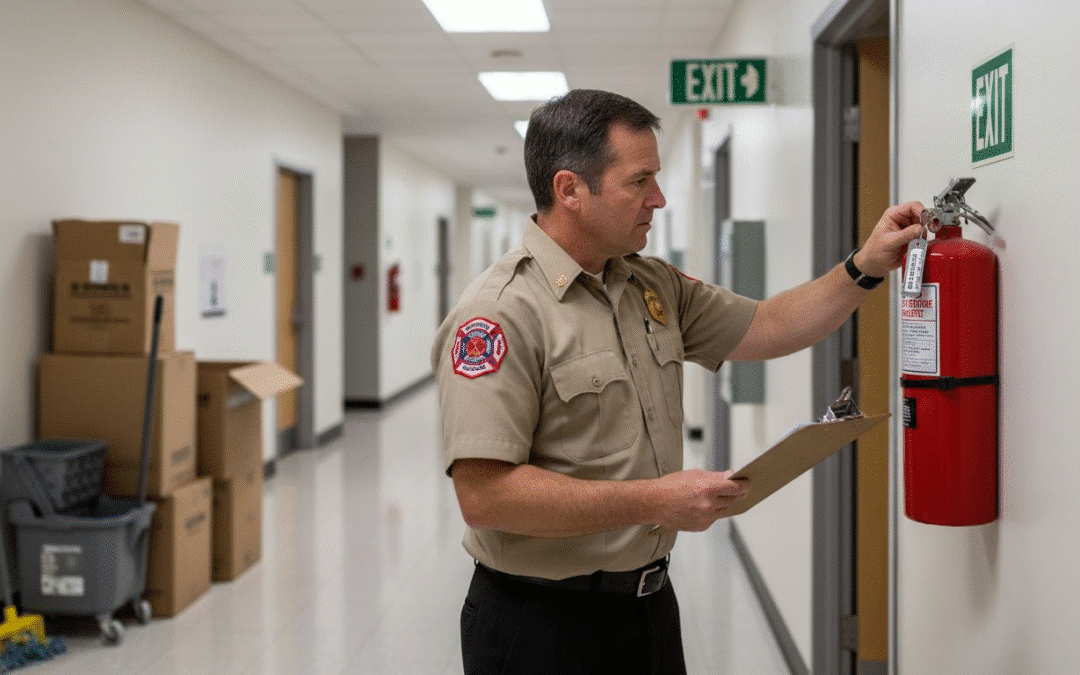
Managing a commercial property in Houston means facing high expectations for safety and compliance every single day. Complex buildings and diverse industries highlight the city’s need for comprehensive fire protection systems that keep people and businesses secure. Understanding updated laws, proven technologies, and local fire department support can help you make the right choices so your property meets Houston’s 2025 standards and stays protected from unexpected emergencies.
Table of Contents
- Fire Protection In Houston Explained
- Major Fire Protection Systems And Coverage
- Updated 2025 Houston Fire Codes And Standards
- Comprehensive Compliance Requirements For Property Managers
- Risks, Penalties, And Optimal Safety Strategies
Key Takeaways
| Point | Details |
|---|---|
| Comprehensive Fire Protection is Essential | Houston’s safety relies on an integrated fire protection system that includes advanced response capabilities and community education. |
| Stay Informed About Regulations | Property managers must maintain awareness of evolving fire codes and ensure compliance to protect lives and properties. |
| Regular Training and Inspections are Critical | Ongoing assessments and staff training enhance fire safety and adherence to current safety standards. |
| Proactive Risk Management is Key | Implementing technology and conducting routine audits can significantly mitigate fire safety risks and associated penalties. |
Fire protection in Houston explained
Houston’s fire protection landscape represents a critical infrastructure ensuring the safety of over 2 million residents across 654 square miles. The Houston Fire Department stands at the forefront of this essential public safety mission, operating with an impressive network of 93 stations equipped to handle diverse urban emergency scenarios.
Effective fire protection in Houston requires a comprehensive approach that integrates multiple strategic elements:
- Advanced emergency response capabilities
- Robust fire prevention infrastructure
- Regular safety inspections and compliance protocols
- Specialized equipment and trained personnel
- Community education and awareness programs
The Houston Fire Department’s commitment extends beyond traditional firefighting. Their specialized units are designed to address the unique challenges posed by Houston’s diverse urban environment, which includes complex industrial facilities, dense residential zones, and critical infrastructure.
Fire safety regulations play a pivotal role in protecting Houston’s properties. Property managers and business owners must navigate a complex framework of local and state requirements to ensure comprehensive protection. Staying updated on current standards is not just recommended – it’s mandatory.
Fire protection is not an option in Houston – it’s a critical necessity for preserving life and property.
Pro tip: Conduct a comprehensive fire safety audit of your property at least twice annually to identify and mitigate potential risks before they become critical emergencies.
Major fire protection systems and coverage
In Houston’s complex urban landscape, comprehensive fire protection systems are essential for safeguarding lives and property. These sophisticated networks combine multiple technological components designed to detect, suppress, and mitigate fire risks across various building types and environments.
Modern fire protection systems typically encompass several critical elements:
- Fire Alarm Systems: Provide early warning and detection
- Sprinkler Systems: Automatic water-based fire suppression
- Smoke Detection Technologies: Identify potential fire risks quickly
- Suppression Equipment: Chemical and water-based solutions
- Emergency Communication Networks: Coordinate rapid response protocols
The Society of Fire Protection Engineers emphasizes that effective fire protection goes beyond simple equipment installation. It requires a holistic approach integrating system design, regular maintenance, and strategic planning tailored to specific building characteristics and potential risk scenarios.
Houston’s unique urban environment demands specialized fire protection strategies that account for diverse infrastructure, from high-rise commercial buildings to complex industrial facilities. Property managers must implement multi-layered protection systems that can quickly respond to different fire scenarios while minimizing potential damage and ensuring occupant safety.

Below is a summary of Houston’s key fire protection systems and their primary benefits:
| System Type | Main Purpose | Typical Benefit |
|---|---|---|
| Fire Alarm Systems | Early detection | Reduces response time |
| Sprinkler Systems | Automatic fire suppression | Limits fire spread and damage |
| Smoke Detection Tech | Identifies risks rapidly | Improves evacuation safety |
| Emergency Communication | Coordinates alerts and response | Enhances emergency preparedness |
| Suppression Equipment | Direct fire control | Protects specialized facilities |
Comprehensive fire protection is not just about equipment – it’s about creating intelligent, responsive safety ecosystems.
Pro tip: Invest in annual professional fire system inspections to ensure all components are functioning at optimal performance levels and meet current safety standards.
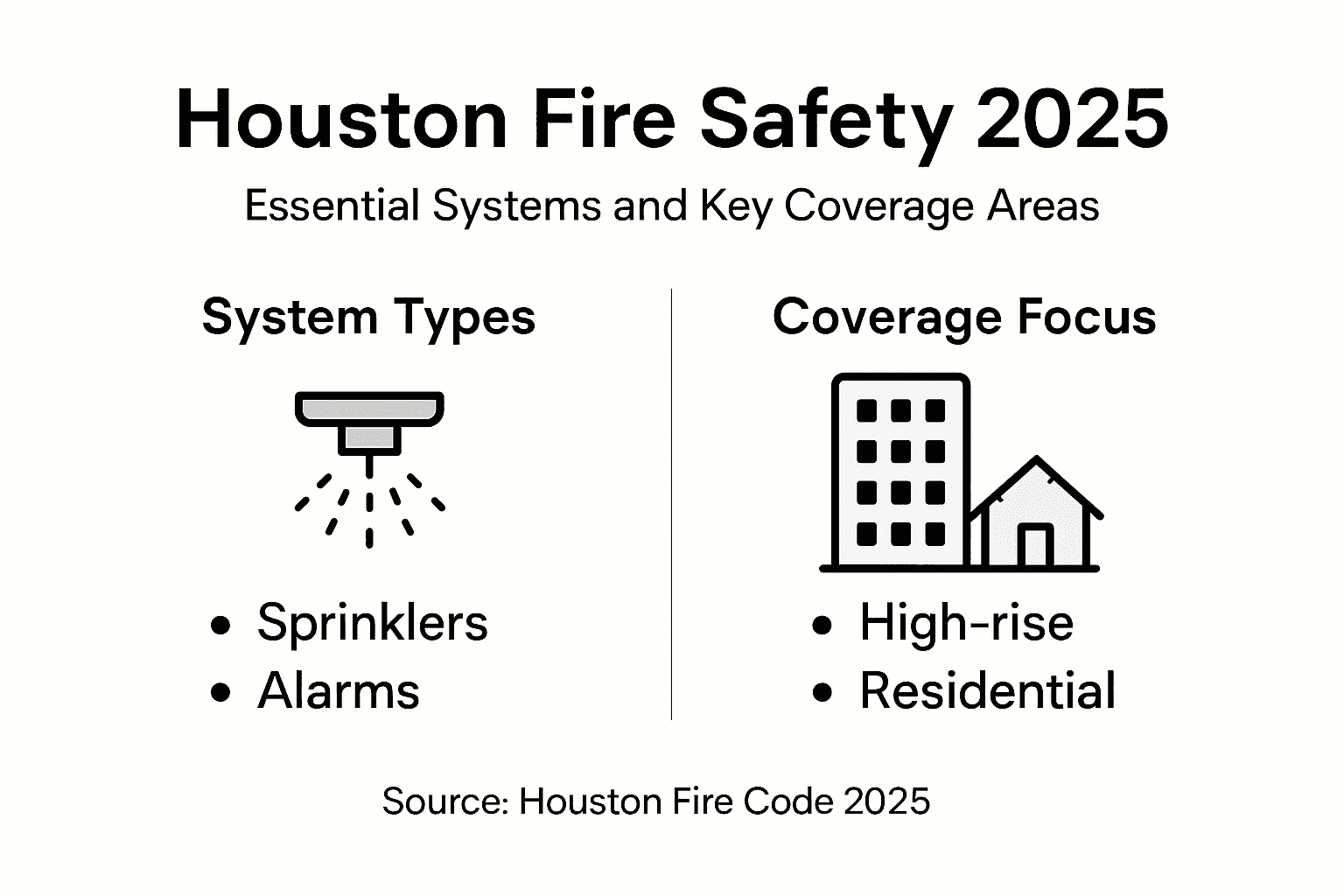
Updated 2025 Houston fire codes and standards
The Houston Permitting Center’s design and construction standards represent a comprehensive framework for fire safety regulations in 2025. These updated guidelines ensure that property managers, architects, and developers maintain rigorous safety protocols across Houston’s diverse urban landscape.
Key updates to fire codes and standards for 2025 include:
- Enhanced sprinkler system requirements
- Stricter emergency access regulations
- More detailed infrastructure design protocols
- Expanded certification standards for fire protection professionals
- Increased emphasis on technological fire prevention systems
The Texas Commission on Fire Protection plays a critical role in enforcing and refining these standards. Their comprehensive approach addresses multiple dimensions of fire safety, from building design to operational procedures, ensuring that Houston remains at the forefront of fire prevention technology and regulatory compliance.
Property owners and managers must stay informed about these evolving standards. The 2025 regulations reflect significant advancements in fire safety technology, emphasizing proactive prevention, rapid detection, and sophisticated suppression techniques tailored to Houston’s unique urban environment.
Fire code compliance is not just a legal requirement – it’s a fundamental commitment to community safety.
Pro tip: Schedule a professional fire code compliance review annually to ensure your property meets the latest 2025 Houston safety standards and regulations.
Comprehensive compliance requirements for property managers
Property managers in Houston must navigate complex fire safety compliance requirements that demand meticulous attention to detail and proactive management. These regulations encompass a comprehensive framework designed to protect occupants and property through stringent safety protocols.
Key compliance requirements for property managers include:
- Maintaining fully functional fire protection systems
- Conducting regular equipment inspections
- Documenting maintenance and repair records
- Ensuring emergency egress pathways remain clear
- Updating safety protocols to match current regulations
- Training staff on fire safety procedures
The Texas Commission on Fire Protection establishes critical standards that property managers must consistently meet. These requirements go beyond basic equipment checks, demanding a holistic approach to fire safety that integrates technology, training, and systematic prevention strategies.
Successful compliance involves more than simply checking boxes. Property managers must develop a comprehensive understanding of evolving fire safety regulations, implement proactive maintenance strategies, and create a culture of safety that prioritizes prevention and rapid response.
Compliance is not a one-time event, but an ongoing commitment to protecting lives and property.
Pro tip: Create a dedicated compliance calendar that tracks all fire safety inspection dates, equipment maintenance schedules, and required staff training sessions to ensure consistent regulatory adherence.
Risks, penalties, and optimal safety strategies
Navigating the complex landscape of fire safety involves understanding the significant risks and legal consequences associated with non-compliance. Property owners and managers face potential penalties that extend far beyond simple monetary fines, potentially impacting business continuity and legal standing.
Key risks and potential penalties include:
- Substantial financial fines
- Potential business license revocation
- Legal liability for property damage
- Increased insurance premiums
- Potential criminal charges for severe negligence
- Mandatory business shutdowns
The National Fire Protection Association emphasizes a comprehensive approach to risk mitigation. Successful safety strategies require more than reactive measures – they demand proactive, systematic prevention techniques that integrate technology, training, and continuous improvement.
Optimal safety strategies involve creating a robust fire prevention ecosystem that addresses multiple risk dimensions. This includes implementing advanced detection technologies, conducting regular staff training, maintaining comprehensive emergency response protocols, and staying current with evolving safety regulations.
Here is a comparison of major penalties for fire code violations in Houston and strategies to prevent them:
| Potential Penalty | Risk Level | Prevention Strategy |
|---|---|---|
| Financial fines | High | Routine compliance inspections |
| Business license revocation | Severe | Staff safety training and updates |
| Insurance premium increase | Moderate | Maintain current fire systems |
| Legal liability | Severe | Document all safety procedures |
| Mandatory shutdowns | Critical | Implement proactive hazard audits |
Effective fire safety is not about avoiding penalties, but protecting lives and assets.
Pro tip: Develop a comprehensive fire risk assessment document that categorizes potential hazards, documents mitigation strategies, and provides clear action protocols for emergency scenarios.
Secure Your Houston Property with Trusted Fire Protection Solutions
Houston’s evolving fire codes and sophisticated fire protection demands call for expert solutions that go beyond basic compliance. From enhanced sprinkler requirements to advanced detection systems the challenges of staying fully compliant can feel overwhelming. Whether you are a property manager or business owner facing these critical safety and regulatory hurdles Reliable Fire Protection offers the tailored services you need to protect lives and assets.
Key benefits of partnering with Reliable Fire Protection include:
- Certified inspections and system maintenance aligned with 2025 Houston fire codes
- Professional installation of fire alarms sprinklers and suppression systems
- Proactive compliance guidance to avoid costly penalties and business disruptions
Don’t wait until risks escalate. Visit our Fire Protection – Reliable Fire Protection page for detailed service options.

Ensure your property meets Houston’s toughest fire safety standards with local experts you can count on. Act now and connect with Reliable Fire Protection at https://reliable-fire-protection.com to schedule a free consultation and keep your community safe.
Frequently Asked Questions
What are the essential components of a fire protection system in Houston?
Modern fire protection systems typically include fire alarm systems, sprinkler systems, smoke detection technologies, suppression equipment, and emergency communication networks that collectively work to detect, suppress, and mitigate fire risks.
How often should property managers conduct fire safety audits?
Property managers should conduct comprehensive fire safety audits at least twice annually to identify and mitigate potential risks before they escalate into critical emergencies.
What are the compliance requirements for fire safety that property managers must follow?
Property managers must maintain fully functional fire protection systems, conduct regular equipment inspections, document maintenance records, ensure clear emergency egress pathways, update safety protocols, and train staff on fire safety procedures.
What are the potential penalties for non-compliance with fire safety regulations?
Potential penalties for non-compliance include substantial financial fines, business license revocation, increased insurance premiums, legal liability for property damage, and even mandatory shutdowns for severe negligence.
Recommended
- 7 Essential Fire Safety Compliance Tips for Houston Buildings
- Creating Fire Safety Checklist for Houston Properties
- Why Fire Safety Matters for Houston Properties
- Fire Safety Testing Requirements for Houston Properties
- Expert EMS Consulting & Public Safety Services | PSCG
- Fire Alarm System University Place TX
- Fire Alarm System Bellaire TX