
Keeping up with changing safety codes can lead to confusion for property managers working with multi-tenant buildings in Houston. Understanding what “fire safety zoning” means becomes even more crucial because Houston does not use traditional zoning but instead enforces regulations through a mix of subdivision ordinances and local fire safety codes. Grasping these unique Houston ordinances helps you protect tenants, avoid fines, and stay compliant as your building’s occupancy changes.
Table of Contents
- Fire Safety Zoning: Definition And Misconceptions
- Houston Zoning Codes And Fire Safety Standards
- Fire Protection Systems Required For Compliance
- Permit Processes And Inspection Protocols
- Legal Liabilities And Avoiding Common Violations
Key Takeaways
| Point | Details |
|---|---|
| Understanding Zoning Importance | Fire safety zoning dictates building requirements and compliance; knowing this helps protect tenants and ensures regulatory adherence. |
| Addressing Misconceptions | Many property managers overlook the dynamic nature of zoning; compliance can change with tenant use and variance applications. |
| Legal Liabilities | Property managers are responsible for fire safety compliance, and ignoring violations can lead to serious legal and financial consequences. |
| Documentation and Maintenance | Keeping thorough records of inspections and ensuring regular maintenance of fire safety systems is critical to avoiding liability and maintaining operations. |
Fire Safety Zoning: Definition and Misconceptions
Fire safety zoning sounds technical, but it’s really about understanding how cities divide land and buildings to protect people. As a commercial property manager in Houston, knowing what fire safety zoning actually means—and what it doesn’t—keeps your tenants safe and your property compliant.
What Fire Safety Zoning Actually Is
Zoning divides jurisdictions into districts with specific land use regulations. In practical terms, it determines what can happen where: residential areas look different from industrial zones, which differ from commercial districts.
Fire safety zoning specifically controls building density, use types, and proximity to hazardous operations. Houston’s zoning code designates certain areas for multi-tenant commercial use, warehouse operations, or manufacturing—each with distinct fire safety demands.
Your building’s zone classification directly impacts required fire suppression systems, alarm capabilities, and occupancy limits. A mixed-use building in downtown Houston faces different requirements than a single-tenant warehouse near the port.
Fire safety zoning is preventive, not retroactive—it guides future development and tenant placement, not elimination of existing uses.
Common Misconceptions Property Managers Make
Misunderstanding fire safety zoning creates real compliance risks. Here are the biggest myths:
- “Zoning never changes, so compliance is permanent.” Zoning flexibility exists through variances and modifications. Houston allows exceptions for specific circumstances, meaning your approved use could shift if zoning changes or you apply for variance.
- “My building’s original zoning covers all my current tenants.” Wrong. Tenant use changes require zoning re-evaluation. A fitness studio converting to a medical laboratory might violate current zoning and trigger new fire safety requirements.
- “Fire safety requirements are the same across all commercial zones.” Different zones demand different protections. High-density mixed-use areas require more sophisticated fire safety regulations than single-use properties.
- “If my building was grandfathered in, I don’t need updates.” Non-conforming uses get protection, but new tenant occupancies or renovations can eliminate grandfather status, forcing compliance with current codes.
Why This Matters for Your Tenants
Your zoning classification determines what fire detection and suppression systems are legally required. A tenant operating incompatible business in your space without proper zoning creates liability exposure—the property owner remains responsible.
Tenants in Houston often underestimate how their business operations intersect with zoning requirements. A restaurant in a zone zoned for office use, or a manufacturing operation in commercial retail space, creates scenarios where standard fire safety systems become inadequate.
Pro tip: Before signing new tenant leases, verify their intended use matches your property’s zoning classification and conduct a fire safety assessment with professionals who understand Houston codes.
Houston Zoning Codes and Fire Safety Standards
Houston does something different than most major cities—it operates without traditional zoning districts. Instead, the city uses a hybrid approach combining land development regulations with fire safety codes. Understanding this unique system is critical for property managers who need to stay compliant.

The Houston Fire Department enforces fire safety through amendments to the 2015 International Fire Code. These amendments address Houston’s specific risks: high-rise buildings, atrium evacuation challenges, industrial hazards near residential areas, and the city’s rapid growth patterns.
How Houston’s System Actually Works
Unlike Dallas or Austin, Houston doesn’t divide land into residential, commercial, or industrial zones. Instead, land development is governed through subdivision ordinances, parking requirements, setbacks, and access regulations. This means your fire safety obligations connect to what your building actually does, not a zoning label.
Fire safety standards directly tie to building type and occupancy. A 40-story office tower faces different code requirements than a warehouse or mixed-use development. The Houston Fire Department reviews hazard-specific plans before approval.
Houston’s lack of traditional zoning means fire code compliance depends on documented building use and occupancy classification, not zone designation.
Key Fire Safety Requirements for Your Building
The Houston Fire Department enforces these critical standards:
- Sprinkler systems in high-rise buildings over a certain height and occupancy threshold
- Atrium evacuation plans for buildings with multi-story atriums or open vertical spaces
- Stairwell identification and emergency egress markings meeting current codes
- Hazard-specific plan reviews before occupancy changes or tenant modifications
- Emergency access ensuring fire trucks can reach hydrants and building entrances
Your property must maintain documentation proving compliance with these standards. Regular fire safety testing and inspections verify that systems function properly and meet current code amendments.
What Changes Mean for Your Property
When you modify building use, add tenants, or renovate spaces, the Houston Fire Department may require updated hazard assessments. A warehouse converting to light manufacturing, or office space becoming a data center with different cooling systems, triggers code review.
Non-compliance creates serious exposure. Fire Department citations, fines, and potential liability make it essential to understand what your building requires before problems emerge.
Pro tip: Document your building’s current occupancy classification and maintain contact with the Houston Fire Department to confirm requirements before any tenant changes or renovations.
Fire Protection Systems Required for Compliance
Houston’s fire safety regulations demand specific protection systems based on your building’s size, occupancy type, and use. As a commercial property manager, knowing which systems your building actually needs—and maintaining them properly—keeps you compliant and your tenants protected.
The Houston Fire Department Life Safety Bureau sets strict standards for fire protection equipment. These aren’t suggestions. They’re mandatory requirements affecting everything from sprinkler systems to emergency lighting to fire alarm networks.
Core Fire Protection Systems You Need
Most commercial buildings in Houston require multiple systems working together:
- Fire alarm systems detecting smoke and heat, alerting occupants and emergency services
- Sprinkler systems suppressing fires automatically before they spread
- Fire-rated doors and stairwells providing safe evacuation routes
- Emergency lighting and exit signage ensuring occupants can navigate during power loss
- Backup power systems keeping alarms and lighting operational during outages
- Backflow preventers protecting the water supply from contamination
Your building’s specific requirements depend on square footage, occupancy classification, and fire code amendments. A 50,000-square-foot office building needs different systems than a 10,000-square-foot warehouse.
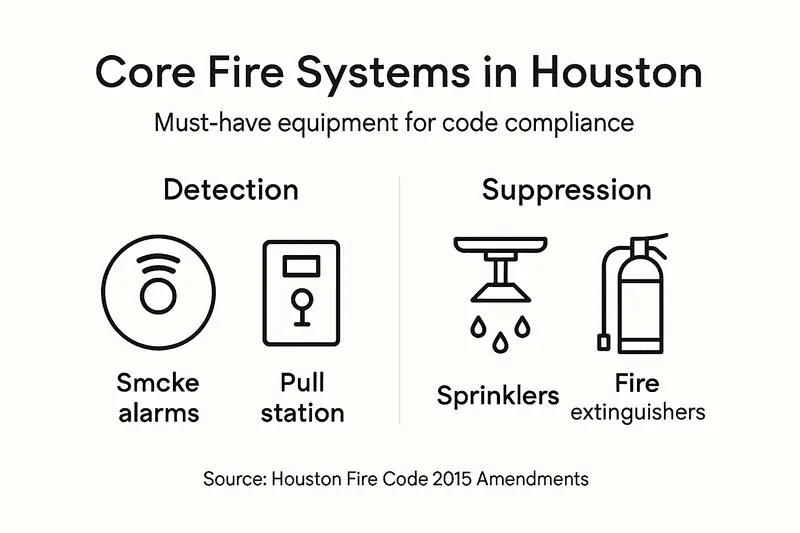
Here’s a comparison of key fire protection systems and their roles in commercial property safety:
| System Type | Main Function | Compliance Impact |
|---|---|---|
| Fire Alarm Systems | Detect smoke/heat, alert occupants | Early warning, required by code |
| Sprinkler Systems | Automatically suppress fire | Mandatory for many occupancies |
| Fire-Rated Doors/Stairwells | Maintain evacuation routes | Enable safe exit, required in multi-story buildings |
| Emergency Lighting/Signage | Guide occupants during outage | Necessary for safe evacuation |
| Backup Power Systems | Ensure alarms and lighting function | Critical during power failures |
| Backflow Preventers | Protect water supply | Prevent ticketing and contamination |
Fire protection systems must meet NFPA standards and pass regular inspections to remain compliant with Houston codes.
Permits, Plans, and Professional Requirements
Harris County requires permits and plan approvals for all new fire alarm and sprinkler installations. Both underground fire lines and aboveground systems need separate approvals. Skip this step and you face fines, delays, and potential shutdown orders.
Contractors installing these systems must be licensed and registered with proper documentation. Unlicensed work creates liability exposure for you as the property owner, even if you didn’t know the contractor lacked credentials.
Maintenance: The Part Most Managers Miss
Installing systems is just the beginning. Fire protection and life safety equipment requires regular servicing, tagging, and record-keeping to ensure ongoing operational readiness. Fire alarm systems need annual inspections. Sprinklers require quarterly inspections and annual certification.
Failure to maintain systems creates serious problems. Fire Department citations, tenant complaints, and insurance denial of claims all follow neglected maintenance. One property manager I know skipped sprinkler inspections for two years, then faced $15,000 in fines when discovered.
Documentation Protects You
Keep detailed records of every inspection, service, and repair. When fire inspectors visit, you need proof that systems passed testing and maintenance occurred on schedule. Digital records make audits quick and painless.
Connect with fire system maintenance professionals who understand Houston compliance requirements. They handle scheduling, testing, paperwork, and certification—eliminating compliance confusion.
Pro tip: Schedule all fire protection system inspections and maintenance during off-hours or low-occupancy periods, and maintain a digital calendar of due dates to prevent lapses in compliance.
Permit Processes and Inspection Protocols
Permits aren’t optional paperwork—they’re how Houston Fire Department validates that your building meets safety standards before occupancy. As a property manager, understanding permit requirements and inspection timelines keeps your projects on schedule and prevents costly delays.
The Houston Fire Department requires permits before any fire safety work begins. This includes fire alarms, sprinkler systems, hazardous material storage, and operational permits for certain commercial uses. Starting work without permits invites citations, project shutdowns, and potential fines.
Types of Permits You’ll Encounter
The Houston Fire Department handles permits for fire alarms, sprinkler systems, hazardous materials, and operational use. Each permit type serves a specific purpose and requires different documentation.
Here’s what you typically need permits for:
- Fire alarm installations or modifications in your building
- Sprinkler system additions or upgrades affecting water supply or coverage
- Hazardous materials storage including flammable liquids or compressed gases
- Operational permits for certain tenant uses (dry cleaners, restaurants with hood suppression, etc.)
- Alterations to fire-rated barriers or emergency egress routes
Small modifications sometimes qualify for exemptions, but don’t assume. When in doubt, contact the Fire Department before proceeding.
Permits must be obtained before work begins. Starting construction or installation without approval creates liability exposure and requires expensive remediation.
The Inspection Workflow
Harris County Office of the County Engineer issues inspection documents required for fire-related permits. To schedule inspections, you submit completed pre-inspection documents including system test certifications.
The process follows these steps:
- Obtain the permit from Houston Fire Department with detailed plans
- Schedule the pre-inspection after submitting certificates and test results
- Inspector reviews documentation to verify code compliance
- Final inspection occurs after work is complete
- Approval certificate is issued for occupancy or operational use
Inspections for licensed commercial occupancies happen annually or as needed. If your building houses multiple tenants with different uses, inspection requirements multiply.
Documentation That Prevents Problems
Keep all inspection reports, permits, and certificates organized and accessible. Fire inspectors need proof that systems passed testing. Missing documentation delays re-inspections and creates compliance questions.
Develop a permit tracking system with due dates, inspector contact information, and required documentation lists. Digital filing works better than paper—inspectors can access files remotely during reviews.
Annual fire safety inspections verify that your systems remain operational and compliant with current codes. Schedule these inspections well in advance to accommodate busy Fire Department calendars.
Common Timeline Issues Property Managers Face
Inspections aren’t instant. Plan for 2-4 weeks between submission and final approval, depending on complexity. New construction or major renovations take longer. Tenants moving in before permits are finalized creates emergency situations.
Build inspection timelines into your project schedule. Communicate inspection dates to tenants beforehand so occupancy transitions happen smoothly without surprises.
Pro tip: Submit permit applications and pre-inspection documents at least 6 weeks before your planned occupancy or system activation date to account for scheduling delays and potential revision requests.
Legal Liabilities and Avoiding Common Violations
Fire code violations aren’t minor infractions. They carry real legal consequences—fines, citations, liability exposure, and in worst cases, criminal charges if someone is harmed. As a property manager, understanding your legal obligations protects your building, your tenants, and your career.
You’re legally responsible for fire safety compliance. Period. The Houston Fire Department holds owners, operators, and sometimes occupants accountable for violations. Ignorance of the code doesn’t excuse non-compliance.
Citations and Enforcement Actions
The Houston Fire Department issues municipal court citations for fire code violations when voluntary compliance fails. Some violations trigger immediate citations without warning.
Serious hazards get cited immediately:
- Blocked or locked emergency exits preventing occupant evacuation
- Disabled fire alarm systems or extinguishers removed from service
- Sprinkler systems shut off or covered for maintenance without approval
- Missing emergency lighting in stairwells or corridors
- Hazardous materials stored improperly or without permits
- Alterations to fire-rated barriers without approval
Immediate citations mean potential fines of $100 to $1,000 per violation, per day. A single violation lasting a week costs $700. Multiple violations compound quickly.
Citations for imminent hazard violations can be issued immediately without opportunity to voluntarily correct the problem.
Your Liability as Property Manager
You can’t delegate safety responsibility to tenants. Even if a tenant disables alarms or blocks exits, you’re still liable. The legal doctrine of premises liability holds property owners responsible for conditions on their property affecting visitor safety.
Federal safety standards violations carry willful penalties for non-compliance with fire safety practices. When accidents occur in non-compliant buildings, lawsuits follow. Insurance may deny claims if you knew of violations but failed to correct them.
Common Violations Property Managers Miss
These violations appear repeatedly in Houston Fire Department citations:
- Expired fire extinguisher tags (annual certification required)
- Sprinkler system test reports missing or outdated
- Fire alarm system not professionally monitored
- Emergency exit signage blocked or inadequate
- Combustible materials stored blocking fire-rated doors
- Electrical panels or mechanical rooms locked without Fire Department override access
- Tenant alterations to building envelope or fire barriers
Most violations stem from maintenance lapses, not intentional violations. But the Fire Department doesn’t distinguish—the violation exists, and you’re responsible.
The table below summarizes common fire code violations in Houston and their typical consequences:
| Violation Type | Typical Cause | Potential Consequence |
|---|---|---|
| Blocked Emergency Exits | Poor housekeeping, remodeling | Immediate citation, fines |
| Expired Extinguisher Tags | Missed inspection schedule | Fines, increased liability |
| Disabled Fire Alarms | Unauthorized tenant actions | Possible shutdown, high fines |
| Improper Hazardous Storage | Failure to obtain permits | Immediate citation, legal action |
| Inadequate Exit Signage | Renovations, maintenance lapse | Increased occupant risk, citations |
| Missing System Test Reports | Lax record-keeping | Delayed approvals, fines |
Correcting Violations Quickly
When citations are issued, you have limited time to respond. Ignoring citations escalates consequences. Show good faith by correcting violations immediately and documenting corrections with photos, invoices, and inspection reports.
Develop a compliance checklist reviewed quarterly. Schedule maintenance in advance. Train tenant representatives on fire safety requirements. Communication prevents most violations.
Pro tip: Conduct a comprehensive fire safety audit annually with a professional inspector, documenting all findings and corrections to establish a paper trail demonstrating good-faith compliance efforts.
Protect Your Houston Property with Expert Fire Safety Solutions
Understanding Houston’s unique fire safety zoning challenges and code requirements is vital for every property manager. From the importance of proper occupancy classification to maintaining up-to-date fire protection systems such as sprinklers and alarm networks, the risks of non-compliance are real and costly. Do not let unclear zoning rules or changing tenant uses put your property and tenants at risk.
Take control now by partnering with Reliable Fire Protection, Houston’s trusted expert in comprehensive fire safety solutions. We specialize in sprinkler system installations, fire alarm upgrades, and ongoing fire protection system maintenance all tailored to Houston’s fire codes and regulatory standards. Visit Reliable Fire Protection to request your free evaluation. Ensure your property’s safety and compliance before hazards develop. Don’t wait until an inspection citation or emergency happens. Schedule your professional fire safety assessment today and secure peace of mind for you and your tenants.
Frequently Asked Questions
What is fire safety zoning and why is it important?
Fire safety zoning refers to the regulations that determine how land and buildings are designated for use, impacting aspects like building density and required fire safety systems. It is vital for ensuring compliance and protecting tenants from fire hazards.
How do changes in zoning affect existing properties?
Zoning can change over time through variances and modifications. If the zoning of a property changes, it may necessitate a re-evaluation of compliance with current fire safety requirements, impacting tenants and operations.
What fire safety systems are typically required for commercial buildings?
Commercial buildings generally require fire alarm systems, sprinkler systems, emergency lighting, fire-rated doors, and backflow preventers. Specific requirements depend on the building’s size and occupancy classification.
What are the potential consequences of fire safety code violations?
Violations can lead to municipal court citations with fines, increased liability exposure, and possible shutdown orders if the property is not compliant. Ignoring violations can escalate the severity of penalties.
Recommended
- Fire Safety Testing Requirements for Houston Properties
- Fire Safety Regulations Explained: Impact on Houston Property Managers
- Fire Safety for Government Buildings in Houston
- 7 Essential Fire Safety Compliance Tips for Houston Buildings
- Fire Alarm System University Place TX
- Fire Alarm System Bellaire TX