
Most Houston property owners invest in fire alarms and sprinkler systems and believe they’ve covered their bases. That’s a reasonable assumption, but it misses a critical layer of fire safety. Passive fire protection is a set of building materials, systems, and techniques that contain fires and protect structural integrity without requiring activation or human intervention. While your sprinklers are working to suppress flames, passive systems are already slowing the fire’s spread, protecting escape routes, and keeping your building standing. This guide breaks down how passive fire protection works, what Houston codes require, and what property managers need to do right now.
Table of Contents
- Understanding passive fire protection
- Key methods and materials in passive fire protection
- Testing, codes, and compliance in Houston
- Pitfalls, maintenance, and real-world failures
- Why passive fire protection is the property manager’s secret weapon
- Connect with Houston’s fire safety experts
- Frequently asked questions
Key Takeaways
| Point | Details |
|---|---|
| Automatic fire containment | Passive fire protection quietly contains fires using materials built into the structure. |
| Houston code compliance | Local fire codes require regular inspections and proper fire-rated barriers for property safety. |
| Common pitfalls | Small installation errors or missed maintenance can undermine even the best protection systems. |
| Layered fire safety | The most resilient properties combine passive and active fire protection approaches. |
Understanding passive fire protection
Alarms go off. Sprinklers activate. But what’s working before any of that happens? That’s passive fire protection, and it’s built directly into your building’s structure.
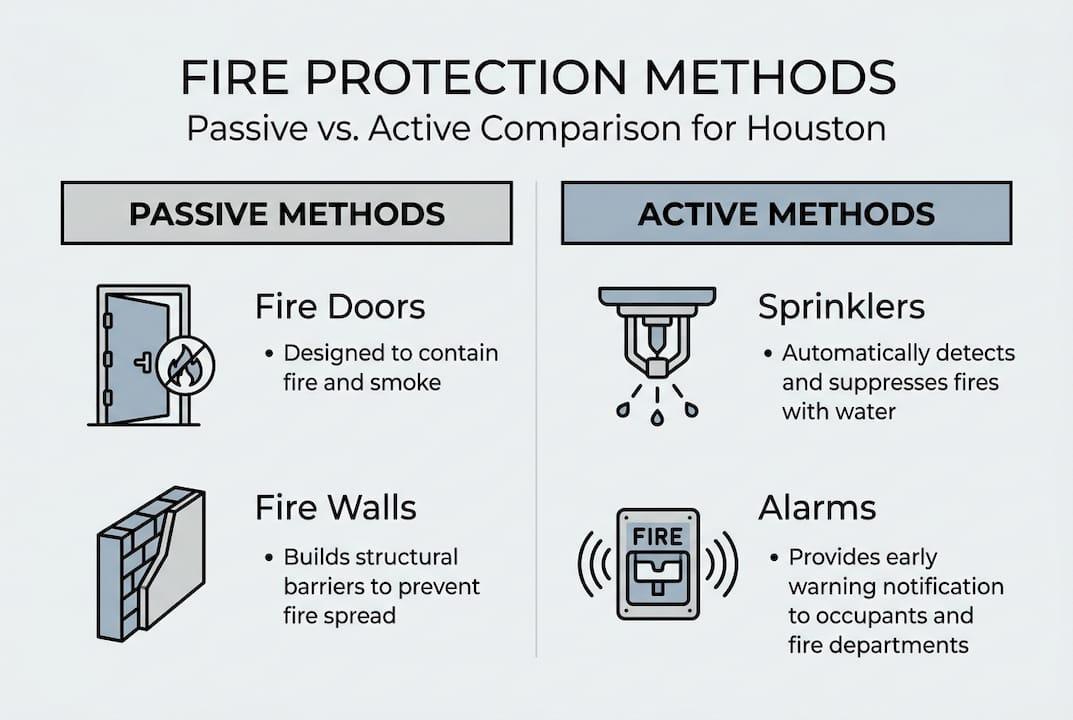
Passive fire protection (PFP) refers to materials and design features that are permanently part of a building. They don’t need power, signals, or anyone to flip a switch. Fire-rated walls, floors, doors, and firestopping materials all fall into this category. As explained in passive fire protection fundamentals, PFP works without activation, power, or human intervention, making it fundamentally different from active fire protection (AFP) systems like sprinklers and alarms.
Here’s a simple way to think about it. Active fire protection responds to a fire. Passive fire protection resists it from the start.
| Feature | Passive fire protection | Active fire protection |
|---|---|---|
| Activation required | No | Yes |
| Examples | Fire walls, fire doors, firestopping | Sprinklers, alarms, suppression systems |
| Power dependency | None | Usually required |
| Failure risk | Low (if installed correctly) | Higher (mechanical/electrical failure) |
| Primary role | Contain and delay fire spread | Detect and suppress fire |
For Houston fire safety basics, understanding this distinction matters because both layers must work together. PFP forms the foundation of what fire engineers call a “layered defense.” Think of it as the walls of a fortress. Active systems are the guards. You need both.
The core benefits of passive fire protection include:
- Automatic operation: No human action needed, ever
- Permanent barriers: Built into the structure at construction or renovation
- Reliability: No mechanical parts to fail or batteries to die
- Life safety: Keeps escape routes clear and slows structural collapse
- Regulatory compliance: Required under most building and fire codes
For Houston property managers, this means PFP isn’t optional. It’s the baseline.
Key methods and materials in passive fire protection
With the basics covered, let’s explore how passive fire protection is actually achieved in real buildings.
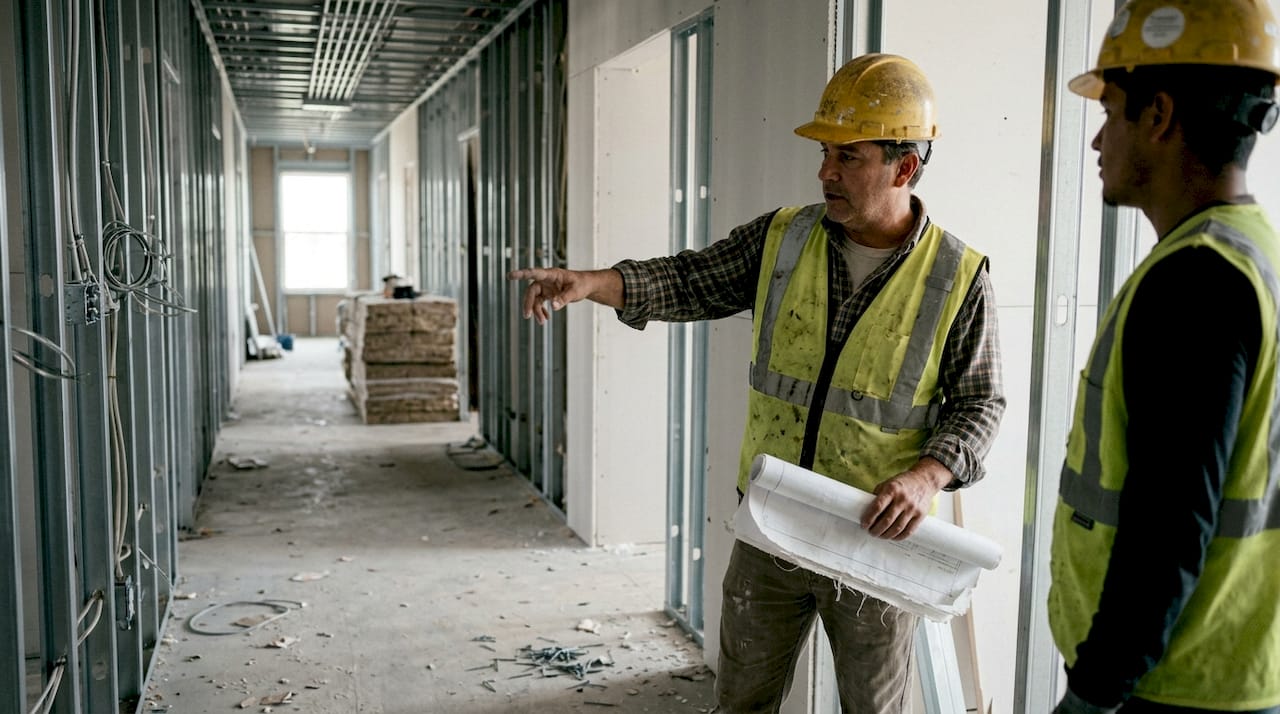
There are four core methods used in PFP. Each serves a specific purpose, and together they form a complete system. Fire ratings range from 30 to 240 minutes, expressed in standards like REI 60 (load-bearing, insulating, integrity for 60 minutes) or EI 120 (integrity and insulation for 120 minutes).
| PFP method | What it does | Common materials |
|---|---|---|
| Compartmentation | Divides building into fire-contained zones | Fire-rated walls, floors, ceilings |
| Structural protection | Protects steel/concrete from heat | Intumescent coatings, spray fireproofing |
| Fire doors and hatches | Seals openings to prevent spread | Steel, timber with fire-rated cores |
| Firestopping | Seals gaps around pipes, cables, ducts | Intumescent sealants, fire collars, pillows |
Here’s how these components work together in a real building scenario:
- Compartmentation divides the building into sections. If fire starts in one zone, fire-rated walls and floors contain it there, giving occupants time to evacuate.
- Structural protection keeps steel beams and columns from failing under heat. Without it, a building can collapse in minutes.
- Fire doors automatically close during a fire, sealing off corridors and stairwells so escape routes stay clear and breathable.
- Firestopping seals every pipe, cable, and duct penetration in fire-rated walls. This is the step most often skipped or done poorly.
For guidance on fire protection best practices and staying current with Houston fire safety regulations, reviewing each of these methods during any renovation is essential.
Pro Tip: Pay special attention to wall penetrations where pipes, conduits, and cables pass through fire-rated barriers. These are the most common weak points in any building’s passive fire protection system. A single unsealed hole can compromise an entire fire compartment.
Testing, codes, and compliance in Houston
Understanding what systems exist is one thing. Knowing how to ensure they perform is just as vital, especially in Houston.
Passive fire protection systems are tested under controlled furnace simulations that replicate real fire conditions. Standards like ASTM E119 and UL 263 expose assemblies to a standard fire curve, measuring how long they maintain structural integrity, prevent flame passage, and limit heat transfer. These tests produce the fire ratings you see on product labels and construction drawings.
One statistic every Houston property manager should know: steel loses 50% strength at approximately 1,100°F (593°C) without protection. That’s why structural fireproofing isn’t cosmetic. It’s what keeps your building upright long enough for everyone to get out.
For fire protection testing practices in cellulosic systems, the fire curve used matters significantly. Different occupancies and materials behave differently under heat flux, which is why code-specified testing protocols exist.
Houston operates under the Houston Fire Code (HFC), which adopts the International Fire Code with local amendments. It requires fire-rated barriers in specific occupancy types, regular inspections, and documentation of all fire protection systems.
Steps to stay compliant with Houston’s passive fire protection rules:
- Review your building’s original construction documents for fire-rated assembly locations
- Confirm all fire doors are self-closing, properly gasketed, and undamaged
- Verify firestopping products are listed and installed per manufacturer specifications
- Schedule fire safety testing in Houston with a qualified inspector
- Use the Houston fire prevention checklist as a starting point for your annual review
- Consult fire protection standards for Houston to confirm your systems meet current code
Pro Tip: Keep a dedicated binder or digital folder with every PFP inspection report, product data sheet, and installation record. Houston fire inspectors can and do ask for this documentation during routine checks, and having it ready saves time and avoids citations.
Pitfalls, maintenance, and real-world failures
Even with good systems on paper, small mistakes can put property and lives at risk. Here’s how to avoid the most costly errors.
The most dangerous passive fire protection failures don’t happen during disasters. They happen slowly, during renovations, tenant buildouts, and routine maintenance when nobody is thinking about fire safety. A plumber cuts through a fire-rated wall to run a new pipe and leaves the penetration unsealed. An HVAC contractor replaces ductwork and removes a fire damper. These small changes quietly destroy the integrity of your entire compartmentation strategy.
“Failures from poor installation, wrong products, unsealed penetrations, or missing barriers are common. Even a 10mm gap allows rapid smoke spread.”
That 10mm figure is worth pausing on. A gap less than half an inch, invisible to a casual walk-through, can let smoke travel through an entire floor in minutes. Smoke inhalation causes the majority of fire fatalities, not flames.
Other vulnerabilities that show up in real buildings:
- UV and moisture degradation: Intumescent coatings on exterior or exposed structural steel can crack and lose effectiveness over time
- Door hardware failure: Fire doors propped open, damaged closers, or worn seals eliminate their protective value entirely
- Wrong products installed: Not all fire sealants are rated for all penetration types. Using the wrong product is as bad as using none
- Renovation damage: New tenants or contractors cutting into walls without understanding fire compartment boundaries
Routine maintenance tasks that protect your investment:
- Inspect all fire doors quarterly for damage, proper closure, and seal integrity
- Check firestopping at every known penetration annually
- Review intumescent coatings on structural steel for cracking or peeling
- Confirm fire dampers in HVAC systems are operational
- Schedule annual fire inspections in Houston with a certified professional
For fire safety tips for managers handling multi-tenant properties, the challenge multiplies with each new occupant.
Pro Tip: Any time a contractor does work that touches walls, ceilings, floors, or mechanical systems, require a written sign-off confirming that all fire-rated assemblies were restored to their original condition. Make it part of your contractor agreement.
Why passive fire protection is the property manager’s secret weapon
Here’s a view that most fire safety guides won’t give you: active systems get all the attention, but they fail more often than passive ones. Sprinklers clog. Alarm batteries die. Suppression systems malfunction. When these failures happen at the wrong moment, the consequences are severe.
Passive fire protection, when properly installed and maintained, simply sits there doing its job. No moving parts. No power requirements. But here’s the catch most property managers miss: nonlinear degradation in passive systems means performance doesn’t drop gradually. It can drop sharply after a threshold of neglect is crossed. A fire door that’s 80% functional provides almost no real protection in a serious fire.
The smartest Houston property teams treat PFP maintenance like structural maintenance, not like a checkbox. They also reap benefits that most guides never mention: insurers often reward properties with well-documented passive fire protection programs with lower premiums. Strong PFP records also support property valuations and reduce liability exposure.
Meeting Houston compliance standards isn’t just about avoiding fines. It’s about building a property that performs when it matters most. That’s the real competitive advantage.
Connect with Houston’s fire safety experts
Ready to put this knowledge to work and take the next step toward property safety?
At Reliable Fire Protection, we work with Houston property owners and managers every day to assess, install, and maintain passive fire protection systems that meet code and actually perform under pressure. Whether you need a post-renovation inspection, a full compliance review, or help designing a layered fire safety strategy, our team brings local expertise and certified credentials to every project.

Explore our Houston fire alarm systems and learn how they integrate with passive protection. Review our fire suppression workflow to see how active and passive systems work together. When you’re ready to take action, browse our full range of fire safety solutions or contact us for a free quote tailored to your property.
Frequently asked questions
What’s the main difference between passive and active fire protection?
Passive fire protection works automatically, using built-in materials and barriers to contain fire, while active systems such as alarms or sprinklers require activation to function.
How can I tell if my building has adequate passive fire protection?
Look for firestopping and compartmentation features like fire-rated doors, walls, and properly sealed pipe and cable penetrations, then review maintenance logs to confirm recent inspections.
What’s the risk if a passive fire barrier is poorly installed?
A single 10mm gap can allow smoke and fire to spread rapidly through a building, undermining the entire compartmentation strategy and increasing danger to occupants.
Are there local codes in Houston that require passive fire protection?
Yes, the Houston Fire Code requires fire-rated barriers and regular inspections under International Fire Code amendments adopted locally.
How often should passive fire protection be inspected?
Annual inspections are the standard recommendation, and you should schedule an additional review after any renovation or maintenance work that may have affected fire-rated barriers or assemblies.