
Choosing the right backflow prevention device shouldn’t feel like solving a puzzle blindfolded. Texas business owners juggle water safety compliance, device costs, and maintenance schedules while trying to avoid fines and health risks. This guide walks you through practical device selection tips, regulatory requirements, and maintenance best practices so you can confidently protect your facility’s water supply and stay compliant with Texas standards.
Table of Contents
- How To Choose The Right Backflow Prevention Device
- Types Of Backflow Prevention Devices And Their Uses
- Maintenance And Testing Requirements In Texas
- Cost Considerations And Budgeting For Backflow Prevention
- Installation Best Practices To Ensure Compliance And Accessibility
- Situational Recommendations Based On Business Needs
- Summary Comparison Table Of Backflow Devices
- Explore Expert Backflow Prevention Solutions
- Frequently Asked Questions
Key takeaways
| Point | Details |
|---|---|
| Device selection depends on hazard level and pressure requirements | Match your device type to the contamination risk and system characteristics to ensure proper protection and regulatory compliance. |
| RPZ devices offer maximum protection but require higher investment | Reduced Pressure Zone devices suit high-hazard environments like hospitals and chemical facilities with stricter maintenance needs. |
| Texas mandates annual testing by certified professionals | Annual compliance testing prevents contamination risk and keeps your facility aligned with state water safety regulations. |
| Proper installation and routine maintenance reduce failures by up to 85% | Accessible installation locations and regular inspections minimize breakdowns and extend device lifespan. |
| Budget planning must account for installation and recurring maintenance costs | Total cost of ownership varies significantly by device type, affecting long-term financial planning. |
How to choose the right backflow prevention device
Texas businesses face a critical decision when selecting backflow prevention equipment. The right choice depends on your facility’s specific hazard level, system pressure, and accessibility needs.
Start by assessing your contamination hazard level. High-hazard facilities like hospitals or chemical plants require robust protection against toxic substances entering the water supply. Moderate-hazard operations such as irrigation systems or commercial kitchens need reliable but less intensive safeguards. Low-hazard applications like simple outdoor spigots can use basic protection.
Evaluate your system’s pressure and flow characteristics next. Some devices perform poorly under fluctuating pressure conditions. Others restrict flow rates that could impact operational efficiency. Your plumbing configuration and water demand patterns determine which devices will function reliably.
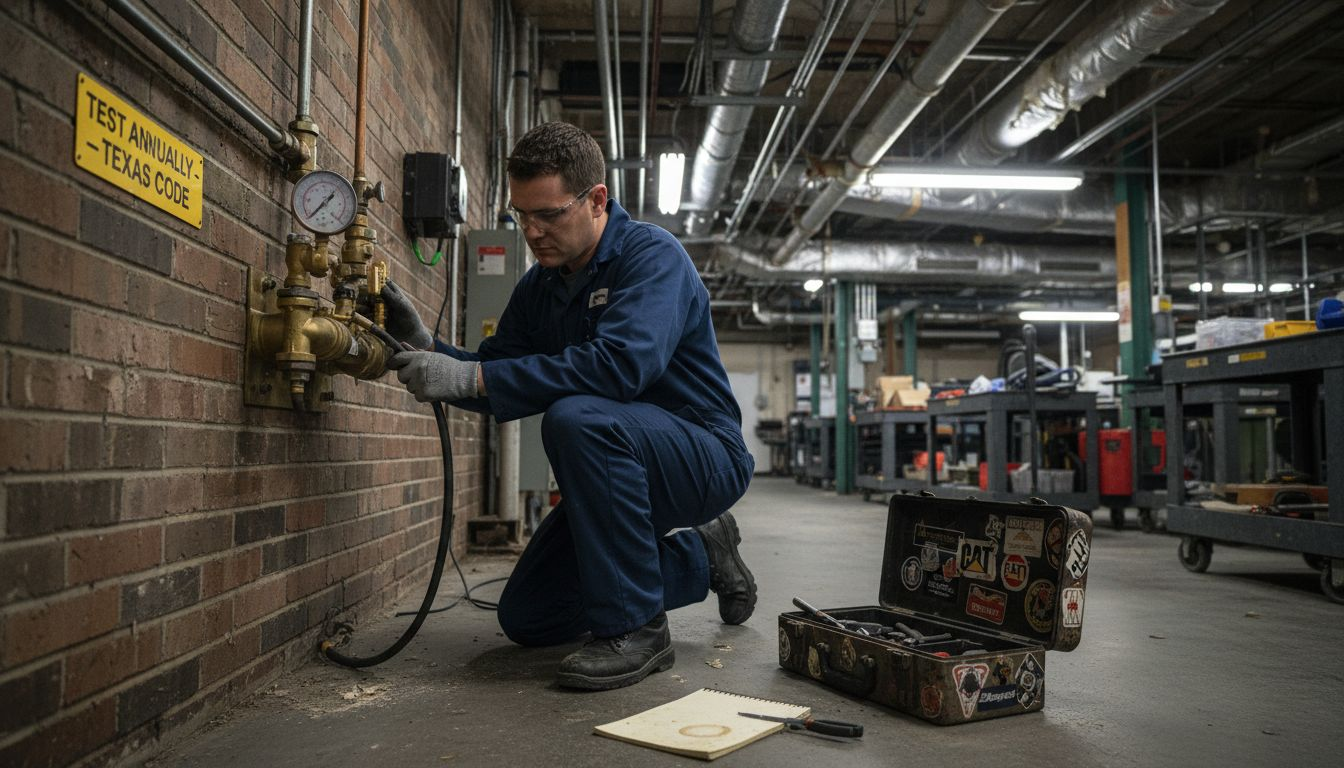
Texas plumbing codes require specific installation standards for accessibility. Backflow preventer services must meet state regulations that mandate easy access for annual testing. Installing devices in cramped mechanical rooms or behind permanent structures creates compliance headaches and maintenance delays.
Pro Tip: Schedule a professional site assessment before purchasing any backflow device. Certified technicians can identify pressure variations, hazard classifications, and installation constraints that affect device performance and compliance status.
Maintenance capability matters as much as initial selection. Texas regulations require hazard level assessment and annual compliance testing for backflow devices. Some equipment demands quarterly inspections and specialized repair parts. Budget constraints and staffing availability should influence your choice.
Balance upfront costs against long-term expenses. Cheaper devices often carry higher maintenance burdens or fail compliance standards for your hazard category. Premium equipment with lower maintenance needs can save money over five to ten years. Consider total cost of ownership when comparing options.
Your decision should align with broader facility safety strategies. Integrating backflow prevention with Texas fire safety best practices creates a comprehensive protection plan. Coordinating with commercial fire safety systems and fire sprinkler system requirements ensures all safety components work together efficiently.
Document your selection criteria and decision rationale. Inspectors and insurance providers want evidence that you matched device specifications to actual facility conditions. This documentation supports compliance audits and demonstrates due diligence in protecting public water supplies.
Types of backflow prevention devices and their uses
Three main device types dominate Texas commercial applications. Each offers distinct protection levels, cost profiles, and maintenance requirements suited to different business needs.
Reduced Pressure Zone (RPZ) devices provide maximum protection for high-hazard environments. These assemblies use two independent check valves with a pressure-monitored relief valve between them. The relief valve opens if the pressure differential fails, preventing any backflow.
- Ideal for hospitals, chemical plants, and facilities handling toxic materials
- Higher installation costs ranging from $1,200 to $3,500 depending on size
- Requires quarterly inspections and annual certified testing
- Must be installed above ground in climate-controlled or protected areas
- Provides fail-safe protection even when both check valves malfunction
Double Check Valve Assemblies (DCVA) balance cost and protection for moderate-hazard situations. Two spring-loaded check valves operate independently to prevent backflow. These devices work well where contamination risk exists but toxic substances are not present.
- Cost-effective option with installation costs between $600 and $1,800
- Suitable for irrigation systems, commercial booster pumps, and fire sprinkler connections
- Simpler maintenance schedules with annual testing requirements
- Can be installed underground in many applications
- Adequate protection for most commercial water uses
Atmospheric Vacuum Breakers (AVB) serve as the simplest, lowest-cost solution for specific low-risk applications. These devices open to atmosphere when water pressure drops, preventing vacuum-induced backflow. RPZ devices are best for high-hazard environments; Double Check Valve Assemblies suit low to medium hazards; AVBs fit intermittent, low-risk conditions.
- Limited to intermittent use on fixtures like outdoor hose bibs
- Installation costs typically under $150 per unit
- Minimal maintenance beyond visual inspections
- Cannot be used under continuous pressure or downstream of shutoff valves
- Not suitable for most commercial applications requiring constant water supply
Pressure Vacuum Breakers (PVB) offer another option between AVBs and DCVAs. These devices combine an air inlet valve with a check valve for irrigation and industrial applications. They cost less than DCVAs but require above-ground installation at least 12 inches above downstream piping.
Select your device based on Texas-specific hazard classifications. The state categorizes water connections by potential contamination severity. Match your backflow prevention devices to your classification to avoid compliance violations and protect public health.
Maintenance and testing requirements in Texas
Texas enforces strict backflow prevention compliance through mandatory testing protocols. Understanding these requirements keeps your facility operational and protects water quality.
Texas mandates annual testing of backflow devices by certified testers to maintain certification and water safety. Only state-certified professionals can perform compliance tests and submit results to local water authorities. Missing your annual test triggers violation notices, potential fines, and possible water service disconnection.
Follow this testing and maintenance sequence:
- Schedule annual testing 30 days before your certification expires
- Hire only Texas-certified backflow testers registered with the state
- Review test results for any failed components or pressure discrepancies
- Complete repairs immediately using approved replacement parts
- Retest after repairs to confirm proper operation
- Submit passing test reports to your water provider within required timeframes
Routine maintenance between annual tests prevents emergency failures. Visual inspections every quarter catch obvious problems like leaking relief valves, corrosion, or physical damage. Clean debris from relief valve openings and check valve chambers. Verify that installation remains accessible and unobstructed.
Pro Tip: Keep maintenance logs documenting every inspection, test, and repair. These records prove compliance during audits and help identify recurring problems that may require device replacement or system modifications.
“Proper maintenance reduces backflow device failures and contamination risk by up to 85% compared to reactive repair approaches. Scheduled inspections identify small issues before they become compliance violations or water quality threats.”
Noncompliance carries serious consequences beyond fines. Texas water authorities can immediately disconnect service if testing lapses or devices fail without prompt repair. Business interruption costs far exceed routine maintenance expenses. More importantly, failed backflow prevention can contaminate public water supplies, exposing your business to liability claims and regulatory enforcement actions.
Your testing requirements in Texas align with broader safety obligations. Coordinate backflow testing with fire safety inspection schedules to streamline compliance activities. Integrate maintenance calendars with fire alarm maintenance and fire safety testing requirements to avoid scheduling conflicts.
Winter weather poses special maintenance challenges in Texas. Hard freezes can damage RPZ assemblies installed outdoors. Install insulation or heating elements on exposed devices. Plan for temporary winterization procedures during extreme cold events to prevent costly freeze damage and service interruptions.
Cost considerations and budgeting for backflow prevention
Backflow prevention involves both upfront installation costs and ongoing maintenance expenses. Smart budgeting requires understanding total cost of ownership across device lifespans.
Installation and maintenance costs vary significantly by device type, impacting budget planning. RPZ devices demand the highest initial investment but provide superior protection for high-hazard facilities. Double Check Valve Assemblies offer middle-ground pricing for moderate-hazard applications. Atmospheric Vacuum Breakers cost least but serve limited purposes.
| Device Type | Installation Cost | Annual Testing | Maintenance | 5-Year Total |
|---|---|---|---|---|
| RPZ Assembly | $1,200 – $3,500 | $150 – $300 | $400 – $800 | $3,950 – $8,300 |
| Double Check Valve | $600 – $1,800 | $100 – $200 | $200 – $400 | $2,100 – $4,200 |
| Atmospheric Vacuum Breaker | $75 – $200 | $50 – $100 | $50 – $150 | $575 – $1,200 |
| Pressure Vacuum Breaker | $300 – $900 | $75 – $150 | $150 – $300 | $1,425 – $2,850 |
Recurring maintenance costs accumulate over device lifespans of 10 to 15 years. Factor in annual testing fees, repair parts, and emergency service calls. RPZ assemblies require more frequent attention due to complex internal components. Relief valves and check valve internals wear faster under high-pressure conditions.
Hidden costs catch unprepared facility managers off guard. Installation complexity increases expenses when existing plumbing requires modifications. Confined spaces demand extra labor hours. Underground installations need excavation and backfill work. Above-ground RPZ devices may require protective enclosures or climate control.
Pro Tip: Request detailed quotes covering installation labor, materials, permits, system modifications, and first-year testing. Compare total project costs rather than device prices alone to avoid budget surprises.
Budget for contingencies and unexpected repairs. Check valves fail from debris or wear. Relief valves stick open, wasting water and triggering utility surcharges. Freezing temperatures crack housings in unprotected installations. Reserve 15% to 20% of your annual maintenance budget for unplanned repairs.
Consider device longevity when calculating value. Premium components with longer warranties reduce replacement frequency. Brands with readily available parts simplify repairs and minimize downtime. Cheap devices that fail frequently cost more over time through repeated service calls and water waste.
Financing options help spread costs. Many suppliers offer payment plans for larger projects. Some local water utilities provide rebates or low-interest loans for backflow prevention upgrades. Check with your water provider about available incentive programs that reduce net installation costs.
Align your backflow prevention cost data with overall facility safety budgets. Coordinate purchases with fire protection system installations to negotiate better pricing. Volume discounts apply when combining multiple safety system projects under single contracts.
Installation best practices to ensure compliance and accessibility
Proper installation determines whether your backflow device meets Texas codes and functions reliably. Location, orientation, and accessibility affect both compliance status and maintenance efficiency.
Follow Texas plumbing codes for installation accessibility and location requirements. Devices must be installed where certified testers can easily perform annual inspections. Cramped mechanical rooms, crawl spaces, or areas blocked by equipment create code violations and testing difficulties.
Key installation requirements include:
- Install RPZ devices at least 12 inches above grade or flood level to prevent submersion
- Provide minimum clearance of 12 inches around all sides for testing access
- Ensure adequate drainage for relief valve discharge to prevent property damage
- Use proper orientation with flow arrows matching water flow direction
- Install shutoff valves and test cocks according to manufacturer specifications
- Protect outdoor installations from freezing temperatures and physical damage
Avoid common installation mistakes that compromise performance. Never install devices upside down or sideways despite space constraints. Incorrect orientation prevents proper valve operation and causes premature failure. Skipping drain lines for relief valve discharge creates flooding hazards when valves open during testing or pressure events.
Proper installation focusing on accessibility reduces compliance risks and operational issues. Coordinate with certified installers who understand Texas-specific requirements. Amateur installations frequently fail initial inspections, requiring costly rework and delayed occupancy permits.
Document installation details with photographs and as-built drawings. Record device serial numbers, installation dates, and initial test results. This documentation supports warranty claims and helps future technicians understand your system configuration during repairs.
Plan for future maintenance needs during installation design. Provide permanent ladder access to elevated devices. Ensure adequate lighting for testing procedures. Consider installing permanent drain connections rather than relying on temporary hoses during testing.
Seasonal considerations affect installation timing. Schedule installations during mild weather to avoid temperature extremes that complicate testing and startup procedures. Spring and fall offer optimal conditions for outdoor device installations in Texas climate zones.
Situational recommendations based on business needs
Matching device types to your specific business operations ensures optimal protection while managing costs effectively. Texas businesses fall into distinct hazard categories requiring tailored solutions.
Matching device types to specific Texas business hazards ensures optimal protection and compliance. High-hazard facilities demand RPZ assemblies regardless of cost. Moderate-hazard operations benefit from Double Check Valve Assemblies. Low-hazard intermittent uses can employ simpler atmospheric vacuum breakers.
Recommended device selections by business type:
- Hospitals and medical facilities: RPZ devices for all connections handling medical waste, dialysis equipment, or chemical systems
- Chemical plants and industrial facilities: RPZ assemblies for process water, boiler feed, and any toxic substance handling
- Commercial kitchens and restaurants: Double Check Valve Assemblies for dish washers, ice machines, and beverage systems
- Irrigation and landscape systems: Double Check Valve Assemblies for constant-pressure lawn sprinkler systems
- Car washes and pressure washing: Double Check Valve Assemblies for chemical injector systems and high-pressure equipment
- Office buildings and retail: Double Check Valve Assemblies for fire sprinkler connections and boiler makeup water
- Warehouses and distribution centers: Double Check Valve Assemblies for dock equipment and basic fire protection
- Outdoor hose bibs and utility sinks: Atmospheric Vacuum Breakers for intermittent, non-critical uses
| Business Type | Primary Hazard Level | Recommended Device | Typical Cost Range |
|---|---|---|---|
| Hospital/Medical | High | RPZ Assembly | $2,000 – $3,500 |
| Chemical Plant | High | RPZ Assembly | $2,500 – $4,000 |
| Restaurant/Commercial Kitchen | Moderate | Double Check Valve | $800 – $1,500 |
| Irrigation System | Moderate | Double Check Valve | $600 – $1,200 |
| Office Building | Moderate | Double Check Valve | $700 – $1,400 |
| Warehouse | Low-Moderate | Double Check Valve | $600 – $1,100 |
| Outdoor Utility | Low | Vacuum Breaker | $75 – $200 |
Property managers should audit all water connections to identify required protection levels. Single facilities often need multiple device types serving different functions. Your main service line may require a Double Check Valve while specific high-hazard processes need dedicated RPZ assemblies.
Consult with certified backflow prevention specialists before finalizing device selections. Professional assessments identify hazards that may not be obvious. Local water authorities provide hazard classification guidance specific to your business operations and water use patterns.
Budget flexibility allows right-sizing protection to actual needs. Overprotecting low-hazard connections wastes money on unnecessary RPZ devices. Underprotecting high-hazard uses creates liability exposure and compliance violations. Match protection levels precisely to hazard classifications for optimal cost-effectiveness.
Summary comparison table of backflow devices
This comprehensive comparison helps you quickly identify the best device for your Texas facility based on key performance and cost factors.
| Feature | RPZ Assembly | Double Check Valve | Vacuum Breaker | Pressure Vacuum Breaker |
|---|---|---|---|---|
| Protection Level | Maximum (high hazard) | Moderate (medium hazard) | Basic (low hazard) | Moderate (medium hazard) |
| Installation Cost | $1,200 – $3,500 | $600 – $1,800 | $75 – $200 | $300 – $900 |
| Annual Testing Cost | $150 – $300 | $100 – $200 | $50 – $100 | $75 – $150 |
| Maintenance Complexity | High (quarterly checks) | Moderate (annual) | Low (visual only) | Moderate (annual) |
| Installation Location | Above ground, protected | Above or below ground | Above ground, limited | Above ground, elevated |
| Typical Applications | Hospitals, chemical plants | Irrigation, fire systems | Hose bibs, utility sinks | Irrigation systems |
| Service Life | 10 – 15 years | 12 – 18 years | 8 – 12 years | 10 – 15 years |
| Freeze Protection Needs | Critical (must protect) | Important | Moderate | Critical |
| Water Pressure Loss | 5 – 12 psi | 2 – 5 psi | Minimal | 3 – 7 psi |
Use this comparison when evaluating proposals from contractors or planning facility upgrades. Different backflow device recommendations suit varying operational requirements and budget constraints. Balancing protection level against total cost of ownership produces the most economical long-term solution for your business.
Explore expert backflow prevention solutions
Protecting your facility’s water supply requires expertise beyond device selection alone. Professional installation, certified testing, and ongoing maintenance ensure your backflow prevention system remains compliant and effective.
Reliable Fire Protection brings decades of experience to Texas commercial backflow prevention. Our certified technicians understand state regulations and local water authority requirements. We handle everything from initial site assessments through installation, testing, and routine maintenance.
Our comprehensive backflow preventer services include device selection guidance, code-compliant installation, annual certification testing, and emergency repairs. We work with businesses across Houston to design backflow prevention solutions that match operational needs and budget constraints.
Don’t risk compliance violations or water contamination from improper backflow prevention. Contact Reliable Fire Protection today for a free facility assessment and customized protection plan. Our certified professionals ensure your system meets all Texas requirements while minimizing long-term costs.
Frequently asked questions
What are the most common types of backflow prevention devices used in Texas commercial properties?
RPZ assemblies, Double Check Valve Assemblies, and Atmospheric Vacuum Breakers dominate Texas installations. RPZ devices serve high-hazard facilities like hospitals and chemical plants. Double Check Valves protect moderate-hazard operations including irrigation systems and commercial kitchens. Atmospheric Vacuum Breakers suit low-risk intermittent uses like outdoor faucets.
How often must backflow prevention devices be tested to meet Texas regulations?
Texas requires annual testing by state-certified professionals for all backflow devices. Testing must occur before certification expiration dates. Some high-hazard facilities may need more frequent testing based on local water authority mandates or specific device types.
What maintenance practices help extend the life of backflow prevention devices?
Quarterly visual inspections catch early problems before they cause failures. Clean relief valve openings and remove debris from check valve chambers. Keep installation areas accessible and unobstructed. Address small leaks immediately before they worsen. Follow manufacturer maintenance schedules for internal component replacement.
Which backflow prevention device is best for an irrigation system in Texas?
Double Check Valve Assemblies provide cost-effective protection for most Texas irrigation applications. They handle moderate contamination hazards from fertilizers and pesticides while keeping installation and maintenance costs reasonable. RPZ devices are unnecessary unless your system connects to high-hazard chemical injection equipment.