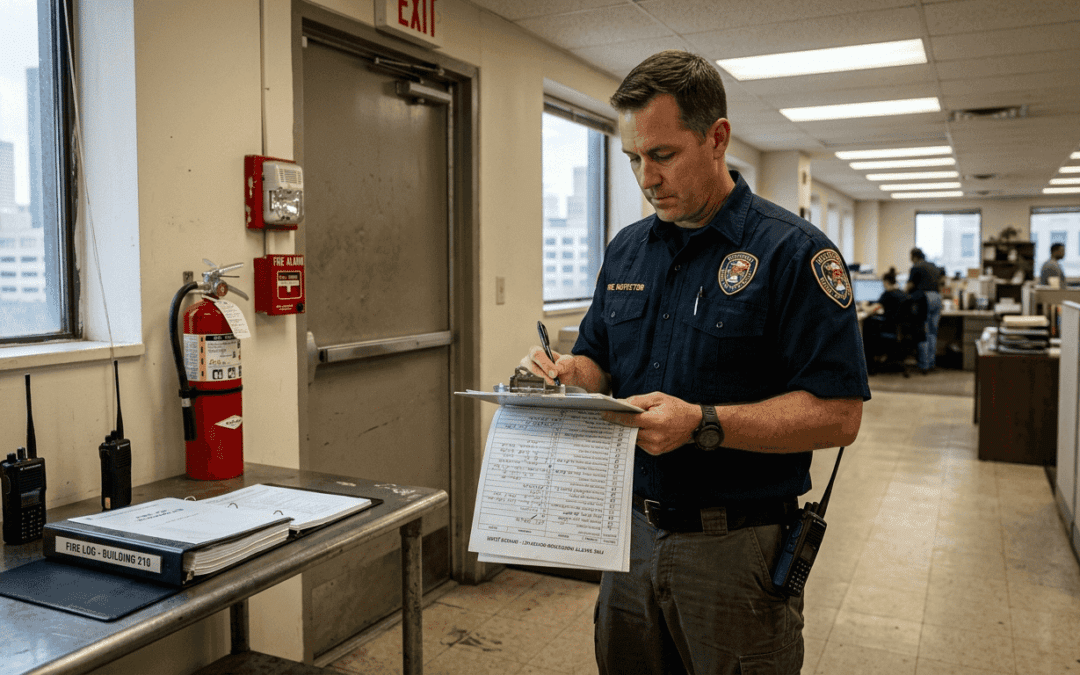
Houston businesses face mounting pressure to comply with evolving fire safety regulations while protecting employees and assets from devastating fire incidents. Recent events, including dangerous hydrogen sulfide leaks and commercial property fires, underscore the urgent need for comprehensive fire protection measures. A well-structured inspection checklist serves as your roadmap to meeting 2026 Houston fire codes, preventing costly violations, and ensuring rapid emergency response when seconds matter most.
Table of Contents
- Key Criteria For An Effective Fire Safety Inspection Checklist In 2026
- Essential Fire Safety Equipment And Systems To Include
- Comparison Of Modern Fire Safety Inspection Tools And Technologies
- Choosing The Right Fire Safety Inspection Approach For Your Houston Property
- Reliable Fire Protection Services For Houston Businesses
- Frequently Asked Questions
Key takeaways
| Point | Details |
|---|---|
| Regular audits prevent disasters | Comprehensive fire safety audits, conducted at least twice annually, identify and mitigate risks in Houston properties. |
| Equipment inspections are mandatory | Fire extinguishers, alarms, sprinklers, and emergency systems require systematic testing to meet 2026 compliance standards. |
| Technology enhances safety | Modern monitoring sensors and digital inspection tools reduce errors while improving documentation and response times. |
| Non-compliance carries penalties | Houston fire code violations result in fines, business closures, and liability exposure that far exceed prevention costs. |
| Professional services ensure compliance | Expert inspections aligned with current regulations provide peace of mind and protect your investment. |
Key criteria for an effective fire safety inspection checklist in 2026
Your inspection checklist must address Houston’s unique fire hazards while meeting stringent 2026 regulatory requirements. Creating a comprehensive framework ensures nothing falls through the cracks during routine safety evaluations.
Start by identifying critical fire hazards specific to your facility type. Industrial properties face different risks than office buildings or retail spaces. Warehouses storing flammable materials require more frequent inspections than administrative offices. Document every potential ignition source, from electrical panels to chemical storage areas.
Comprehensive fire safety audits, conducted at least twice annually, are crucial for identifying and mitigating risks in Houston properties, aligning with 2026 standards. This frequency represents the minimum baseline. High-risk facilities should schedule quarterly inspections to maintain optimal protection levels.
Your checklist must systematically cover all fire protection equipment and building safety features:
- Fire suppression systems including sprinklers, foam systems, and specialized equipment
- Fire alarm panels, detectors, and notification devices throughout the premises
- Emergency exit routes, signage, and door hardware functionality
- Fire extinguisher placement, accessibility, and maintenance status
- Emergency lighting systems and backup power supplies
- Ventilation and smoke control systems
Testing emergency communications represents a critical but often overlooked component. Your staff must know how to report fires, evacuate safely, and communicate with first responders. Schedule regular drills that simulate realistic scenarios, including power failures and blocked exits.
Align every checklist item with annual fire safety inspections Houston requirements and document compliance meticulously. Houston fire marshals review inspection records during permit renewals and random audits. Missing documentation triggers investigations and potential violations even when equipment functions properly.
Pro Tip: Create separate checklists for daily, monthly, and annual inspections rather than one massive document. This approach prevents oversight and assigns clear responsibilities to different team members.
Penalties for non-compliance escalate quickly. First violations may result in warnings, but repeat offenses trigger substantial fines and operational restrictions. Some violations force immediate business closure until corrections are completed and verified. The financial and reputational damage far exceeds the cost of maintaining rigorous creating fire safety checklist Houston protocols.
Essential fire safety equipment and systems to include
Every piece of fire protection equipment serves a specific purpose in your comprehensive safety strategy. Understanding inspection requirements for each system ensures nothing gets overlooked during routine evaluations.
Fire extinguishers represent your first line of defense against small fires before they escalate. Over 60% of American commercial property fires involve missing or poorly maintained extinguishers, highlighting the critical need for regular inspections. Mount extinguishers between 3.5 and 5 feet from the floor for optimal accessibility. Verify pressure gauges indicate proper charge levels and inspect for physical damage, corrosion, or blocked nozzles. Check that appropriate extinguisher types match nearby fire hazards.
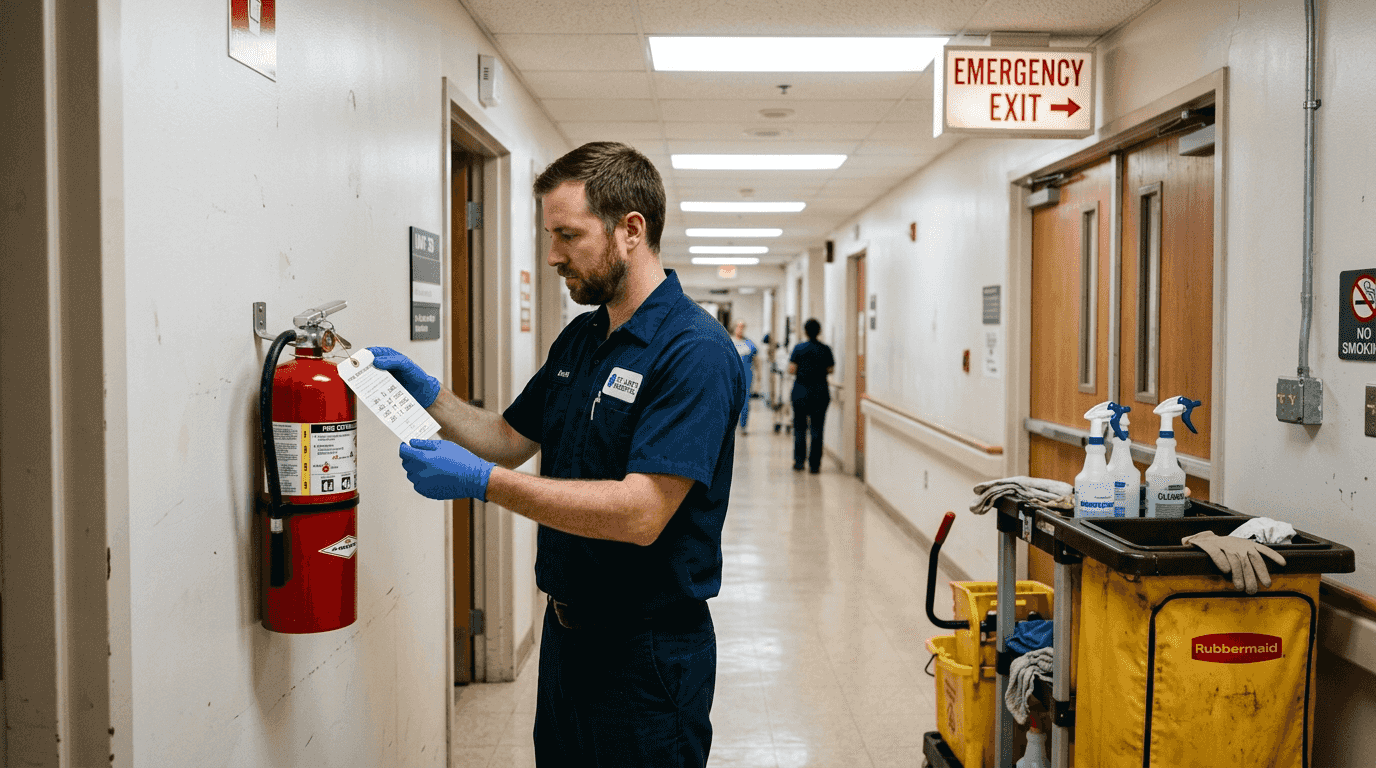
Fire alarm systems provide early warning that saves lives and minimizes property damage. Test all detection devices monthly to confirm proper operation. Inspect control panels for error codes or trouble indicators. Verify notification appliances produce adequate sound levels throughout the building. Integration with suppression systems ensures automatic activation when alarms trigger. Understanding how fire alarm systems work helps you identify potential failure points during inspections.
Sprinkler systems deliver automatic fire suppression when human intervention isn’t possible. Inspect for:
- Leaking pipes, fittings, or sprinkler heads
- Adequate water pressure and flow rates
- Proper coverage areas without obstructions
- Functional control valves in accessible locations
- Clear access to system components for maintenance
Emergency lighting and exit signage guide occupants to safety during power failures and smoke conditions. Test backup batteries monthly and replace units that fail to maintain illumination for required durations. Verify exit signs remain visible from all angles and that pathways stay clear of obstructions.
Smoke and gas detectors provide crucial early warning, especially for toxic hazards like hydrogen sulfide that pose immediate life threats. Clean detector sensors regularly to prevent false alarms and test sensitivity according to manufacturer specifications. Replace aging detectors before they reach end of service life.
Pro Tip: Photograph each piece of equipment during inspections to document condition over time. Visual records help identify deterioration patterns and support insurance claims if incidents occur.
Maintain detailed service records for every system component. Document inspection dates, findings, corrective actions, and technician credentials. These records prove compliance during regulatory audits and provide valuable data for optimizing maintenance schedules. Follow the comprehensive fire extinguisher inspection guide Houston business protocols to ensure nothing gets missed.
Comparison of modern fire safety inspection tools and technologies
Traditional paper checklists served adequately for decades, but modern technology dramatically improves inspection accuracy, efficiency, and documentation quality. Evaluating your options helps you select tools that match your operational needs and budget constraints.
Manual checklist inspections rely on printed forms and clipboard-carrying inspectors. This approach works for small facilities with minimal equipment but introduces significant error potential. Inspectors may skip items accidentally, lose documentation, or fail to follow up on identified issues. Data entry delays mean problems aren’t addressed promptly.
Digital inspection apps transform smartphones and tablets into powerful safety management tools. Inspectors complete checklists electronically with built-in prompts that prevent skipped items. Photo documentation captures equipment condition instantly. GPS tagging verifies inspection locations. Cloud synchronization provides real-time visibility to management teams. Reports generate automatically with compliance summaries and trend analysis.
Real-time monitoring sensors represent the cutting edge of fire protection technology. Modern fire protection systems integrate multiple technological components for comprehensive safety, including emergency communication networks and suppression equipment. Continuous monitoring detects anomalies immediately rather than waiting for scheduled inspections. Automated alerts notify facility managers and emergency responders simultaneously when problems arise.
Integrated emergency communication systems coordinate responses across multiple building systems. When fire alarms activate, these platforms automatically notify occupants, unlock exit doors, recall elevators, and alert fire departments. Integration eliminates delays caused by manual processes during critical moments.
| Inspection Method | Accuracy | Speed | Documentation | Cost | Best For |
|---|---|---|---|---|---|
| Paper checklists | Moderate | Slow | Manual entry | Low | Small facilities |
| Digital apps | High | Fast | Automatic | Moderate | Most businesses |
| Real-time sensors | Very high | Instant | Continuous | High | Large facilities |
| Integrated systems | Very high | Instant | Comprehensive | Very high | High-risk properties |
Technology reduces inspection time by 40 to 60 percent compared to manual methods. Inspectors spend less time writing and more time evaluating actual conditions. Error rates drop dramatically when software guides users through standardized procedures. Digital records never get lost or damaged like paper files.
Pro Tip: Start with digital inspection apps before investing in expensive sensor networks. Apps deliver immediate benefits at reasonable costs while you evaluate whether advanced monitoring justifies additional investment.
Cost considerations vary widely based on facility size and technology sophistication. Basic digital apps cost $10 to $50 per user monthly. Sensor networks require thousands in equipment plus ongoing monitoring fees. Budget-friendly options exist for smaller businesses through scalable platforms that grow with your needs. Review fire protection best practices Houston 2026 to understand which technologies deliver the best return on investment for your situation.
Many providers offer hybrid approaches combining periodic professional inspections with continuous automated monitoring. This strategy balances cost effectiveness with comprehensive coverage. Professional expertise identifies issues that sensors miss while technology provides constant vigilance between scheduled visits. Explore fire safety testing requirements Houston to understand mandatory testing frequencies that influence technology selection.
Choosing the right fire safety inspection approach for your Houston property
Selecting an inspection strategy requires balancing regulatory compliance, risk management, and budget realities. Your approach must address your facility’s unique characteristics while meeting Houston’s stringent 2026 fire safety standards.
Several factors influence inspection frequency and depth requirements. Building age affects fire risk significantly, with older structures requiring more frequent evaluations due to aging electrical systems, outdated suppression equipment, and deteriorating building materials. Occupancy type matters tremendously. High-density occupancies like restaurants, theaters, and healthcare facilities demand rigorous inspection schedules. Properties with past fire incidents need enhanced monitoring to prevent recurrence.
Professional inspections versus in-house safety checks represent a critical decision point. Professional fire safety technicians bring specialized expertise, calibrated testing equipment, and regulatory knowledge that internal staff typically lack. They identify subtle problems that untrained observers miss. However, professional services cost more than internal inspections. Many businesses adopt hybrid approaches using professionals for comprehensive annual audits while conducting monthly internal checks for obvious issues.
Scheduling inspections strategically maximizes compliance efficiency:
- Align comprehensive audits with Houston permit renewal deadlines
- Coordinate with fire department pre-planning visits
- Schedule before peak business seasons to address issues proactively
- Plan equipment testing during low-occupancy periods to minimize disruption
Budgeting for fire safety requires viewing expenses as insurance against catastrophic losses rather than discretionary costs. Compliance with evolving fire codes is mandatory for property managers in Houston to protect lives and properties, as emphasized by the Houston Fire Department. Equipment upgrades represent significant investments but prevent far costlier emergency repairs and liability claims. Inspection services cost substantially less than penalties for violations.
| Inspection Approach | Pros | Cons | Annual Cost | Compliance Level |
|---|---|---|---|---|
| Internal only | Low cost, flexible scheduling | Limited expertise, higher error risk | $500 to $2,000 | Basic |
| Professional annual | Expert evaluation, comprehensive | Higher cost, scheduling constraints | $2,000 to $8,000 | Good |
| Hybrid quarterly | Balanced cost and quality | Coordination required | $3,000 to $10,000 | Excellent |
| Continuous monitoring | Maximum protection, instant alerts | Highest investment | $8,000 to $25,000+ | Superior |
Smaller businesses with straightforward fire protection systems often succeed with professional annual inspections supplemented by monthly internal walkthroughs. Mid-size facilities benefit from quarterly professional visits that catch problems early. Large or high-risk properties justify continuous monitoring investments through reduced insurance premiums and liability exposure.
Consider your risk tolerance honestly. Some business owners accept minimum compliance standards while others pursue excellence that exceeds regulatory requirements. Your insurance carrier may mandate specific inspection frequencies and documentation standards. Review policies carefully to ensure your approach satisfies coverage requirements. Understand fire safety compliance tips Houston buildings to avoid gaps that void coverage.
Stay informed about regulatory changes by monitoring fire safety regulations 2026 Houston updates. Code revisions occur regularly, and ignorance provides no defense against violations. Professional inspection services include regulatory monitoring as part of their value proposition, ensuring your program adapts as requirements evolve.
Reliable fire protection services for Houston businesses
Implementing a comprehensive fire safety inspection program requires expertise, equipment, and time that many Houston businesses struggle to provide internally. Reliable Fire Protection delivers turnkey solutions that ensure 2026 compliance while protecting your most valuable assets.
Our professional fire safety audits align precisely with the latest Houston fire codes and 2026 regulatory updates. We inspect every critical system component, test functionality under realistic conditions, and provide detailed reports documenting compliance status. Our technicians identify potential problems before they trigger violations or emergencies.
Comprehensive inspection and maintenance services cover all essential fire protection equipment. We service fire alarms, extinguishers, sprinklers, suppression systems, and emergency communication networks using manufacturer-approved procedures. Understanding how fire alarm systems work informs our testing protocols, ensuring reliable operation when seconds count. Our fire extinguisher inspection guide Houston business standards exceed minimum requirements. We follow rigorous sprinkler system inspection guide Houston properties protocols that prevent failures.
Customizable service plans accommodate different property sizes, risk levels, and budget constraints. Whether you need annual audits or quarterly monitoring, we design programs matching your specific requirements. Our experienced team focuses on compliance and risk prevention rather than selling unnecessary services. We provide transparent pricing and clear explanations of recommended actions.
Easy scheduling and responsive support ensure fire protection never disrupts your operations. We work around your business hours and provide emergency services when urgent needs arise. Contact us today for a comprehensive fire safety evaluation.
Frequently asked questions
What is included in a 2026 fire safety inspection checklist?
A comprehensive checklist covers fire extinguishers, alarm systems, sprinkler equipment, emergency exits, lighting, and communication systems. It must follow updated Houston fire codes and include regular testing schedules with maintenance documentation. Customization depends on your building type, occupancy levels, and identified hazards. Regular audits ensure early detection of problems and maintain compliance, helping you avoid penalties and protect occupants.
How often should fire safety inspections be conducted in Houston?
Comprehensive fire safety audits, conducted at least twice annually, are crucial for identifying and mitigating risks in Houston properties, aligning with 2026 standards. This represents the minimum frequency for most commercial properties. More frequent inspections become necessary for high-risk facilities, buildings with past fire incidents, or properties housing hazardous materials. Monthly internal checks supplement professional evaluations.
What are the penalties for non-compliance with Houston fire safety regulations?
Non-compliance triggers fines, operational penalties, and potential business closures until violations are corrected. Compliance with evolving fire codes is mandatory for property managers in Houston to protect lives and properties, as emphasized by the Houston Fire Department. Penalty amounts vary based on violation severity and enforcement priorities. Repeat offenses result in escalating consequences including license revocation. Insurance coverage may be voided for properties with documented safety violations.
How can technology improve fire safety inspections?
Technology enables real-time monitoring that detects problems instantly rather than waiting for scheduled inspections. Modern fire protection systems integrate multiple technological components for comprehensive safety, including emergency communication networks and suppression equipment. Digital inspection tools reduce human error through standardized checklists and automated prompts. Cloud-based documentation improves record keeping and provides instant access during audits. Automated alerts ensure rapid response when issues arise.