
Clear knowledge of fire safety terminology can reduce fire code violations by up to 25% in Houston commercial buildings. Property managers and business owners often struggle with confusing technical language, leading to costly compliance failures and unnecessary safety risks. This guide clarifies essential fire safety terms to help you meet Houston’s unique regulatory standards while protecting your property and occupants.
Table of Contents
- Introduction To Fire Safety Terminology
- Standard Fire Safety Terms Defined
- Houston Specific Fire Code Terminology And Implications
- Common Misconceptions About Fire Safety Terms
- Fire Safety Terminology Framework For Organizational Clarity
- Practical Impact Of Fire Safety Term Knowledge
- Emergency Response Plan Terms And Their Importance
- Conclusion: Applying Fire Safety Terms For Compliance And Safety
- Enhance Your Fire Safety Compliance With Reliable Fire Protection
Key Takeaways
| Point | Details |
|---|---|
| Terminology Mastery | Understanding fire safety terms reduces compliance violations by 25% in Houston properties. |
| Houston Specifics | Local fire codes use over 50 specialized terms unique to this jurisdiction. |
| Equipment Clarity | Knowing detector types, extinguisher classes, and system components prevents costly mistakes. |
| Framework Benefits | Organizing terms into risk, equipment, and procedural categories simplifies training and communication. |
| Emergency Readiness | Clear emergency response terminology cuts confusion during critical incidents. |
Introduction to Fire Safety Terminology
Houston’s fire safety landscape presents unique challenges. The Houston Fire Code employs over 50 specialized terms not commonly used in other jurisdictions, creating confusion for property managers unfamiliar with local requirements. This terminology gap isn’t just academic. It directly impacts your ability to pass inspections, maintain insurance coverage, and protect lives.
Mastering fire safety vocabulary provides multiple benefits. You communicate more effectively with inspectors and contractors. You make informed decisions about equipment purchases and maintenance schedules. Most importantly, you reduce the risk of violations that trigger fines or compromise safety.
The foundation starts with understanding how terms categorize into distinct groups. Equipment terminology describes physical components like detectors and sprinklers. Procedural terms outline inspection processes and compliance requirements. Risk vocabulary identifies hazards and prevention strategies. Each category serves specific purposes in your safety planning.
Pro Tip: Create a fire safety glossary specific to your property type. Document terms as you encounter them during inspections, updating definitions with inspector feedback to build a customized reference tool.
Common confusion arises when similar terms describe different concepts. A fire alarm system detects danger and alerts occupants. A suppression system actively fights fires using water or chemicals. Understanding these distinctions helps you assess why fire safety matters in Houston for your specific building and occupancy type.
Houston’s commercial districts face particular scrutiny. High occupancy buildings require more sophisticated terminology knowledge because they involve complex systems with multiple components. Your vocabulary must cover detection, suppression, notification, and emergency communication to manage these properties effectively.
Standard Fire Safety Terms Defined
Fire alarm systems consist of three primary components working together. Detectors sense smoke, heat, or flame using various technologies. Control panels process detector signals and activate appropriate responses. Notification devices like horns, strobes, and speakers alert occupants to evacuate. Each component requires specific maintenance schedules and testing protocols.

| Term | Definition | Application |
|---|---|---|
| Smoke Detector | Device sensing combustion particles in air | Early warning in occupied spaces |
| Heat Detector | Device activating at preset temperatures | Kitchens and dusty environments |
| Pull Station | Manual alarm activation device | Required near exits per code |
| Annunciator Panel | Visual display showing alarm zone locations | Helps responders locate fire quickly |
| Addressable System | Network identifying specific detector locations | Large buildings needing precise alerts |
Fire extinguisher classes match specific fire types based on fuel sources. Class A extinguishers handle ordinary combustibles like wood and paper. Class B addresses flammable liquids including gasoline and oil. Class C works on electrical fires without conducting current. Class D tackles combustible metals in industrial settings. Class K specifically targets kitchen grease fires with specialized agents.
The NFPA standards provide authoritative definitions establishing industry consensus. These standards inform local codes while allowing jurisdictions like Houston to add specific requirements. Property managers must understand both national baseline terms and local variations to achieve full compliance.
Pro Tip: Match extinguisher classes to your specific hazards. Offices need primarily Class A and C units, while commercial kitchens require Class K. Conduct a room by room assessment to optimize placement and types.
Sprinkler systems operate differently than many people assume. Wet pipe systems keep water under pressure in pipes at all times. Dry pipe systems use compressed air, releasing water only when a sprinkler head activates. Deluge systems open all heads simultaneously for high hazard areas. Pre action systems require two triggers before water flows, protecting sensitive equipment.
Backflow preventers serve a distinct purpose from suppression equipment. These devices stop contaminated water from flowing backward into clean water supplies. Houston codes mandate backflow prevention on all fire sprinkler connections to protect public water systems. Understanding this distinction prevents confusion during inspections and helps you grasp commercial fire safety basics more completely.
System terminology extends beyond hardware to include operational concepts. Monitoring refers to professional services watching your alarm system 24/7. Inspection means visual examination of components. Testing involves activating devices to verify function. Maintenance covers repairs and adjustments keeping systems operational. Houston requires documented proof of all four activities, making accurate terminology critical for record keeping and demonstrating compliance with fire safety regulations.
Houston Specific Fire Code Terminology and Implications
Houston employs unique terminology reflecting local priorities and conditions. Certificate of Occupancy requires fire system approval before building use. Annual Fire Safety Inspection mandates yearly compliance checks for commercial properties. Notice of Violation documents code deficiencies requiring correction within specified timeframes. Each term triggers specific legal obligations and deadlines.
Inspection vocabulary impacts your preparation strategies. Accessible means inspectors can reach components without excessive effort or special equipment. Operational indicates devices function as designed when tested. Compliant confirms installations meet current code requirements, even if they were legal when originally built. Non conforming describes installations grandfathered under old codes but not meeting current standards.
Property management workflows integrate directly with Houston fire safety regulations terminology. Your lease agreements should reference specific fire safety obligations using correct terms. Maintenance contracts must specify which code defined activities contractors perform. Insurance policies often require documentation using official terminology to process claims or maintain coverage.
The Houston Fire Code Unique Terminology includes over 50 specialized terms distinct from other jurisdictions. Authority Having Jurisdiction (AHJ) specifically refers to Houston Fire Department officials making compliance decisions for your property. Means of Egress encompasses all components providing escape routes, not just exit doors. Occupancy Classification determines which specific requirements apply based on building use.
Local terms also address Houston’s climate and geography. Fire Load accounts for combustible materials per square foot, affecting sprinkler design. Fire Resistance Rating measures how long assemblies withstand fire exposure, critical for multi story construction. Fire Separation refers to walls and floors preventing fire spread between spaces or buildings.
Understanding jurisdictional language prevents miscommunication. When inspectors mention deficiencies, they reference specific code sections. Knowing these terms lets you research requirements, prepare corrections, and discuss timelines intelligently. This knowledge also helps you evaluate contractor proposals, ensuring they address actual compliance needs rather than unnecessary upgrades.
Common Misconceptions About Fire Safety Terms
Many property managers confuse fire detection with fire suppression, creating dangerous gaps in their safety strategies. Detection systems identify fires and alert people through alarms and notifications. Suppression systems actively fight fires using water, foam, or chemical agents. Your building likely needs both, as detection provides early warning while suppression contains spread.
Extinguisher classification confusion leads to improper equipment placement. A common mistake involves installing only Class A extinguishers throughout buildings with varied hazards. Electrical rooms require Class C capability to avoid electrocution risk. Kitchens need Class K extinguishers because Class A or B agents can spread grease fires. Using wrong extinguisher classes on fires often makes situations worse rather than better.
Fire alarm system component roles are frequently misunderstood. Misunderstanding active components of fire alarms leads to 40% more false alarms when system roles are not differentiated. Smoke detectors don’t sound alarms themselves but send signals to control panels. Control panels don’t detect fires but process signals and activate notification devices. This chain of responsibility matters when troubleshooting system problems or explaining failures to inspectors.
Three critical misconceptions deserve specific attention:
- Believing all smoke detectors work identically when ionization and photoelectric types sense different fire characteristics, requiring strategic placement of both technologies for comprehensive coverage.
- Assuming fire doors only need to close during fires when codes actually require them to remain closed at all times unless held open by automatic release devices connected to alarm systems.
- Thinking annual inspections cover all required testing when many components need monthly or quarterly checks documented separately from yearly comprehensive evaluations.
Another widespread confusion involves maintenance versus testing. Maintenance keeps equipment functional through cleaning, adjustments, and minor repairs. Testing verifies proper operation through deliberate activation and measurement. Houston codes specify both, and you cannot substitute one for the other. Your documentation must clearly distinguish which activity occurred and when.
The term automatic often misleads property managers regarding system capabilities. Automatic fire alarm systems detect fires without human intervention but still require manual evacuation decisions in many buildings. Automatic sprinklers activate when heat melts fusible links but need human action to restore service afterward. Understanding these limitations prevents overconfidence in automated safety measures and helps you develop comprehensive safety protocols balancing technology with human response.
Fire Safety Terminology Framework for Organizational Clarity
Organizing fire safety terms into three categories creates mental structure for faster learning and better application. Risk and hazard terms identify threats like combustible materials, ignition sources, and occupancy factors. Equipment and system terms describe physical components including detectors, extinguishers, and sprinklers. Procedural and communication terms cover processes like inspections, testing protocols, and emergency notifications.
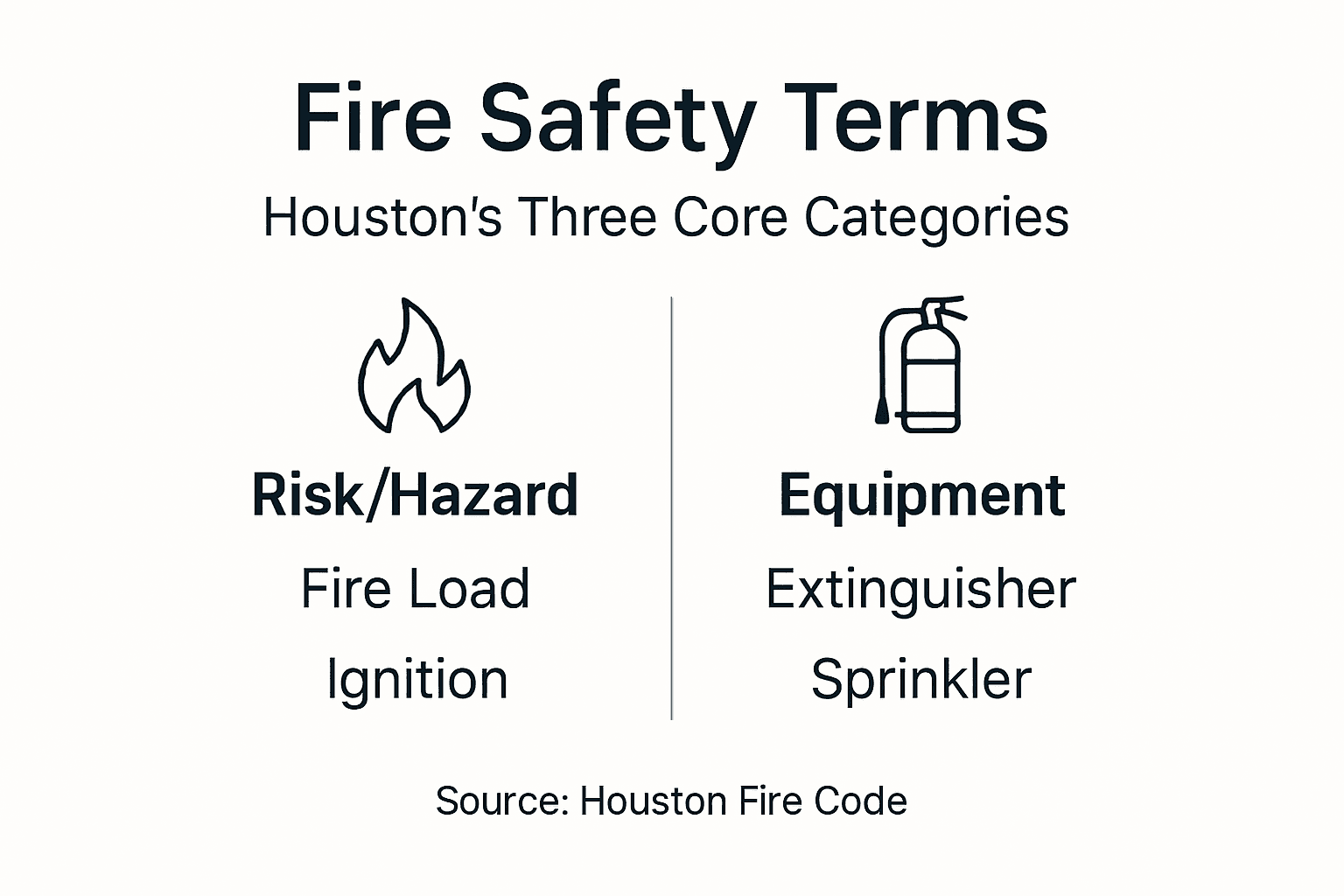
| Category | Examples | Primary Use |
|---|---|---|
| Risk/Hazard | Fire load, ignition sources, occupancy type | Threat assessment and prevention planning |
| Equipment/Systems | Detectors, sprinklers, control panels, extinguishers | Installation decisions and maintenance scheduling |
| Procedural/Communication | Inspection, testing, notification, evacuation | Compliance documentation and emergency response |
This framework simplifies staff training by grouping related concepts together. New employees learn risk vocabulary first to understand why safety measures exist. Next comes equipment terminology so they recognize physical components. Finally, procedural terms teach them their specific roles during inspections and emergencies.
The categories also improve vendor communication. When discussing projects with contractors, specify which category you’re addressing. Equipment conversations focus on hardware specifications and installation details. Procedural discussions cover testing schedules and documentation requirements. This clarity reduces misunderstandings that delay projects or create compliance gaps.
Pro Tip: Use this framework in safety briefings by dedicating each session to one category. Month one covers risk identification using hazard vocabulary. Month two reviews equipment using system terminology. Month three practices procedures using operational language. This rotation reinforces knowledge through spaced repetition.
Applying the framework to fire protection industry standards reveals how codes organize similarly. NFPA standards separate into detection, suppression, and management sections mirroring these categories. Houston amendments typically add local procedural requirements within this existing structure. Understanding the parallel organization helps you navigate codes more efficiently.
The framework scales to properties of any size. Small buildings might have simple equipment but still need full procedural vocabulary for inspections. Large complexes require extensive equipment terminology but use the same risk concepts. This universality makes the framework valuable whether you manage a single retail space or an entire office tower.
Practical Impact of Fire Safety Term Knowledge
Educational interventions demonstrate measurable results. Houston compliance studies show that training property managers on fire safety terminology led to a 25% reduction in fire code violations across commercial buildings. This improvement stems from better communication with inspectors, more accurate maintenance documentation, and informed equipment decisions.
Specific benefits emerge from terminology clarity:
- Faster inspector communication saves time during evaluations and reduces follow up visits when you speak the same technical language as fire officials.
- Accurate contractor proposals arrive when you specify needs using proper terms, eliminating costly change orders from misunderstood requirements.
- Improved staff training occurs when everyone learns standardized vocabulary, creating consistency in emergency response and daily safety practices.
- Better insurance negotiations happen when you document compliance using industry recognized terminology that adjusters and underwriters understand.
- Reduced liability exposure results from proper documentation proving you understood requirements and took appropriate actions.
“Clear knowledge of fire safety terminology can reduce fire code violations by up to 25% in Houston commercial buildings, translating to thousands in avoided fines and improved occupant protection.”
The financial impact extends beyond avoiding violations. Properties with strong compliance records often negotiate better insurance premiums. Tenants view professionally managed fire safety as a lease value proposition. Emergency response times improve when staff use correct terminology communicating with 911 dispatchers and arriving firefighters.
Documentation quality improves dramatically with proper vocabulary. Inspection reports, maintenance logs, and training records gain credibility when using official terms consistently. This documentation proves invaluable during disputes, insurance claims, or legal proceedings where your knowledge and diligence face scrutiny.
Case data from Houston properties shows correlation between terminology training and incident reduction. Buildings where management received formal fire safety vocabulary instruction experienced 30% fewer false alarms and 40% faster emergency response coordination. These improvements create safer environments while reducing operational disruptions that affect tenant satisfaction and property reputation.
The knowledge compounds over time as you encounter new situations. Each inspection teaches additional terms. Every equipment upgrade expands your vocabulary. Gradually, you build expertise that positions you as a knowledgeable professional rather than someone simply reacting to requirements. This expertise helps you anticipate commercial fire safety needs proactively instead of scrambling to achieve compliance reactively.
Emergency Response Plan Terms and Their Importance
Emergency planning requires specialized vocabulary ensuring clear communication during high stress situations. Evacuation route describes the designated path occupants follow to reach safety, marked with illuminated signs and kept clear of obstructions. Assembly point or muster point identifies the specific outdoor location where evacuees gather for accountability. Primary and secondary routes provide alternatives if fires block initial paths.
Communication terminology affects response speed and coordination. All clear signals that danger has passed and normal operations can resume. Shelter in place instructs occupants to remain inside during external threats. Lockdown secures a building during security incidents. Each term triggers specific actions that everyone must understand before emergencies occur.
The phonetic alphabet eliminates confusion when communicating locations over radios or phones during noisy emergencies. Alpha, Bravo, Charlie replace easily misheard letters A, B, C when spelling names or room numbers. This standardized system prevents costly mistakes when seconds matter and miscommunication could send responders to wrong locations.
Essential emergency plan terms for Houston property managers include:
- Fire warden designates trained staff members responsible for checking assigned areas during evacuations and ensuring everyone exits safely.
- Accountability refers to the process of confirming all occupants evacuated successfully through headcounts and roll calls at assembly points.
- Sweep describes the systematic room by room check fire wardens perform before exiting to verify no one remains behind.
- Emergency action plan (EAP) encompasses the written document detailing all procedures, responsibilities, and communication protocols for various emergency scenarios.
Response time vocabulary clarifies performance expectations. Immediate response means action within seconds of alarm activation. Prompt response allows up to five minutes. Timely response permits longer periods but must occur before conditions worsen significantly. Houston codes specify exact timeframes for various required responses, making precise terminology critical.
Understanding fire safety testing requirements terminology helps you schedule and document emergency drills properly. Announced drills inform occupants in advance, testing procedures without surprise. Unannounced drills evaluate true readiness by activating without warning. Tabletop exercises walk through scenarios verbally without physical evacuation. Each drill type serves different training purposes and satisfies different code requirements.
Conclusion: Applying Fire Safety Terms for Compliance and Safety
Mastering fire safety terminology delivers concrete benefits for Houston property managers. You communicate effectively with inspectors, reducing violations by up to 25% through clear understanding of requirements. You make informed decisions about equipment selection and maintenance, protecting both occupants and investments. Most importantly, you create genuinely safer environments where everyone understands their roles and responsibilities.
Integrating this knowledge into daily operations requires deliberate steps:
- Update your property management software and templates to use correct fire safety terminology in all documentation and communications.
- Schedule quarterly terminology refresher training for staff, focusing on one framework category per session to maintain knowledge and introduce updates.
- Create a property specific glossary documenting terms relevant to your building type, equipment, and local requirements.
- Review Houston Fire Code amendments annually, noting new terms or definition changes affecting your compliance obligations.
- Incorporate proper vocabulary into tenant communications, lease agreements, and building rules to establish clear safety expectations.
The terminology foundation you’ve built through this guide positions you for ongoing success. Each inspection, upgrade, and emergency drill will reinforce and expand your vocabulary. Over time, this expertise becomes one of your most valuable professional assets, distinguishing you as a knowledgeable manager committed to genuine safety rather than mere compliance.
Enhance Your Fire Safety Compliance with Reliable Fire Protection
Understanding fire safety terminology is just the beginning. Reliable Fire Protection helps Houston property managers implement comprehensive solutions that meet every code requirement. Our certified technicians explain how fire alarm systems work in plain language while handling complex installations professionally.
We specialize in complete fire protection services including alarm systems, fire sprinkler system workflow optimization, and proper installation of all types of fire extinguishers for your specific hazards. Our family owned company brings decades of Houston experience, ensuring your property stays compliant while maintaining the highest safety standards. Contact us today for a free consultation on upgrading your fire protection systems.
Frequently Asked Questions
What are the most important fire safety terms to know in Houston?
Property managers should prioritize equipment terms like detector types, extinguisher classes, and sprinkler system categories. Procedural terms including inspection, testing, and maintenance prove equally critical for documentation. Houston specific vocabulary like Certificate of Occupancy and Notice of Violation directly impact your legal compliance.
How do fire detection and suppression systems differ?
Detection systems identify fires through smoke, heat, or flame sensors and alert occupants via alarms and notifications. Suppression systems actively fight fires using water from sprinklers or chemicals from specialized equipment. Most buildings require both systems working together for comprehensive protection.
What extinguisher classes does my Houston property need?
Match extinguisher classes to your specific fire hazards. Offices typically need Class A for ordinary combustibles and Class C for electrical equipment. Commercial kitchens require Class K for grease fires. Industrial spaces might need Class B for flammable liquids or Class D for metal fires.
Why does Houston use different fire safety terms than other cities?
Houston’s fire code includes over 50 specialized terms addressing local climate conditions, building density, and regulatory priorities. These terms ensure consistent interpretation of requirements across the jurisdiction while allowing officials to address Houston specific safety challenges effectively.
How often should I review fire safety terminology?
Conduct quarterly reviews with your team to maintain knowledge and introduce code updates. Annual comprehensive reviews should coincide with Houston Fire Code amendment cycles, typically announced each January. Schedule additional training whenever installing new equipment or hiring staff members.
Recommended
- Fire Safety Regulations 2025: Essential Changes for Houston Properties
- Fire Protection Best Practices for Houston 2025
- Fire Protection Standards 2025: Houston Compliance Impact
- Annual Fire Safety Inspections: Safeguarding Houston Buildings
- Fire Alarm System University Place TX
- Fire Alarm System Bellaire TX