
TL;DR:
- A fire safety audit systematically evaluates fire protection systems and policies to ensure NFPA compliance and reduce fire risks.
- Preparation, thorough physical inspections, organized recordkeeping, and tracked corrective actions are essential for a successful audit process.
A step by step fire safety audit is a systematic evaluation of every fire protection system and safety policy in your building, conducted to confirm compliance with NFPA codes and eliminate preventable fire risks. The industry term for this process is a fire risk assessment, and both terms describe the same structured methodology: inspect, document, identify deficiencies, and correct them before an Authority Having Jurisdiction (AHJ) does it for you. For business owners and property managers in Houston and across Texas, a well-executed audit covers NFPA 10, NFPA 25, NFPA 72, NFPA 80, and NFPA 101 standards. Get it right, and you reduce costly violations, protect occupants, and strengthen your insurance position.
What does a step by step fire safety audit actually involve?
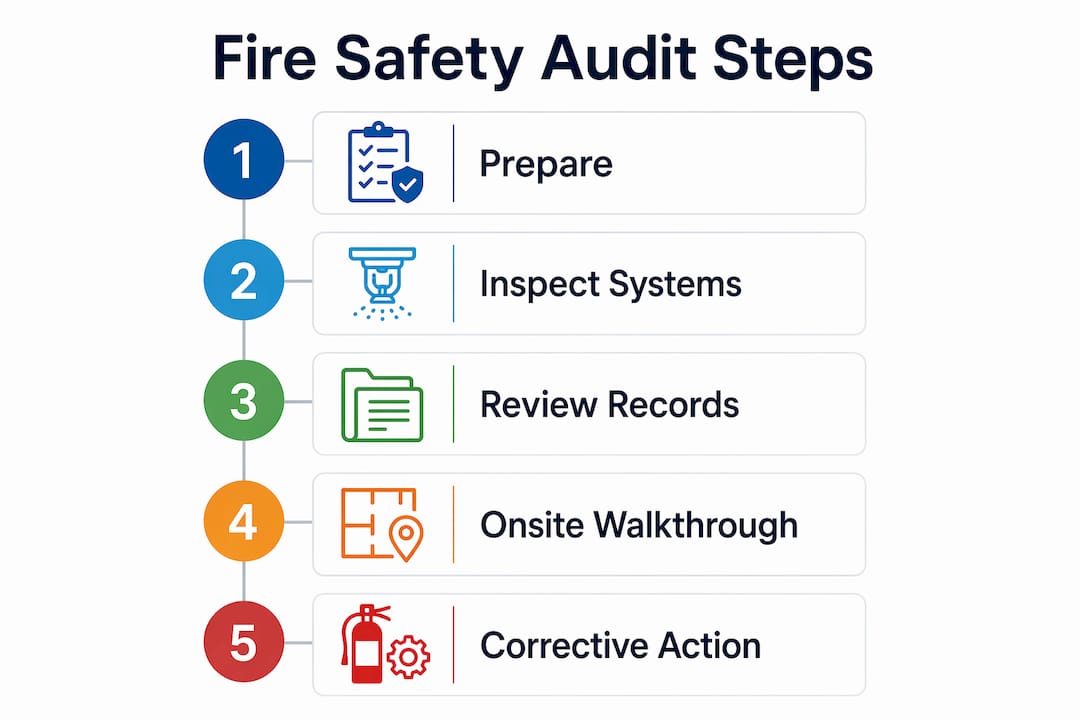
A fire safety audit is not a single walk-through. It is a phased process that moves from preparation through physical inspection to documentation review and corrective action planning. Structured NFPA-aligned checklists align inspection categories directly with NFPA 72, 25, 10, 101, and 80 standards, giving you a defensible, code-referenced record of every finding. That record is what separates a credible audit from a clipboard exercise.
The audit serves three primary goals. First, it confirms that your fire protection systems function as designed. Second, it identifies gaps before they become violations or, worse, emergencies. Third, it produces a corrective action plan with assigned owners and deadlines, which is the document that actually drives improvement. Without that plan, the walk-through produces no lasting change.
How to prepare for your fire safety audit
Preparation determines how much ground you cover onsite and how defensible your findings are afterward. Start by defining the audit scope in writing. Specify whether you are auditing the full building or specific zones, and whether the focus is regulatory compliance, risk reduction, or both. A written scope prevents scope creep and keeps the team aligned.
Gather these documents before the audit begins:
- Building floor plans and as-built drawings
- Maintenance logs for all fire protection systems
- Previous audit and inspection reports
- Fire drill records and evacuation plan documentation
- Training certificates for safety personnel
- Certification tags and service records for extinguishers and suppression systems
Pro Tip: Pre-audit desktop research, reviewing prior reports and maintenance logs before you set foot onsite, lets you target high-risk areas first and cuts your onsite time significantly. Campus inspection guides confirm that defining scope in writing and pre-reviewing records focuses inspection efforts on likely problem areas.
Your audit team should include a facility manager, a designated safety officer, and qualified technicians for each system category. Bring pressure gauges, smoke pencils, a digital camera or smartphone with photo-capture capability, measuring tape, and a standardized fire safety checklist. Using a Houston fire safety checklist built around local code requirements gives you a ready-made framework rather than building one from scratch.
Inspecting each fire safety system: what to check and when
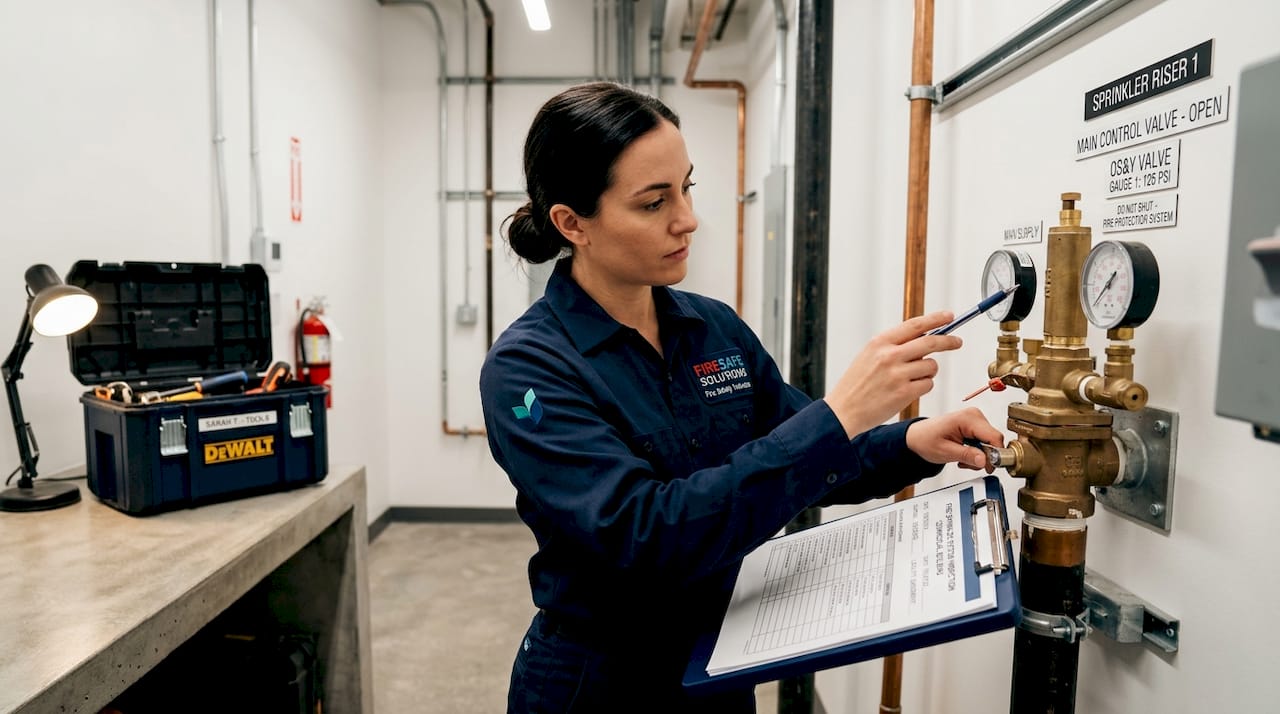
The core of any fire hazard evaluation process is a system-by-system physical inspection. Each category has its own NFPA standard, inspection frequency, and common failure points. The table below summarizes what to inspect, the applicable code, and how often.
| System category | Key inspection tasks | NFPA standard | Frequency |
|---|---|---|---|
| Fire sprinkler systems | Valves, pressure gauges, flow alarms, pipe condition | NFPA 25 | Monthly visual, annual full |
| Fire alarm and detection | Control panel, detectors, manual pull stations, notification devices | NFPA 72 | Monthly test, annual inspection |
| Portable fire extinguishers | Visual condition, pressure indicator, pin and seal, annual maintenance tag | NFPA 10 | Monthly visual, annual service |
| Emergency lighting and exits | Illumination level, battery backup test, exit sign visibility | NFPA 101 | Monthly 30-second test, annual 90-minute test |
| Fire door assemblies | Door condition, self-closing hardware, latching, frame integrity | NFPA 80 | Annual inspection |
| Means of egress | Obstruction-free pathways, signage, illumination, travel distance | NFPA 101 | Every audit cycle |
Sprinkler systems require you to confirm that all control valves are in the open position and supervised, that pressure gauges read within the normal operating range, and that flow alarms activate when tested. NFPA 25 requires quarterly inspections of wet pipe system gauges and annual full inspections by a qualified contractor.
Fire alarm systems are inspected per NFPA 72, which mandates testing of every initiating device, notification appliance, and the central control panel. Check that the panel shows no trouble or supervisory signals, that smoke detectors are clean and unobstructed, and that manual pull stations are accessible. For a detailed breakdown of alarm system components, the fire alarm inspection guide from Reliable Fire Protection covers each step.
Portable extinguishers require a monthly visual check confirming the unit is in its designated location, the pressure gauge reads in the green zone, and the tamper seal is intact. Annual maintenance by a certified technician is required under NFPA 10. The extinguisher inspection guide for Houston businesses outlines the full annual service procedure.
Pro Tip: During egress inspections, measure the actual clear width of corridors and door openings. NFPA 101 specifies minimum widths, and furniture, equipment, or stored materials frequently reduce them below code. A tape measure catches what a visual scan misses.
Auditing fire safety documentation and records management
Physical systems can pass inspection while documentation failures cause an audit to collapse. Inspectors expect organized records accessible on demand per NFPA recordkeeping requirements, and missing logs are treated the same as missing maintenance. Treat documentation management as a separate workflow within the audit, not an afterthought.
Follow these steps to organize your records before the audit date:
- Create a system-specific folder for each fire protection category: sprinklers, alarms, extinguishers, suppression systems, emergency lighting, and fire doors.
- Within each folder, file records chronologically with the most recent document on top.
- Attach photographic evidence to any record that documents a repair or corrective action.
- Confirm that certification tags on extinguishers and suppression systems match the dates in your maintenance logs.
- Verify that fire drill records include the date, time, number of occupants, and any observed deficiencies.
- Flag any gap in the inspection timeline and prepare a written explanation for the auditor.
Building record retrieval systems that group logs by system, date, and compliance status improve audit-day readiness significantly. Digital management platforms that automate inspection scheduling, generate work orders, and timestamp every entry remove the human error that causes most documentation failures. Digital checklists with photo capture and auto work orders increase inspection accuracy and reduce administrative burden at the same time.
How to conduct the onsite audit walkthrough
Start every onsite audit with an opening meeting. Bring together the facility manager, safety officer, and any department heads whose areas are in scope. Confirm the audit boundaries, agree on access logistics, and identify any areas that require special coordination, such as server rooms or occupied patient care spaces.
Move through the building zone by zone, system by system. A zone-based approach prevents you from missing areas and creates a logical sequence that mirrors the building’s egress paths. For each finding, record the following:
- A standardized description of the deficiency
- The specific NFPA code section it violates
- A severity rating: critical (immediate life-safety risk), major (compliance gap requiring prompt correction), or minor (housekeeping or administrative issue)
- Photographic evidence with a timestamp and location label
- The name of the person assigned to correct the finding and the deadline for closure
Severity-based closure models involve tagging hazards and assigning responsible parties with firm due dates, which is the mechanism that converts audit findings into actual risk reduction. A live register tracking open findings, ownership, and status keeps corrective actions from stalling between audit cycles.
Pro Tip: Tag or physically barricade any critical finding the moment you identify it. Do not wait for the closing meeting. Immediate restriction communicates urgency to staff and reduces liability if an incident occurs before the repair is completed.
Structured frameworks and digital workflows reduce fire safety violations by up to 85%. That figure reflects what happens when organizations replace informal walk-throughs with standardized, code-referenced inspection protocols. The onsite walkthrough is where that structure pays off.
Key takeaways
A fire safety audit succeeds only when preparation, physical inspection, documentation review, and a tracked corrective action plan operate as one connected process.
| Point | Details |
|---|---|
| Define scope before you start | Write the audit boundaries in advance to prevent scope creep and focus onsite time on high-risk areas. |
| Inspect all six system categories | Cover sprinklers, alarms, extinguishers, emergency lighting, fire doors, and egress per NFPA 10, 25, 72, 80, and 101. |
| Treat documentation as a separate workflow | Organize records by system and date before audit day; missing logs fail audits as often as defective equipment. |
| Rate every finding by severity | Use critical, major, and minor ratings to prioritize repairs and assign owners with firm deadlines. |
| Use digital tools to sustain compliance | Automated checklists, photo capture, and work order tracking maintain audit readiness between formal inspection cycles. |
Why most fire audits fail before the walk-through begins
After working through fire safety compliance across dozens of commercial properties, the pattern is consistent: the audits that produce real safety improvements are not the ones with the most thorough inspectors. They are the ones where the property manager treated preparation and follow-through as seriously as the inspection itself.
The most common failure I see is treating the audit as a one-day event. A business owner schedules an inspection, the team walks the building, findings get written up, and then the report sits in a drawer. Audits are valued most for their corrective action plans and follow-through, not the initial walk-through alone. A finding without an assigned owner and a deadline is just a note.
The second failure is documentation. I have seen properties with well-maintained sprinkler systems fail AHJ inspections because the maintenance logs were incomplete or stored in a format the inspector could not quickly verify. The most common violations found during fire audits include blocked exits, expired extinguishers, faulty alarms, and unmaintained sprinkler systems. Most of those violations trace back to lapses in routine inspection and recordkeeping, not equipment failure.
My recommendation: run an internal surprise audit at least once between your formal inspection cycles. Walk the building unannounced, check a random sample of extinguishers, test one pull station, and verify that egress paths are clear. What you find in that 30-minute exercise tells you more about your real compliance posture than any scheduled audit ever will. Pair that with a Texas fire safety inspection guide to keep your process aligned with current state requirements.
— Reliable Fire Protection
How Reliable Fire Protection supports your audit and compliance
Reliable Fire Protection gives Houston business owners and property managers the certified expertise and practical tools to move from audit findings to verified compliance.
Reliable Fire Protection’s certified technicians conduct NFPA-aligned inspections of fire alarm systems and sprinkler system workflows, producing the documented service records your audit requires. The team also supports fire extinguisher maintenance, suppression system inspections, and emergency lighting verification across Houston and surrounding neighborhoods. Whether you need a full fire safety compliance checklist built for your property type or a certified contractor to close out critical findings, Reliable Fire Protection delivers the response speed and documentation quality that AHJ inspections demand. Contact Reliable Fire Protection for a free quote and get your property audit-ready.
FAQ
What is a fire safety audit?
A fire safety audit is a systematic, code-referenced evaluation of all fire protection systems, safety policies, and documentation in a building to confirm compliance with NFPA standards and identify corrective actions. It covers sprinklers, alarms, extinguishers, fire doors, emergency lighting, and egress pathways.
How often should a fire safety audit be conducted?
Most commercial properties require a formal fire safety audit annually, with monthly visual checks on extinguishers and emergency lighting and quarterly inspections of sprinkler system gauges per NFPA 25. High-occupancy or high-hazard facilities may require more frequent reviews.
What are the most common fire safety violations found during audits?
Blocked exits, expired extinguishers, faulty alarm systems, and unmaintained sprinkler systems are the most frequent violations. Most arise from lapses in routine inspection and documentation rather than equipment failure.
What NFPA codes apply to a commercial fire safety audit?
A commercial fire safety audit references NFPA 10 for extinguishers, NFPA 25 for sprinkler systems, NFPA 72 for fire alarms, NFPA 80 for fire doors, and NFPA 101 for life safety and egress requirements. Each standard specifies inspection tasks and frequencies.
How do digital tools improve fire safety audit outcomes?
Digital checklists with photo capture, automated work orders, and defect tracking increase inspection accuracy and maintain audit readiness between formal cycles. Structured digital workflows reduce fire safety violations by up to 85% compared to informal inspection methods.