
Automatic fire suppression systems save lives and drastically reduce property damage, yet many Houston property managers remain uncertain about their true value beyond simple code compliance. Buildings with sprinkler systems experience significantly fewer fatalities and less property loss. This guide provides clarity on why choosing the right fire suppression system is critical for protecting your Houston business in 2026.
Table of Contents
- Understanding The Impact Of Fire Suppression Systems
- Common Causes Of Fire Suppression Failures And How To Avoid Them
- Choosing The Right Fire Suppression System For Your Houston Property
- Benefits Beyond Safety: Compliance And Insurance Savings
- Protect Your Houston Property With Reliable Fire Suppression Solutions
Key takeaways
| Point | Details |
|---|---|
| Fire suppression systems reduce fatalities by 60-80% and property damage by 50-70% in commercial buildings. | |
| Human error causes 93% of suppression system failures, making regular inspection and maintenance essential. | |
| Choosing the right system requires matching technology to specific fire hazards and building layout. | |
| Compliance with Houston fire codes prevents fines while reducing insurance premiums through enhanced safety. | |
| Professional installation and maintenance ensure system readiness when emergencies strike. |
Understanding the impact of fire suppression systems
Fire suppression systems deliver measurable, life-saving results when properly installed and maintained. Buildings with sprinkler systems experience a 60-80% reduction in fire-related fatalities and a 50-70% reduction in property damage compared to buildings without sprinklers. These impressive statistics demonstrate why fire suppression is far more than a checkbox for code compliance.
Sprinklers detect and control fires in their early stages, preventing small incidents from becoming catastrophic losses. Automatic sprinklers control fires in over 90% of incidents, limiting spread and allowing critical evacuation time. This early intervention capability explains why insurers and fire marshals strongly advocate for comprehensive suppression systems in commercial properties.
The effectiveness of modern fire suppression technology stems from rapid response and targeted application of suppressants. Systems activate within seconds of detecting heat or smoke, applying water or chemical agents directly to the fire source. This immediate response prevents flames from spreading to other areas, protecting both people and valuable assets.
Understanding these systems’ proven track record helps property managers make informed decisions about protecting their Houston businesses and meeting safety obligations.
Consider how fire suppression systems workflow integrates detection, activation, and suppression in a coordinated sequence. Each component plays a vital role:
- Detection sensors continuously monitor for temperature changes and smoke particles
- Control panels process signals and trigger appropriate suppression responses
- Suppression heads distribute water or chemicals to affected zones
- Alarm systems notify occupants and emergency responders simultaneously
This coordinated approach ensures maximum protection while minimizing unnecessary activation. Modern systems use intelligent zoning to target specific areas, reducing water damage and business disruption.
Common causes of fire suppression failures and how to avoid them
Despite their proven effectiveness, fire suppression systems can fail when not properly maintained or operated. Closed valves cause 61% of all fire sprinkler activation failures, while 93% of failures stem from human error rather than equipment defects. These statistics reveal a critical insight: most failures are entirely preventable.
The most common failure modes include closed water supply valves, blocked or painted sprinkler heads, frozen pipes, and corroded components. Each of these issues develops over time and can be detected through regular inspection. Property managers who implement consistent maintenance schedules virtually eliminate these preventable failures.
Understanding why valves get closed helps prevent this leading cause of system failure. Maintenance workers may close valves during repairs and forget to reopen them. Construction projects sometimes require temporary shutdowns that become permanent oversights. Without proper lockout/tagout procedures and verification checklists, critical valves remain closed until an emergency reveals the problem.
Pro Tip: Install tamper switches on all control valves to trigger immediate alerts when valves are closed, ensuring you know instantly if water supply is interrupted.
Regular professional inspections catch problems before they compromise system performance. Annual testing verifies that:
- All control valves are open and properly positioned
- Sprinkler heads are unobstructed and uncorroded
- Water pressure meets minimum flow requirements
- Alarm systems communicate with monitoring stations
- Backup power supplies function correctly
Scheduling fire system maintenance houston services ensures compliance with NFPA standards while protecting your investment. Professional technicians identify wear patterns, corrosion, and component degradation that untrained eyes miss.
Documentation provides crucial accountability for system readiness. Maintaining detailed inspection records, valve position logs, and maintenance histories demonstrates due diligence to insurance carriers and fire marshals. These records also help identify recurring issues that may indicate systemic problems requiring correction.
Choosing the right fire suppression system for your Houston property
Selecting the optimal fire suppression system requires matching technology to your specific business needs, fire hazards, and building characteristics. Choosing the right fire suppression system depends on specific business needs, hazard types, and building layout, making expert consultation crucial for informed decisions. Understanding your options helps you make choices that maximize protection while controlling costs.
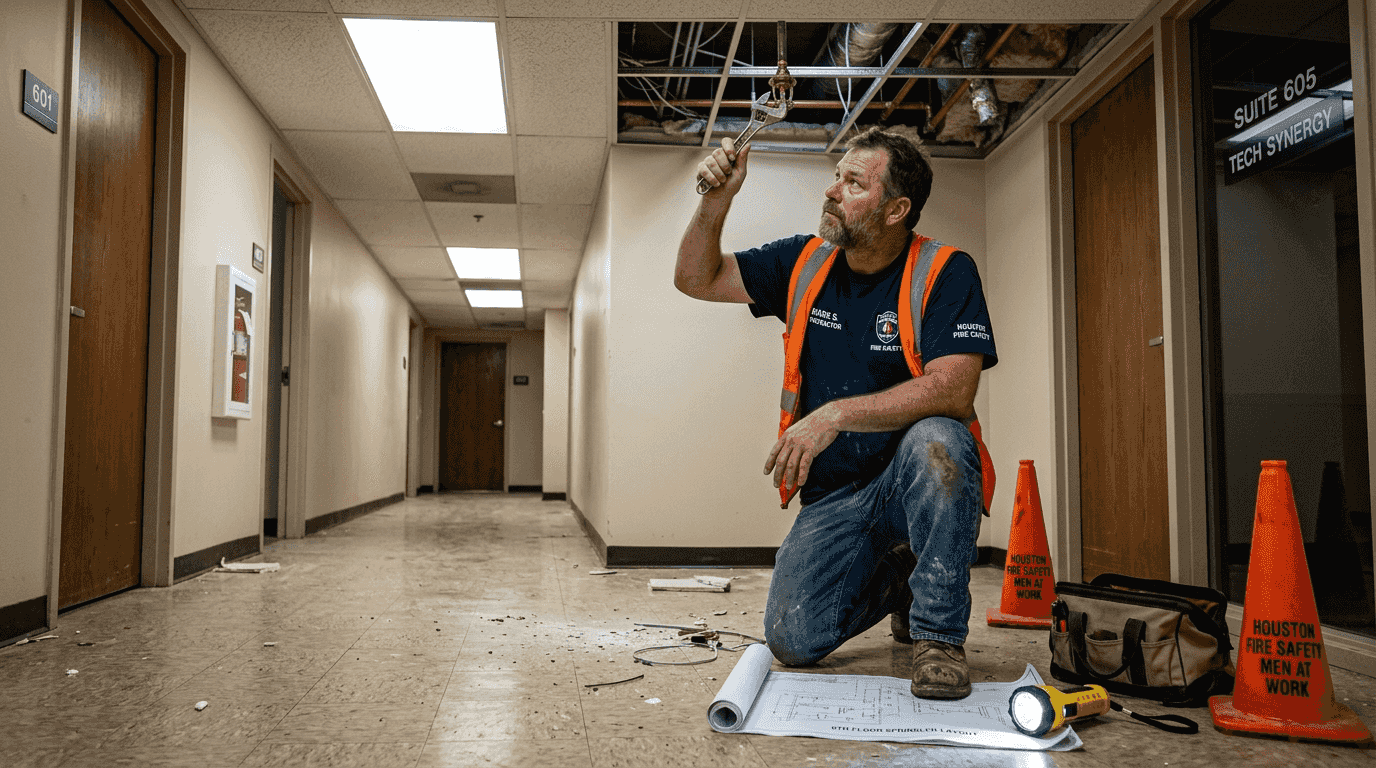
Different suppression technologies serve distinct purposes and environments. Water-based sprinkler systems work well for general commercial spaces, warehouses, and retail establishments. Chemical suppression systems protect sensitive electronics and data centers where water would cause extensive damage. Gas-based systems suit server rooms and archives where residue from chemicals creates problems.
| System Type | Best Applications | Advantages | Considerations |
|---|---|---|---|
| Wet Pipe Sprinklers | General commercial, retail, offices | Reliable, cost effective, immediate response | May freeze in unheated areas |
| Dry Pipe Sprinklers | Unheated warehouses, parking structures | Prevents freezing, suitable for cold environments | Slower activation, higher maintenance |
| Clean Agent Systems | Data centers, electronics, museums | No water or chemical residue, safe for equipment | Higher initial cost, limited coverage area |
| Foam Systems | Flammable liquid storage, chemical facilities | Suppresses fuel fires effectively | Requires special cleanup, environmental concerns |
Follow these steps to select the right system for your Houston property:
- Conduct a comprehensive fire risk assessment identifying specific hazards present in your facility
- Review Houston fire code requirements for your building type and occupancy classification
- Evaluate water supply capacity and pressure available at your location
- Consider the value and sensitivity of assets requiring protection
- Obtain proposals from certified fire protection contractors for recommended solutions
- Compare lifecycle costs including installation, maintenance, and potential insurance savings
- Select a system that meets code requirements while addressing your unique risk profile
Exploring fire suppression technologies 2025 reveals innovations that enhance protection while reducing environmental impact. Modern systems incorporate smart sensors, remote monitoring, and targeted suppression that minimizes collateral damage.
Pro Tip: Request detailed drawings showing sprinkler head placement and coverage zones to verify that all areas receive adequate protection before finalizing your system design.
Installation quality directly impacts system reliability and performance. Working with experienced contractors who understand local codes and best practices ensures your system functions correctly when needed. Verify that installers hold proper licensing and certifications before authorizing work to begin.
The install fire sprinklers houston process involves careful planning, precise installation, and thorough testing. Professional contractors coordinate with building trades to integrate suppression systems without compromising structural integrity or aesthetics.
Benefits beyond safety: compliance and insurance savings
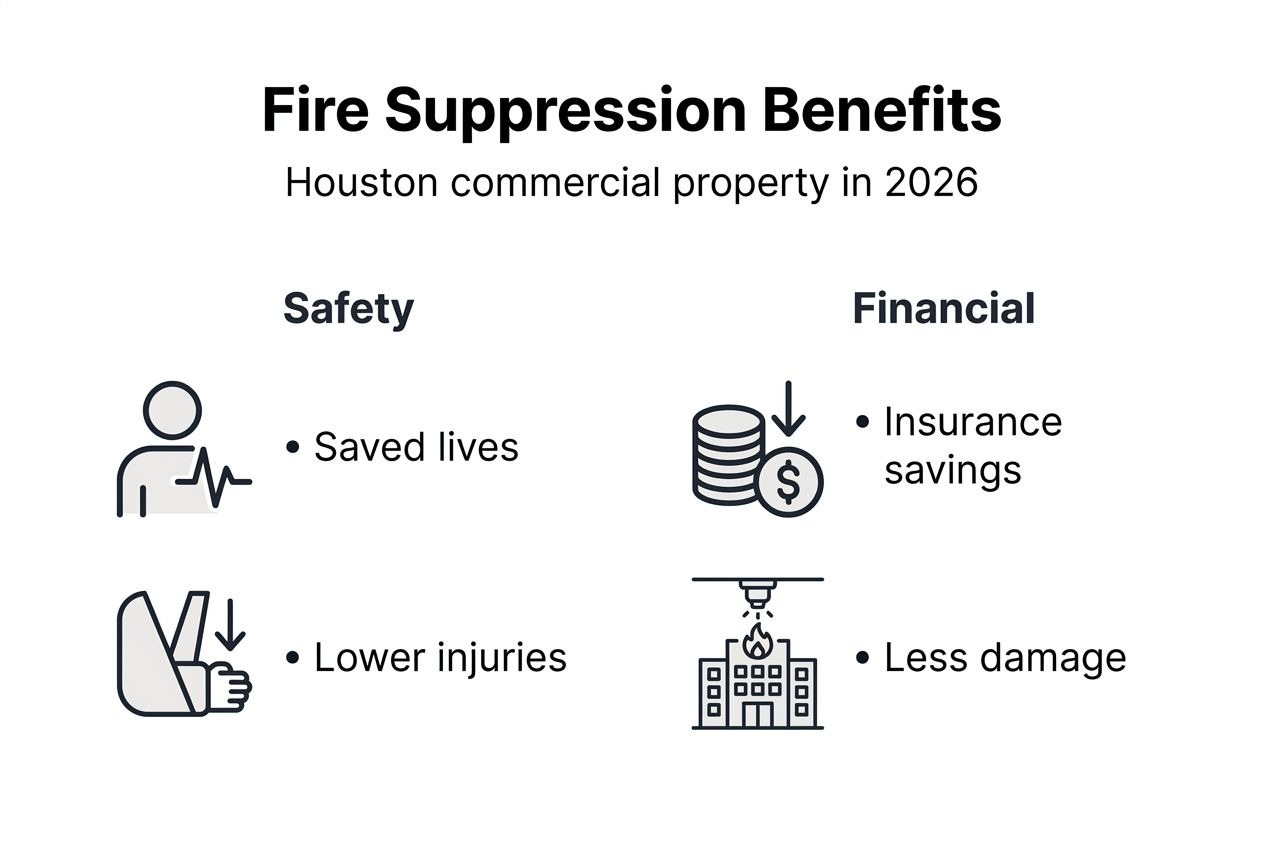
Fire suppression systems deliver value beyond life safety through regulatory compliance and financial benefits. Meeting Houston fire codes prevents costly violations while protecting your business from liability. Failure to comply with fire codes and insurance requirements can lead to fines, legal liabilities, and denied claims.
Houston enforces the International Fire Code with local amendments specific to our climate and building patterns. Commercial properties must install suppression systems based on occupancy type, building size, and hazard classification. High-rise buildings, assembly spaces, and facilities storing flammable materials face particularly stringent requirements.
Non-compliance creates serious consequences that extend beyond immediate fines. Fire marshals can issue stop-work orders halting business operations until violations are corrected. Insurance carriers may deny claims if fires occur in buildings lacking required suppression systems. Property owners face personal liability when inadequate fire protection contributes to injuries or deaths.
Insurance companies recognize the proven risk reduction that suppression systems provide. Implementing fire suppression systems can lower insurance premiums for businesses through reduced claim frequency and severity. These savings often offset system costs within a few years while providing ongoing financial benefits.
Quantifying insurance savings requires understanding how carriers evaluate fire risk. Insurers consider:
- Type and extent of suppression system coverage
- Frequency and quality of maintenance and testing
- Distance to nearest fire station and response times
- Building construction materials and fire resistance ratings
- Presence of monitoring and automatic alarm notification
Properties with comprehensive, well-maintained suppression systems may qualify for premium reductions of 15-30% compared to similar unprotected buildings. These savings compound annually, delivering substantial return on investment over the system’s 30-50 year lifespan.
Viewing fire suppression as a financial investment rather than a regulatory burden helps justify the upfront costs while recognizing long-term value creation.
Beyond direct premium savings, suppression systems reduce business interruption risk. Fires in unprotected buildings often cause extended closures for repairs and remediation. Buildings with effective suppression experience shorter downtimes, preserving revenue and customer relationships. This operational continuity represents significant value that financial statements may not fully capture.
Understanding fire protection systems lower insurance premiums through demonstrated risk mitigation helps justify investment decisions. Documenting compliance and maintenance creates the evidence insurers need to offer favorable rates.
Protect your Houston property with reliable fire suppression solutions
Safeguarding your Houston business requires more than understanding fire suppression benefits. It demands partnering with experienced professionals who design, install, and maintain systems that perform flawlessly when seconds count.
Reliable Fire Protection brings decades of expertise serving Houston commercial properties with comprehensive fire safety solutions. Our certified technicians understand local codes, building challenges, and industry-specific hazards that impact system selection. We guide you through the entire process from initial assessment through installation and ongoing maintenance.
Our services ensure your fire suppression systems workflow integrates seamlessly with building operations while meeting all compliance requirements. We handle permitting, inspections, and documentation so you can focus on running your business. When you install fire sprinklers houston with our team, you gain peace of mind knowing every component meets the highest standards.
Regular fire system maintenance houston services keep your investment protecting your property year after year. Contact Reliable Fire Protection today to schedule your consultation and discover how proper fire suppression protects your Houston business in 2026.
FAQ
What types of fire suppression systems are most common in Houston commercial buildings?
Wet pipe sprinkler systems dominate Houston commercial installations due to their reliability, cost effectiveness, and proven performance in our climate. Dry pipe systems serve unheated warehouses and parking structures where freezing poses risks. Gas-based and chemical suppression systems protect data centers and facilities with sensitive electronics where water damage would be catastrophic.
How often should fire suppression systems be inspected and maintained?
NFPA standards require annual inspections by certified technicians to verify system readiness and compliance. Monthly visual checks by property staff should confirm valve positions and verify that sprinkler heads remain unobstructed. Frequent inspections reduce failure rates dramatically while ensuring your system activates properly during emergencies.
Can installing fire suppression systems reduce my business insurance premiums?
Yes, most insurers offer premium reductions of 15-30% for properties with properly installed and maintained fire suppression systems. These savings reflect the proven risk reduction that suppression provides through fewer claims and reduced damage severity. Contact your insurance carrier to understand specific discount programs and documentation requirements. Learn more about how fire protection systems lower insurance premiums.
What should I consider when choosing a fire suppression system for my business?
Evaluate your specific fire hazards, including flammable materials, electrical equipment, and high-value assets requiring protection. Consider your building layout, water supply capacity, and applicable code requirements for your occupancy type. Consulting experienced fire protection professionals ensures you select systems that address your unique risks while meeting regulatory standards and budget constraints.