
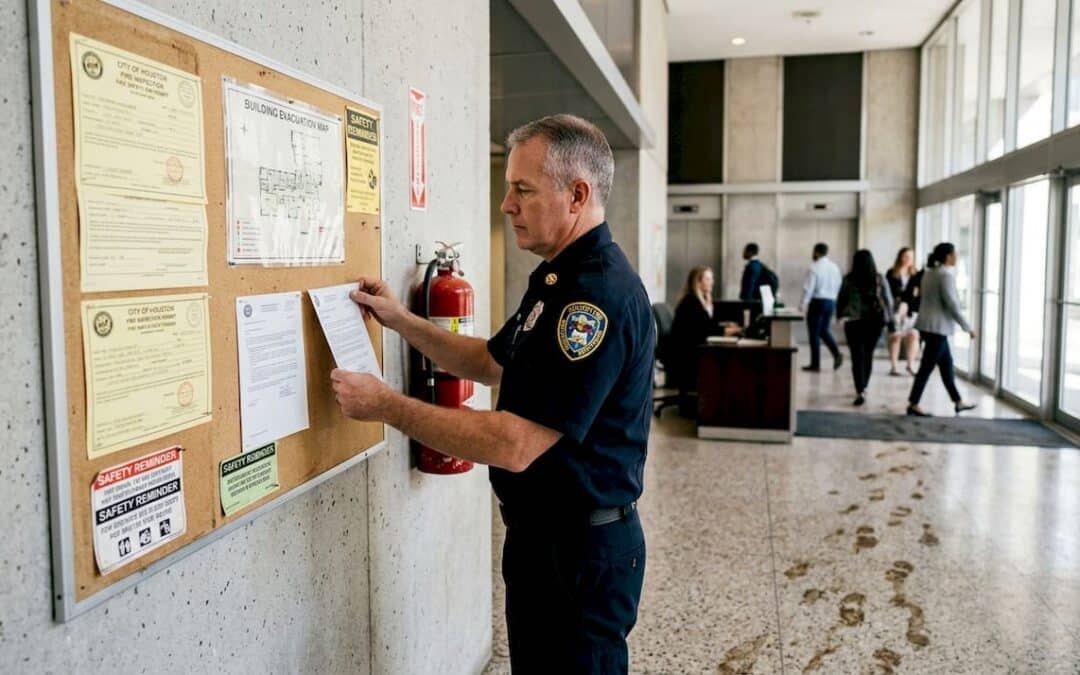
Fire codes are often dismissed as bureaucratic red tape, but that view can cost lives and money. Code-compliant buildings with sprinklers have fire death rates roughly one-sixth those of non-compliant structures nationally. For Houston property owners and managers, understanding exactly what the city requires is not optional. It is the difference between a safe, profitable property and one facing shutdowns, lawsuits, and tragedy. This article walks you through Houston’s fire code structure, what compliance actually involves, the real penalties for ignoring the rules, and how to pass your next inspection with confidence.
Table of Contents
- Understanding Houston fire codes and local enforcement
- How compliance protects lives, property, and your bottom line
- What fire code compliance looks like in practice
- Common pitfalls and how to pass your next inspection
- Why code compliance matters more than ever: an expert’s take
- Take the next step towards full compliance
- Frequently asked questions
Key Takeaways
| Point | Details |
|---|---|
| Local codes are unique | Houston fire codes build on national standards with local amendments targeting city risks. |
| Non-compliance is costly | Ignoring fire codes leads to steep fines, lost business days, and insurance headaches. |
| Compliance saves lives | Properties that follow codes have far lower injury and death rates in fire events. |
| Inspections and records matter | Regular maintenance and thorough documentation are key to passing inspections. |
Understanding Houston fire codes and local enforcement
Houston’s fire safety framework is not built from scratch. The city adopts the International Fire Code (IFC) with local amendments and the Houston Fire Marshal’s Office serves as the Authority Having Jurisdiction, or AHJ. The AHJ has the final word on how codes are interpreted and enforced within city limits. That means even if you are familiar with national standards, you still need to understand Houston’s specific additions and modifications.
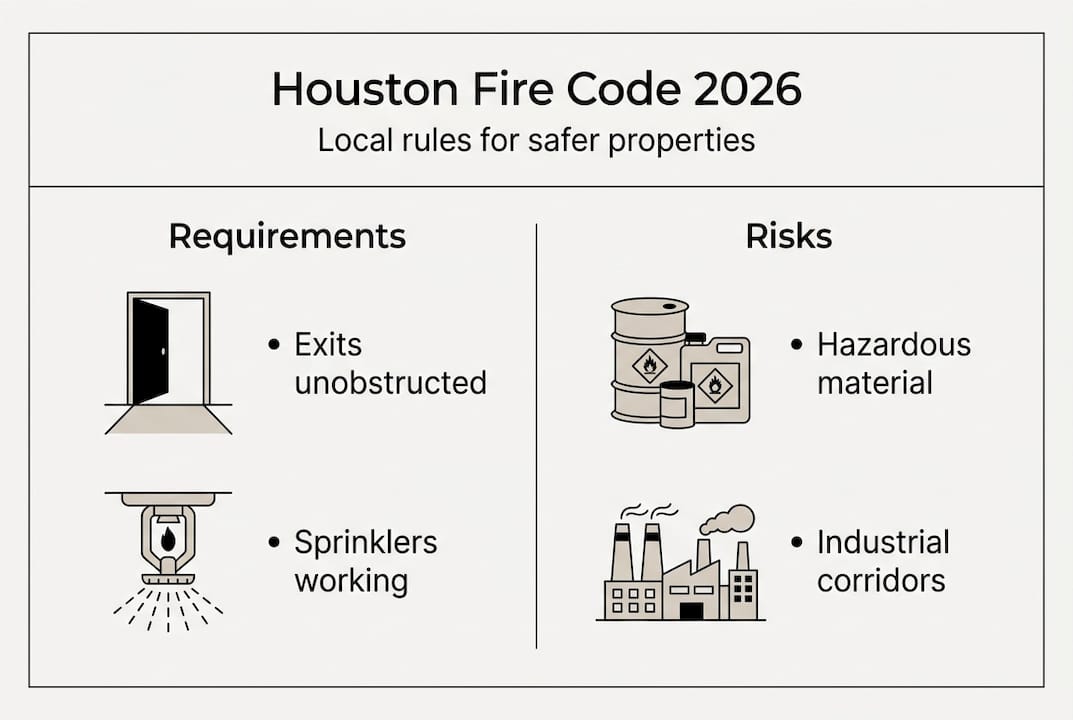
The IFC covers a broad range of fire hazards, but Houston’s local amendments address regional realities like industrial corridors, high-density storage facilities, and the city’s unique mix of commercial and residential properties. Staying current with Houston fire safety regulations is essential because amendments can change, and what was compliant last year may not meet today’s standards.
Here is a quick comparison of the base IFC versus Houston’s local amendments:
| Area | Base IFC standard | Houston amendment focus |
|---|---|---|
| Sprinkler thresholds | Based on occupancy type | Stricter thresholds for high-rise and mixed-use |
| Hazardous materials | General storage limits | Specific rules for industrial and petrochemical sites |
| High-piled storage | Standard rack storage rules | Enhanced requirements for warehouse districts |
| Emergency access | Standard road width minimums | Adjusted for Houston’s urban and suburban grid |
| Inspection frequency | Varies by occupancy | AHJ may require more frequent checks |
The most important areas covered by Houston fire codes include:
- Fire hazard control: Preventing ignition sources, managing flammable materials, and controlling open flames
- Alarm and detection systems: Ensuring working smoke detectors, pull stations, and notification devices
- Emergency egress: Keeping exits clear, properly marked, and functional at all times
- Sprinkler systems: Installation, maintenance, and testing per NFPA 13 and local requirements
- Hazardous materials storage: Proper labeling, containment, and quantity limits
- Emergency vehicle access: Maintaining clear lanes and hydrant access around your property
Knowing this structure helps you stop treating inspections as surprise events and start treating them as routine checkpoints.
How compliance protects lives, property, and your bottom line
The numbers tell a stark story. Fire codes regulate hazards, emergency access, sprinklers, alarms, exits, and hazardous materials for a reason. Buildings that follow these rules consistently see fewer fatalities, less structural damage, and faster emergency response times.
Consider this: the fire death rate in compliant structures is approximately 1.2 deaths per million occupants annually, compared to 7.6 per million in non-compliant or older buildings. That is a sixfold difference in lives lost, and it comes down almost entirely to whether the property meets modern fire code standards.
For building safety in Houston, the financial stakes are just as serious. Non-compliance exposes property owners to a cascade of consequences:
- Fines and violation notices: Penalties can accumulate quickly, especially for repeat violations
- Business shutdowns: The AHJ can order operations to cease until deficiencies are corrected
- Occupancy permit revocation: Losing your certificate of occupancy can halt all business activity
- Insurance premium increases: Insurers view non-compliant properties as high-risk and charge accordingly
- Legal liability: If a fire occurs and violations are found, negligence claims become much easier to prove
- Criminal exposure: In cases of gross negligence, property owners can face criminal charges
“Proactive compliance is not just about avoiding penalties. It is about building a reputation as a responsible property owner, reducing long-term risk, and giving tenants and insurers genuine confidence in your property’s safety.”
Following fire protection best practices is the most direct path to protecting both people and your investment. The cost of staying compliant is almost always far less than the cost of a single serious incident.
What fire code compliance looks like in practice
Compliance is not a one-time event. It is an ongoing process that involves permits, documentation, inspections, and maintenance. Here is what it actually looks like for a Houston property:
- Obtain required permits: Any new construction, renovation, or installation of fire protection systems requires a permit from the Houston Fire Marshal’s Office before work begins.
- Submit plans for review: Sprinkler layouts, alarm system designs, and suppression system plans must be reviewed and approved by the AHJ before installation.
- Schedule and pass inspections: After installation, systems must be inspected and tested. Compliance requires regular inspections under NFPA 25 for sprinklers and NFPA 72 for alarms, among other standards.
- Maintain all systems: Ongoing testing, servicing, and record-keeping are mandatory. A fire alarm that was installed correctly five years ago but never tested since is a violation waiting to happen.
- Address edge cases: Commercial kitchens require special suppression systems and hood cleaning schedules. High-piled storage areas need rack sprinklers and specific aisle widths. Historic buildings may require alternative compliance pathways approved by the AHJ.
Inspections can happen without notice. AHJ officers have the authority to show up at your property at any time, and they will check everything from exit sign illumination to fire extinguisher tags. Refer to the fire prevention checklist to make sure you are covering every category before an inspector arrives.
For additional guidance tailored to property managers, the manager safety tips resource covers specific responsibilities and best practices for staying ahead of compliance requirements.
Pro Tip: Keep a dedicated compliance binder or digital folder with all permits, inspection reports, maintenance logs, and test records organized by system. If an inspector asks for documentation, you want to produce it in minutes, not days.
Common pitfalls and how to pass your next inspection
Even well-intentioned property managers make mistakes. Knowing the most common compliance failures in advance gives you a real advantage.
| Common issue | Why it happens | How to fix it |
|---|---|---|
| Blocked or locked exits | Storage creep or security concerns | Conduct monthly exit walkthroughs |
| Outdated or missing alarm records | No formal logging system | Implement a digital testing log |
| Expired fire extinguisher tags | Missed annual service dates | Set calendar reminders for all service intervals |
| Improper hazardous material storage | Staff turnover or poor training | Post storage rules and train all new staff |
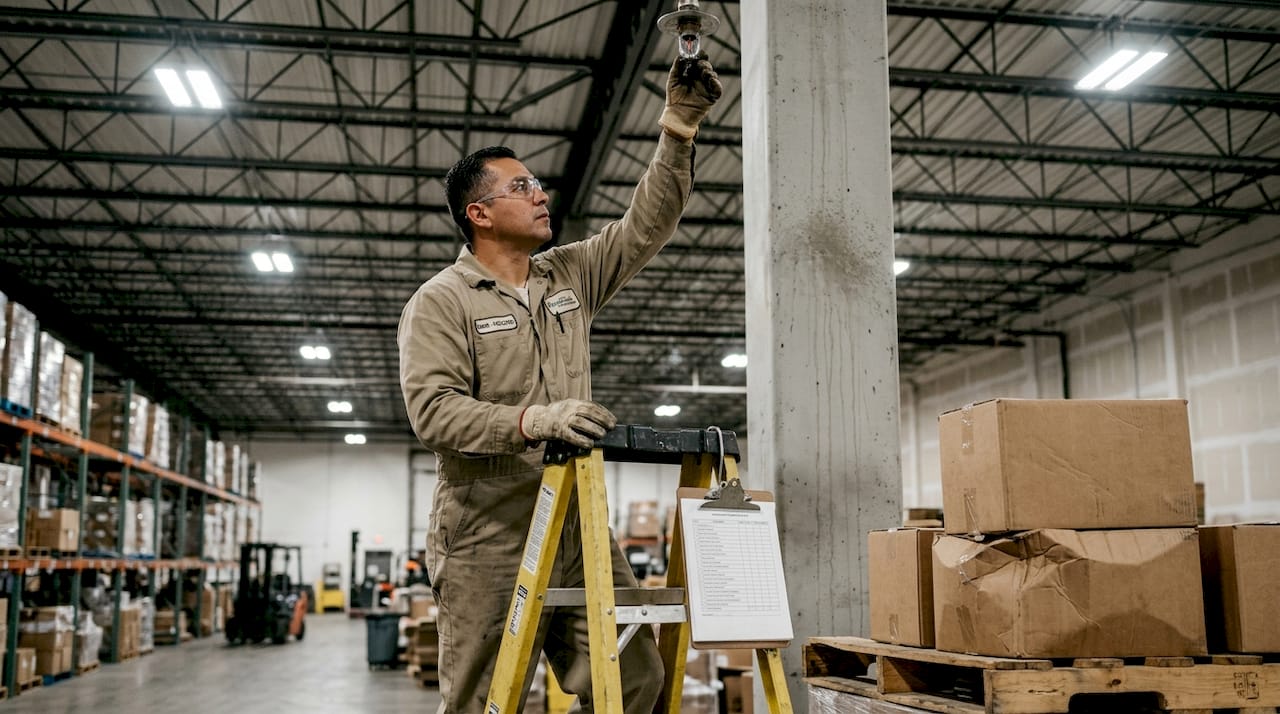
| Sprinkler heads obstructed | Shelving or renovation changes | Maintain 18-inch clearance below all heads |
AHJ inspections can occur at any time, and red tags halt operations until every cited deficiency is resolved. A red tag is not a warning. It is an order to stop operations, and it stays in place until a re-inspection confirms the issues are corrected. That can mean days or weeks of lost revenue.
When deficiencies are cited, act fast:
- Contact a licensed fire protection contractor immediately to assess the scope of repairs
- Document every corrective action with photos and written records
- Request a re-inspection as soon as repairs are complete
- Review how the deficiency occurred to prevent it from recurring
Houston’s local amendments also address risks that are unique to this region. Industrial corridors near the Ship Channel, large warehouse districts, and properties with chemical storage face stricter requirements than a typical office building. Understanding fire sprinkler systems and how they apply to your specific occupancy type is critical for staying ahead of these nuances.
Pro Tip: Schedule a professional fire safety audit at least once a year, separate from any required inspections. An outside expert will catch issues your team has become blind to through familiarity.
Why code compliance matters more than ever: an expert’s take
Here is something most compliance guides will not tell you: the bar is rising, and it is not being raised by regulators alone. Tenants, insurers, and lenders are all demanding higher fire safety standards than they did a decade ago. A property that merely passes inspection is no longer enough to attract quality tenants or competitive insurance rates.
We see this constantly in Houston. Property owners who treat compliance as a minimum threshold find themselves scrambling when a major tenant requires proof of recent audits or when an insurer demands documentation of quarterly testing. The owners who treat compliance as an ongoing investment, not a periodic obligation, are the ones who avoid disruptions and build long-term value.
Proactive compliance through regular audits, professional services, and thorough documentation prevents costly disruptions, reduces liability exposure, and builds genuine trust with the people who occupy and insure your building. The upfront cost of staying ahead of the code is almost always a fraction of what a single red tag, lawsuit, or fire incident would cost.
The property owners who thrive are the ones who stop asking “what is the minimum required?” and start asking “what does a truly safe property look like?” That shift in mindset is what separates reactive managers from resilient ones.
Take the next step towards full compliance
Putting fire code knowledge into action is much easier with the right support. Reliable Fire Protection works with Houston property owners and managers to install, inspect, and maintain every system your building needs to stay compliant and safe.

Whether you need to understand how fire alarm systems work, navigate the sprinkler compliance workflow, or browse our full range of fire safety products, our team is ready to help. We bring certified expertise, local knowledge, and a straightforward process that takes the guesswork out of compliance. Reach out today for a free quote and let us help you protect your property, your tenants, and your peace of mind.
Frequently asked questions
What are the most common reasons Houston properties fail fire inspections?
Houston properties most often fail due to blocked exits, missing or outdated alarms, lack of testing records, and improper hazardous material storage. Staying current with maintenance and documentation is the single most effective way to avoid these failures.
How strict is enforcement of Houston fire codes?
Houston fire codes are strictly enforced, with unannounced inspections and red tags that halt operations until violations are corrected. Repeat violations can escalate to permit revocation and significant fines.
What penalties can property owners face for violations?
Penalties range from fines and business shutdowns to loss of occupancy permits and legal liability. In cases of negligence, non-compliance can result in criminal charges as well.
Are there special fire code rules for historic or unique buildings in Houston?
Yes, historic buildings, high-piled storage, and commercial kitchens all face special considerations and may require alternative compliance pathways approved by the AHJ.
Does fire code compliance lower insurance costs?
Yes, proactive compliance builds insurer trust and can result in lower premiums because your property presents a measurably lower risk profile.