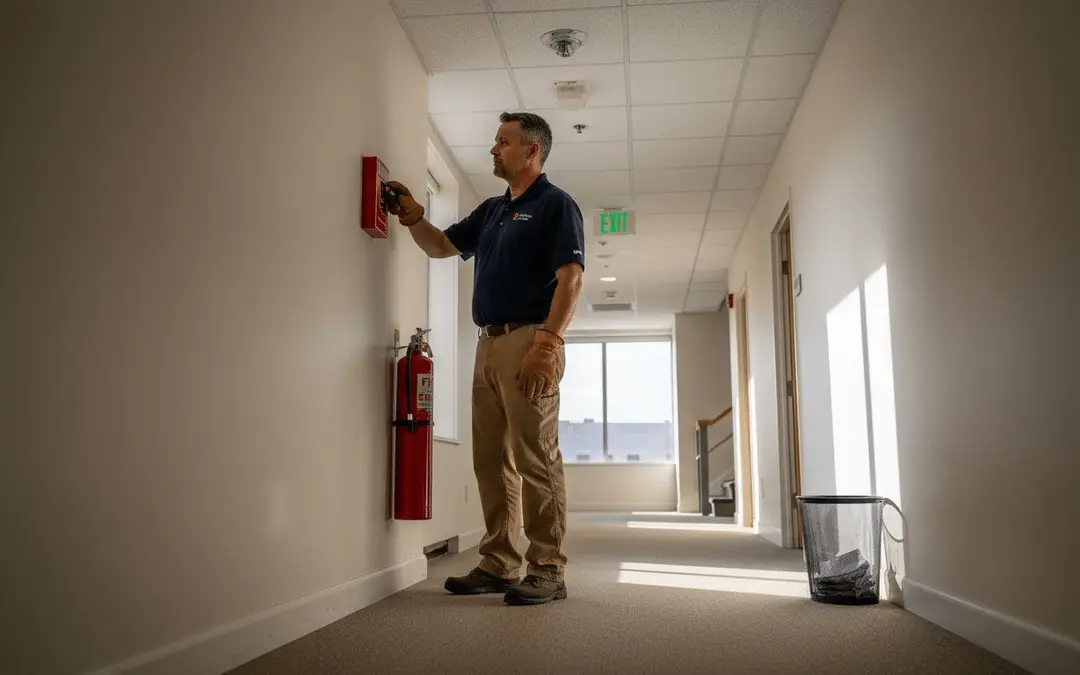
Many Houston commercial property managers believe fire alarms alone provide complete fire protection. This misconception creates dangerous gaps in safety systems and code compliance. Fire alarms detect fires and alert occupants, but they don’t stop flames from spreading. Suppression systems actively control or extinguish fires, protecting your property when seconds count. Understanding how these systems differ and work together ensures you meet Houston fire codes while maximizing protection for your building and occupants.
Table of Contents
- Introduction To Fire Safety Systems
- Understanding Fire Alarm Systems
- Understanding Fire Suppression Systems
- Regulatory Requirements In Houston
- Common Misconceptions And Clarifications
- Comparing Fire Alarm And Suppression Systems
- Integrating Alarms And Suppression For Optimal Safety
- Protect Your Houston Property With Expert Fire Safety Solutions
- Frequently Asked Questions
Key Takeaways
| Point | Details |
|---|---|
| Fire alarms detect and alert | They notify occupants but cannot suppress fires |
| Suppression systems control fires | Required by Houston code in high-risk commercial areas |
| Combined systems reduce damage | Integration cuts property damage by up to 40% |
| Regular maintenance is essential | Both systems need inspection to ensure reliability |
| Understanding differences ensures compliance | Proper knowledge prevents code violations and protects property |
Introduction to Fire Safety Systems
Commercial properties face substantial fire risks daily. Kitchen equipment malfunctions, electrical failures, and storage hazards create constant threats. Without proper protection, a small fire can destroy your building in minutes.
Fire safety systems form layered defenses against these risks. Fire alarms detect fires early and alert everyone inside. They’re your first line of defense, giving occupants time to evacuate. But detection alone doesn’t stop fire spread.
Suppression systems take the next critical step. They actively extinguish or control flames, protecting your property while firefighters respond. Fire sprinkler systems and chemical agents stop fires from spreading to adjacent rooms or floors.
Commercial kitchens in Houston must have NFPA 96-compliant suppression systems per local fire codes. These aren’t optional upgrades. They’re legal requirements that protect lives and property.
Key commercial fire risks include:
- Kitchen equipment fires from grease buildup and high heat
- Electrical system failures in aging buildings
- Flammable material storage in warehouses
- HVAC system malfunctions spreading smoke
- Welding or maintenance work creating ignition sources
Both alarm and suppression systems work together. Alarms provide early warning while suppression controls the threat. This layered approach gives you the best chance of protecting your investment and keeping occupants safe.
Understanding Fire Alarm Systems
Fire alarms use multiple detection methods to identify threats quickly. Smoke detectors sense particles in the air. Heat sensors trigger when temperatures spike rapidly. Flame detectors respond to infrared or ultraviolet light signatures from fire.
When sensors detect danger, alarms activate immediately. Sirens alert occupants throughout the building. Strobe lights help people with hearing impairments. Many systems connect to monitoring services that notify fire departments automatically.
Yet alarms provide early warning but rely on occupant evacuation and external firefighting. They don’t release water or chemical agents. They can’t reduce flames or lower temperatures. Understanding how fire alarms work helps you see why suppression systems matter.
Fire alarm limitations include:
- No fire control or extinguishing capability
- Dependence on occupant response time
- Reliance on fire department arrival
- Potential for false alarms reducing credibility
- Limited protection for property and assets
Pro Tip: Test your fire alarm system monthly and ensure monitoring service connectivity. A disconnected alarm can’t summon help when you need it most. Schedule professional inspections quarterly to verify sensor functionality and battery backup systems.
Alarms excel at one job: alerting people to danger. They buy time for evacuation and emergency response. But in commercial properties with high-value assets or hazardous materials, you need systems that actively fight fires while alarms do their work.
Understanding Fire Suppression Systems
Suppression systems actively control or extinguish fires using various agents. Water-based sprinklers are most common, releasing water when heat activates individual heads. Clean agent systems use chemicals like FM-200 that suppress flames without water damage. Foam systems blanket flammable liquids, cutting off oxygen supply.
Activation happens through heat detection, often integrated with your alarm system. When temperatures reach preset thresholds, suppression releases automatically. Some systems allow manual activation for immediate response. Suppression systems reduce fire spread by up to 60%, actively protecting property while alarms alert occupants.
Houston fire code mandates suppression system installations in commercial kitchens and hazard areas. This isn’t a suggestion. Buildings without required suppression face fines, insurance complications, and serious liability if fires occur.
Common suppression system types:
- Wet pipe sprinklers with water under constant pressure
- Dry pipe systems using pressurized air in cold environments
- Pre-action systems requiring dual triggers before water release
- Clean agent systems for server rooms and archives
- Kitchen hood suppression using wet chemicals for grease fires
Pro Tip: Select suppression agents based on your specific property risks. Server rooms need clean agents to avoid water damage to electronics. Kitchens require wet chemical systems for grease fires. Warehouses storing paper goods work fine with traditional sprinklers.
Suppression systems don’t just alert people. They attack fires directly, reducing temperatures and limiting spread. While alarms give occupants time to escape, suppression gives your property a fighting chance to survive with minimal damage.

Regulatory Requirements in Houston
Houston fire codes require alarm systems broadly for detection and occupant notification. Every commercial building needs functional alarms that alert people to danger. These systems must meet NFPA standards and connect to monitoring services in many cases.
Suppression requirements are more specific. Houston fire code mandates specific suppression systems in kitchens and hazardous zones. Commercial kitchens must have hood suppression systems. Buildings storing flammable materials need appropriate suppression for those risks. High-rise structures face additional requirements.
Regular inspections keep both system types compliant. Alarms need quarterly testing and annual professional inspections. Suppression systems require semi-annual inspections checking agent levels, pressure gauges, and activation mechanisms. Documentation proves compliance during fire marshal visits.
Noncompliance creates serious problems. Fire marshals issue citations and fines for missing or non-functional systems. Insurance companies may deny claims if required systems weren’t installed or maintained. Most importantly, you risk lives and property when safety systems don’t meet code.
Key Houston commercial fire protection requirements:
- Annual alarm system inspection and testing
- Semi-annual suppression system maintenance
- Monthly self-inspection logs for both systems
- Immediate repairs for any deficiencies found
- Updated documentation for fire marshal reviews
- Licensed contractor installation and service
Property managers must track inspection schedules carefully. Missing a required inspection can void your insurance coverage. Keep detailed records showing when systems were tested, who performed the work, and what issues were addressed.
Common Misconceptions and Clarifications
Many Houston property managers confuse alarm and suppression capabilities. This confusion leads to incomplete safety systems and code violations. Understanding what each system actually does prevents dangerous gaps in protection.
The biggest misconception: fire alarms stop fires. They don’t. Alarms detect fires and alert people, nothing more. They provide early warning, but flames continue spreading while alarms sound. 68% of commercial property managers confuse alarms with suppression capabilities, creating false confidence in inadequate systems.
Another common belief: alarms satisfy all legal requirements. In areas like commercial kitchens, Houston code specifically requires suppression systems. Alarms alone don’t meet these mandates. You need both systems in most commercial properties.
Some managers worry all suppression systems cause water damage. Clean agent systems suppress fires without water, protecting electronics and documents. Choosing the right suppression type for each area prevents unnecessary damage while still controlling fires.
Top misconceptions debunked:
- Fire alarms extinguish fires: False. Alarms only detect and alert, never suppress flames.
- Alarms meet all code requirements: False. Many commercial areas legally require suppression systems too.
- Suppression always means water damage: False. Clean agents and foam systems protect sensitive equipment without water.
These misunderstandings explain why some buildings have fire alarm systems but lack required suppression. Property managers assume alarms provide complete protection. When fires occur, they discover too late that detection alone doesn’t stop damage.
Clarity about system functions guides better decisions. Alarms alert and evacuate. Suppression controls and extinguishes. Both systems serve distinct, essential purposes in comprehensive fire protection.
Comparing Fire Alarm and Suppression Systems
Fire alarms and suppression systems serve different functions in protecting your property. Alarms focus on early detection and occupant notification. They sense smoke, heat, or flames, then trigger audible and visual alerts throughout the building.
Suppression systems actively fight fires. They release water, chemicals, or foam to reduce temperatures and eliminate oxygen. Suppression systems reduce fire spread rate by up to 60% compared to alarms alone, making them essential for property protection.
| Feature | Fire Alarms | Suppression Systems |
|---|---|---|
| Primary Function | Detect and alert | Control and extinguish |
| Activation Speed | Seconds after detection | Automatic at preset temperature |
| Maintenance Frequency | Quarterly testing | Semi-annual inspection |
| Installation Cost | $2-5 per square foot | $5-15 per square foot |
| Property Protection | None, alerts only | Active fire control |
| Legal Requirements | All commercial buildings | Kitchens, hazard areas |
Activation methods differ significantly. Alarms trigger when sensors detect fire indicators. Sirens and strobes activate instantly. Suppression systems wait for specific heat thresholds, then release agents automatically. Some allow manual activation for immediate response.
Maintenance requirements vary by system complexity. Alarms need regular battery checks, sensor cleaning, and monthly testing. Suppression systems require pressure gauge monitoring, agent level verification, and component inspection. Both need professional service, but suppression maintenance costs more due to specialized agents and equipment.
Installation costs reflect system sophistication. Basic alarm systems run $2-5 per square foot. Suppression systems cost $5-15 per square foot depending on agent type and coverage area. Clean agent systems for server rooms cost more than standard sprinklers.
Fire alarm pros and cons:
- Pros: Lower cost, quick detection, life safety focus, simple maintenance
- Cons: No fire control, property unprotected, relies on external response
Suppression system pros and cons:
- Pros: Active fire control, property protection, reduces spread, automatic operation
- Cons: Higher cost, periodic agent replacement, potential for accidental discharge
Understanding the role of fire alarms versus suppression helps you budget appropriately. Both systems are investments in safety and compliance, but they protect different aspects of your property and occupants.
Integrating Alarms and Suppression for Optimal Safety
Combining fire alarms and suppression systems creates comprehensive protection that exceeds what either system achieves alone. Integrating fire alarms and suppression systems can reduce fire-related property loss by up to 40%, making integration a smart investment for Houston commercial properties.
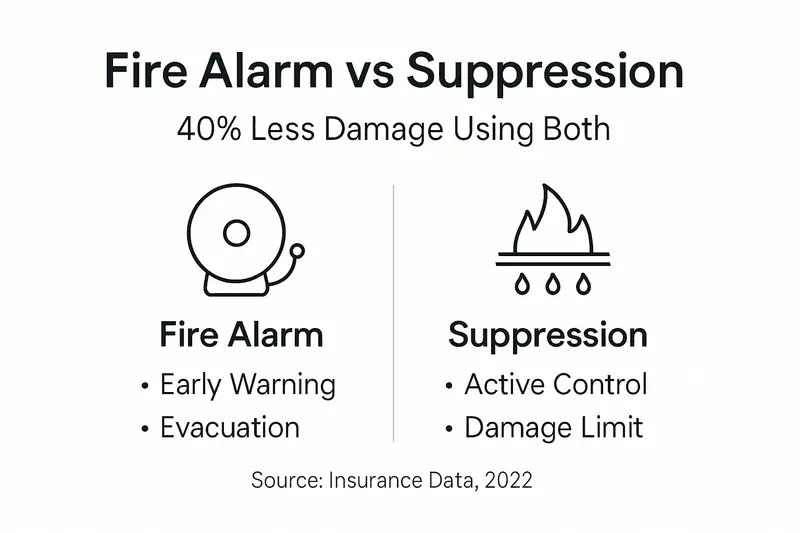
Integrated systems communicate with each other. When alarms detect fire, they can trigger suppression activation in specific zones. This coordination speeds response time dramatically. Occupants evacuate while suppression controls flames automatically.
Implementing integrated fire protection:
- Conduct a comprehensive fire risk assessment identifying all hazard areas
- Design alarm coverage ensuring detection in every room and hallway
- Install suppression systems in high-risk zones like kitchens and storage areas
- Connect alarm and suppression through a central monitoring panel
- Program zone-specific responses so alarms trigger appropriate suppression areas
- Test the integrated system quarterly verifying communication between components
- Train staff on evacuation procedures and manual suppression activation
Real Houston success stories demonstrate integration benefits. A downtown restaurant’s integrated system detected a grease fire and activated hood suppression within seconds. Flames were controlled before spreading beyond the cooking area. Total damage stayed under $5,000 instead of the typical $50,000 for kitchen fires without suppression.
A warehouse integrated its smoke detection with pre-action sprinklers. When welding sparked a small fire, alarms alerted workers while suppression prepared to activate. Workers extinguished the fire with portable extinguishers before sprinklers released, avoiding water damage to inventory. The coordinated response saved hundreds of thousands in potential losses.
Pro Tip: Schedule joint inspections where technicians test alarm and suppression communication. Verify that alarm activation properly signals suppression systems. Check that monitoring services receive alerts from both systems simultaneously. This coordination ensures nothing fails when you need it most.
Integration extends beyond hardware. Understanding the importance of fire alarms and how fire extinguishers complement automated systems helps staff respond effectively. Train employees to recognize alarm signals and evacuate immediately while suppression handles fire control.
Monitoring both systems through a single service provides unified oversight. When either alarm or suppression activates, monitoring centers dispatch fire departments and notify property managers instantly. This streamlined communication eliminates confusion during emergencies.
Protect Your Houston Property with Expert Fire Safety Solutions
Reliable Fire Protection designs, installs, and maintains integrated fire alarm and suppression systems tailored to Houston commercial properties. Our certified technicians ensure your building meets all local fire codes while providing maximum protection for occupants and assets.
We specialize in comprehensive solutions combining fire alarm systems with appropriate suppression technology for your specific risks. Whether you need kitchen hood systems, clean agent protection for server rooms, or building-wide sprinkler coverage, we deliver reliable systems backed by ongoing maintenance.
Contact us today for a free consultation and quote. Our family-owned Houston company provides prompt emergency response and expert service ensuring your fire safety systems work flawlessly when you need them most.
Frequently Asked Questions
What areas in Houston commercial buildings legally require suppression systems?
Commercial kitchens must have hood suppression systems under Houston fire code. Buildings storing flammable materials, hazardous chemicals, or large quantities of combustible goods need appropriate suppression. High-rise structures and certain occupancy types face additional requirements based on square footage and building height.
Can a suppression system work independently without a fire alarm?
Suppression systems can function independently using their own heat detection for activation. However, Houston code typically requires alarm systems for occupant notification regardless of suppression presence. Installing both ensures code compliance and provides layered protection with early warning plus active fire control.
How often should fire alarms and suppression systems be inspected?
Fire alarms need quarterly testing and annual professional inspections per Houston regulations. Suppression systems require semi-annual inspections checking agent levels, pressure, and activation mechanisms. Monthly self-inspections for both systems help identify issues before they become compliance problems.
Are there suppression systems that prevent water damage?
Clean agent systems like FM-200 suppress fires without water, making them ideal for server rooms, archives, and areas with sensitive electronics. Foam systems work well for flammable liquid storage. These alternatives provide effective fire control while eliminating water damage concerns for valuable equipment.
What happens if my building is noncompliant with suppression requirements?
Noncompliance results in citations and fines from fire marshals during inspections. Insurance companies may deny fire damage claims if required systems weren’t installed or properly maintained. Most seriously, inadequate fire protection puts occupants at risk and exposes property managers to liability if fires cause injuries or deaths.