
Many Houston property owners mistakenly believe fire sprinklers are only necessary for large commercial buildings or that existing structures are exempt from modern safety standards. This misconception can leave properties vulnerable and non-compliant with current fire codes. The reality is that Houston’s adoption of updated fire safety regulations in recent years has expanded sprinkler requirements to include many residential and commercial properties, both new and renovated. Installing fire sprinklers not only protects lives and property but also ensures compliance with local codes, potentially reduces insurance costs, and demonstrates a commitment to occupant safety. This guide walks you through Houston’s specific requirements, the benefits of sprinkler systems, and practical steps to install and maintain them effectively in 2026.
Table of Contents
- Understanding Houston’s Fire Sprinkler Requirements In 2026
- Key Benefits Of Installing Fire Sprinklers For Houston Properties
- Types Of Sprinkler Systems Suitable For Houston Properties
- Steps To Install And Maintain A Sprinkler System In Houston
- Reliable Fire Protection Solutions In Houston
- Frequently Asked Questions About Fire Sprinklers In Houston
Key takeaways
| Point | Details |
|---|---|
| Enhanced safety | Sprinklers activate quickly to control fires, significantly reducing injury risk and property damage. |
| Compliance necessity | Houston’s 2021 IFC adoption mandates sprinklers for many new and renovated buildings. |
| Financial benefits | Properly installed systems often lower insurance premiums and prevent costly fire damage. |
| System variety | Wet, dry, pre-action, and deluge systems offer tailored solutions for different Houston property types. |
| Maintenance matters | Regular inspections and testing ensure ongoing effectiveness and code compliance. |
Understanding Houston’s fire sprinkler requirements in 2026
Houston adopted the 2021 International Fire Code to strengthen fire safety across residential and commercial properties. This code establishes clear mandates for when sprinkler systems must be installed, covering new construction and major renovations that exceed specific thresholds. The city has also implemented local amendments that modify certain requirements to address Houston’s unique building landscape and climate conditions.
Property owners must understand how these regulations apply to their specific building type. Residential properties, including single-family homes, townhouses, and multifamily dwellings, face different sprinkler obligations than commercial structures like offices, retail spaces, or industrial facilities. The classification of your property determines which sections of the fire code apply and what installation timelines you must follow.
Houston’s local amendments adjust sprinkler thresholds for certain building heights, occupancy loads, and use classifications. For example, multifamily residential buildings above a certain number of units or stories typically require automatic sprinkler systems throughout. Commercial properties often face sprinkler requirements based on square footage, occupancy type, or the presence of hazardous materials. Understanding these nuances helps you plan appropriately and avoid costly retrofits or compliance issues down the line.
Key triggers for sprinkler installation under 2026 Houston codes include:
- New construction of residential buildings with more than two dwelling units
- Commercial buildings exceeding specific square footage thresholds
- Major renovations involving structural changes or occupancy reclassification
- Buildings with high occupant loads or vulnerable populations
- Structures storing flammable or hazardous materials
Compliance with Houston’s fire sprinkler requirements is not optional. Property owners who fail to install required systems face enforcement actions, fines, and increased liability in the event of a fire. Beyond legal obligations, sprinklers represent a proven life safety investment that protects occupants and preserves property value.
Working with local fire officials early in your planning process ensures you understand exactly what your property requires. The City of Houston Building Department provides resources and plan review services to help property owners navigate these requirements. Proactive engagement prevents delays and ensures your sprinkler systems Houston compliance strategy aligns with current codes from the start.
Key benefits of installing fire sprinklers for Houston properties
Fire sprinklers deliver immediate, localized fire suppression that dramatically improves occupant safety. When a fire starts, the heat activates only the sprinkler heads nearest the flames, releasing water directly onto the fire source. This rapid response contains the fire before it can spread, giving occupants critical extra minutes to evacuate safely. Studies consistently show that properties with sprinklers experience far fewer fire-related injuries and fatalities than those without.
Property damage reduction represents another compelling reason to install sprinklers. Sprinklers reduce fire damage by controlling flames before they engulf entire rooms or structures. The water damage from a sprinkler activation is minimal compared to the destruction caused by an uncontrolled fire or the water volume firefighters must use to extinguish larger blazes. Many property owners find that sprinkler systems pay for themselves by preventing a single catastrophic loss.

Insurance companies recognize the risk reduction that sprinklers provide and often reward property owners with lower premiums. The exact savings vary by insurer, property type, and coverage details, but reductions of 10 to 20 percent are common. Over the lifespan of a sprinkler system, these savings can offset a significant portion of the installation cost. Some insurers also offer better coverage terms or higher limits for properties equipped with automatic sprinkler protection.
Meeting code requirements protects you from legal and financial penalties while demonstrating responsible property stewardship. Houston’s fire marshal has authority to issue citations, impose fines, and even restrict occupancy for non-compliant properties. Beyond avoiding these consequences, compliance enhances your property’s marketability and appeal to tenants or buyers who prioritize safety.
Pro Tip: Schedule a consultation with Houston fire officials before finalizing building plans to confirm sprinkler requirements and identify any site-specific considerations that could affect system design or installation costs.
The combined safety, financial, and compliance advantages make sprinkler installation a smart investment:
- Life safety protection for occupants and first responders
- Significant reduction in property damage and business interruption
- Lower insurance premiums and better coverage options
- Full compliance with Houston fire codes and building regulations
- Enhanced property value and tenant appeal
These benefits apply across residential and commercial properties, making sprinklers one of the most effective fire protection best practices Houston property owners can implement. The upfront investment delivers ongoing returns through reduced risk, lower operating costs, and peace of mind.
Types of sprinkler systems suitable for Houston properties
Choosing the right sprinkler system depends on your property’s specific characteristics, use patterns, and environmental conditions. Houston’s climate, with its hot summers and mild winters, influences which system types perform best. Understanding the options helps you make an informed decision that balances effectiveness, cost, and maintenance requirements.
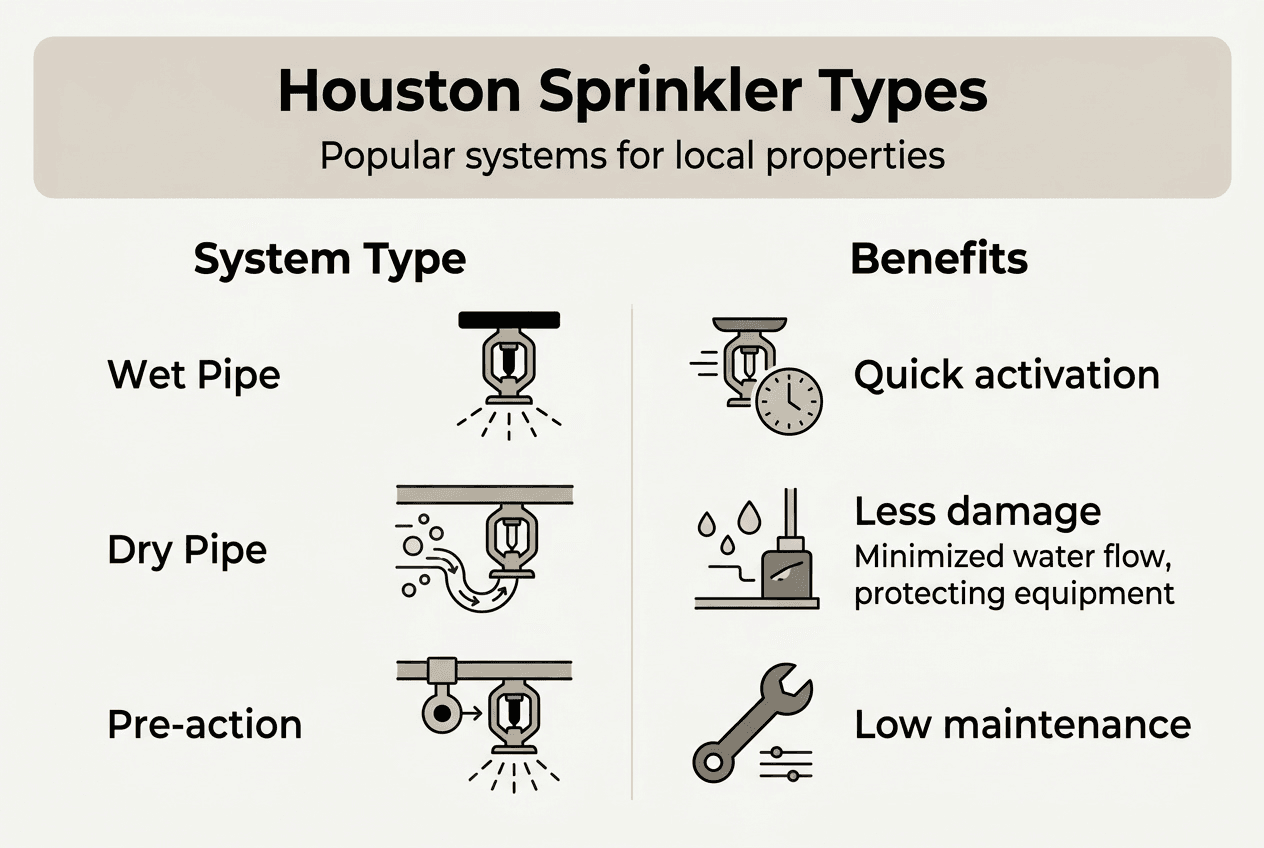
| System Type | Climate Suitability | Typical Cost | Best Use Case |
|---|---|---|---|
| Wet Pipe | Excellent for Houston | Lowest | Heated buildings, most common residential and commercial |
| Dry Pipe | Good for unheated areas | Moderate | Parking garages, outdoor canopies, unheated warehouses |
| Pre-Action | Climate neutral | Higher | Data centers, museums, areas with sensitive equipment |
| Deluge | Climate neutral | Highest | Industrial facilities, areas with high fire risk |
Wet pipe systems are the most common choice for Houston properties because they offer simplicity, reliability, and low maintenance. These systems keep water in the pipes at all times, ready to discharge immediately when a sprinkler head activates. Houston’s mild winters mean freezing is rarely a concern in heated buildings, making wet systems practical for most residential and commercial applications. Their straightforward design also translates to lower installation and maintenance costs.
Dry pipe systems use pressurized air or nitrogen instead of water in the pipes until a sprinkler activates. When heat triggers a head, the air releases, allowing water to flow. These systems suit areas where freezing could occur, such as unheated parking structures, loading docks, or outdoor covered spaces. While more complex and expensive than wet systems, dry pipe installations provide reliable protection in environments where wet systems would be impractical.
Pre-action systems require two separate triggers before water discharges: a fire detection device and sprinkler head activation. This dual requirement prevents accidental water release, making pre-action systems ideal for spaces with valuable equipment, electronics, or irreplaceable materials. Data centers, server rooms, and archival storage areas benefit from this added protection layer, though the complexity increases both installation cost and maintenance needs.
Deluge systems open all sprinkler heads simultaneously when activated, flooding an entire area with water. These systems are reserved for high-hazard environments where rapid fire spread is likely, such as chemical storage facilities, industrial processing areas, or aircraft hangars. The specialized nature and high water demand make deluge systems uncommon in typical residential or commercial properties.
Factors to consider when selecting a sprinkler system include:
- Building type and construction materials
- Occupancy classification and fire risk level
- Presence of temperature-sensitive equipment or materials
- Water supply capacity and pressure
- Maintenance capabilities and budget
- Local code requirements and fire official preferences
Pro Tip: Consulting a fire protection specialist familiar with Houston’s climate and building codes ensures you select the optimal system for your property’s specific needs, maximizing both compliance and cost effectiveness.
Proper system selection tailored to your property’s characteristics and Houston’s environmental conditions ensures reliable fire protection and long-term performance. Working with experienced professionals who understand local requirements helps you avoid costly mistakes and ensures your investment delivers maximum safety benefits. Learn more about choosing fire sprinkler system options that fit your property.
Steps to install and maintain a sprinkler system in Houston
Installing a fire sprinkler system requires careful planning, professional expertise, and coordination with local authorities. Following a structured approach ensures your system meets all code requirements and performs reliably for years to come. Here’s the step-by-step process Houston property owners should follow:
- Conduct a fire protection assessment to determine system requirements based on property type, size, occupancy, and use.
- Engage a licensed fire protection engineer or qualified contractor to design a system that meets Houston’s fire code and your property’s specific needs.
- Submit plans to the City of Houston Building Department for review and approval, addressing any comments or required revisions promptly.
- Obtain necessary permits before beginning installation work, ensuring all contractors hold appropriate licenses and insurance.
- Install the system according to approved plans, using qualified installers who follow NFPA standards and manufacturer specifications.
- Schedule required inspections at key milestones, including rough-in, pressure testing, and final system acceptance.
- Complete final inspection with Houston fire officials to verify code compliance and obtain occupancy approval.
- Document all installation details, test results, and approval certificates for your records and future reference.
Choosing the right contractor is critical to successful installation. Look for firms with extensive Houston experience, proper licensing, and a track record of passing inspections on the first attempt. References from similar projects and proof of insurance protect you from liability and ensure quality workmanship. Experienced contractors understand local code nuances and can navigate the permitting process efficiently.
Ongoing maintenance keeps your sprinkler system ready to perform when needed. Regular inspections and testing identify potential issues before they compromise system effectiveness or create code violations. Houston property owners should implement a maintenance schedule that includes:
- Quarterly visual inspections of sprinkler heads, pipes, valves, and control equipment
- Annual flow tests to verify proper water pressure and coverage
- Five-year internal pipe inspections for corrosion or obstruction
- Immediate repairs of any damaged components or system malfunctions
- Documentation of all maintenance activities and test results
Many property owners find that contracting with a professional fire protection service for ongoing maintenance ensures compliance and reduces the burden of tracking inspection schedules. These services typically include regular testing, minor repairs, and coordination with local fire officials for required annual reports.
Maintaining detailed records of all inspections, tests, repairs, and upgrades is essential for demonstrating compliance during fire marshal inspections or insurance audits. These records also help identify patterns or recurring issues that may require system modifications or upgrades. Digital documentation systems make it easy to track maintenance history and schedule upcoming service needs.
For comprehensive guidance on the installation process, explore our detailed resource on how to install fire sprinklers Houston. Property owners seeking ongoing compliance support can reference our sprinkler inspection guide Houston for detailed maintenance requirements and best practices.
Reliable fire protection solutions in Houston
Navigating Houston’s fire sprinkler requirements and selecting the right system for your property can feel overwhelming. That’s where professional guidance makes all the difference. Reliable Fire Protection brings decades of Houston-specific experience to help property owners design, install, and maintain sprinkler systems that meet code requirements and deliver dependable fire protection.

Our team understands the nuances of Houston’s fire codes and local amendments, ensuring your sprinkler system complies with current regulations from initial design through final inspection. We work closely with property owners to recommend system types and configurations that balance safety effectiveness with budget considerations. Whether you need a straightforward wet pipe system for a residential property or a specialized solution for a commercial facility, our expertise ensures optimal results.
Beyond installation, we provide comprehensive inspection and maintenance services that keep your system code-compliant and ready to perform. Our technicians conduct thorough testing, identify potential issues early, and complete repairs promptly to minimize downtime and liability. We handle all documentation and reporting requirements, giving you peace of mind that your fire protection obligations are fully met.
Ready to protect your Houston property with a professionally designed sprinkler system? Explore our fire sprinkler installation services to learn how we can help. For ongoing system care, our sprinkler inspection services ensure continuous compliance and reliability. Contact us today to discuss your Houston sprinkler compliance solutions and take the first step toward enhanced fire safety.
Frequently asked questions about fire sprinklers in Houston
Do all Houston properties require fire sprinklers?
Not all properties require sprinklers, but Houston’s 2021 IFC adoption expanded requirements significantly. New multifamily residential buildings, most new commercial structures, and properties undergoing major renovations often need sprinkler systems. Your specific obligation depends on building type, size, occupancy, and use classification.
How much does sprinkler installation cost in Houston?
Installation costs vary widely based on system type, building size, and complexity. Residential wet pipe systems typically cost less per square foot than commercial or specialized systems. Most Houston property owners find that insurance savings and damage prevention offset installation expenses over time. Request quotes from multiple licensed contractors for accurate estimates.
How often must sprinkler systems be inspected in Houston?
Houston requires annual sprinkler system inspections by qualified professionals, with quarterly visual checks recommended for property owners. Flow tests, valve inspections, and alarm verifications must occur on schedules specified by NFPA standards. Maintaining detailed inspection records demonstrates compliance during fire marshal audits.
Can existing Houston buildings avoid sprinkler installation?
Existing buildings without sprinklers may continue operating without retrofitting unless they undergo major renovations, change occupancy classification, or trigger specific code provisions. However, voluntary sprinkler installation offers significant safety and insurance benefits even when not legally required. Consult Houston fire officials to understand your property’s specific status.
What is the lifespan of a fire sprinkler system?
Properly maintained sprinkler systems typically last 50 years or more, though individual components may require replacement sooner. Sprinkler heads, valves, and control equipment should be inspected regularly for signs of wear or damage. Corrosion in pipes can reduce system effectiveness over time, making periodic internal inspections important for older installations.
Do sprinklers cause significant water damage when activated?
Sprinklers release far less water than firefighting hoses and activate only near the fire source, minimizing water damage. A single sprinkler head typically discharges 10 to 25 gallons per minute, compared to hundreds of gallons per minute from fire department equipment. The localized water release prevents fire spread while limiting collateral damage to unaffected areas.