
TL;DR:
- Fire safety audits provide a comprehensive review of systems, documentation, and compliance beyond inspections.
- Houston-specific regulations require tailored checklists and functional testing to ensure full compliance.
- Properly conducted audits reduce liability, insurance costs, and enhance overall building safety.
Many Houston facilities pass their annual fire inspections without issue, yet still fall short when a true fire safety audit is conducted. The gap is real and costly. Many properties pass inspections but fail audits because inspections only capture compliance at a single moment, while audits expose deeper, systemic gaps in documentation, training, and system performance. For business owners and facility managers in Houston, understanding that difference is not just a technical detail. It directly affects your liability exposure, insurance premiums, and the actual safety of everyone in your building. This article breaks down what fire safety audits really involve, why they matter more than most owners realize, and how to use them strategically.
Table of Contents
- What is a fire safety audit and how does it differ from inspections?
- Why fire safety audits matter for Houston businesses
- The audit process: Steps, standards, and special cases in Houston
- Common pitfalls and how to avoid them during fire safety audits
- Our perspective: Unseen value and overlooked risks of fire safety audits
- Leverage audit expertise for safer Houston properties
- Frequently asked questions
Key Takeaways
| Point | Details |
|---|---|
| Audits prevent hidden risks | Fire safety audits catch issues regular inspections miss, protecting people and property. |
| Tailor for Houston rules | Local amendments require businesses to go beyond generic checklists to pass audits. |
| Improve ROI and lower costs | Comprehensive audits can reduce insurance premiums and avoid costly fines. |
| Functional tests and documentation matter | Combining functional tests with detailed records leads to fewer audit failures. |
What is a fire safety audit and how does it differ from inspections?
A fire safety audit is a structured, in-depth review of your entire fire safety management system. It covers documentation, equipment performance, staff procedures, emergency plans, and whether your building meets both national codes and Houston-specific local amendments. It is not a quick walkthrough.
A fire inspection, by contrast, checks whether your equipment and exits meet code at that specific point in time. An inspector verifies that extinguishers are tagged, alarms are present, and exits are clear. It is a snapshot. A fire risk assessment sits somewhere in between, focusing on identifying potential hazards and rating their severity, but it does not always include functional testing or documentation audits.
Here is a side-by-side comparison:
| Factor | Fire Safety Audit | Fire Inspection | Risk Assessment |
|---|---|---|---|
| Purpose | Full system and process review | Code compliance check | Hazard identification |
| Process | Documentation, interviews, functional tests | Visual and equipment check | Hazard analysis |
| Who performs it | Licensed fire safety professional | Fire marshal or certified inspector | Safety consultant |
| Documentation required | Extensive, ongoing records | Inspection report | Risk report |
| Regulatory vs. best practice | Both | Regulatory | Best practice |
Key advantages of a full audit include:
- Liability protection through documented proof of compliance
- Insurance leverage when filing claims or negotiating premiums
- Operational gaps identified before they become violations
- Houston-specific code alignment, not just generic NFPA standards
“The ROI of a thorough audit can reach over 200% to 600%, mostly from avoided fines and insurance savings.”
For Houston properties, audits provide liability protection via documentation and require licensed professionals to conduct functional system tests. You cannot substitute a visual check for a real test. Understanding regular fire inspections in Houston helps clarify where inspections end and audits begin. The importance of fire alarms as a tested, functional system, not just an installed one, becomes especially clear in this context.
Now that you understand the essential difference, let’s explore why audits are uniquely valuable for Houston’s commercial properties.
Why fire safety audits matter for Houston businesses
Houston presents a specific set of challenges that make fire safety audits more critical here than in many other markets. The city has a large stock of older commercial structures, a dense mix of high-occupancy buildings, and local fire code amendments that go beyond standard NFPA requirements. A generic national checklist simply will not cover everything you need.
Houston-specific local amendments require tailored checklists that address occupancy types, building age, and regional construction norms. If your audit does not account for those local rules, you are still exposed even if you think you are compliant.
The financial stakes are significant. Fire audits offer substantial liability protection and can directly reduce insurance premiums when you present thorough documentation to your carrier. Beyond premiums, documented compliance protects you in litigation if an incident occurs.
Key non-obvious triggers for scheduling a fire safety audit:
- After any renovation or structural change to the building
- Following a fire, smoke event, or system activation
- When occupancy type or tenant mix changes significantly
- When your insurer requests updated fire safety documentation
- After purchasing or inheriting an older commercial property
A striking data point: 34% of high-rise audits in comparable urban markets result in unsatisfactory findings. That is more than one in three buildings failing. For Houston high-rises, that number should be a wake-up call.
Pro Tip: When building your audit checklist, do not just pull a generic NFPA template. Cross-reference it with Houston Fire Department local amendments. The gaps between national and local requirements are exactly where violations hide.
Understanding fire safety importance for Houston businesses goes beyond meeting code. It means protecting your people, your assets, and your ability to operate. The financial case for lowering insurance premiums through documented compliance is one of the most underused tools available to facility managers.
Understanding these stakes makes it clear why structured audit procedures are essential.
The audit process: Steps, standards, and special cases in Houston
A well-run fire safety audit follows a clear sequence. Knowing what to expect helps you prepare documentation in advance and avoid delays.
Standard Houston fire safety audit steps:
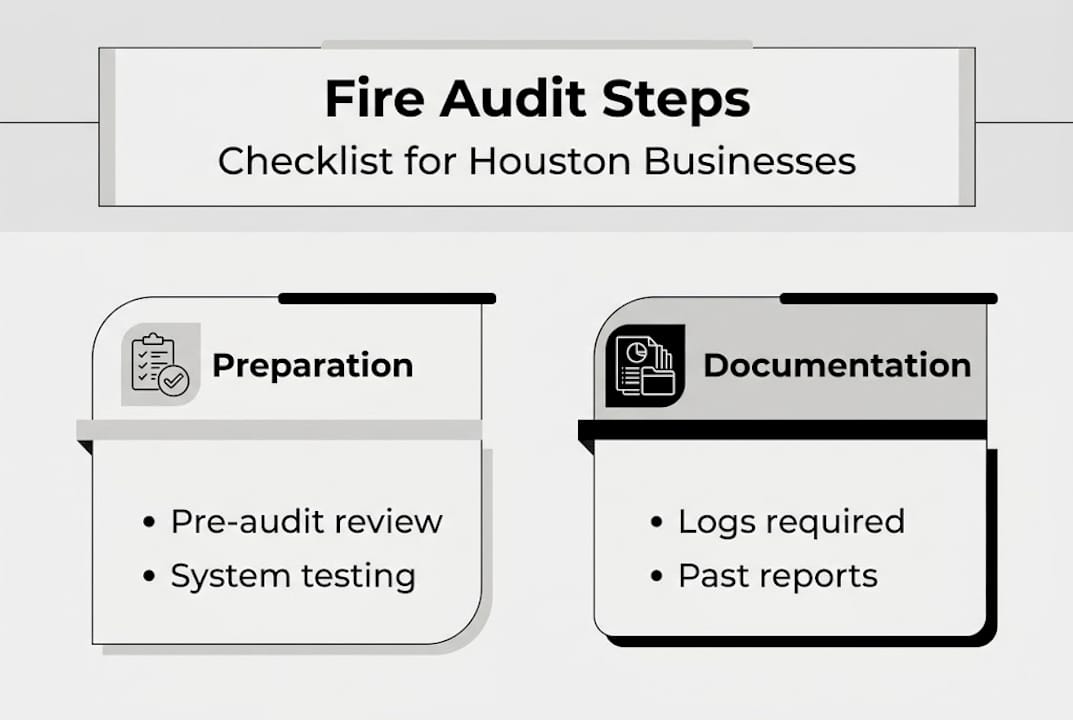
- Pre-audit documentation review: Gather maintenance logs, past inspection reports, impairment notices, and floor plans
- Site walkthrough: Visual check of all exits, signage, suppression systems, and alarm panels
- Functional system testing: Test alarms, sprinklers, suppression systems, and detection devices under real conditions
- Staff and procedure interviews: Verify that employees know evacuation routes and fire response protocols
- Documentation audit: Confirm that all records are current, complete, and Houston-code compliant
- Findings report: Auditor provides a written summary of deficiencies and required corrective actions
- Re-audit or follow-up: Verify that all deficiencies have been corrected with updated documentation
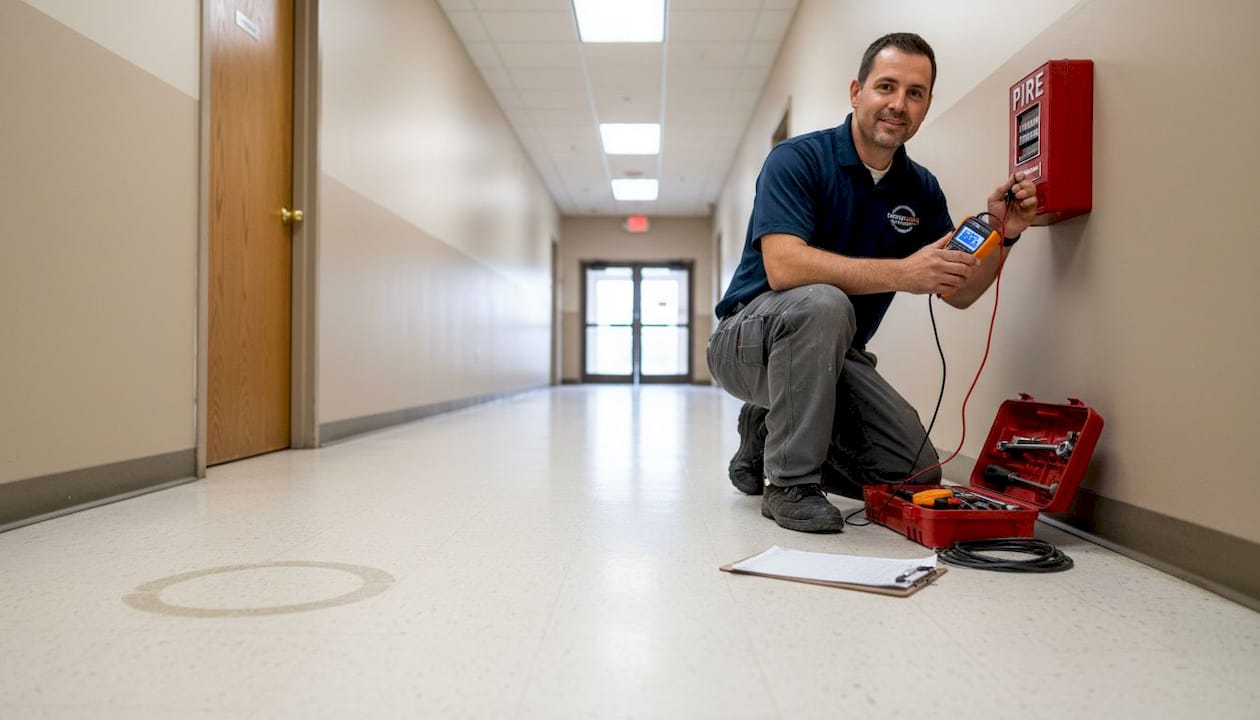
Visual checks alone are not sufficient. Functional system tests are required to confirm that equipment actually performs as intended. A sprinkler head that looks fine may be corroded internally. An alarm panel that appears active may have a silent zone failure.
| Audit step | Documentation required |
|---|---|
| Pre-audit review | Maintenance logs, past reports |
| System testing | Test results, technician sign-off |
| Impairment management | Impairment notices, fire watch logs |
| Staff verification | Training records, drill logs |
| Final report | Corrective action plan, timeline |
Pro Tip: Document all impairments and corrective actions digitally. Paper logs get lost, especially during post-renovation re-audits. A digital record system makes follow-up audits faster and cleaner.
Edge cases like high-rise properties, vacant buildings, and post-renovation audits require special attention. Vacant or older buildings often have dormant systems that have not been tested in years. Post-renovation audits must verify that construction did not compromise existing fire protection infrastructure. When systems are impaired, a formal fire watch must be implemented immediately.
Use a solid fire alarm audit checklist to guide your preparation, and reference creating a fire safety checklist for Houston-specific guidance. Scheduling annual fire safety inspections alongside your audit cycle keeps your compliance calendar organized.
Well-executed audits provide more than paperwork. They drive real, tangible safety improvements.
Common pitfalls and how to avoid them during fire safety audits
Even well-intentioned facility managers run into avoidable problems during audits. Knowing these pitfalls in advance gives you a real edge.
Most common fire safety audit failures:
- Skipping functional tests and relying on visual checks only
- Assuming that passing last year’s inspection means you will pass this year’s audit
- Using outdated paper documentation that cannot be quickly verified
- Failing to account for Houston-specific code amendments in your checklist
- Not tracking corrective actions from previous audits, leading to repeat findings
- Missing re-audit requirements after renovations or system changes
“Over 45% of audits in similar markets fail on the first try due to overlooked details.”
Each of these pitfalls has a direct fix. For functional testing gaps, schedule tests with a licensed technician before your official audit date. For documentation issues, move to a digital tracking system that timestamps every entry. For Houston code gaps, work with a local fire safety professional who knows the current amendments, not just national standards.
Pro Tip: Run an internal pre-audit at least four weeks before your official review. Walk through every item on your checklist, test your systems, and verify your documentation. Issues found internally cost far less to fix than violations cited in an official report.
Review fire alarm maintenance tips to keep your systems in testable condition year-round. A step-by-step fire safety inspection guide for Texas in 2026 can help you align your internal process with current standards.
Avoiding these missteps can transform an audit from a cost into a strategic asset.
Our perspective: Unseen value and overlooked risks of fire safety audits
Most Houston business owners treat fire safety audits the way they treat tax filings: something to get through, not something to leverage. That mindset is expensive.
We have seen properties that check every visible box, hang their certificates, and then face serious liability exposure because their documentation was incomplete or their systems had never been functionally tested. The audit was technically done. The protection was not.
The real value of an audit shows up when something goes wrong. A well-documented audit trail is your strongest defense in an insurance claim or a legal dispute. It shows that you acted responsibly, that your systems were tested, and that your staff was trained. Without that trail, you are relying on goodwill.
The properties that get the most from their audits treat them as an ongoing operational tool, not an annual obligation. They use annual fire safety inspections as a baseline and build digital documentation habits throughout the year. When the official audit arrives, they are ready. The cost is lower, the findings are fewer, and the business protection is real. That shift in mindset is the single biggest upgrade any facility manager can make.
Leverage audit expertise for safer Houston properties
Getting your fire safety audit right the first time requires more than a checklist. It requires local expertise, functional testing capability, and documentation systems built for Houston’s specific code environment.
At Reliable Fire Protection, we help Houston business owners and facility managers move from reactive compliance to proactive protection. Our team covers everything from fire safety solutions and equipment to detailed fire extinguisher inspections and a proven fire alarm audit checklist built for commercial properties. Whether you manage a single facility or a portfolio of buildings across Houston, we are ready to help you build a safer, fully documented fire safety program.
Frequently asked questions
How often must Houston businesses conduct fire safety audits?
Most Houston businesses should conduct annual fire safety audits, but high-risk occupancies, recently renovated properties, or those with prior violations may need more frequent reviews based on local amendments and facility type.
What documentation is required for fire safety audits in Houston?
You need maintenance logs, inspection reports, proof of completed repairs, and digital records aligned with Houston code amendments that go beyond generic national standards.
How are audits different from inspections?
Audits assess your entire fire safety management process, including documentation and functional performance, while inspections check code compliance at a single point in time without the same depth of review.
Can fire safety audits help lower insurance costs?
Yes. Thorough audits with complete documentation can lead to reduced insurance premiums and provide critical protection against fines or legal claims following an incident.
What are the biggest reasons audits fail?
Most failures come from missing documentation, skipped functional tests, or failing to address Houston-specific requirements that go beyond standard NFPA checklists.
Recommended
- Annual Fire Safety Inspections: Safeguarding Houston Buildings
- Government fire safety tips for Houston managers 2026
- Commercial Fire Safety: Protecting Houston Businesses
- Fire prevention checklist for Houston properties 2026
- Fire Alarm System University Place TX
- Fire Alarm System Services in Bellaire, TX